kids screen time rules
Is tech pulling your family apart or bringing you together? Screens don’t have to be a solo activity. Learn how to set rules that integrate tech into family life rather than isolating the kids.

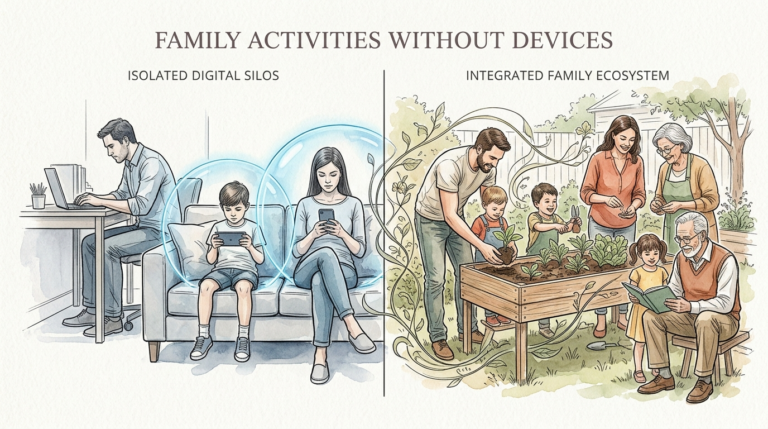
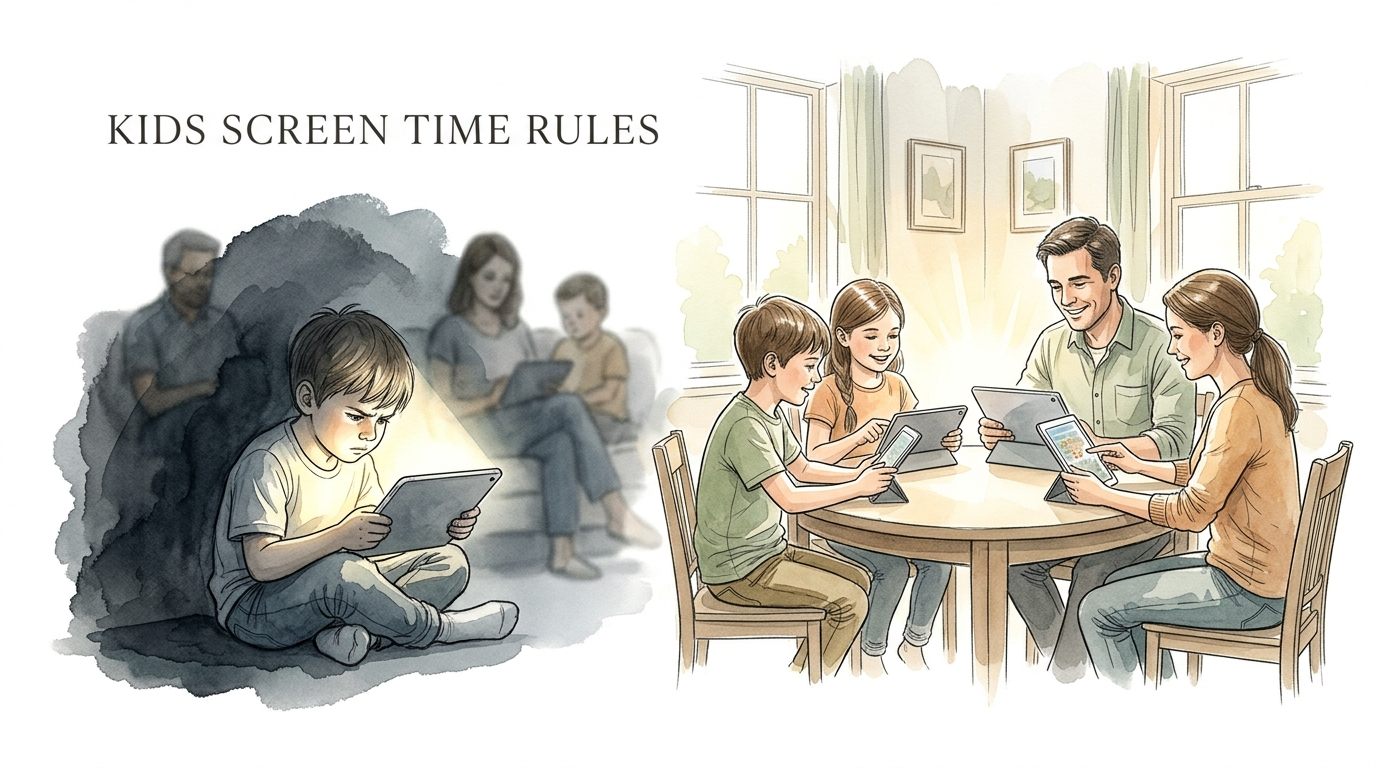
Modern parenting feels like a constant tug-of-war with a glowing rectangle. Every time a child picks up a tablet, a silent wall often goes up between them and the rest of the room. This phenomenon, often called Isolated Zoning, turns family time into a collection of individuals sitting together but living in different digital worlds.

Integrated Connection offers a different path. It treats technology as a tool for bonding rather than a barrier to it. This shift requires more than just a timer on the microwave; it needs a strategy that values the quality of the interaction over the minutes on the clock. You are about to discover how to turn tech into a bridge for your family.
kids screen time rules
Kids screen time rules are the evolving guidelines parents use to manage how children interact with digital devices. These rules have shifted significantly in recent years. In 2024 and 2025, experts moved away from rigid “minutes-per-day” mandates for older children, focusing instead on the context and content of the media consumed.
These rules exist to protect the developing brain and maintain family social structures. Think of screen time like nutrition; some digital “calories” are empty and addictive, while others provide growth and connection. Rules provide the framework that helps kids move from passive consumption to active, intentional use.
Real-world situations often complicate these rules. A child using a laptop for a coding project is doing something fundamentally different than a child scrolling through autoplaying short-form videos. Effective rules recognize this difference. They prioritize sleep, physical movement, and face-to-face conversation while allowing technology to enhance learning and play.
Current pediatric guidelines for 2025 emphasize a “Family Media Plan” over a one-size-fits-all limit. For infants under 18 months, the rule is simple: no screens except for video chatting with family. Between 18 and 24 months, high-quality educational content is allowed if an adult watches alongside them. For ages two to five, the limit is generally one hour of high-quality programming per weekday, with co-viewing as a core requirement.
How to Build an Integrated Tech Strategy
Creating a functional system starts with a family meeting. You cannot impose rules from the top down and expect them to stick. Children who feel they have a voice in the process are more likely to respect the boundaries when the timer goes off.
Start by identifying your family’s core values. If “connection” is a value, then phones at the dinner table are an obvious violation. If “learning” is a value, then educational apps might earn more “digital credit” than mindless games. Use these values to build your roadmap.
- The 5C Framework: Evaluate media based on Content, Context, the individual Child, Connectivity, and Community.
- Joint Media Engagement: Aim to watch or play together. This transforms tech from a solo isolation booth into a shared experience.
- Transparent Monitoring: Use parental controls as a safety net, not a spy tool. Explain to your kids why certain apps are blocked or timed.
- The “One Screen” Rule: Avoid background TV. If no one is actively watching, turn the screen off to prevent “technoference” with play and conversation.
Principles of “serve and return” apply here. When a child sees something on a screen, they need a caregiver to talk about it with them. This “integrated” approach helps the child process what they see and prevents the “zoning out” effect that happens during solo viewing.
Actionable advice often involves physical cues. Create a “device parking lot” in a common area like the kitchen. When the family enters the house, phones and tablets go in the parking lot. This physical boundary signals that the home is a space for human connection first.
Benefits of Integrated Screen Rules
Practical benefits of these rules show up in your child’s behavior almost immediately. When tech is integrated rather than isolating, children develop better emotional regulation. They aren’t “crashing” from a dopamine high because the transition away from the screen is managed and expected.
Social skills see a measurable boost when co-viewing is the norm. Talking about a show while watching it helps children understand social cues, empathy, and narrative structure. It turns a passive activity into a cognitive exercise. You are essentially teaching them how to be a critical consumer of media.
Family bonding is perhaps the most significant advantage. Playing a cooperative video game together or searching for a DIY project on YouTube builds shared memories. It replaces the “silo” effect with a “huddle” effect. Technology becomes the catalyst for the conversation, not the replacement for it.
Measurable health outcomes include improved sleep hygiene and increased physical activity. Rules that mandate “no screens 60 minutes before bed” allow the brain to produce melatonin naturally. This results in faster sleep onset and better overall rest, which directly impacts school performance and mood.
Challenges and Common Mistakes
The most frequent pitfall is parental hypocrisy. Experts call this “phubbing”—phone snubbing. When you tell your child to get off their tablet while you are scrolling through your own feed, the rule loses all credibility. Children model their behavior after what you do, not what you say.
Mistakes often happen because parents use screens as a “pacifier” or “babysitter.” While occasionally necessary for a parent’s sanity, using screens to stop a tantrum teaches the child that they don’t need to learn how to regulate their own emotions. The screen does the work for them, creating a dependency that is hard to break later.
Inconsistency is another major hurdle. If the rules change every time you are tired or busy, children will constantly push the boundaries to see what they can get away with. A rule is only as strong as its most recent enforcement. Set boundaries that you can actually maintain on your worst day, not just your best day.
Falling for “engagement-based design” is a trap for both parents and kids. Apps are designed to keep you scrolling through autoplay, notifications, and infinite feeds. Recognizing these “dark patterns” is the first step in fighting back. If the app is designed to be hard to put down, it probably needs stricter rules.
Limitations and Realistic Constraints
Rules do not exist in a vacuum. School-required technology is a major constraint for modern families. When a child needs a laptop for three hours of homework, you cannot simply count that toward a “two-hour limit.” Integrated rules must distinguish between “school tech” and “leisure tech.”
Environmental limitations also play a role. If you live in a small apartment during a cold winter, “going outside to play” isn’t always an option. In these cases, the “quality” of the screen time becomes your most important lever. You might pivot to active games like dance-offs or virtual fitness rather than passive YouTube viewing.
Neurodivergent children may interact with screens differently. For some children on the autism spectrum, digital devices can be a vital tool for communication or regulation. Applying standard “neurotypical” time limits can sometimes be counterproductive. In these situations, the rules must be tailored to the child’s specific developmental needs.
Practical boundaries are necessary to avoid “parental burnout.” Trying to co-view every single minute of your child’s screen time is impossible. It is okay to have “independent tech time” as long as it is balanced with integrated sessions. The goal is a healthy mix, not 100% supervision at all times.
Integrated Connection vs. Isolated Zoning
Understanding the difference between these two approaches helps you decide where to spend your energy. Integrated connection focuses on the relationship, while isolated zoning focuses on the device.
| Feature | Isolated Zoning | Integrated Connection |
|---|---|---|
| Primary Goal | Quiet time / Occupying the child | Shared experience / Learning |
| Social Interaction | Minimal / Individual bubbles | High / Active discussion |
| Transition Out | Often results in tantrums | Predictable and smooth |
| Parental Role | Passive / Distracted | Active / Mentoring |
Complexity increases with isolated zoning because you are constantly fighting against the “pull” of the device. Integrated connection requires more effort upfront but results in lower long-term friction. It builds the “digital literacy” muscle that children will need for the rest of their lives.
Practical Tips for Immediate Implementation
Start small with “Tech-Free Zones.” The kitchen table and the car are the best places to begin. These are natural spaces for conversation. Removing screens from these areas forces family members to engage with one another, even if it feels awkward at first.
Use “Grayscale Mode” on tablets and phones. Most devices have an accessibility setting that removes all color. This makes the screen significantly less stimulating and less addictive for the developing brain. It is an easy way to reduce the “magnetic” pull of apps without a verbal fight.
- Set “Hard Stops”: Use a physical timer that counts down visibly. This gives kids a sense of control and prevents the “just five more minutes” loop.
- The “Active” Filter: Encourage apps that require creating rather than consuming. Coding, digital art, or music production are better than endless scrolling.
- Family Tech Curfew: All devices go to the charging station at a set time every night—parents included.
- Review the Plan: Set a calendar reminder to review your family media plan every six months. As kids grow, their needs and the technology change.
Optimizing your router settings can also help. Many modern routers allow you to set “profiles” for each family member, automatically cutting off the internet to specific devices at bedtime. This removes the parent from the role of “enforcer” and lets the system handle the boundary.
Advanced Considerations for the Digital Age
Serious practitioners of digital wellness should look into “Algorithmic Literacy.” Teach your children how algorithms work. Explain that the “Recommended for You” section is a machine trying to guess what will keep them watching the longest. When kids understand they are being manipulated, they often find it easier to resist the urge to click.
Data privacy is another deep-dive topic. Integrated tech use should include discussions about what happens to the data kids provide to games and social media. Using privacy-focused browsers and teaching kids to never share personal information are essential skills for 2025 and beyond.
AI literacy is the newest frontier. As generative AI becomes integrated into toys and apps, children need to understand the difference between a human response and a machine-generated one. Discussing the limitations of AI—like “hallucinations” or biased data—helps them use these tools effectively without becoming overly dependent on them.
Scaling these rules for teenagers requires a shift from “management” to “mentorship.” You cannot control every second of a 16-year-old’s digital life. Instead, focus on building their internal “digital compass.” Talk about “Digital Footprints” and how their online behavior affects their future opportunities in college or the workforce.
Example Scenarios: Theory in Practice
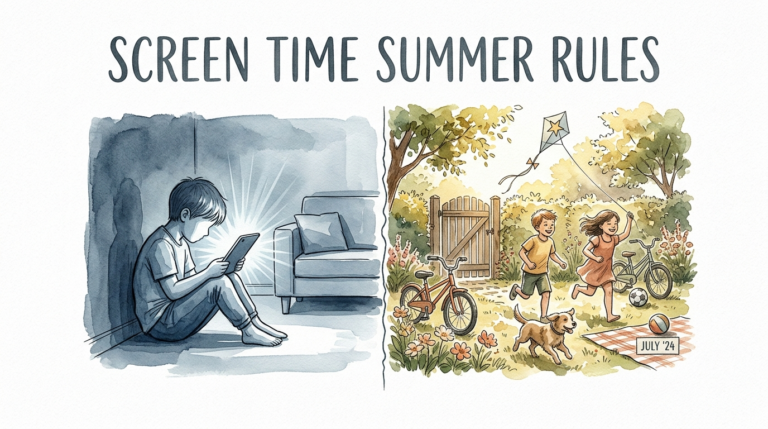
Imagine a typical Tuesday evening. In the “Isolated” house, the kids are on their tablets in the living room while the parents scroll through news on their phones in the kitchen. Everyone is quiet, but no one is together. When it’s time for bed, a massive argument breaks out because the kids are over-stimulated and don’t want to stop.
Now, look at the “Integrated” house. The family uses the tablet together to look up a recipe for dinner. While the meal cooks, they play a quick 15-minute round of a family trivia game on the TV. After dinner, the kids get 30 minutes of “solo tech,” but the devices are in the common room. Because the transition was part of a clear, agreed-upon plan, the devices go into the “parking lot” at 8:00 PM without a fight.
Another scenario involves long car rides. Instead of four people with four sets of headphones, the family listens to a curated “Audiobook of the Month” or a family-friendly podcast. They stop at specific intervals to discuss the story. This uses technology to create a shared mental landscape, even if their eyes are on the road.
Final Thoughts
Setting kids screen time rules isn’t about being the “tech police.” It is about being a digital mentor. By moving from isolated zoning to integrated connection, you change the fundamental chemistry of your household. You move away from the frustration of constant distraction and toward the satisfaction of shared attention.
Applying these principles takes time and patience. There will be days when the rules break down and everyone ends up staring at a screen for too long. That is okay. The goal is progress, not perfection. Every shared movie, every tech-free dinner, and every conversation about an algorithm builds a foundation for a healthier digital future.
Encourage your family to experiment with these ideas. Start with a single tech-free zone today. Notice how it changes the “vibe” of your home. As you grow more comfortable, expand your family media plan to include more integrated activities. You will likely find that when the screens aren’t the only thing happening, they become much less of a threat to your connection.
Sources
1 att.com | 2 wholeheartily.com | 3 aacap.org | 4 childhealthassociatespc.com | 5 mayoclinic.org | 6 commonwealthpeds.com | 7 healthychildren.org | 8 cbwchc.org | 9 principalstoday.co.nz | 10 psychologytoday.com | 11 thebrink.me | 12 theguardian.com | 13 cps.ca