screen time summer rules
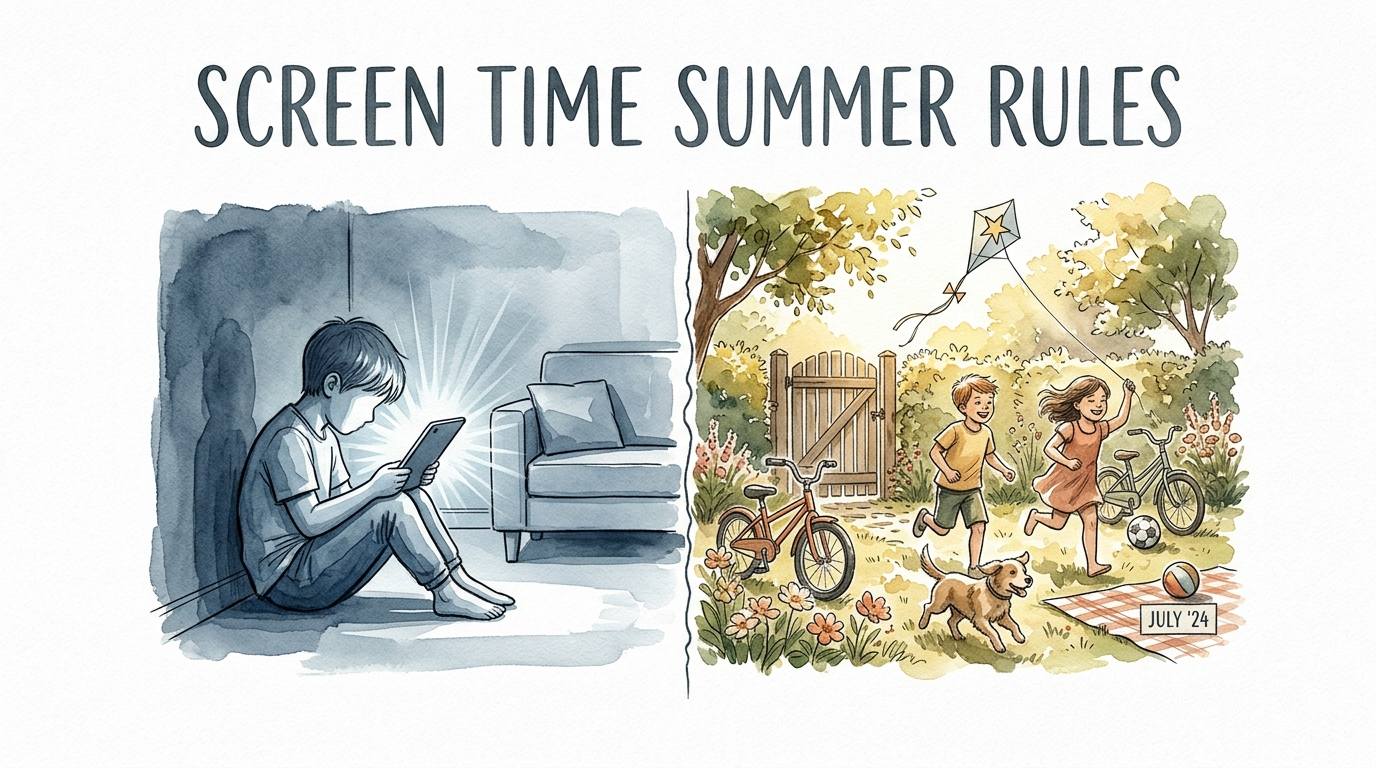
Is your child’s summer glowing with pixels or growing with nature? Don’t let the summer pass by in a digital fog. Use our ‘Dead vs. Living’ framework to help your kids reconnect with the real world. #SummerRules #NaturePlay #ParentingHacks

Summer break often arrives with a promise of freedom, but for many families, that freedom quickly turns into a digital downward spiral. The structure of the school year vanishes, leaving a vacuum that is too easily filled by the sterile screen glow of tablets and gaming consoles. Without a plan, the “digital fog” sets in, leading to irritable moods, sluggish bodies, and a summer that feels more like a tech marathon than a season of growth.
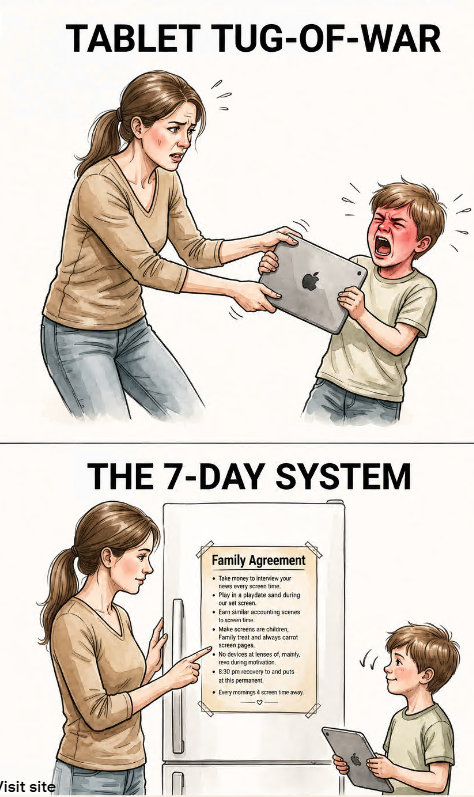
Parenting in the digital age requires more than just setting a timer. It requires a philosophy that distinguishes between consumption that drains and creation that fulfills. This is where the ‘Dead vs. Living’ framework comes in, offering a simple yet powerful way to categorize how our children spend their time. We want to move away from the passive “dead” activities of mindless scrolling and shift toward “living” activities that spark curiosity, movement, and connection.
This guide will walk you through everything you need to transform your home this summer. You will learn how to implement realistic screen time summer rules that actually stick. We are going to dive deep into the science of nature play, the psychology of boredom, and the practical steps to reclaim your child’s summer from the grip of the algorithm.
screen time summer rules
Screen time summer rules are the essential guardrails that keep a child’s development on track when the traditional school schedule disappears. These rules are not about being “anti-tech” but about being “pro-balance.” In the modern home, screens are ubiquitous, and without clear boundaries, they become the default activity for every spare moment of the day.
Think of summer screen time like junk food. A little bit might be fine for a treat, but a diet of nothing but processed snacks leads to poor health and low energy. Screen time summer rules act as the “nutritional label” for your child’s daily activities. They help parents and children identify when a digital activity is serving a purpose and when it is simply a tool for mindless escape.
These rules exist because children often lack the executive function to self-regulate their dopamine intake. High-energy video games and short-form videos provide instant gratification that the real world struggle to match. By establishing a framework early, you prevent the “screen creep” that often results in behavioral meltdowns and social isolation as the weeks go by. Recent pediatric guidance suggests moving away from rigid hour-counting and instead focusing on what the screens are replacing—specifically sleep, physical activity, and face-to-face social connection.
Effective rules are collaborative rather than dictatorial. When children understand the “why” behind the limits—such as protecting their sleep or making room for “living” play—they are far more likely to cooperate. The goal is to create a rhythm where screens have a specific time and place, rather than being an all-day background noise.
The ‘Dead vs. Living’ Framework: How It Works
The core of this system is the distinction between “Dead” and “Living” activities. This framework simplifies the decision-making process for both parents and kids, moving the conversation away from “Can I have my iPad?” to “Is this activity helping me grow?”
Defining Dead Play
Dead play refers to passive consumption. This is when a child is a spectator rather than a participant. Examples include binging YouTube videos, scrolling through social media feeds, or playing games that rely on repetitive, mindless loops designed to keep the user engaged without requiring any real skill or creativity. In the ‘Dead’ state, the child is essentially a vessel for content designed by someone else.
Defining Living Play
Living play is active, creative, and often messy. It involves the “three Cs”: Creation, Connection, and Contemplation. Living play includes building with LEGOs, playing a musical instrument, coding a game (rather than just playing one), or engaging in unstructured nature play. It is “living” because it requires the child to exert their own agency and imagination to drive the experience forward.
The “Living” Requirement
A practical way to implement this is to require a specific ratio of Living time before any Dead time is allowed. For example, a child might need to complete two hours of “Living” activities—such as reading, playing outside, or helping with chores—to “earn” 30 minutes of “Dead” screen time. This teaches children that digital entertainment is a secondary reward, not a primary right.
Transitioning to this system requires a family kickoff meeting. Sit down with a whiteboard or a large piece of paper and brainstorm what “Living” activities look like for your family. Focus on things that make your kids feel energized and proud. When they see the list of possibilities, the transition away from screens feels less like a punishment and more like an invitation to adventure.
Benefits of Reclaiming Summer
Switching to a framework that prioritizes nature play and active engagement offers measurable benefits for a child’s physical and mental health. The shift from pixels to the real world isn’t just about discipline; it’s about neurodevelopment.
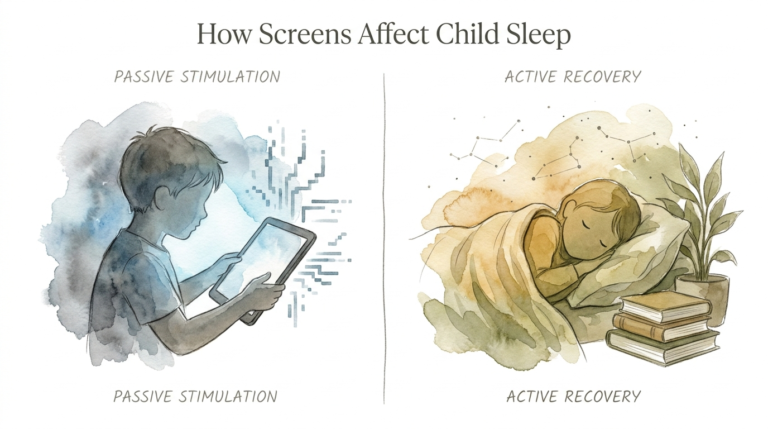
One of the most immediate benefits is the improvement in sleep quality. Research shows that screens in bedrooms, particularly at night, are strongly associated with delayed bedtimes and reduced sleep quality. By enforcing “Living” rules that keep devices out of the bedroom, you ensure your child gets the rest they need to regulate their mood and emotions the next day.
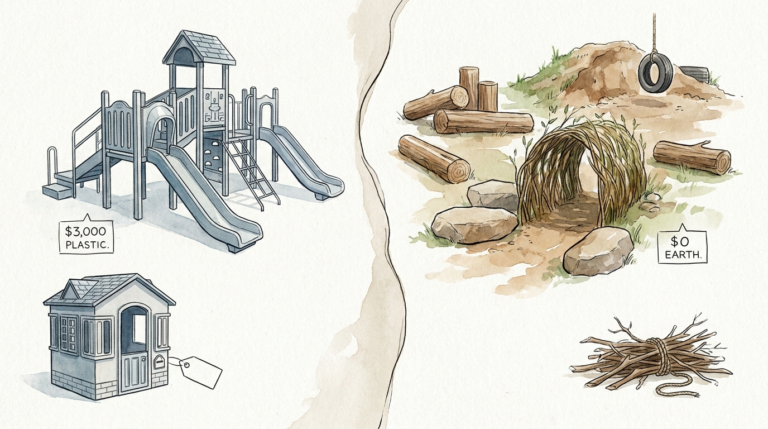
Physical health also sees a massive boost. Outdoor play encourages “proprioception”—the sense of self-movement and body position—which is often neglected during sedentary screen use. Nature play involves running, climbing, and sensory exploration that strengthens muscles, improves coordination, and provides essential Vitamin D from sunshine. Children who play outside regularly tend to have a lower BMI and better overall physical resilience.
Mental health and executive functioning are perhaps the most significant winners in this framework. Unstructured play in nature fosters curiosity and problem-solving skills that screens cannot replicate. While digital feedback is instantaneous, the real world requires patience and persistence. Overcoming a “boring” afternoon by building a fort or starting a garden builds the mental resilience children need to handle frustration in other areas of life.
Social skills also flourish when screens are sidelined. Face-to-face interaction requires reading body language, negotiating rules, and managing conflict in real-time. These are “living” skills that prepare children for success in school and future workplaces. By prioritizing connection over consumption, you are giving your child the tools to build meaningful relationships throughout their lives.
Challenges and Common Mistakes
Implementing new screen time summer rules is rarely a smooth process. You should expect pushback, especially if your children are used to unrestricted access. Understanding these challenges will help you stay consistent when things get difficult.
The “Boredom Battle” is the most common hurdle. When the constant dopamine hits from screens are removed, children often experience a “withdrawal” phase where they feel intensely bored and irritable. Many parents cave at this point because they feel it is their job to be a “personal camp counselor.” This is a mistake. Boredom is actually a catalyst for creativity; it is the “uncomfortable vacuum” that nudges a child to invent their own fun.
Consistency is another major pitfall. Rules often fall apart during the “hot afternoons” or “rainy days” when parents are tired and just need a break. It is easy to let one hour of TV turn into four. To avoid this, you need a pre-planned list of “Rainy Day Rescues”—Living activities that are ready to go when the weather or your energy fails. Without a backup plan, the default will always be the screen.
Parental modeling is frequently overlooked. If you are telling your kids to “go play outside” while you are hunched over your own smartphone, the rules will feel hypocritical and unfair. Children are much more likely to follow boundaries if they see their caregivers modeling balanced tech use. Setting your own “Living” goals can help create a culture of accountability within the home.
Ignoring the “why” behind the screen request can also lead to failure. Often, a child asking for a screen is actually looking for connection, stimulation, or a way to handle a big emotion. If you simply say “no” without investigating what they actually need, you miss an opportunity to teach them better coping mechanisms. Instead, try asking, “Are you bored, or do you just want to spend time together?”
Limitations: When This Framework May Not Work
While the Dead vs. Living framework is powerful, it is important to recognize its limitations. Not every family situation or every day is suited for a perfect balance. Recognizing these boundaries will help you avoid “parental guilt” when life gets in the way.
Environmental constraints are a reality for many. Not every family has a backyard or easy access to safe green spaces. If you live in a highly urban environment or a place with extreme summer heat, “Nature Play” might be restricted to specific times of the day or require significant travel. In these cases, your “Living” activities might need to focus more on indoor creativity, like art, cooking, or building, rather than just being outdoors.
Travel and special circumstances also require flexibility. A ten-hour car ride or a long flight is not the time to be a “tech tyrant.” Screens can be a vital tool for keeping the peace during transit. The goal of the framework is long-term balance over the course of the summer, not perfection every single hour of every single day. A “rainy day” or a “sick day” might naturally involve more screen time, and that is okay as long as it doesn’t become the new permanent habit.
Neurodiversity can also change how you apply these rules. For some children with ADHD or autism, certain types of digital engagement can be highly regulating or educational. In these instances, the definition of “Dead” vs “Living” might need to be adjusted to fit the specific needs and strengths of the child. What looks like “consumption” to one child might be a vital “connection” tool for another.
Passive vs. Active Screen Time Comparison
Not all digital experiences are equal. To help you decide which activities fall into the ‘Dead’ or ‘Living’ categories, use this comparison table to evaluate the content your children are engaging with.
| Factor | Passive (Dead) | Active (Living) |
|---|---|---|
| Core Goal | Entertainment & Consumption | Creation & Engagement |
| Mental Load | Low (Vegging out) | High (Problem-solving) |
| Social Aspect | Isolated scrolling | Collaboration/Co-play |
| Example | YouTube autoplay, TikTok | Coding, Video editing, Chess |
| Impact on Mood | Often leads to irritability | Often leads to pride/accomplishment |
This table demonstrates that the “device” itself isn’t the problem—the “use case” is. A child using an iPad to record and edit a stop-motion movie is engaging in a “Living” activity. The same child using the same iPad to watch 50 mindless toy-unboxing videos is engaging in “Dead” play. Focus your rules on the quality of the interaction rather than just the quantity of the minutes.
Practical Tips for a Successful Summer
Actionable strategies make the transition much easier. Use these tips to optimize your home environment for “Living” play and reduce the friction of enforcing screen time summer rules.
- Create a “Summer Bucket List”: Have the kids write down 50 things they want to do this summer that don’t involve a screen. This serves as their “menu” when they feel bored.
- Use Digital Guardrails: Tools like Google Family Link or Apple Screen Time aren’t just for blocking; they are for visibility. Use them to set automated “downtime” so you don’t have to be the bad guy every night.
- Seed Options, Not Instructions: Instead of saying “Go outside,” try “Do you want to use the water balloons, the sidewalk chalk, or the sprinkler?” Giving them a choice increases their sense of agency.
- The “Morning Routine” Rule: Screens are only allowed after a set of “Living” tasks are completed. This usually includes making the bed, eating breakfast, 30 minutes of reading, and 30 minutes of outdoor movement.
- Designate “Tech-Free Zones”: Keep the dining table and the bedrooms as screen-free sanctuaries. This protects family connection time and sleep quality.
- Embrace the “Boredom Gap”: When your child says “I’m bored,” acknowledge it without fixing it. Say, “I can’t wait to see what your brain comes up with to solve that!” and then walk away.
By shifting the focus to what children can do rather than what they can’t, you lower the emotional temperature of the house. You are not “taking away their fun”; you are making room for even better experiences.
Advanced Considerations: The Science of the “Digital Daze”
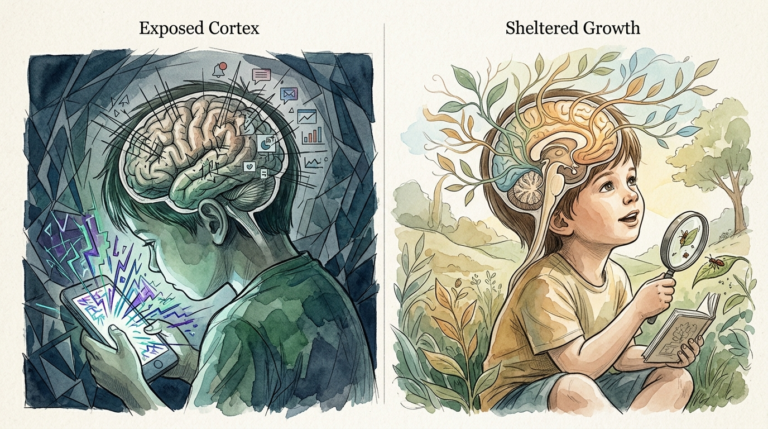
For parents who want to understand the “why” at a deeper level, it is worth looking at the neurological impact of modern digital design. Many “Dead” screen activities are built using “persuasive design” techniques intended to hijack the brain’s reward system.
Features like infinite scroll, autoplay, and variable reward schedules (found in loot boxes and social media likes) create a dopamine loop that is difficult for a developing brain to break. This is why children often seem “zombie-like” while on a screen but become explosive the moment it is turned off. They are experiencing a literal “come-down” from a high-intensity neurological state.
In contrast, “Living” play in nature provides a “soft fascination” that allows the brain’s directed attention to rest. This is known as Attention Restoration Theory (ART). When a child watches a stream, climbs a tree, or builds with sand, their brain is engaged but not overstimulated. This type of environment actually helps restore the ability to focus and think critically—the exact opposite of the “digital fog.”
Understanding the cognitive load of different activities helps you make better decisions. High-intensity gaming might be “Active,” but it also carries a high cognitive load that can lead to exhaustion and irritability. Balancing high-load digital activities with low-load “Green Time” is the secret to a emotionally stable household.
Real-World Example: A Day in the ‘Living’ Framework
To visualize how this works, let’s look at a typical Tuesday for a 9-year-old named Sam using the Dead vs. Living rules.
Sam wakes up at 7:30 AM. He knows that screens are “Dead” until after lunch. He starts his “Living” morning by eating breakfast, walking the dog for 20 minutes, and then spending an hour building a cardboard fort in the garage. Because he is in the “Living” state, his brain is active and creative.
By 10:30 AM, Sam feels bored. Instead of handing him an iPad, his mom points to the Summer Bucket List. Sam chooses “Water Balloon Target Practice.” He spends the next hour filling balloons and trying to hit a target on the fence. This involves fine motor skills, physical movement, and persistence. He is “growing with nature” rather than “glowing with pixels.”
After a healthy lunch, Sam has earned 45 minutes of “Dead” time. He watches a favorite show. Because he has spent the morning in an active state, he is less likely to fall into a “digital daze.” When the timer goes off at 45 minutes, he transitions back to a “Living” activity—reading his book for 30 minutes—without a meltdown. The transition is easier because his brain hasn’t been “fried” by an all-day digital marathon.
The evening ends with a family walk and a screen-free dinner. By the time Sam goes to bed, he has had a balanced “digital diet.” He feels tired, accomplished, and ready for a good night’s sleep. His summer isn’t being “passed by”; it is being lived.
Final Thoughts
Reclaiming your child’s summer from the “digital fog” isn’t about being a perfect parent or banning technology forever. It is about being intentional. By using the ‘Dead vs. Living’ framework, you provide your children with the structure they need to explore the real world while still allowing for the digital benefits of the modern age.
The lessons they learn this summer—how to handle boredom, how to create their own fun, and how to connect with nature—will serve them far longer than any high score in a video game. These “living” skills are the foundation of a resilient, creative, and healthy adult. Start small, stay consistent, and watch as your kids trade the sterile screen glow for the vibrant, messy, and beautiful reality of living play.
Now is the time to take the first step. Gather your family, define your “Living” activities, and set your summer rules today. Your children might push back at first, but one day they will look back at these summers as the ones where they truly came alive. Experiment with this framework and find the rhythm that works best for your unique family—the results are worth the effort.
Sources
1 fledge.health | 2 c-suitenetwork.com | 3 kinzoo.com | 4 gozen.com | 5 biglifejournal.com | 6 jcsri.org | 7 northwestfamilyclinics.com | 8 compasschildcare.com | 9 parade.com | 10 digitalwellnesslab.org | 11 digitalwellnesslab.org | 12 digitalwellnesslab.org | 13 thescreenguardians.com | 14 childmind.org | 15 substack.com | 16 avidopenaccess.org | 17 thevoiceofearlychildhood.com | 18 reddit.com | 19 youtube.com | 20 beelievepediatrictherapy.com | 21 youtube.com | 22 aifs.gov.au | 23 childmind.org