healthy screen time poster
Vague rules lead to constant arguments. Pro-level visual guides create clarity and compliance without the friction. A visual schedule acts as a neutral third party. Download our blueprint for a screen time poster that actually works for kids of all ages.
Setting boundaries around technology is one of the most exhausting parts of modern parenting. You want your kids to be tech-literate, but you also want them to go outside, read books, and actually look you in the eye. Without a clear system, every request for an iPad turns into a negotiation or a full-blown battle.
The solution isn’t necessarily fewer minutes on a screen; it is more clarity about when those minutes happen. By moving the “rules” out of your head and onto the wall, you shift the dynamic from “Parent vs. Child” to “Child vs. The Plan.”
healthy screen time poster
A healthy screen time poster is a physical, visual tool that outlines the expectations, limits, and prerequisites for using digital devices in a household. It serves as a permanent reference point that children can check independently before they ever ask for a device.
In real-world situations, this poster acts as the “referee.” Instead of you saying “no” for the tenth time, the poster says “not yet.” It helps children visualize their day as a series of blocks where entertainment has a specific, earned place rather than being the default activity.
Most of these posters include a checklist of “must-do” items, such as finishing homework, cleaning their room, or playing outside for 30 minutes. By making these requirements visible, you remove the ambiguity that often leads to “negotiation fatigue” for parents.
Think of it like a flight manifest. A pilot doesn’t just take off; they go through a pre-flight checklist to ensure everything is safe and ready. A screen time poster teaches kids that digital play is a privilege that comes after their developmental and responsibilities “check-boxes” are cleared.
How to Design Your Screen Time Precision Guide
Creating an effective poster requires more than just a list of rules. It needs to be a system that your child feels they can “win” at. If the requirements are too high, they will give up; if they are too vague, they will find loopholes.
Step 1: Define the “Must-Dos”
Start by identifying the non-negotiables for your family. These usually fall into three categories: Hygiene, Contribution, and Development. Hygiene includes brushing teeth and getting dressed. Contribution includes chores like clearing the table or feeding a pet. Development includes reading, outdoor play, or creative “boredom.”
Step 2: Choose Your Format
For younger children, use icons and photos. A picture of a toothbrush or a stack of books is more powerful than the words themselves. For older kids, a “if/then” chart or a points-based system works better. You might decide that 30 minutes of reading “unlocks” 30 minutes of gaming.
Step 3: Establish the “Hard Stops”
Every poster needs clear “No-Fly Zones.” Common examples include no screens during mealtimes, no screens in bedrooms, and a mandatory “power down” at least 60 minutes before bed. Science shows that the blue light and high-stimulation content from devices can severely disrupt sleep hygiene and melatonin production.
Step 4: Make It Interactive
A static poster can eventually become “wall-paper” that kids ignore. Use a laminated sheet with dry-erase markers or a board with Velcro icons. Letting the child physically check off a task or move a “token” gives them a hit of dopamine that rivals the screen itself, reinforcing the positive habit of completing responsibilities.
The Science of Visual Boundaries
Why does a poster work better than a verbal reminder? It comes down to how a child’s brain processes information. When you give a verbal instruction, the child has to use their working memory to store that rule while they are already likely distracted by the desire for a screen.
Visual schedules support executive function. They externalize the routine, moving it from an invisible expectation in the parent’s mind to a concrete, predictable road map. This reduces “cognitive load,” allowing the child to focus on the task at hand rather than trying to remember what they are supposed to do next.
A visual guide also addresses the “Dopamine Loop.” Digital media is designed to be addictive, providing instant rewards. By placing a visual checklist in front of the screen, you create a “friction point.” This forces the brain to pause and engage its logical centers before diving into the high-stimulation world of apps and games.
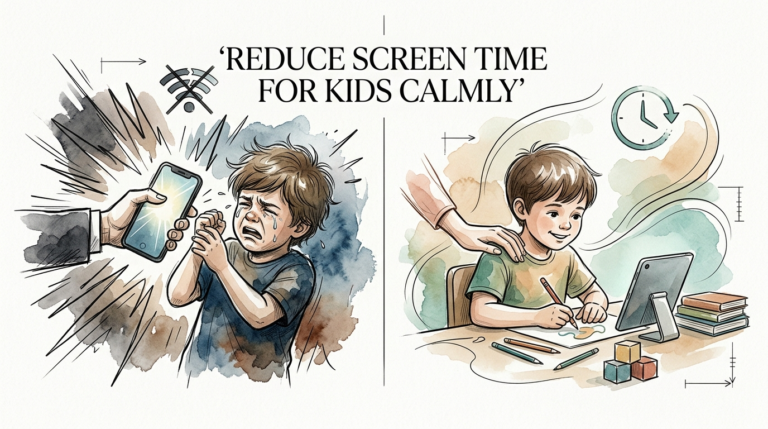
Finally, the poster acts as a neutral third party. When you tell a child they can’t have their tablet, it can feel like a personal attack or an arbitrary decision. When the poster shows that the “Outside Play” box isn’t checked yet, the “No” comes from the system, not the person. This significantly reduces the likelihood of an emotional meltdown.
Benefits of the Visual Schedule Approach
The primary benefit is consistency. One of the biggest mistakes parents make is being firm one day and giving in the next because they are tired. The poster doesn’t get tired. It stays the same every day, which provides the predictability children need to feel secure.
Another major advantage is the development of autonomy. When a child knows exactly what is required to earn their screen time, they stop asking you for permission and start managing their own time. They learn that their actions directly control their rewards—a vital life skill that extends far beyond the iPad.
Beyond the behavioral benefits, a structured poster helps ensure your child meets developmental milestones. By mandating time for physical activity and social interaction, you are protecting the “human” parts of their growth that screens often replace. This leads to better sleep, improved concentration, and more stable moods.
Common Mistakes and Pitfalls
The most frequent error is making the poster too complicated. If there are 15 things a child has to do before they can watch a 20-minute show, they will likely become overwhelmed and stop trying. Keep the daily checklist to 5-7 manageable items that can be completed within a reasonable timeframe.
Another pitfall is using screen time as a bribe rather than a scheduled part of the day. A bribe is reactive: “If you stop crying, I’ll give you the phone.” An earned system is proactive: “Once your chores are done, you have your 30 minutes.” Bribing teaches kids to use big emotions to get what they want; a poster teaches them to use discipline.
Inconsistency is the final “system killer.” If you have a poster but let them skip the rules on weekends or because you have a headache, the system loses its authority. If you need a “Weekend Mode,” create a separate, slightly more relaxed version of the poster for those days so the concept of “following the plan” remains intact.
Limitations: When the Poster Isn’t Enough
A visual guide is a tool, not a cure-all. It cannot fix a deep-seated digital addiction or replace active parental supervision. If a child is consistently aggressive or unable to function without a device, you may need a “digital detox” period where all screens are removed for several weeks to reset their dopamine receptors.
Environmental factors also play a role. If the house is filled with screens that are always on in the background, a small poster on the fridge will have limited impact. The home environment needs to support the poster’s goals—for example, by having a designated “tech basket” where all devices live when they aren’t being used according to the schedule.
Age is another constraint. While a 5-year-old might respond well to icons and stickers, a 15-year-old will find that patronizing. For older kids and teens, the “poster” should transition into a Family Media Contract that focuses on privacy, safety, and time management rather than just basic hygiene and chores.
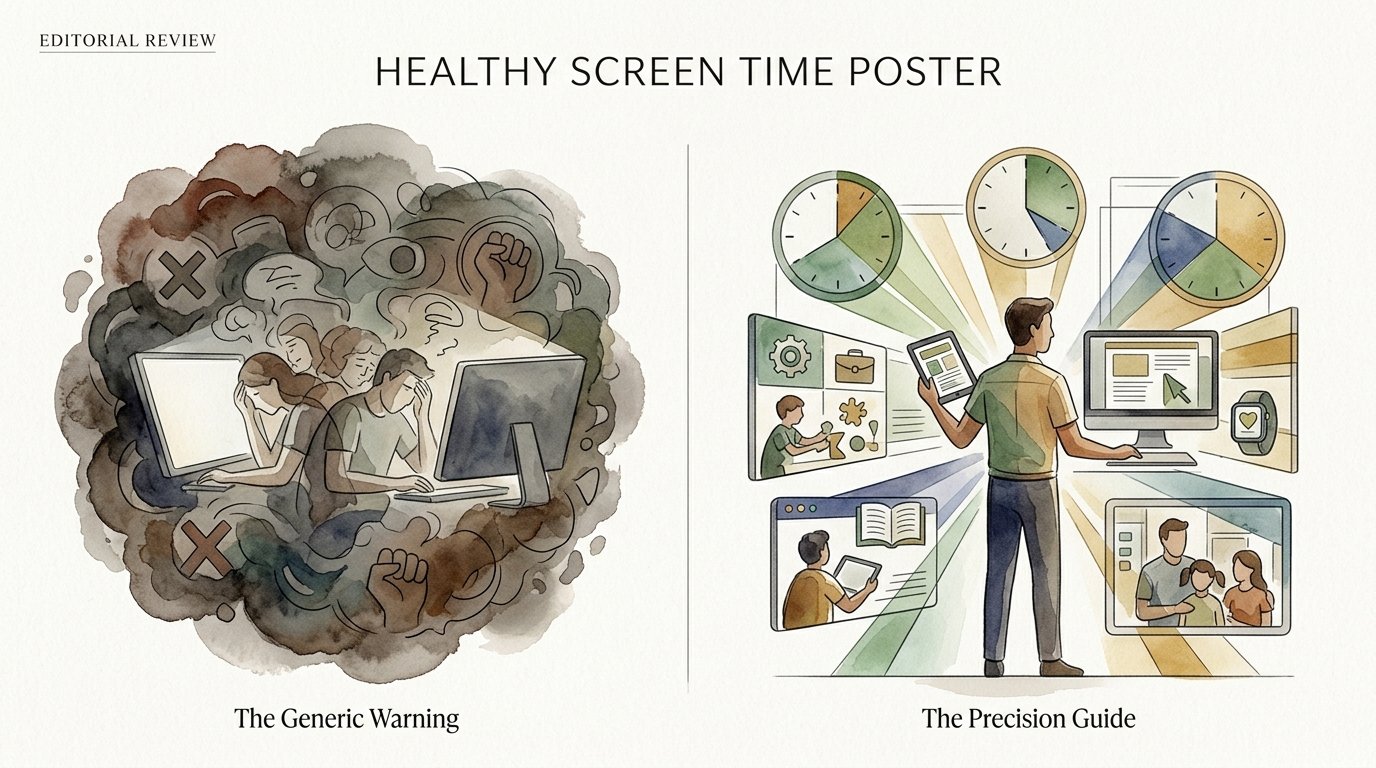
The Generic Warning vs. The Precision Guide
Most families operate on “The Generic Warning”—vague, verbal threats that escalate until someone starts shouting. Switching to “The Precision Guide” changes the entire atmosphere of the home.
| Feature | The Generic Warning | The Precision Guide (The Poster) |
|---|---|---|
| Source of Authority | Parent’s current mood. | The established, visible house rules. |
| Clarity | Vague (“Not too long today”). | Specific (“30 mins after reading 2 chapters”). |
| Child’s Role | Passive/Pleading. | Active/Responsible. |
| Emotional Tone | High friction/Frequent arguments. | Low friction/Predictable outcome. |
| Outcome | Negotiation fatigue for the parent. | Increased independence for the child. |
Practical Tips for Instant Success
To make your healthy screen time poster stick, placement is everything. Don’t hide it in a folder. Mount it at the child’s eye level in a high-traffic area, like the kitchen or the hallway leading to their bedroom. This makes it impossible to ignore.
Use a visual timer in conjunction with the poster. Devices like “Time Timers” show a red disk that disappears as time elapses. For children who don’t yet understand the abstract concept of “30 minutes,” seeing the red wedge get smaller helps them prepare for the transition when the screen goes away.
Involve your kids in the creation of the poster. If they help choose the icons or decide which chores go on the list, they will have “buy-in.” They are no longer following your rules; they are following the family rules that they helped build. This significantly increases compliance.
Update the poster seasonally. What works in the winter (more indoor creative play) might not work in the summer (more outdoor time). Keeping the poster fresh prevents it from becoming background noise and ensures it stays relevant to the child’s changing interests and school schedule.
Advanced Considerations for Long-Term Digital Wellness
As your children grow, the poster should evolve to include “Quality of Content” tiers. Not all screen time is equal. You might decide that educational apps, video calls with grandparents, or coding lessons don’t “count” against their daily recreational limit. This teaches them to distinguish between passive consumption (scrolling) and active creation or connection.
Consider implementing a “Tech-Free Tuesday” or a similar designated screen-free day. This helps the entire family—parents included—detach from the digital world. Use the poster to suggest alternative activities for that day, like board games, cooking together, or a “mystery adventure” outside.
For older practitioners, look into Screen Time Currency. Instead of just “30 minutes a day,” kids can “earn” tokens through extra chores or academic achievements. They can then “spend” these tokens throughout the week. This introduces basic financial literacy and delayed gratification, as they may choose to save their tokens for a longer gaming session on the weekend.
Example Scenario: The “First-Then” Morning
Imagine a typical Saturday morning. In many homes, the child wakes up and immediately asks for the TV. This starts a cycle of “No,” followed by whining, followed by the parent giving in just to get 20 minutes of peace.
With the Precision Guide Poster:
1. The child wakes up and sees the poster on the fridge.
2. The poster says: First (Eat breakfast, Get dressed, Clear your plate), Then (30 minutes of Minecraft).
3. The child completes the three tasks without being asked because they want the reward.
4. The child shows the parent their completed checklist.
5. The parent sets the visual timer for 30 minutes.
6. When the timer goes off, the child knows the “deal” is done. They move to the next item on the poster: “Outdoor Play.”
This scenario replaces a 20-minute argument with 20 minutes of productive activity and a calm transition into digital play.
Final Thoughts
A healthy screen time poster is more than just a list of rules; it is a framework for a more peaceful home. By externalizing your expectations and providing a clear path to success, you empower your children to take ownership of their habits. This shift reduces parental stress and helps kids develop the self-regulation skills they will need for the rest of their lives.
Transitioning from verbal commands to a visual system requires an initial investment of time and a commitment to consistency. However, the payoff—fewer arguments, better habits, and a healthier relationship with technology—is well worth the effort. Start simple, be consistent, and let the poster do the hard work of “refereeing” your home.
Don’t wait for the next big argument to change your strategy. Download a template or grab some poster board today. Once the system is in place, you will wonder how your family ever managed without it. Deepening your understanding of these visual systems can open doors to other positive parenting techniques that foster independence and cooperation.
Sources
1 timetimer.com | 2 abajourney.com | 3 sunshine-parenting.com | 4 focusflorida.com | 5 kqed.org | 6 superconnected.technology | 7 myhspediatrics.com | 8 mayoclinic.org | 9 aao.org | 10 cacfp.org | 11 thekids.org.au | 12 instrucko.com