Durable Travel Journals For Kids
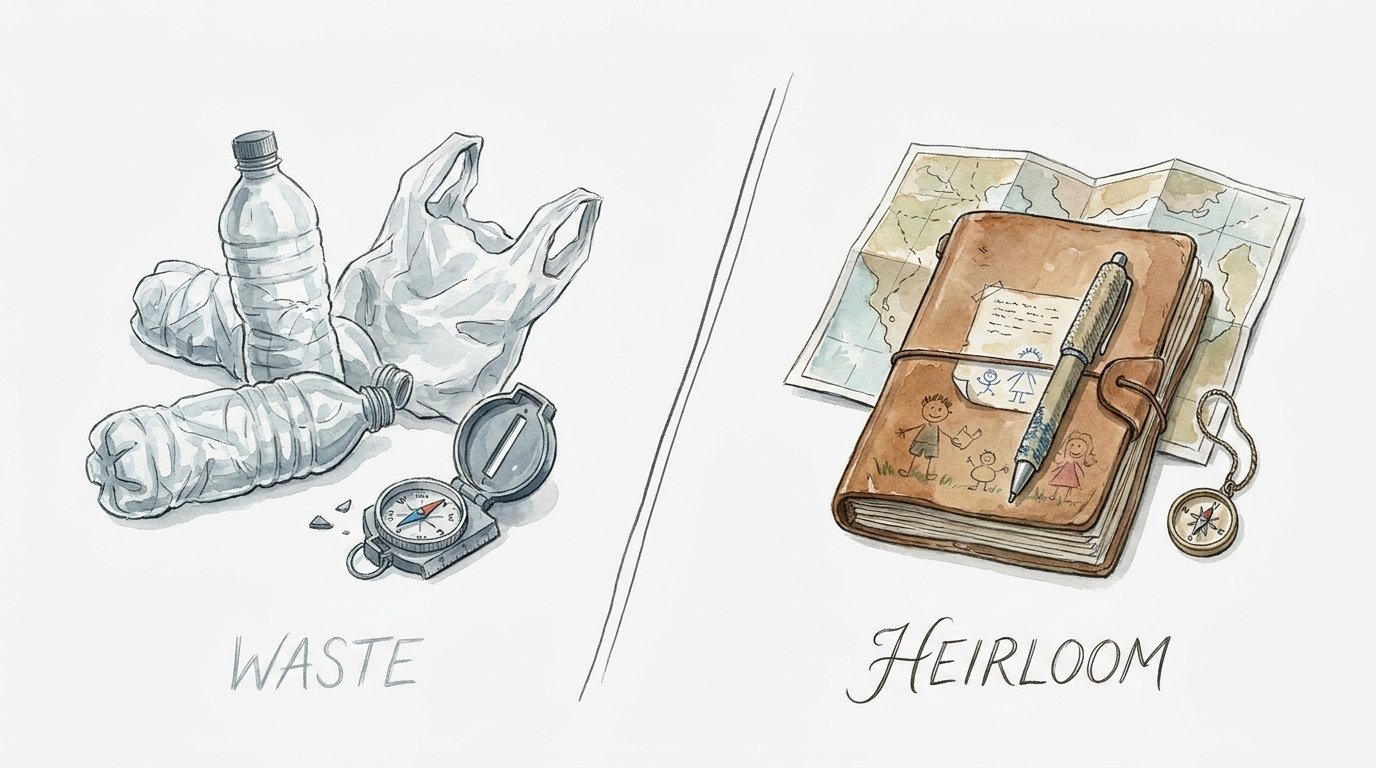
Will their vacation memories end up in a landfill or on a library shelf? The plastic trinkets from the gift shop will be broken by next Tuesday. A high-quality travel journal is a time machine that grows more valuable every decade. Give them a tool that survives to see their own grandchildren.
Traveling with children is an investment in their world view and cognitive growth. Yet, without a way to anchor those experiences, the sights and sounds of a week in Rome or a weekend in the woods can fade into a blurry montage of snacks and car rides. A durable journal transforms a fleeting trip into a permanent legacy.
Durable Travel Journals For Kids
A durable travel journal for kids is a specialized notebook designed to withstand the physical demands of childhood exploration while preserving written and visual memories for decades. Unlike standard school notebooks, these journals prioritize high-quality materials like full-grain leather covers, heavy-weight archival paper, and reinforced bindings. They exist to bridge the gap between a simple activity book and a family heirloom.
In real-world situations, these journals act as a child’s personal command center. They are shoved into overstuffed backpacks, dropped on hiking trails, and stained with gelato. A truly durable journal handles this “character-building” wear and tear without falling apart. While a flimsy spiral notebook might lose its pages by the flight home, a high-quality journal becomes more beautiful as it ages, developing a patina that tells its own story.
Parents use these tools to encourage “active” rather than “passive” travel. Instead of merely consuming a destination, a child with a journal is prompted to observe, collect, and reflect. This creates a tangible record that can be revisited during family dinners twenty years from now, sparking memories that would otherwise be lost to time.
How to Choose and Start a Journaling Practice
Selecting the right vessel is the first step in ensuring the habit sticks. For younger children, look for journals with guided prompts like those from Mudpuppy or Lonely Planet Kids, which provide structure for kids who might feel intimidated by a blank page. For older children or teens, a refillable leather system like a Midori Traveler’s Notebook allows them to swap out inserts as they fill them, keeping the same protective cover for a lifetime.
Establishing a routine is essential for success. Set aside fifteen minutes at the end of each day or during transit times, such as on a train or plane, for “quiet reflection.” This helps children process the sensory-rich environments they encounter, which research shows activates neural pathways associated with memory formation.
Equip your child with a “journaling kit” that goes beyond just a pen. Include a small glue stick, a few rolls of washi tape, and a set of fine-liner pens that won’t bleed through the paper. Having these tools ready in a dedicated pouch makes the process feel like a special ritual rather than a homework assignment.
The Benefits of Physical Journaling Over Digital Alternatives
Handwriting provides cognitive advantages that typing on a tablet simply cannot match. The physical act of forming letters improves memory retention and helps children process complex emotions. When a child writes about a challenging hike or a strange new food, they are practicing self-expression and building resilience through reflection.
Physical journals serve as “sensory anchors.” While a digital photo is a flat image, a journal page might contain a pressed flower from a meadow, a textured ticket stub, or a smudge of sand from a distant beach. These tactile elements make the memories more vivid and enduring.
Long-term preservation is the ultimate advantage. Digital files can become corrupted, lost in the cloud, or locked behind forgotten passwords. A physical book made with acid-free paper is a “low-tech” solution that requires no batteries and no updates. It is a reliable archive of a child’s evolving voice and artistic style throughout their upbringing.
Challenges and Common Mistakes to Avoid
One frequent pitfall is the “monotony trap.” Many kids’ journals use repeated page layouts that ask the same questions every day—destination, weather, and best part of the day. For a long trip, this can become boring. To avoid this, encourage your child to skip sections or use blank “sketch” pages to break the routine.
Perfectionism is another major hurdle. Many children (and parents) want the journal to look “Instagram-perfect.” This pressure can make a child reluctant to start. Remind them that messy handwriting, misspelled words, and crookedly pasted tickets are part of the charm. These “imperfections” capture their age and stage of life more accurately than a polished presentation would.
Using low-quality writing tools can also ruin the experience. Cheap pens often leak or fade over time. If the goal is a family heirloom, invest in archival-quality, fade-resistant ink. This ensures that the heartfelt notes written by an eight-year-old remain legible when they are eighty.
Limitations and Realistic Constraints
A physical journal may not be the best choice for every single trip or every type of child. For extremely fast-paced itineraries where every minute is scheduled, finding time for thoughtful entries can feel like a chore. In these cases, a digital app like Day One or One Second Everyday might be more practical for capturing quick snippets.
Very young children who have not yet mastered fine motor skills may struggle with traditional journaling. While they can draw pictures, the burden of “documentation” often falls on the parent to transcribe their stories. If this feels like too much work for the adult, it is okay to wait until the child is slightly older to start a dedicated travel journal.
Environmental conditions also play a role. If your travels involve heavy water activities, such as multi-day rafting or extreme humidity, a standard paper journal will suffer. For these specific niches, look for specialized “Rite in the Rain” notebooks that use waterproof paper to ensure the entries survive the elements.
Comparing Guided vs. Blank Travel Journals
| Feature | Guided Journals | Blank / Dot Grid Journals |
|---|---|---|
| Best For | Ages 5–10; Beginners | Ages 11+; Creative/Artistic kids |
| Structure | Pre-printed prompts and activities | Open pages for sketching and writing |
| Longevity | Usually limited to one or two trips | Can span many years and trips |
| Complexity | Low (fill-in-the-blank) | High (requires imagination) |
Practical Tips for a Better Journaling Experience
Use the “Lowlight” technique to build emotional intelligence. Encourage children to write about something that didn’t go as planned—a missed train or a rainy day. Reflecting on how the family handled the situation teaches resilience and makes for a much more interesting story later on.
Maximize the use of built-in pockets. If the journal doesn’t have one, glue a small envelope to the inside back cover. This is the perfect place to store loose items like currency from different countries, postcards, or sugar packets from a memorable cafe.
Incorporate local language and culture into the pages. Have your child learn five local words (like “hello” or “thank you”) and write them in the journal. They can also draw the national flag or research a local animal to document. This turns the journal into a mini-textbook that makes learning feel like an adventure.
Advanced Considerations for Long-Term Preservation
For serious practitioners who want their journals to last a century, paper quality is the most critical factor. Look for paper that is labeled “acid-free” or “archival-grade.” Acidic paper will yellow and become brittle over time, eventually crumbling. Paper weight, measured in GSM (grams per square meter), should be at least 100 or higher to prevent ink from bleeding through to the other side.
The binding method also determines durability. “Smyth-sewn” bindings use thread to hold groups of pages together, allowing the book to lay flat without the pages falling out. This is superior to “perfect binding,” which uses only glue and is prone to cracking in extreme temperatures or after years of use.
If you choose a leather cover, understand the tanning process. Vegetable-tanned leather is often preferred for heirlooms because it is processed using natural tannins and develops a much richer patina over time compared to chrome-tanned leather. It is also more environmentally friendly, aligning with the goal of reducing plastic waste.
Real-World Scenarios
Imagine a family trip to a National Park. A child with a durable journal can spend the afternoon sketching a Douglas Fir or rubbing the texture of a fallen leaf onto a page. They might record the temperature each morning or list the animals they spotted through binoculars. Ten years later, that journal isn’t just a book; it’s a field guide to their own childhood curiosity.
Contrast this with a high-energy European city break. In a bustling city like Paris, the journal becomes a scrapbook of urban life. The child might stick in a Metro ticket, draw a caricature of a street performer, or write a “review” of the best croissant they found. The journal provides a much-needed moment of calm in a busy day, allowing the child to decompress and process the overwhelming sensory input of a new culture.
Final Thoughts
Investing in a high-quality, durable travel journal is one of the simplest ways to increase the long-term value of your family vacations. It moves the focus away from disposable souvenirs and toward the preservation of personal growth and shared experiences. These books serve as the anchors of family history, capturing the voices of children before they grow up and change.
Start small by choosing a journal that matches your child’s age and interests. Don’t worry about making it perfect; just focus on making it a habit. The goal is to create a tool that survives the trip and lives on a shelf for decades, ready to transport its owner back to the magic of their early adventures.
Encourage your children to see themselves as explorers and historians. By giving them a place to record their world, you are teaching them that their observations and memories have lasting value. In a world of fleeting digital updates, a well-worn travel journal is a powerful statement of what truly matters.
Sources
1 insidethetravellab.com | 2 milanastravels.com | 3 craftandantlerco.com | 4 packhacker.com | 5 classyleatherbags.com | 6 thebrokebackpacker.com | 7 eden.co.uk | 8 planetschooling.com | 9 worldhealth.net | 10 travelynnfamily.com | 11 travelislife.org | 12 mom2.com | 13 exquisitexchange.com | 14 allytravels.com | 15 holiday-golightly.com | 16 wanderlustandwetwipes.com