How To Handle Toddler Boredom Without Screens
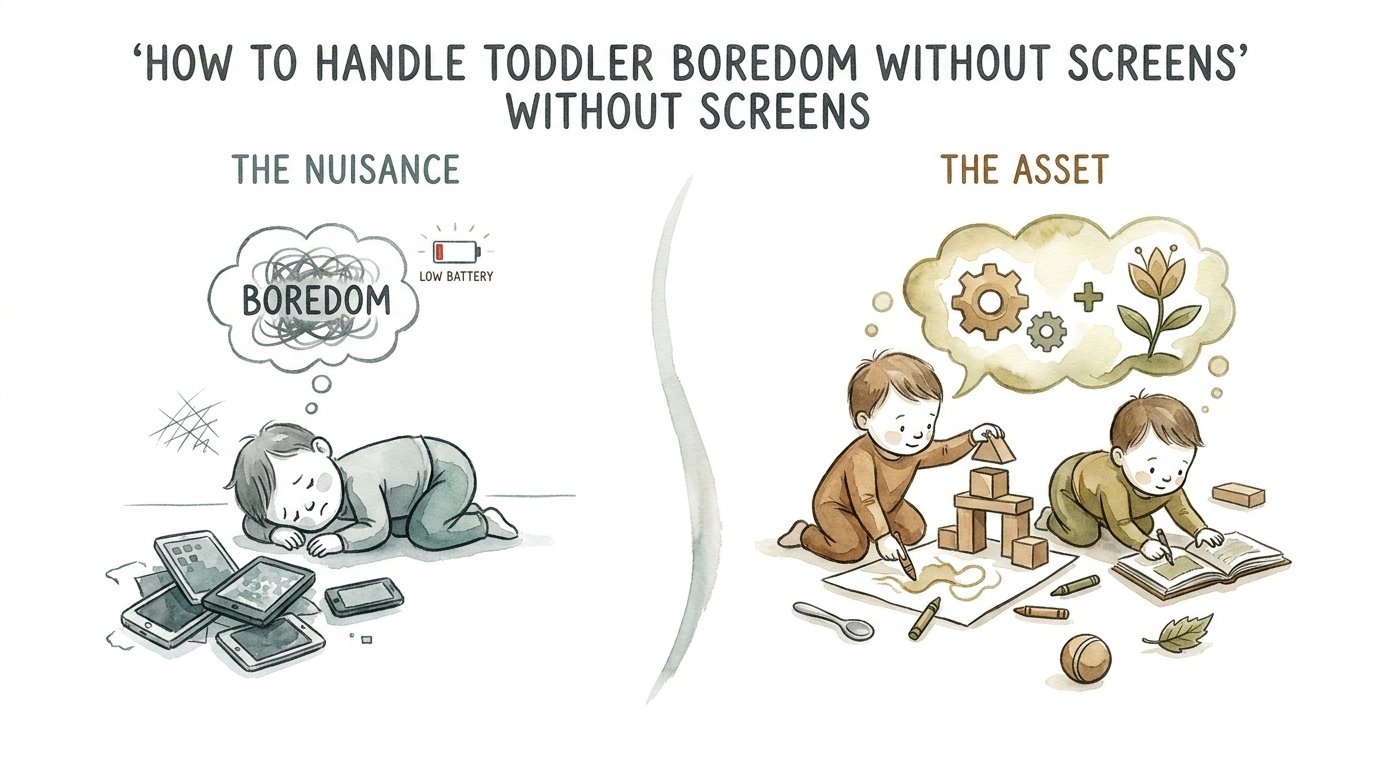
What if the sound of ‘I’m bored’ was actually the ignition switch for your child’s genius? We’ve been trained to view a child’s boredom as a fire that needs to be put out with a screen. But boredom isn’t the enemy; it’s the vacuum that draws in creativity. When you stop filling the void with pixels, they start filling it with possibilities.

Modern parenting often feels like a 24/7 entertainment service. We feel the heavy weight of guilt the moment a toddler wanders aimlessly. Our hands instinctively reach for a tablet or a remote to “help” them. This reflex is well-intentioned but robs our children of a vital developmental milestone. Boredom is the bridge between passive consumption and active creation.
Stepping back and allowing the “vacuum” to exist is a radical act of love. It tells your child that they are capable of entertaining themselves. It signals that their inner world is rich enough to sustain them. This article will guide you through the transition from screen-dependence to creative independence.
How To Handle Toddler Boredom Without Screens
Toddler boredom is a state of psychological “waiting” where a child lacks a clear external stimulus to guide their actions. In a world of instant digital gratification, this state feels like a crisis. However, handling it without screens means resisting the urge to provide a quick fix. You are not an animator; you are a facilitator.
Research from experts like Dr. Sandi Mann suggests that boredom stimulates the brain to seek out creative solutions. When the external world stops shouting for attention, the internal world begins to whisper. For a toddler, this might look like staring at a patch of sunlight or pushing a wooden block around for five minutes. These seemingly “empty” moments are actually periods of intense neurological activity.
Real-world situations often trigger this “I’m bored” reflex. It happens during grocery store lines, long car rides, or while you are trying to prepare dinner. The typical response is to hand over a smartphone to keep the peace. Handling this screen-free involves preparing the environment rather than the entertainment. It means having “loose parts” or simple tools available that invite exploration rather than dictate play.
Understanding this concept requires a shift in perspective. View boredom as an invitation. It is the moment where the child’s brain says, “Nothing is happening, so I must make something happen.” This is the birth of agency. When you remove the screen, you remove the crutch that prevents them from walking on their own creative feet.
The Science of the Bored Brain
Understanding why boredom matters requires a look under the hood. When a child is bored, their brain doesn’t just go dark. It switches to the Default Mode Network (DMN). This is a specific brain circuit responsible for daydreaming, imagination, and self-reflection. Digital screens often keep the brain in a state of “task-positive” focus, which is highly stimulating but leaves no room for the DMN to activate.
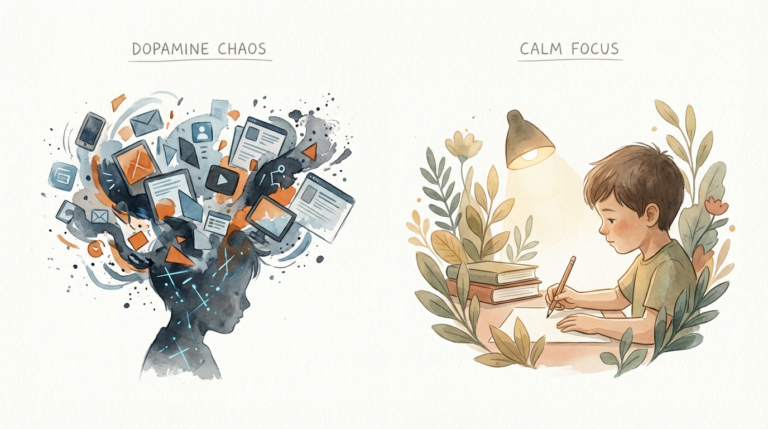
Dopamine plays a massive role in this cycle. High-reward activities like YouTube or fast-paced games flood the brain with dopamine. This creates a high baseline. When the screen turns off, the “dopamine drop” makes real life feel dull, irritating, and slow. This is why kids often have meltdowns after screen time; their brains are literally struggling to adjust to a lower-stimulation environment.
Creative play, by contrast, provides a “slow-burn” dopamine release. It comes from the satisfaction of solving a problem or finishing a drawing. This type of reward builds patience and persistence. It trains the brain to find joy in effort rather than just consumption. This neurological shift is the foundation of long-term focus and executive function.
How It Works: Transitioning to Screen-Free Play
Transitioning away from the “screen fix” is a process of retraining the brain. It does not happen overnight. If your toddler is used to 2 hours of TV a day, taking it away suddenly will result in a period of “detox.” Expect some resistance. This is a sign that the brain is learning to re-regulate its reward systems.
Start by creating a “Low-Dopamine Environment.” This means simplifying the playroom. Too many toys can be as overstimulating as a screen. Use the “Toy Rotation” method. Keep only a few open-ended items out—like blocks, silks, or cardboard boxes. This forces the child to think more deeply about how to use what they have.
The “Wait 15 Minutes” rule is a powerful tool. When your toddler complains of boredom, acknowledge it calmly. Say, “I can’t wait to see what your brain comes up with!” Then, do not provide a solution. Set a timer if you have to. Often, within 10 to 15 minutes, the child will find a way to engage with their surroundings. They might start lining up their shoes or talking to a stuffed animal.
Provide “Loose Parts” instead of “Finished Toys.” A toy that only does one thing (like a plastic car that makes noise) has a short play life. A basket of pinecones, some fabric scraps, or a set of measuring cups can be anything. These items invite the child to impose their own meaning on the world. This is the essence of independent play.
Benefits of Letting Your Toddler Be Bored
Resilience is perhaps the greatest benefit of boredom. When a child has to navigate the discomfort of “nothing to do,” they are practicing emotional regulation. They are learning that they can handle frustration. This builds a “mental muscle” that will serve them in school, relationships, and their future careers.
Creativity is the natural byproduct of a bored mind. Without a pre-scripted show to follow, toddlers begin to invent. They develop symbolic play—the ability to let a block represent a phone or a sandwich. This abstract thinking is a core component of cognitive development. It is the precursor to advanced problem-solving and innovation.
Executive function skills, such as planning and organization, are also sharpened. When a child decides to “build a fort,” they have to figure out which pillows to use and how to keep the blanket from falling. They are practicing goal-oriented behavior without adult interference. This self-directed learning is far more valuable than any “educational” app.
Long-term focus is another “quiet” benefit. Screens are designed to capture attention through rapid changes. Boredom allows a child to engage in “deep play.” This is the state where they become so absorbed in an activity that they lose track of time. Developing this capacity for deep focus is a competitive advantage in a world of constant distraction.
Common Challenges and Mistakes
Parental guilt is the biggest obstacle. We feel like we are “failing” if our children aren’t constantly happy or learning something. This often leads to over-scheduling. We fill every gap with classes, playdates, or “educational” screen time. This deprives the child of the very downtime they need to develop their own interests.
Intervening too early is a frequent error. When we see a child struggling or looking aimlessly, our instinct is to “help” by suggesting a specific activity. This resets the boredom clock. Every time you provide the solution, you take away their opportunity to find it themselves. Your role is to be a “secure base,” not a cruise director.
Using screens as a reward for “not being bored” can also backfire. This reinforces the idea that real life is just a waiting room for the digital world. It keeps the dopamine baseline high. Instead, celebrate the creative things they do during their “bored” time. Praise the process, not just the result.
Ignoring the “connection cup” is another pitfall. Sometimes, “I’m bored” is actually code for “I need attention.” If you haven’t spent focused time with your child, they will seek the easiest form of connection—usually by complaining. Ensure you have “special time” with them so that when you ask them to play independently, their emotional needs are already met.
Limitations: When Boredom Isn’t the Answer
Context matters when it comes to boredom. It is a tool for development, not a universal solution for every situation. For example, a toddler who is genuinely hungry, tired, or sick cannot be expected to “use their imagination.” In these cases, their physiological needs must be met before they can engage in creative play.
Environmental constraints can also limit the effectiveness of boredom. If a child is strapped into a car seat for six hours with zero tools, they aren’t being “bored for creativity”—they are simply being restrained. In high-stress or highly restrictive environments, some form of structured activity or even limited screen use might be a practical necessity.
Safety is the non-negotiable boundary. A bored toddler might decide to “explore” the kitchen cabinets or climb a bookshelf. You must ensure the environment is “yes-spaced.” This means the area is baby-proofed so that they can follow their curiosity without risking injury. You cannot leave a toddler to their own devices in an unsafe space.
Developmental delays or neurodivergence may also require a different approach. Some children may need more scaffolding to learn how to play. For these children, total boredom might lead to high levels of anxiety rather than creativity. In these instances, “guided play” where you start an activity and then slowly withdraw is more effective.
Optional Comparison: Active Play vs. Passive Consumption
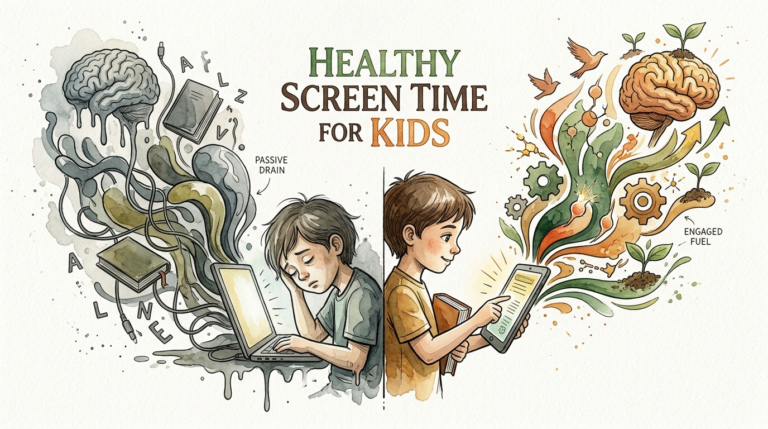
Understanding the difference between active play and passive consumption helps clarify why the “screen fix” is so detrimental. While both might look like a child is “occupied,” the internal processes are vastly different.
| Feature | Passive Consumption (Screens) | Active Play (Boredom-Led) |
|---|---|---|
| Neurological State | Task-positive, low DMN activation. | High DMN activation, imagination-rich. |
| Dopamine Type | Fast-hit, high-intensity rewards. | Slow-burn, effort-based satisfaction. |
| Skill Development | Reaction-based, limited agency. | Executive function, problem-solving. |
| Longevity | Stops the moment the screen is off. | Self-sustaining and grows over time. |
Practical Tips and Best Practices
Establish a “Boredom Station” in your home. This isn’t a toy box; it’s a collection of open-ended materials. Include things like masking tape, cardboard tubes, old clothes for dress-up, and safe kitchen utensils. When the “I’m bored” alarm sounds, point them toward the station and then walk away.
Implement a “Toy Rotation” system to keep things fresh. Divide your child’s toys into three bins. Keep only one bin out at a time. Rotate them every week. This prevents “choice paralysis” and makes “old” toys feel new again. It encourages the child to explore the depths of a few items rather than skimming the surface of many.
Model screen-free boredom yourself. If your child sees you reaching for your phone every time you have a spare minute, they will do the same. Let them see you reading a book, staring out the window, or working on a hobby. Your behavior sets the “baseline” for what is normal and acceptable in the house.
Use the “Invitation to Play” technique. If you know a “boredom period” is coming—like while you’re making a phone call—set out a simple scene. For example, put a few toy animals next to a bowl of water. Don’t say anything. Just leave it there. This “staged” environment provides enough of a spark to ignite their imagination without you directing the play.
Advanced Considerations for the Serious Practitioner
For those looking to dive deeper, consider the concept of “The Prepared Environment.” This is a cornerstone of Montessori philosophy. The idea is that the physical space should be designed to support independence. Lower the shelves so the child can reach their own supplies. Provide child-sized cleaning tools so they can “help” with household chores—a great boredom buster that builds real-world skills.
Neuroplasticity is at its peak during the toddler years. Every time your child successfully navigates a period of boredom, they are literally wiring their brain for autonomy. You are helping them build the neural pathways for self-regulation. This isn’t just about “keeping them busy”; it’s about physical brain architecture.
Think about “Loose Parts” theory. This concept, developed by architect Simon Nicholson, suggests that the more “variables” an environment has, the more creative it is. A playground with fixed equipment is less creative than a pile of dirt and some sticks. Apply this to your home. Prioritize materials that have no “right” way to be used.
Consider the long-term impact on “Digital Literacy.” A child who knows how to be bored is less likely to become a digital addict later in life. They will view screens as tools for specific tasks rather than an escape from the “unbearable” reality of being alone with their thoughts. This is a foundational life skill in the 21st century.
Scenarios: Theory in Action
The “Rainy Afternoon” scenario is a classic test. Instead of a movie marathon, try “The Cardboard Challenge.” Give your toddler a large delivery box and some crayons. Initially, they might complain or ask for help. Acknowledge their feeling: “It’s hard to figure out what to do when it’s raining!” Then, step back. Within twenty minutes, that box will likely become a cave, a spaceship, or a bed for their stuffed animals.
The “Kitchen Prep” scenario often leads to screen time. Instead, try “Functional Play.” Give your toddler a dull butter knife and some soft fruit, or a bowl of soapy water and some plastic cups. They aren’t “playing” in the traditional sense; they are engaging in the “work” of the home. This satisfies their natural desire for imitation and mastery, effectively ending the boredom loop.
The “Long Car Ride” can be handled with “Sensory Kits.” Instead of a tablet, provide a small bin with items like a magnifying glass, a spinning top, or a “find-it” bottle filled with rice and small charms. These items require active engagement and manual manipulation. They keep the brain in “discovery mode” rather than “autopilot mode.”
Final Thoughts
Boredom is not a problem to be solved; it is a gift to be unwrapped. By stepping back and letting the “vacuum” of unstructured time exist, you are giving your child the space to discover who they are. You are moving them from the role of a spectator to the role of a creator.
The transition to a screen-free approach to boredom requires patience and a shift in perspective. It demands that we tolerate our own discomfort with our child’s frustration. However, the rewards—resilience, creativity, and deep focus—are the most valuable assets a child can possess.
Start small today. The next time you hear “I’m bored,” smile. Welcome it as the beginning of something wonderful. Let the pixels fade so that their possibilities can finally shine.
Sources
1 safariltd.com | 2 first5california.com | 3 childmind.org | 4 joincoralcare.com | 5 buildingbrains.ca | 6 peaceathomeparenting.com | 7 kidsmentalhealthfoundation.org | 8 allforkids.org | 9 innovativeresources.org | 10 healthline.com | 11 thejacobsladdergroup.org | 12 betterscreentime.com | 13 pregnantchicken.com | 14 sf-stemful.com | 15 luriechildrens.org