Child Screen Overuse And Lack Of Imagination
If the screen goes black, does your child’s imagination stay on or shut down?
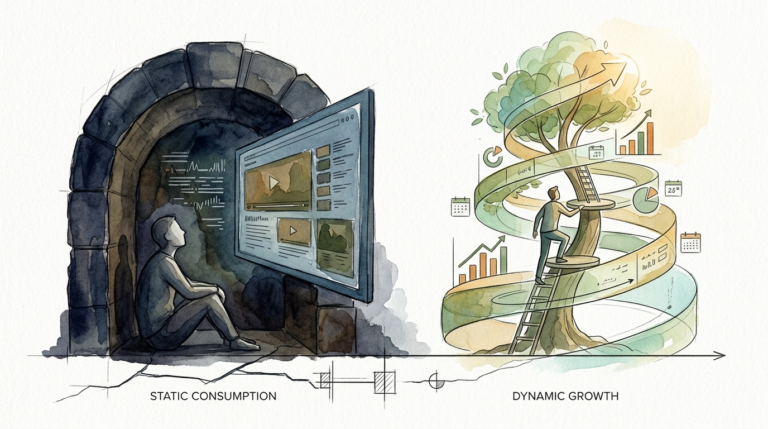
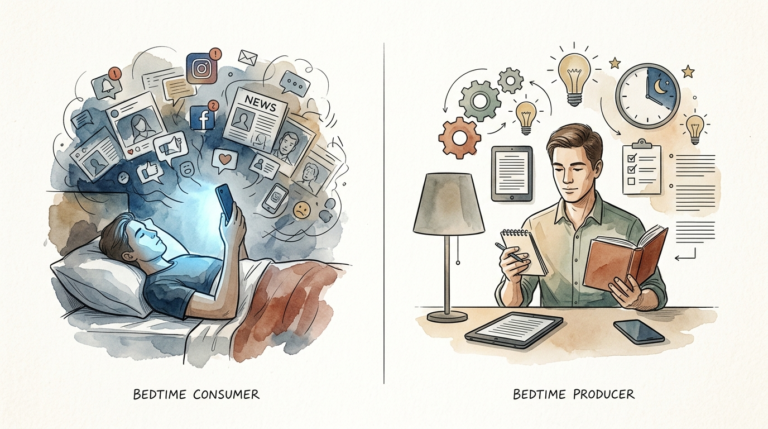
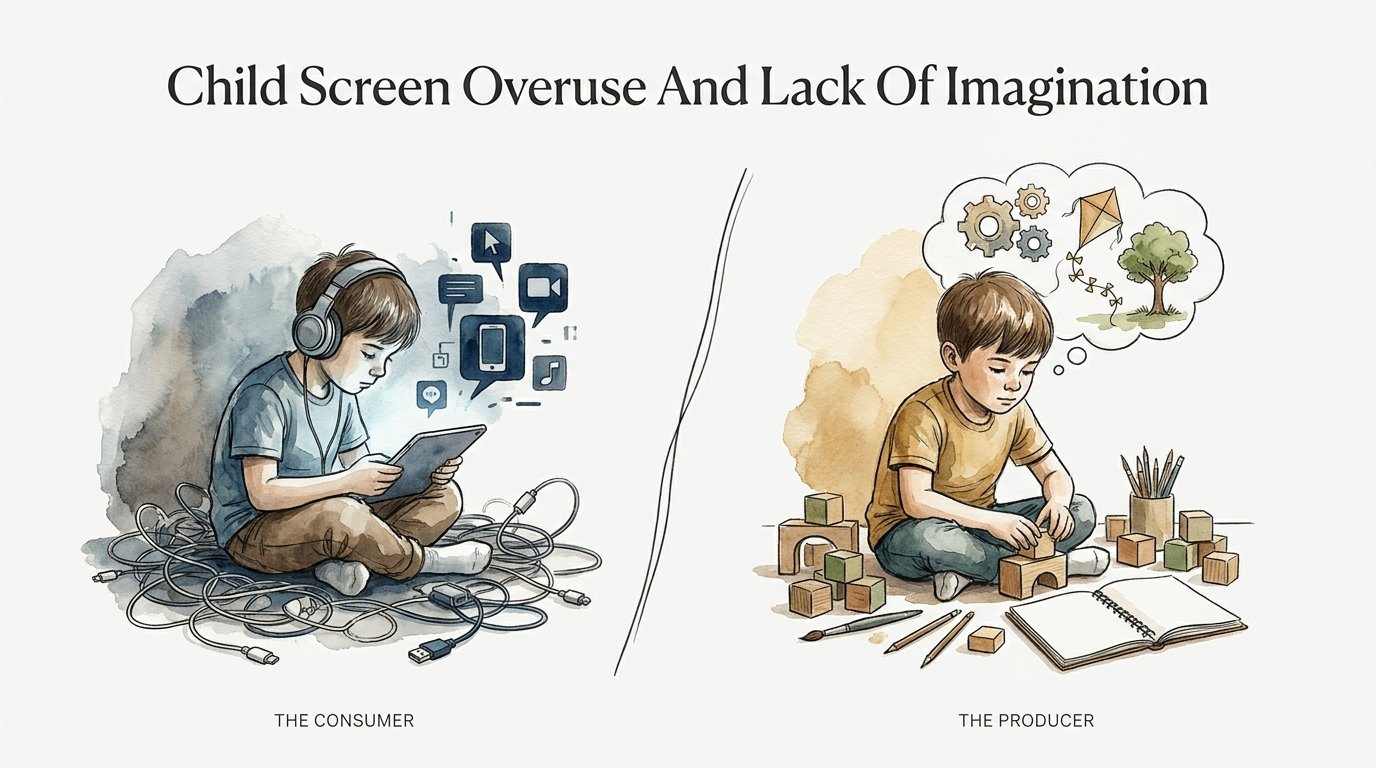
A producer uses tools to create reality. A consumer relies on products to fill the void. A major sign of screen overuse is the total collapse of ‘Internal Narrative’—the ability to look at a stick, a box, or a mud puddle and see a universe. If they need a screen to tell them the story, they’ve lost the power to write their own.
Many parents notice a strange shift in their children after long periods of digital use. The child who once built forts now sits staring at a blank wall, unable to decide what to do next. This isn’t just laziness. It is a biological response to a constant stream of external imagery that does the mental heavy lifting for them.
Child Screen Overuse And Lack Of Imagination
Child screen overuse refers to a state where digital consumption replaces active, unstructured play. This imbalance stunts the development of a child’s internal narrative. The internal narrative is the “mental movie” a child runs in their head when they play. It allows them to transform a simple object into a tool for adventure.
When a child consumes too much passive media, their brain stops practicing visualization. Research shows that high-quality imaginative play is a cornerstone of cognitive development. It helps children explore different scenarios and perspectives. Screens, however, provide pre-packaged stories. The child is no longer the “Producer” of the world; they are a “Consumer” of someone else’s.
This problem exists because screens offer a high-dopamine reward for zero effort. In the real world, a child must work to be entertained. They must invent characters, set rules, and build structures. On a tablet, the entertainment is delivered instantly. Over time, the brain becomes “wired and tired,” preferring the easy hit of a screen over the effort of imagination.
How the Internal Narrative Collapses
The brain has a specific system called the Default Mode Network (DMN). This network is responsible for daydreaming, reflection, and creative thought. The DMN activates when we are “doing nothing.” For a child, these are the moments of boredom that lead to their best ideas.
Screens often bypass this network. Fast-paced animations and instant feedback loops keep the brain in a state of constant external focus. This leaves no room for internal exploration. When the screen finally turns off, the child feels a sense of “brain fog” because their DMN hasn’t been practiced.
To rebuild this, children need to re-learn how to sit with their own thoughts. This process starts with removing the constant noise. You are essentially asking the brain to start “rendering” its own images again instead of downloading them. It takes time, and it often starts with a period of frustration.
Benefits of a Restored Imagination
Fostering an active internal narrative provides measurable developmental advantages. Children with strong imaginations are better problem solvers. They can visualize multiple outcomes to a situation before they act. This is a key part of executive function, which governs planning and emotional control.
A producer mindset builds resilience. When a child is creating their own fun, they encounter obstacles. The “fort” might fall down, or the “spaceship” might need more parts. Solving these micro-problems builds a sense of agency. They learn that they can change their environment through effort.
Strong imagination also correlates with better language skills. Children who engage in “dramatic play” use more complex vocabulary. They narrate their actions, which helps them process emotions and social cues. This internal dialogue becomes the foundation for self-regulation later in life.
Challenges and Common Mistakes
One of the biggest mistakes is the “educational app” trap. Many parents believe that as long as the screen is teaching math or phonics, it is beneficial. While these apps have their place, they are still structured experiences. They don’t allow for the open-ended “nothingness” that sparks true creativity.
Using screens as the primary tool for transitions is another hurdle. If a child gets a phone every time they sit in a car or wait for food, they never learn to observe their surroundings. They lose the ability to “people watch” or find patterns in the clouds. These small moments are where the internal narrative is practiced.
Many caregivers also fear boredom. When a child complains they have nothing to do, the instinct is to provide a solution. This robs the child of the chance to solve the “problem” of boredom themselves. Pushing through the initial discomfort of boredom is the only way to reach the creative breakthrough on the other side.
Limitations and Environmental Constraints
We live in a digital-first world, and total avoidance is rarely realistic. Screens are part of modern education and social life. The goal isn’t necessarily zero screen time, but rather a healthy “media diet.” Factors like family schedules, living space, and neighborhood safety can limit outdoor play.
Digital literacy is also a required skill. A child who has never used a computer may struggle in a modern classroom. The challenge is finding the line between “tool” and “void-filler.” High-quality, interactive screen time—like learning to code or edit video—is vastly different from mindlessly scrolling through short-form videos.
Physical environment plays a role too. In small apartments or urban areas, children may not have the space to engage in “big” play. In these cases, imagination has to be fostered through smaller tools like drawing, building blocks, or reading together. The environment must support the shift from consumer to producer.
Comparison: Active Play vs. Passive Consumption
| Factor | Active/Producer Play | Passive/Consumer Screen Time |
|---|---|---|
| Brain State | Engaged, problem-solving, DMN active. | Passive, hyper-aroused, dopamine-seeking. |
| Skill Built | Executive function, resilience, visualization. | Observation only, limited motor skills. |
| Effort Level | High initial effort, high long-term satisfaction. | Zero effort, instant but fleeting pleasure. |
| Narrative Control | Child creates the story and rules. | Child follows a pre-set algorithm or script. |
| Social Aspect | Negotiation, role-playing, empathy. | Often solitary or “pseudo-social” (likes/comments). |
Practical Tips for Restoring Creative Play
Start by creating a “Low-Dopamine” environment. This doesn’t mean a boring house; it means a house full of “open-ended” tools. A toy with one button that makes one sound is a “closed” toy. A bucket of wooden blocks or a box of old clothes is an “open” tool. These items require the child to provide the meaning.
Implement a “Boredom Period” daily. Set aside one hour where no screens are allowed and you are not available to entertain them. They will likely complain for the first twenty minutes. This is the “detox” phase. Eventually, the brain’s survival instinct for entertainment will kick in, and they will find something to do.
Use the “Narration Technique” instead of giving directions. If you see your child playing with a truck, don’t ask “Where is the truck going?” This inserts your narrative into theirs. Instead, simply describe what you see: “I see the truck is moving over the bumpy rug.” This validates their world without taking the wheel.
Advanced Considerations for Serious Practitioners
Neuroplasticity is your greatest ally. The brain of a child is incredibly adaptable. Even if a child has been over-stimulated for years, the neural pathways for imagination can be rebuilt. This is often called “rewiring.” It requires consistency and a gradual reduction of high-stimulation input.
Watch for “Cortical Thinning” research. Some studies suggest that extreme screen overuse in very young children can lead to structural changes in the brain’s cortex. This area is responsible for critical thinking. By prioritizing “green time” (nature) and “tactile time” (hands-on work), you help maintain the density and health of these brain regions.
Consider the “1:3 Rule.” For every hour of passive consumption, aim for three hours of “producer” activity. This doesn’t have to be formal. It can be drawing, building, cooking, or helping with chores. The goal is to keep the ratio skewed toward creation rather than absorption.
Example Scenarios
Imagine two children given a large cardboard box. Child A has a high screen diet. They might sit in the box for a moment, then ask for a tablet to watch a video *about* people in boxes. They see the box as a container, nothing more. Their internal narrative is dormant.
Child B has a balanced media diet and spends time in unstructured play. They see the box and immediately tip it on its side. To them, it’s a cave. Then it’s a shop. Then it’s a shield. They are narrating a story as they go. They are solving the problem of “what is this?” with their own mind.
The difference isn’t intelligence; it’s practice. Child B has a practiced DMN. They are comfortable with the “rendering” process of the mind. They don’t need a 4K display to see a dragon; they see it in the texture of the cardboard.
Final Thoughts
The collapse of a child’s internal narrative is a quiet crisis, but it is one that can be reversed. When we trade screen time for “boredom time,” we aren’t just taking something away. We are giving them back the keys to their own kingdom. A child who can entertain themselves with a stick is a child who will one day solve complex problems with nothing but their mind.
Every time the screen goes black, an opportunity begins. Encourage them to look at the world as a series of tools rather than a series of products. Whether it is a mud puddle or a pile of laundry, there is a story waiting to be written.
The power to create is far more satisfying than the power to consume. Start small, stay consistent, and watch as their imagination turns back on. You might find that the stories they come up with are far more interesting than anything a streaming service could offer.
Sources
1 techedupteacher.com | 2 medium.com | 3 markmerrill.com | 4 janpetersoncdc.com | 5 substack.com | 6 aksharshala.com | 7 kidsmentalhealthfoundation.org | 8 safariltd.com | 9 celebree.com | 10 thesparkbook.ai | 11 nadinedaycare.com | 12 kidsfirstservices.com | 13 renegadeeducator.com | 14 buildingbrains.ca | 15 learningrx.com | 16 innovativeresources.org | 17 workspaceforchildren.com | 18 theottoolbox.com | 19 nyp.org | 20 childrenandscreens.org | 21 wellspringprevention.org | 22 psychologytoday.com | 23 harvard.edu | 24 nih.gov