Free Sensory Play With Yard Waste
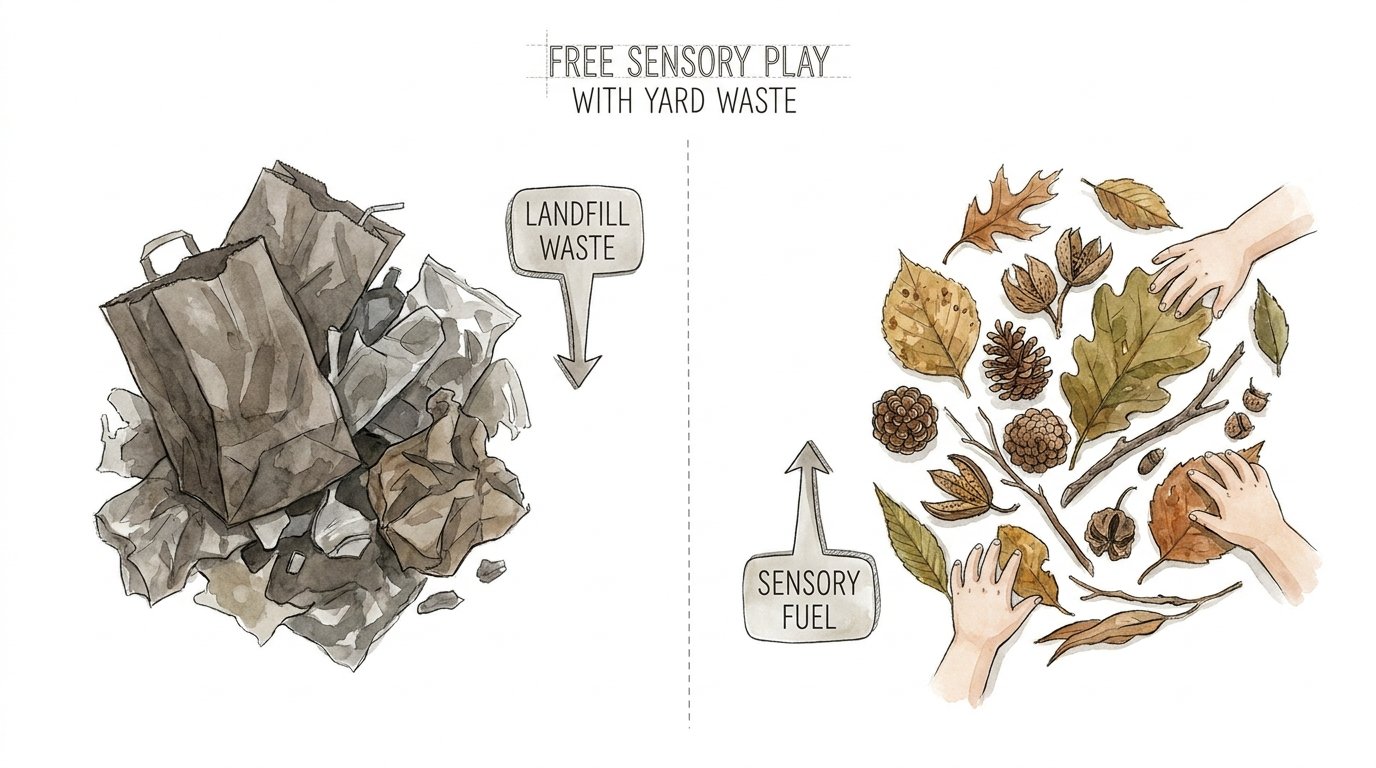
Your neighbor sees a disposal fee; a pro parent sees a weekend of sensory mastery. Stop bagging up your child’s best toys for the landfill. Dried leaves, pinecones, and grass clippings aren’t ‘waste’—they are high-octane sensory fuel. A single afternoon in a ‘crunch bin’ provides more auditory and tactile feedback than a thousand hours of digital apps. Best of all? The cleanup goes straight to the compost pile.

Creating an environment where nature serves as the primary teacher is the ultimate parenting “life hack.” You are not just saving money on expensive plastic kits. You are offering your child a multi-sensory experience that evolves with the seasons. Research shows that natural materials promote 45% better sensory processing than synthetic alternatives. This isn’t just play. It is neurological architecture.
Step into your backyard and look at the “debris.” Every stick is a tool. Every pile of leaves is a sound chamber. This guide will show you how to transform your yard waste into a developmental powerhouse.
Free Sensory Play With Yard Waste
Free sensory play with yard waste is the practice of using organic materials found in your immediate environment to stimulate a child’s development. This includes everything from the rough texture of pinecones to the “shhh-shhh” sound of dry leaves. Unlike manufactured toys, these materials have varied weights, temperatures, and micro-textures. These variables force the brain to work harder to process information.
This concept is used in Montessori and Waldorf education styles. It focuses on open-ended play where the child dictates the purpose of the object. A pile of grass clippings can be a “nest,” a “soup base,” or a “blanket.” In a world dominated by rigid plastic toys with pre-programmed sounds, yard waste offers a refreshing return to organic creativity.
Real-world application is simple. You collect what the trees drop and present it as an invitation to play. This method reduces your carbon footprint while providing a higher quality of engagement. Natural materials are 78% better for the environment than plastic toys and create significantly less household waste.
How to Set Up Your Yard Waste Sensory Stations
Setting up these stations is faster than unboxing a new toy. The key is to provide “invitations to play” rather than strict instructions. Use a shallow bin, a wooden tray, or even a designated corner of the grass.
The Autumn Crunch Bin
Gather dry, crispy leaves of different shapes and sizes. Place them in a large plastic tub or a wooden box. Add a mini-rake, some tongs, and a few small buckets. Encourage your child to “crunch” them with their hands or stomp on them. The auditory feedback from the breaking cell walls in the leaves is incredibly grounding for children who seek sound stimulation.
Pinecone Sorting and Scrubbing
Collect pinecones of various sizes. Set up two bowls: one with warm soapy water and one with a scrubbing brush. Children love “cleaning” the pinecones, which provides tactile input. For an added layer, have them sort the cones from smallest to largest or by the “tightness” of the scales. This builds early mathematical and observation skills.
The Grass Clipping “Nesting” Station
Freshly cut grass offers a unique olfactory experience. Place a large pile of clippings in a central location. Provide small plastic animals or “loose parts” like stones and sticks. Children will often build homes or nests, engaging in heavy-work activities like scooping and piling. This provides essential proprioceptive input to their joints and muscles.
Benefits of Natural Sensory Materials
The advantages of using yard waste over store-bought fillers are measurable. Occupational therapists often recommend these materials for their specific developmental impacts.
* Auditory Processing: The varied sounds of nature—crashing sticks, rustling leaves, and snapping twigs—help children learn to differentiate between frequencies.
* Tactile Discrimination: Feeling the difference between smooth river stones and rough bark builds a refined “neural map” of the world.
* Fine Motor Mastery: Picking up tiny acorns or peeling apart pinecone scales strengthens the small muscles in the hands needed for writing.
* Emotional Regulation: Nature is inherently soothing. Engaging with organic textures can lower cortisol levels and reduce stress in overstimulated children.
* Proprioceptive Input: Moving heavy piles of mulch or carrying buckets of water provides “heavy work” that helps children understand their body’s position in space.
Challenges and Common Mistakes
The biggest mistake parents make is being “too clean.” Sensory play is supposed to be messy. If you are constantly hovering with a wet wipe, the child loses the freedom to explore.
Another pitfall is ignoring the source of your materials. Never use yard waste from lawns that have been recently treated with chemical pesticides. These chemicals can be absorbed through the skin or ingested if the child puts their hands in their mouth. Children are more vulnerable to these toxins because their immune systems are still developing.
Avoid using materials from wood piles that have been sitting for years. These can harbor spiders, ticks, or mold. Always give your collected materials a quick “safety scan” for sharp thorns, animal droppings, or jagged edges before handing them over to a toddler.
Limitations: When Yard Waste Might Not Work
Environmental constraints can sometimes limit your options. If you live in an urban area with no yard, you might have to rely on public parks, which can be less predictable. Always check local regulations before removing large amounts of natural materials from public lands.
Weather is another factor. Wet leaves don’t crunch. Frozen ground doesn’t allow for digging. You may need to dry out your “harvest” in the garage before it is ready for an indoor sensory bin. Additionally, children with severe seasonal allergies may react poorly to grass clippings or high-pollen materials like certain tree blossoms.
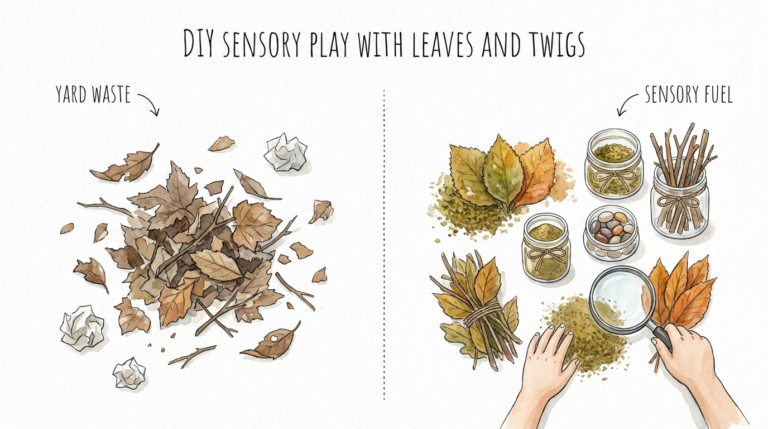
Comparison: Landfill Waste vs. Sensory Fuel
The following table compares traditional synthetic sensory bins with natural yard waste bins to help you see the practical differences.
| Feature | Synthetic Kits (Plastic) | Yard Waste (Natural) |
|---|---|---|
| Cost | $20 – $60 per kit | $0.00 (Free) |
| Sensory Variety | Uniform textures/sounds | Highly varied/Dynamic |
| End-of-Life | Landfill (Takes 100+ years) | Compost (Biodegrades) |
| Setup Time | Unboxing/Instructions | Scavenger Hunt (Active) |
| Chemical Risk | BPA, Phthalates, Microplastics | Pesticides (If used) |
Practical Tips and Best Practices
Maximizing the value of yard waste requires a bit of strategy. Use these tips to keep the experience fresh and organized.
* Seasonal Rotation: Change your materials every two weeks. Switch from spring blossoms to summer grass, then to autumn leaves and winter sticks.
* The “Shake and Dry” Method: If you collect damp leaves, place them in a pillowcase and shake them out before letting them air dry. This prevents mold growth.
* Add Real Tools: Instead of plastic shovels, use old metal kitchen ladles, wooden spoons, and stainless steel bowls. The weight and “clink” of metal add a professional sensory layer.
* Storage: Store your dry materials in clear, labeled bins with tight lids. This keeps out pests and makes it easy to grab a “Crunch Bin” on a rainy day.
* The Cleanup Game: Teach your child that when play is over, the “fuel” goes back to the earth. Taking the materials to the compost pile is a great way to close the loop on the activity.
Advanced Considerations for Serious Practitioners
If you want to take this to the next level, consider building a permanent “Sensory Garden” in a corner of your yard. Plant varieties of plants specifically for their waste products. Lamb’s Ear offers fuzzy leaves that feel like velvet even when dried. Bamboo provides hollow sticks that make incredible musical instruments.
Think about the “Proprioceptive Diet” of your yard. Can you create a digging pit filled with mulch instead of sand? Mulch provides more resistance, which is excellent for building muscle tone. Serious practitioners use these materials to create “heavy work” zones that help neurodivergent children regulate their energy levels before bedtime or school.
Consider the “Soundscape” of your yard. Planting ornamental grasses like Miscanthus provides long, dry stalks in the winter that hiss in the wind. These can be harvested and used for “auditory wands” that kids can wave through the air.
Realistic Scenario: The 15-Minute Yard Transformation
Imagine it is a Saturday morning. You have a mountain of yard work and a bored toddler. Instead of turning on the TV, you grab a shallow laundry basket. You spend five minutes raking a small patch of oak leaves into the basket.
You drop in three pinecones from the neighbor’s driveway and a handful of smooth stones from the flower bed. You hand your child a kitchen whisk and a pair of salad tongs. For the next hour, they are “cooking” a nature feast. They are practicing their pincer grasp. They are listening to the crunch. They are learning about biology without a single screen in sight.
When the hour is up, you dump the contents of the “feast” into your garden bed as mulch. No toys to step on in the middle of the night. No plastic in the landfill. Just a child who is calmer, smarter, and ready for a nap.
Final Thoughts
Transforming your perspective on yard waste is the first step toward a more sustainable and sensory-rich home. You don’t need to spend a fortune at a toy store to give your child a world-class education. The trees in your backyard are already providing the best curriculum available.
Embrace the mess and the seasonal shifts. By treating dried leaves and grass as valuable resources, you teach your child to respect the cycles of nature. This is how we raise environmentally conscious, sensory-capable humans.
Experiment with different “bases” and “toppers” from your yard. Start small with a simple leaf bin today. You will be amazed at how much “sensory fuel” is sitting right outside your door.
Sources
1 happytoddlerplaytime.com | 2 jabaloo.com | 3 andnextcomesl.com | 4 creativelearningnj.com | 5 uwhealth.org | 6 goodnightfox.com | 7 moovershop.com | 8 thedabblingspeechie.com | 9 twinmomrefreshed.com | 10 wonderseekerssensoryplay.com.au