screen free day activities
Stop watching life happen and start participating in it. One full day without screens can reset your family’s dopamine levels. Trade the passive watching for active doing with these high-energy screen-free ideas.
Most of us spend the better part of our day reacting to pings, swipes, and scrolls. This constant stream of digital input keeps our brains in a state of high-alert, flooding our systems with quick hits of dopamine that eventually leave us feeling drained and foggy. It is a cycle of passive spectatorship that can make real-world interaction feel slow or even boring.
Choosing a screen-free day is not about punishment or living in the past. It is a tactical reset designed to reclaim your focus and strengthen the bonds that matter most. When you remove the digital noise, you create space for high-energy movement and genuine creativity. You shift from being a consumer of someone else’s content to the creator of your own experiences.
This guide will walk you through exactly why this reset is necessary and how to fill that newly found time with activities that actually energize you. From indoor obstacle courses to neighborhood scavenger hunts, you will discover that life is much louder, brighter, and more interesting when it isn’t viewed through a five-inch piece of glass.
screen free day activities
A screen-free day is a designated 24-hour period where all entertainment screens—smartphones, tablets, televisions, and gaming consoles—are powered down. The goal is to replace digital consumption with physical movement, face-to-face social interaction, and hands-on hobbies. This practice is often referred to as a “digital detox,” and it serves as a powerful tool for neurological and relational health.
The concept exists because modern technology is designed to be “sticky.” Apps and games use variable reward schedules to keep users engaged for as long as possible, which can lead to a phenomenon known as “brain rot” or cognitive fatigue. By stepping away, you allow your brain’s dopamine receptors to return to a baseline level, making everyday activities like reading a book or going for a walk feel rewarding again.
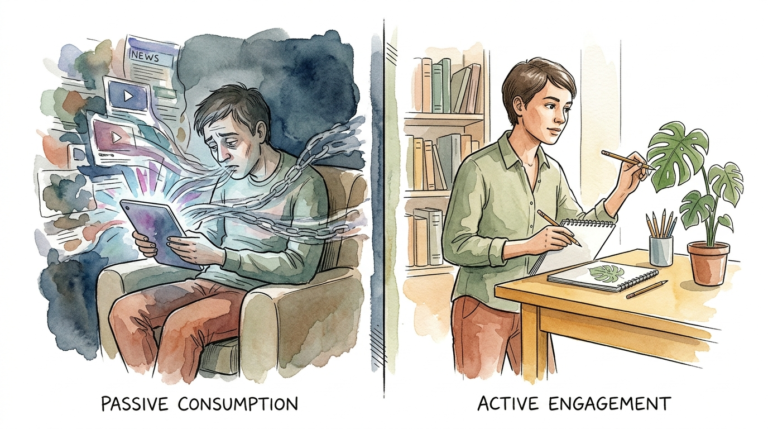
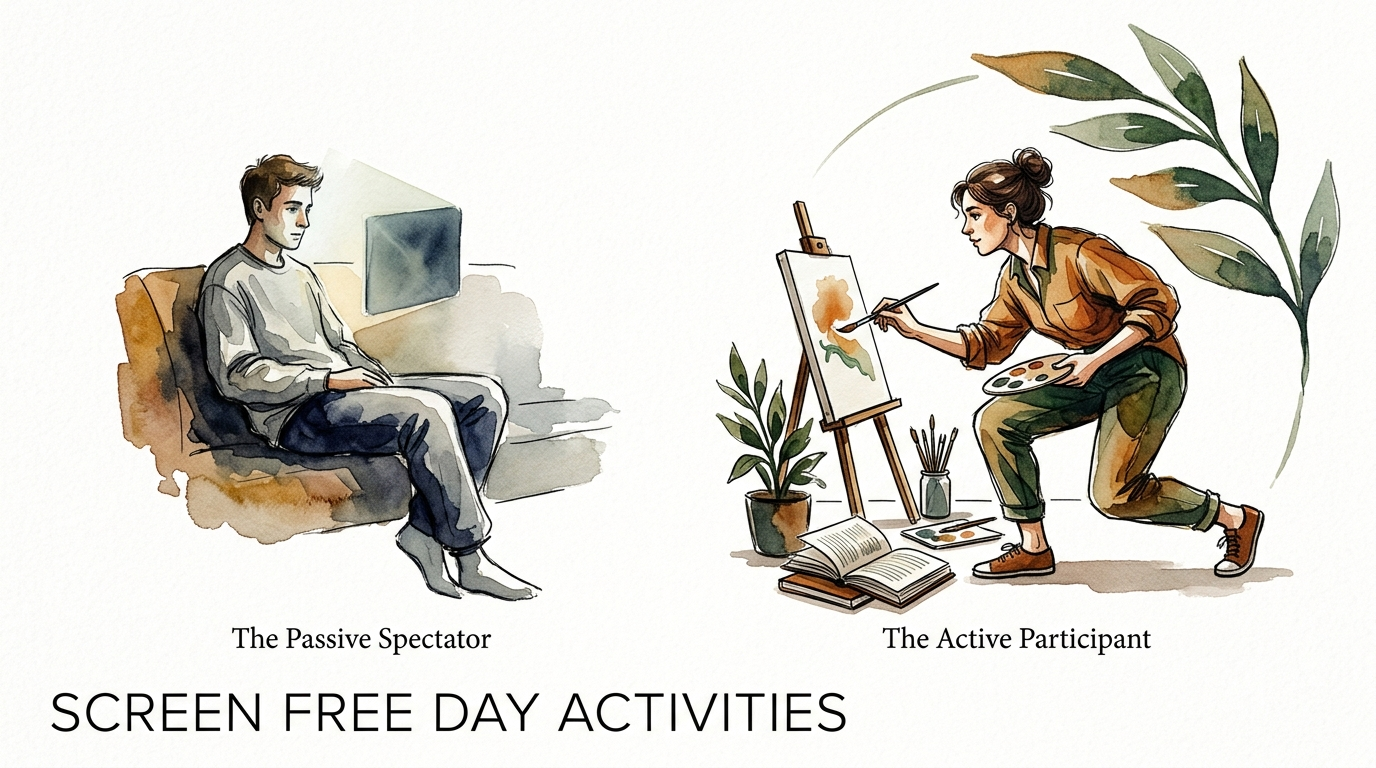
In real-world situations, screen-free days are used by families to break habits of “phubbing” (phone snubbing) and by individuals to combat burnout. It is a practical boundary that helps you differentiate between The Passive Spectator, who watches life through a lens, and The Active Participant, who engages with their environment. Whether it is a rainy Saturday indoors or a sunny afternoon at the park, these activities are designed to get your heart rate up and your brain firing in new ways.
High-Energy Indoor Activities
When the weather keeps you inside, the temptation to turn on the TV is at its peak. Combat this by turning your home into an arena for movement. High-energy indoor activities focus on using the space you have to burn off physical restlessness.
- Indoor Obstacle Course: Use painter’s tape to create “laser” grids in hallways or balance beams on the floor. Pillows become “lava” that cannot be touched, and laundry baskets serve as targets for sock-tossing challenges.
- Sock Snowball Fight: Roll up mismatched socks into soft balls and prepare for household mayhem. This simple activity gets everyone moving and laughing without any risk of breaking furniture.
- Hallway Bowling: Set up empty water bottles or cans at the end of a long hallway. Use a soft ball to see who can get the most strikes.
- The Painter’s Tape Maze: Create a complex winding pathway throughout the house. Challenge children to navigate it while balancing a spoon with a small object on it.
Outdoor Adventure Ideas
Nature provides the ultimate high-energy playground. Stepping outside naturally boosts serotonin and allows your perception of time to reset, making the day feel longer and fuller.
- Neighborhood Scavenger Hunt: Create a list of specific items to find, such as a red leaf, a house with a blue door, or a specific type of bird. This turns a simple walk into an active mission.
- Backyard “Olympics”: Set up stations for long jumps, sprints, and “discus” throwing using frisbees. Keep a tally of the results to foster a sense of accomplishment.
- Flashlight Tag: If your screen-free day extends into the evening, head outside after dark. One person is “it” and must find others by tagging them with a beam of light.
- Nature Detective Agency: Grab a notebook and document different insects or plants found in a local park. This combines physical movement with critical thinking and observation skills.
How to Plan Your Screen-Free Reset
Success on a screen-free day depends entirely on your level of preparation. If you wait until you are bored to think of something to do, the siren call of the smartphone will be too strong to resist. You must treat this day like an event that requires a “setup” phase to ensure the transition is seamless.
Start by identifying your “why.” Are you trying to reduce irritability in your children, or are you trying to reconnect with your partner? Having a clear goal makes it easier to stick to the plan when the initial “withdrawal” phase kicks in. Once the goal is set, you need to physically remove the temptation. Place phones in a dedicated “docking station” or a lockbox, and cover the TV with a decorative cloth to signal that it is off-limits.
Follow these steps to build a high-energy itinerary that works for everyone involved:
- The Pre-Event Briefing: Discuss the plan with your family or partner 24 hours in advance. Explain that this is a day for “active doing” and invite them to contribute one high-energy idea to the list.
- Prep the Materials: Gather any supplies you might need, such as board games, craft supplies, sports equipment, or ingredients for a complex meal. Nothing kills the momentum of a screen-free day like having to run to the store for a missing item.
- Remove the Friction: Charge your traditional camera if you want to take photos. Print out any recipes or instructions you would normally look up on your phone. Make sure you have physical maps if you plan to drive somewhere new.
- Schedule Anchor Points: Plan three main “anchor” activities—one for the morning, afternoon, and evening. This provides a skeletal structure for the day while leaving room for spontaneous play.
Benefits of a Screen-Free Reset
The rewards of a screen-free day are both immediate and long-lasting. By removing the constant stimulation of digital media, you allow your nervous system to downregulate, which leads to a significant decrease in stress and anxiety. Many people report that after the first few hours of “boredom,” they experience a surge in creative energy and a clearer thought process.
Physically, stepping away from screens improves sleep quality. The blue light emitted by devices interferes with melatonin production, which can delay sleep onset. A day without screens allows your internal clock to reset, leading to deeper, more restorative rest. Additionally, high-energy activities promote cardiovascular health and motor skill development, especially in growing children.
Relationally, the benefits are profound. Screen-free time encourages eye contact and active listening. Without the distraction of notifications, conversations become deeper and more meaningful. You aren’t just in the same room as your loved ones; you are actually present with them. This “green time” acts as a powerful counterweight to the “screen time” that usually dominates our lives.
Challenges and Common Mistakes
Transitioning to a screen-free environment can be jarring. One of the most common pitfalls is failing to account for the “dopamine crash.” For the first hour or two, you or your children might feel restless, irritable, or extremely bored. This is a natural reaction as the brain adjusts to a lower level of stimulation. The mistake most people make is giving up during this phase and turning the screens back on.
Another frequent error is “the busy trap.” If you replace screen time with a laundry list of chores and errands, the day will feel like a burden rather than a reset. While some household tasks can be engaging, the focus should be on high-energy fun and connection. If the day feels like work, no one will want to do it again.
Common mistakes to avoid include:
- The “Just One Check” Rule: Telling yourself you will just check your email for five minutes usually leads to an hour of scrolling. Total abstinence is often easier than moderation during a reset day.
- Lack of Variety: Relying on a single activity, like reading, for the entire day. Mix sedentary hobbies with high-energy movement to keep engagement high.
- Neglecting the Transitions: Moving from a high-energy game to a quiet meal can be difficult for kids. Use clear signals, like a “five-minute warning” or a specific song, to help everyone transition smoothly between activities.
Limitations and When This May Not Work
While screen-free days are beneficial, they are not always practical in every situation. If your job requires you to be “on call” for emergencies, a total digital blackout may be impossible. In these cases, a “partial detox” where you only use your phone for essential work calls and keep all entertainment apps blocked is a more realistic compromise.
Environmental factors also play a role. If you live in an area with extreme weather and have limited indoor space, maintaining high-energy activities for 24 hours can be exhausting. Furthermore, if a family member is currently dealing with significant sensory processing issues or neurodivergence, a sudden and total removal of screens might cause extreme distress rather than a reset. In these scenarios, it is often better to gradually reduce screen time rather than attempting a cold-turkey approach.
It is also important to recognize that screens are not the “enemy.” They are tools for education and connection. A screen-free day is a tool for balance, not a permanent lifestyle change. The goal is to develop a healthier relationship with technology, not to eliminate it entirely from your life.
Active Participation vs. Passive Spectatorship
Understanding the difference between active and passive engagement is key to a successful reset. Passive spectatorship requires almost zero cognitive effort, while active participation demands decision-making, movement, and creativity.
| Feature | The Passive Spectator | The Active Participant |
|---|---|---|
| Brain State | Reactive / Consumption mode | Proactive / Creation mode |
| Dopamine Type | Quick, short-lived spikes | Slow, steady fulfillment |
| Physical Effort | Sedentary / Minimal | High / Engaging |
| Social Interaction | Isolated or surface-level | Direct and meaningful |
Practical Tips for a Smooth Reset
To make your screen-free day a success, focus on lowering the barrier to entry for non-digital fun. If the board games are buried in the back of a closet, you are less likely to play them. Bring everything you need into your main living space the night before.
Use these optimization techniques to keep the energy high and the boredom low:
- The Activity Jar: Write various high-energy ideas on slips of paper and put them in a jar. Whenever someone says “I’m bored,” they have to pull a slip and do whatever activity is written on it.
- Set a “Moving” Goal: Aim for a certain number of steps or a specific amount of time spent outdoors. Tracking this on a physical chart can be highly motivating.
- Model the Behavior: If you are a parent, your children will follow your lead. If they see you constantly checking your watch or sighing about your missing phone, they will feel the same way. Approach the day with genuine enthusiasm.
- Focus on Tactile Hobbies: Engaging your hands is the fastest way to distract your brain from the digital itch. Activities like kneading bread dough, gardening, or building with LEGOs provide the tactile feedback that scrolling lacks.
Advanced Considerations: The Science of Neuroplasticity
For those looking to go beyond a single day, it is helpful to understand the science of neuroplasticity. Your brain is constantly rewiring itself based on your habits. Constant screen use strengthens the neural pathways associated with quick rewards and short attention spans. Conversely, engaging in complex, high-energy activities strengthens the prefrontal cortex, which is responsible for executive function and emotional regulation.
A regular practice of screen-free days can actually “re-train” your brain to enjoy slower forms of entertainment. Over time, you will find that your focus improves, your ability to handle stress increases, and your baseline mood becomes more stable. This is not just a temporary fix; it is an investment in your long-term cognitive health.
Consider scaling your screen-free efforts. Once a month is a great start, but many practitioners find that a weekly “Screen-Free Sunday” provides a consistent rhythm that keeps digital fatigue at bay. This regular cadence helps prevent the build-up of the “brain rot” sensation and ensures your family connections remain a priority.
Scenario: A Full Saturday Reset
Imagine a Saturday morning where the first thing you reach for is not your phone, but a glass of water and your running shoes. Instead of scrolling through news headlines, you head outside for a brisk 30-minute walk. The air is fresh, and you notice the sound of the birds—a detail usually drowned out by a podcast.
By 10:00 AM, the living room has been transformed into a “Fort City.” You and your kids have used every blanket and pillow in the house to create a series of tunnels and secret rooms. This is high-energy play that requires coordination and problem-solving. By lunch, everyone is hungry and energized, not sluggish from a morning of cartoons.
The afternoon is spent at a local park for a “Kickball Challenge.” You’ve invited another family to join, turning a simple outing into a social event. By the time you return home for a screen-free dinner, everyone is physically tired in the best way possible. Instead of a movie before bed, you have a “Glow Stick Hide-and-Seek” session in the dark. As you lie down to sleep, you realize you haven’t thought about your notifications once in the last six hours. You feel connected, calm, and truly present.
Final Thoughts
A screen-free day is a powerful declaration that you are in control of your time and your attention. By trading passive watching for active doing, you are giving your brain the reset it desperately needs and your family the connection they deserve. The high-energy activities listed here are just the beginning; the real magic happens in the spontaneous moments of laughter and discovery that only occur when the devices are off.
Do not wait for the “perfect” time to start. There will always be another email to answer or another show to binge. Choose a day, tell your people, and commit to the process. You might find that the world outside the screen is far more rewarding than anything you could ever find inside of it.
Start small, be prepared, and stay active. Your brain—and your family—will thank you for it. Once you experience the clarity and energy that comes from a full digital reset, you may find yourself looking forward to your screen-free days as the highlight of your week.
Sources
1 healthywithin.com | 2 storyofstuff.org | 3 storyofstuff.org | 4 woodlandsmommy.com | 5 emeraldartstudio.com | 6 wibehavioralhealth.com | 7 substack.com | 8 getsuperspace.com | 9 medlineplus.gov | 10 thejacobsladdergroup.org | 11 cosmotogether.com | 12 scouts.org.uk | 13 fairplayforkids.org | 14 expressable.com | 15 littlecedars.co.uk | 16 welloclock.com | 17 parent.com | 18 thismonthscraft.com | 19 sparklestories.com | 20 sparklestories.com | 21 screenfree.org | 22 creatingpositivefutures.com | 23 thevoiceofearlychildhood.com