Signs Of Child Screen Time Energy Stagnation
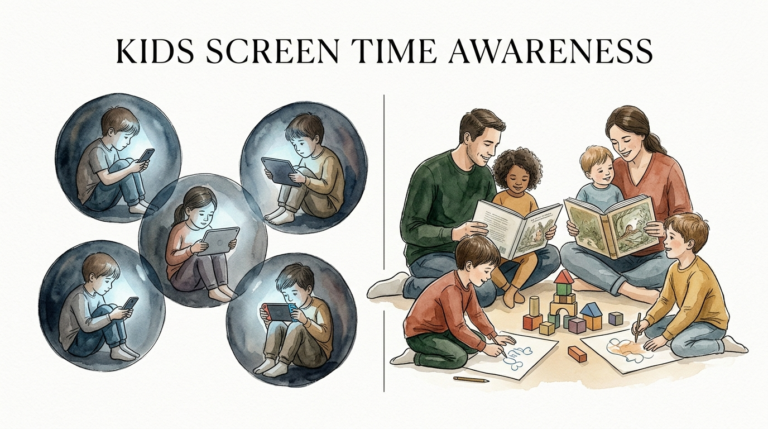
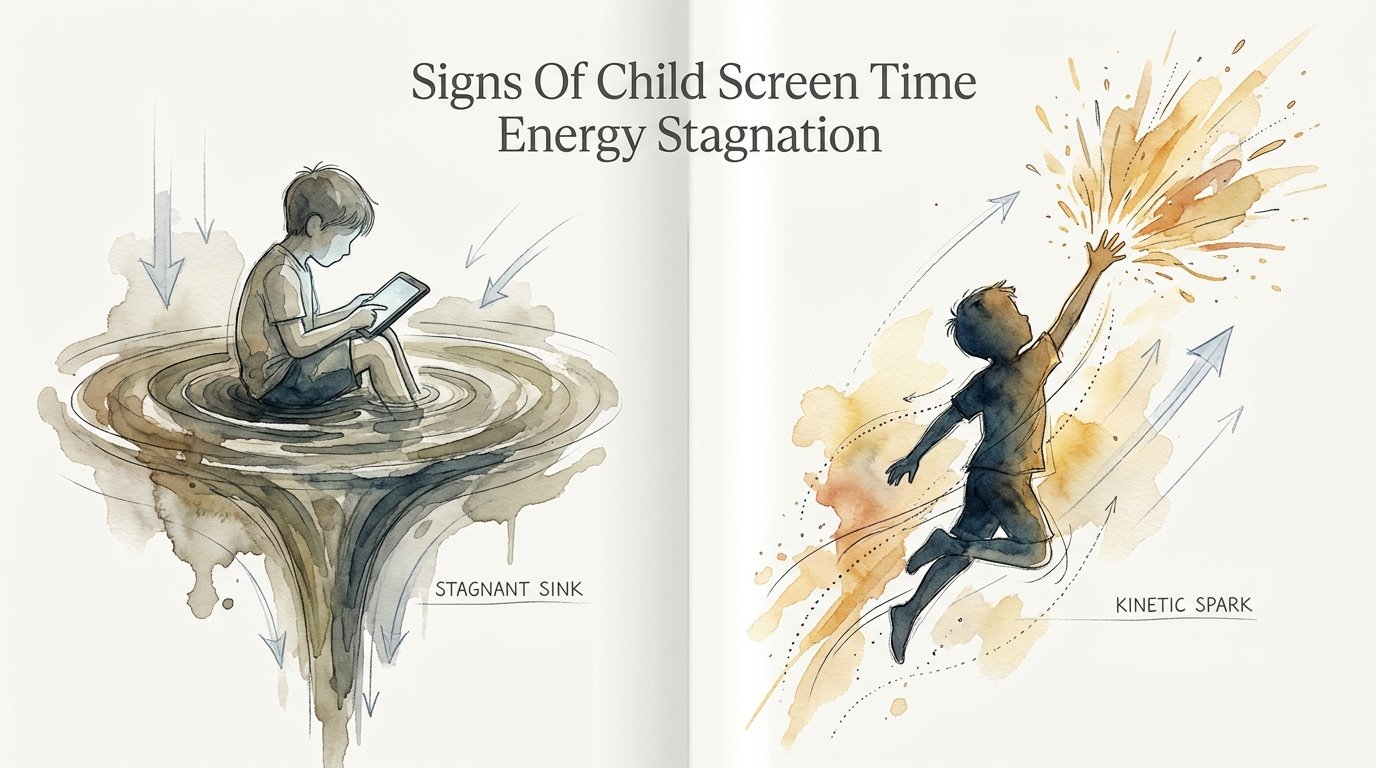
Is the device powering your child’s curiosity, or is it the place where their natural energy goes to die? A healthy habit is a spark that leads to real-world action. Overuse is a stagnant pool where your child’s physical drive and creativity sit still for too long. If you notice the ‘Stone Statue’ pose—where even their breathing seems to slow to the rhythm of the app—it’s a sign the energy flow has stopped moving outward and started sinking inward.

Every parent has seen it. Your child is hunched over a glowing rectangle, eyes wide but unblinking. Their body is motionless, yet their brain is firing at a million miles per hour in a digital loop. This phenomenon isn’t just “quiet time”; it’s a physiological state where potential energy is trapped in a stagnant sink. Instead of running, climbing, or creating, the child’s drive is consumed by an endless stream of algorithmically curated content.

Understanding the difference between a kinetic spark—screen use that leads to learning or movement—and a stagnant sink is the first step in reclaiming your child’s vitality. In a world where digital tools are mandatory, we have to learn how to keep the energy moving. This guide explores how to identify the signs of stagnation and transform screen time into a launchpad for real-world growth.
Signs Of Child Screen Time Energy Stagnation
Energy stagnation occurs when a child’s physical and mental resources are funneled into passive consumption for too long. It is a state of “high-arousal, low-movement.” The brain is overstimulated, but the body is effectively paralyzed. This creates a disconnect that can lead to physical developmental delays and emotional volatility.
The most obvious physical indicator is the “Stone Statue” pose. You might notice your child hasn’t shifted their weight in twenty minutes. Their posture is slouched, shoulders rounded forward, and their head is tilted in what specialists call “text neck.” This repetitive, constrained posture isn’t just about bad back habits; it directly impacts core strength and postural control, which are foundational for school-based tasks like writing and sitting at a desk.
Watch their eyes and breath. In a state of energy stagnation, the blink rate drops significantly, leading to eye strain and blurry vision. Breathing often becomes shallow. Instead of deep, oxygenating breaths that fuel the muscles, the child takes short, upper-chest breaths. This physiological state mimics a stress response, even if they are just watching a “calm” cartoon.
Behavioral signs are equally telling. When the energy flow stops, irritability and emotional dysregulation take over the moment the device is removed. If your child reacts with disproportionate anger or “withdraws” into a shell when the screen goes black, they aren’t just being difficult. They are experiencing the sudden “sink” of the dopamine high they were relying on to stay mentally afloat.
Other signs include:
- Reduced manual dexterity: Excessive touch-screen use can replace tactile play with blocks or scissors, leading to weaker fine motor skills.
- Sensory overload: A child who becomes sensitive to loud noises or textures after a long gaming session is often struggling with overstimulated neural pathways.
- Disrupted sleep: The blue light from screens suppresses melatonin more effectively when the device is close to the face, leading to shorter nighttime sleep.
How the Energy Trap Works
The transition from a spark to a sink happens through the brain’s reward system. Modern apps and games are designed using “persuasive design” to keep the user engaged. For a child, whose prefrontal cortex (the area responsible for self-regulation and impulse control) is still developing, this is an unfair fight. The screen provides a continuous stream of dopamine rewards with zero physical effort required.
Neurologically, passive screen time overstimulates the visual cortex at the expense of the auditory cortex and other social-processing centers. This imbalance can lead to “tunnel vision,” where the child becomes less aware of their physical environment and the people in it. Research indicates that excessive early-life screen use can even lead to cortical thinning in areas related to critical thinking and reasoning.
The “sink” happens because the brain stops seeking external, physical challenges. Why climb a tree or build a fort when a game provides the same feeling of “achievement” with a swipe of a thumb? This replaces active play, which is a developmental necessity for building neural connections through movement, touch, and trial-and-error.
When screen time becomes a kinetic spark, the dynamic changes. This occurs when the digital content prompts a real-world action. For example, watching a video on how to draw a dragon and then immediately grabbing paper and pencils turns the screen into a tool rather than a destination. The energy is used to bridge the gap between the digital and the physical.
Benefits of Shifting to a Kinetic Spark
Reframing how your child interacts with technology offers measurable improvements in their physical and mental health. When you move away from the stagnant sink, you allow the child’s natural drive to manifest in healthier ways.
Improved Motor Development: By limiting passive time and prioritizing active engagement, children regain the hours needed for gross and fine motor skill development. Physical play—running, jumping, and climbing—builds the General Motor Quotient (GMQ), which studies have shown is significantly lower in children with excessive screen exposure.
Better Emotional Regulation: Removing the “digital pacifier” forces a child to practice self-soothing and boredom management. While the initial transition can be rocky, the long-term benefit is a child who can handle transitions without explosive tantrums. They learn that their mood doesn’t have to be managed by an external device.
Enhanced Social-Emotional Skills: Real-world interactions require reading facial expressions, tone of voice, and body language—skills that screens cannot replicate. Reducing stagnant time opens up space for reciprocal dialogue with parents and peers, which is the primary driver of language and social growth.
Sleep Restoration: Ending screen use at least 60 minutes before bed allows the brain’s natural melatonin production to take over. This results in faster sleep onset and better sleep architecture, which are critical for memory consolidation and cognitive recovery.
Challenges and Common Mistakes
The biggest hurdle for most parents is the “Digital Pacifier” trap. It is incredibly tempting to use a screen to keep a child quiet during a meal, a car ride, or a busy afternoon. While effective in the short term, this reinforces the idea that boredom or discomfort must be solved by a device, deepening the energy sink.
Another common mistake is “Cold Turkey” without a plan. Suddenly banning all devices often leads to an “extinction burst” of bad behavior. Without an alternative source of engagement—the kinetic spark—the child is left in a void. They don’t yet have the tools to fill that space with creative play, leading to frustration for both the parent and the child.
Inconsistency is a major roadblock. If the rules for screen time change based on how tired the parent is, the child learns to negotiate, whine, or throw tantrums to get what they want. This turns the device into a high-stakes emotional anchor rather than a simple tool. Establishing clear, predictable boundaries is essential for success.
Finally, parents often overlook their own modeling behavior. Children learn by imitation. If you are constantly “stagnant” on your own phone while telling them to go play outside, the message is lost. Your own digital habits serve as the blueprint for theirs.
Limitations and Environmental Constraints
It is important to acknowledge that technology is not the enemy. Banning screens entirely is often impractical and may even be counterproductive in a digital society. Educational tools, remote family connections, and digital literacy are vital components of a modern upbringing.
Educational Necessity: Many schools now require tablets or laptops for assignments. In these cases, the screen time is mandatory. The goal shouldn’t be zero screen time, but rather balancing the load. If they spend two hours on a screen for school, their recreational “stagnant” time should be adjusted accordingly.
Neurodivergent Considerations: For children on the autism spectrum or those with ADHD, screens can sometimes provide a necessary “regulatory” break from sensory overload. In these instances, the screen isn’t necessarily a stagnant sink; it might be a tool for decompression. However, these children are also more susceptible to digital addiction, requiring a more nuanced, structured approach.
Environmental Boundaries: Not every family has access to a safe backyard or a park. For those in high-density urban environments, the “go outside and play” advice is harder to follow. In these cases, the kinetic spark must be found indoors—through dance videos, indoor obstacle courses, or creative building projects.
Comparison: Stagnant Sink vs. Kinetic Spark
To help you distinguish between healthy and unhealthy digital engagement, consider the following factors in your child’s screen habits.
| Feature | Stagnant Sink | Kinetic Spark |
|---|---|---|
| Engagement | Passive viewing, “zombie” mode. | Active participation, problem-solving. |
| Physicality | Motionless, poor posture, shallow breath. | Moving, gesturing, or using tools nearby. |
| Outcome | “Time filling,” mental exhaustion. | Creation, learning, or physical action. |
| Transition | Difficulty stopping, irritability, “crash.” | Natural end point, excitement to share. |
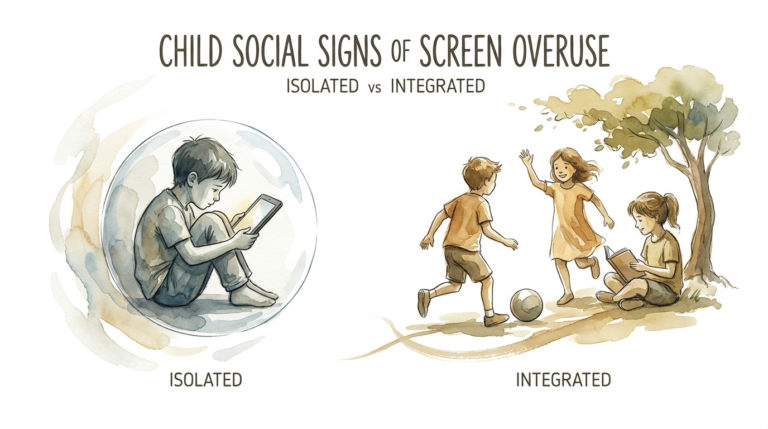
| Social Aspect | Isolation, ignoring surrounding people. | Co-viewing, collaboration, or discussion. |
Practical Tips for Parents
Transforming your child’s digital relationship doesn’t require a total tech ban. It requires intentional structure. Here are actionable steps to start moving the energy back outward.
1. Implement the 20-20-20 Rule: To fight the “Stone Statue” effect, every 20 minutes, have your child look at something 20 feet away for at least 20 seconds. Better yet, make them stand up and do five jumping jacks. This breaks the sedentary cycle and resets their visual and vestibular systems.
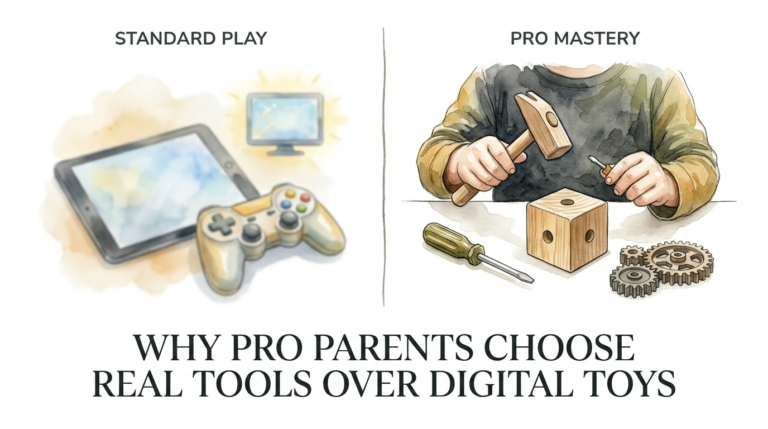
2. Curate for “Creation over Consumption”: Favor apps that allow the child to build, code, or draw. Instead of watching a Minecraft “let’s play” video (stagnant), encourage them to actually build a complex structure in the game (kinetic). This shifts the focus from being a spectator to being a creator.
3. Use Screens as a “Bridge”: If they watch a show about dinosaurs, immediately follow it with a physical activity—like digging for “fossils” in a sandbox or drawing their favorite T-Rex. This ensures the digital information is processed and converted into a kinetic experience.
4. Practice “Co-Viewing”: Sitting with your child and discussing what they are seeing turns a solo, passive experience into a social, cognitive one. Ask questions like, “What do you think happens next?” or “Why did that character do that?” This boosts language development and critical thinking.
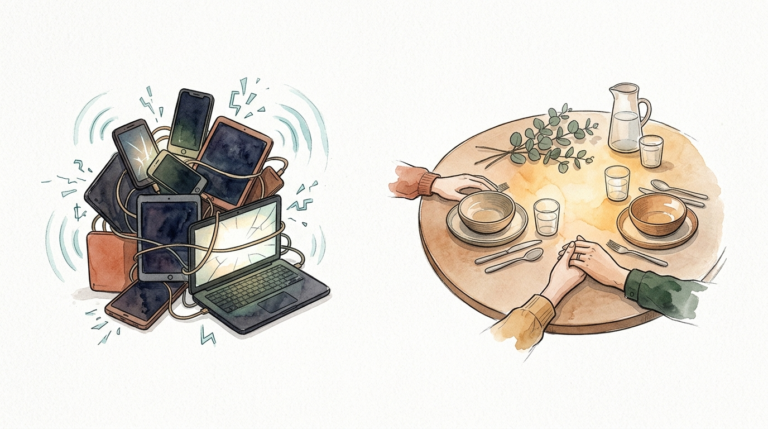
5. Establish Tech-Free Zones: Bedrooms and mealtimes should be strictly no-device zones. Mealtimes are for social interaction and developing a healthy relationship with food. Bedrooms should be for rest. Keeping screens out of these areas prevents them from becoming permanent stagnant sinks.
Advanced Considerations: The Science of “Digital Hygiene”
For parents who want to go deeper, understanding the neurological “Cost of Switching” is vital. Rapid-fire content (like short-form scrolling videos) trains the brain to expect constant, effortless dopamine. This makes “slow” activities—like reading a book or solving a puzzle—feel physically painful or boring to the child.
You can counter this by choosing slow-paced media. Programs with longer scenes, fewer cuts, and more “dead air” allow the child’s brain to process information at a more natural rate. This helps maintain a healthier attention span and prevents the “overactive brain” state that leads to stagnation.
Consider the circadian impact of blue light. It’s not just about falling asleep; it’s about the quality of the sleep. Blue light near the face suppresses the “power down” signals our bodies need. For older children, using “Night Mode” or blue-light filtering glasses can help, but nothing replaces a full hour of screen-free time before bed.
Finally, focus on Digital Literacy. Instead of just setting limits, talk to your child about *why* the apps are so hard to put down. Explain how the “red notifications” and “infinite scrolls” are designed to trick their brains. Empowering them with this knowledge helps them develop their own internal boundaries over time.
Example: Transforming a Stagnant Saturday
Let’s look at a typical scenario and how to flip the script from a stagnant sink to a kinetic spark.
The Stagnant Scenario: A child wakes up, grabs an iPad, and spends three hours on the couch watching unboxing videos or mindless cartoons. By noon, they are “cranky,” they haven’t eaten breakfast, and they refuse to put on shoes to go to the store. Their energy is bottomed out.
The Kinetic Transformation:
- 8:00 AM: The child can use the iPad to find a 15-minute “morning yoga” or “dance party” video. They are on the screen, but their body is moving.
- 9:00 AM: Screen time is used to look up a recipe for “pancake art.” The iPad stays on the counter while they help mix batter and create shapes (real-world application).
- 10:30 AM: Recreational screen time is earned through a chore or outdoor play. They get 45 minutes of a favorite game.
- 11:15 AM: A 5-minute warning is given. When the time is up, they transition to a tactile activity—like LEGOs—to “step down” the dopamine high before leaving the house.
In this transformed Saturday, the screen was used four times, but it never became a stagnant sink. It served as a motivator, a teacher, and a tool for movement.
Final Thoughts
Technology is a permanent part of our children’s lives, but it doesn’t have to be the thief of their vitality. The goal is to move from being managed by the device to managing the device. By identifying the signs of energy stagnation—the “Stone Statue” pose and emotional crashes—you can take the first step toward a healthier balance.
Remember that every child is different. What works for a five-year-old may not work for a ten-year-old. The key is to stay observant and proactive. Don’t let the screen become a stagnant pool where their potential sits still. Instead, use it as a kinetic spark that ignites their curiosity and drives them back into the real world.
Start small. Choose one “tech-free” hour today. Replace one passive video with a creative project. Over time, these small shifts will rebuild your child’s physical strength, emotional resilience, and natural drive. You aren’t just taking away a screen; you are giving them back their energy.
Sources
1 kahfkids.com | 2 jewelautismcentre.com | 3 jewelautismcentre.com | 4 bark.us | 5 cedars-sinai.org | 6 nyp.org | 7 parenta.com | 8 edtechdigest.com | 9 wonjo.kids | 10 kidsusamontessori.org