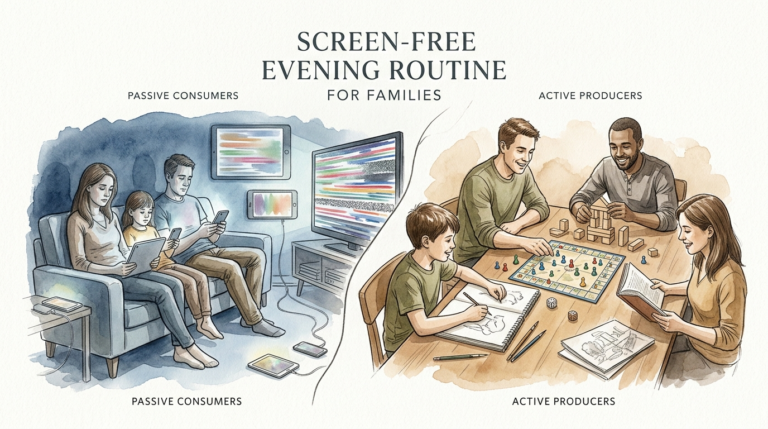
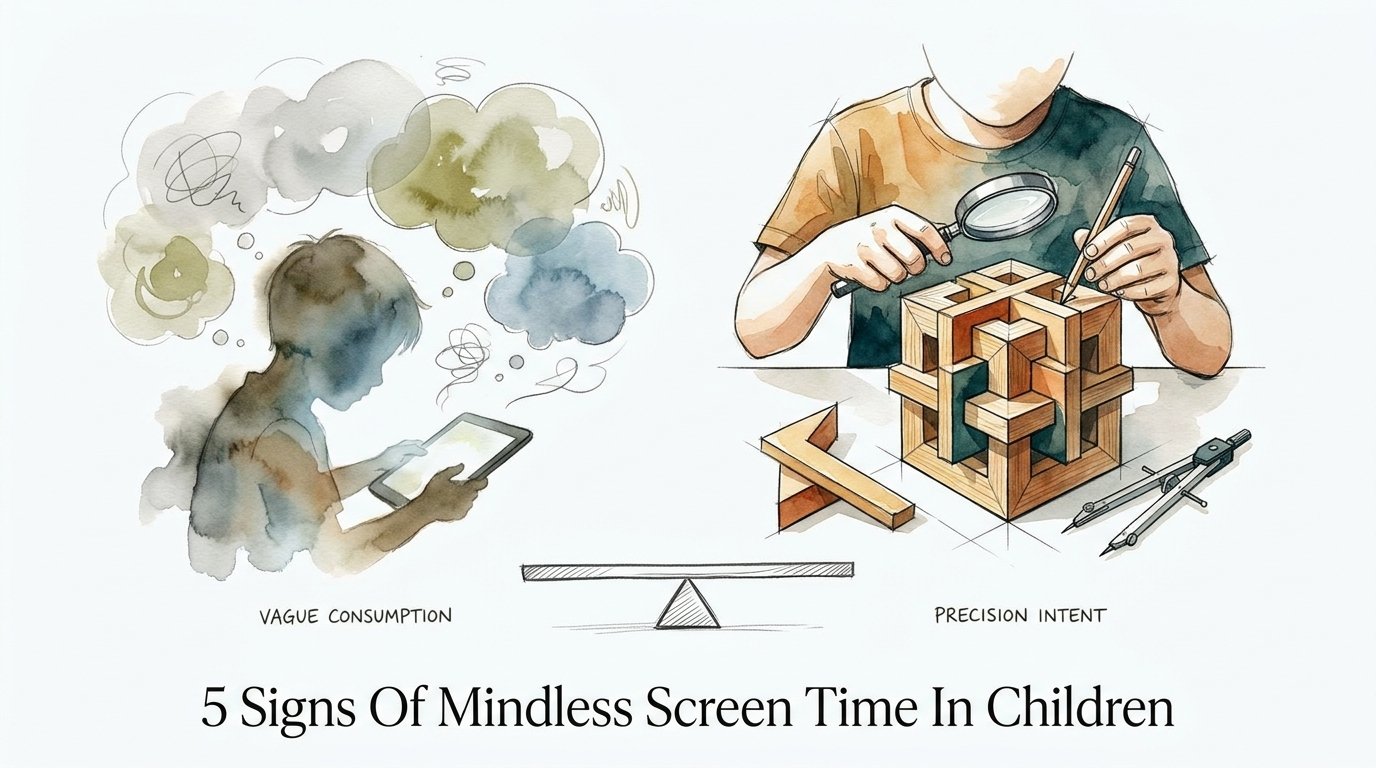
5 Signs Of Mindless Screen Time In Children
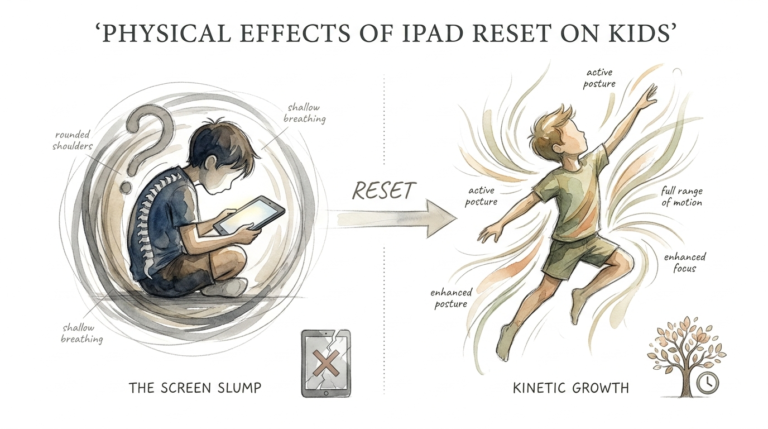
When the ‘Next’ button becomes a reflex, your child isn’t watching content—they are being harvested by it. When a screen habit crosses into overuse, the ‘intent’ disappears. If your child can’t tell you what they just watched, they weren’t learning; they were just filling a void with digital static. Precision usage turns the tablet into a telescope; standard overuse turns it into a blindfold. Look for the ‘Phantom Swipe’—the reflex to move to the next thing before the current one even delivers its value.

Modern parenting often feels like a constant negotiation with a glowing rectangle. We use screens for education, for quiet moments, and for staying connected with family. However, a subtle shift often occurs where the tool begins to use the child rather than the child using the tool. This transition marks the move from Precision Intent to Vague Consumption.

Understanding this difference is the key to digital wellness in 2026. It is not just about the number of minutes spent on a device. It is about the quality of the engagement and the cognitive state of the child while they are plugged in. This guide explores how to identify the slide into mindless consumption and how to reclaim the screen as a platform for growth.
5 Signs Of Mindless Screen Time In Children
Identifying mindless screen time requires looking beyond the clock. It involves observing behavioral patterns and physiological responses. These signs indicate that a child has moved from active engagement to a state of passive absorption where the brain’s reward system is being exploited by algorithms.
1. The Phantom Swipe and Reflexive Clicking
The most visible sign of mindless usage is the “Phantom Swipe.” This occurs when a child moves to the next video, level, or app before the current one has even finished. Their brain is seeking the dopamine hit of “the new” rather than the value of the present. If you notice your child rapidly skipping through content or clicking ‘next’ without a moment of reflection, they are likely trapped in a variable reward loop.
2. Post-Screen Irritability and “Digital Hangover”
Mindless screen time often ends in what experts call a “digital hangover.” When the device is finally put away, the child experiences a sharp drop in dopamine. This manifests as extreme irritability, meltdowns, or a complete inability to regulate emotions. If the transition from screen to reality consistently feels like a battlefield, the screen time was likely passive and overstimulating rather than intentional.
3. Loss of “Real World” Curiosity
When a screen becomes the default for every spare second, traditional hobbies often fall by the wayside. A child might lose interest in LEGOs, drawing, or outdoor play because these activities do not provide the instant, high-intensity feedback of an algorithm. If your child seems bored by everything that doesn’t have a backlit display, they may be suffering from the displacement effects of vague consumption.
4. The “Zombified” Cognitive State
Look at your child’s face while they use the device. Are they smiling, reacting, or asking questions? Or are they staring with a slack jaw and glazed eyes? The latter is a sign of cognitive drowsiness. In this state, information is not being processed or stored; it is simply passing through. If they cannot describe what they just watched or did five minutes after closing the app, the time was spent in the “void.”
5. Persistent Preoccupation and Lying
When screen time moves from a tool to a dependency, it dominates the child’s thoughts even when they are offline. They may constantly ask when they can go back on, or they might start sneaking devices into bed or the bathroom. Lying about how much time they spent online or what they were doing is a major red flag that the usage has become compulsive.
How Precision Intent Works: Shifting the Paradigm
Moving away from mindless consumption requires a fundamental shift in how we view digital devices. We must move from a “gatekeeper” model to a “mentor” model. Instead of just saying “no,” we focus on “how” and “why.”
The Strategy of Active Engagement
Precision Intent is built on the principle of active engagement. This means every time a device is opened, there is a clear objective. The objective could be “I am going to learn how to draw a dragon on YouTube” or “I am going to play three rounds of this strategy game with my friend.” When the objective is met, the device is closed. This prevents the “vague” slide into endless scrolling.
Co-Viewing as a Foundation
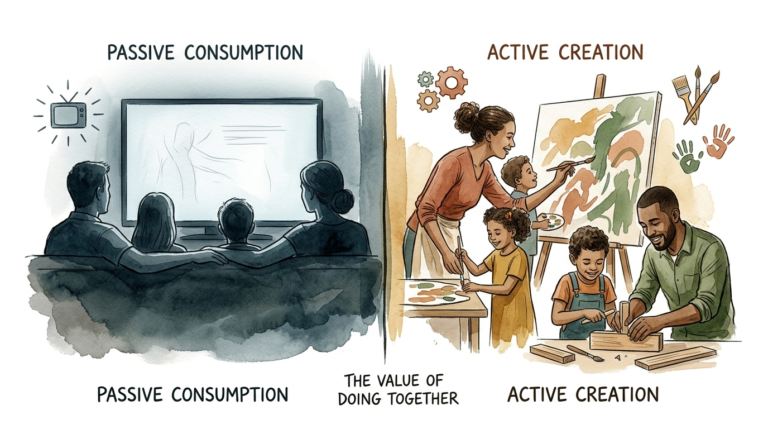
Research consistently shows that co-viewing—watching or playing alongside your child—is one of the most effective ways to ensure screen time remains high-quality. By asking questions like “Why do you think that character did that?” or “How did you solve that puzzle?”, you force the brain to move from passive reception to active processing. This transforms a solo, isolating experience into a social and cognitive exercise.
Content Curation over Algorithmic Feeds
Algorithms are designed to maximize watch time, not educational value. Precision usage involves parents and children working together to curate “playlists” or specific apps that align with the child’s interests and developmental needs. Avoiding the “For You” page or “Autoplay” functions is a practical first step in regaining control over the digital environment.
The Measurable Benefits of Intentional Usage
When screens are used with precision, the negative associations with “screen time” often disappear. The focus shifts to the positive developmental outcomes that technology can provide when it isn’t being used as a passive babysitter.
Development of Digital Literacy
Children who use technology intentionally develop better digital literacy. They learn that the internet is a tool for information and creation, not just a fountain of entertainment. They begin to understand how interfaces are designed to hook them, which builds critical thinking skills that will protect them as they grow into more complex digital spaces like social media.
Enhanced Skill Acquisition
Precision intent turns the tablet into a masterclass. Whether it’s coding, music production, or foreign languages, the internet offers world-class resources. When a child spends 30 minutes on a dedicated learning app, they gain measurable skills. This stands in stark contrast to 30 minutes spent watching “unboxing” videos, which offers zero long-term value.
Social Connectivity and Bonding
Not all digital interaction is isolating. Video chatting with grandparents or playing collaborative building games can strengthen real-world relationships. When the intent is “connection,” the screen serves as a bridge rather than a wall. These interactions teach empathy and digital etiquette in a controlled, purposeful environment.
Common Challenges and Algorithmic Traps
Even with the best intentions, parents often fall into common pitfalls. The digital world is literally designed to break our resolve and capture our children’s attention for profit.
The “Autoplay” Spiral
Autoplay is perhaps the greatest enemy of intentionality. It removes the “choice” from the user. By the time a child realizes they are bored with a video, the next one has already started. This prevents the natural “stop point” that our brains need to reset. Disabling autoplay across all platforms is a non-negotiable step for digital wellness.
Passive Babysitting during Stress
We all do it. When we are exhausted or have an urgent deadline, the tablet becomes a convenient pacifier. While this is understandable in moderation, it becomes a problem when it is the primary way a child deals with boredom or big emotions. If the screen is the only tool in the “emotional regulation” toolbox, the child never learns how to self-soothe in the real world.
The Illusion of “Educational” Labels
Many apps in the “Kids” section of app stores are labeled as educational but are actually just “ad-supported” feedback loops. They use bright lights and loud sounds to trigger a reward response without teaching any actual concepts. Parents must vet “educational” content carefully, looking for apps that require problem-solving rather than just repetitive tapping.
Limitations: When This Approach May Not Work
While intentionality is a powerful tool, it is not a magic wand. There are specific situations and constraints where the “Precision Intent” model may face hurdles.
Neurodiversity and Sensitivities
Children with ADHD or Autism Spectrum Disorder (ASD) often have a much higher sensitivity to digital dopamine loops. For these children, the “pull” of the screen is significantly stronger, and the meltdowns when stopping can be more intense. In these cases, simple intentionality may not be enough; more rigid physical boundaries and professional guidance might be necessary.
Environmental and Social Pressures
It is difficult to maintain a precision intent household when every other child at the playground is talking about the latest viral (and mindless) trend. The “fear of missing out” (FOMO) is a real social constraint. Parents must balance the desire for intentionality with the child’s need for social common ground with their peers.
Travel and Emergency Situations
During a 10-hour flight or a long hospital stay, “Precision Intent” often goes out the window in favor of “Survival Consumption.” It is important for parents to recognize these as temporary exceptions rather than failures. The goal is long-term habit formation, not 100% perfection in every crisis.
Practical Tips for Immediate Optimization
Transforming your child’s relationship with technology doesn’t have to happen overnight. Small, tactical shifts can produce significant results in their behavior and focus.
- Implement the “One-In, One-Out” Rule: For every hour of screen time, there must be an hour of “green time” (outdoor play) or “creative time” (drawing, building, reading).
- Set a “Digital Sunset”: Remove all screens at least 60 minutes before bedtime. The blue light and high stimulation of mindless content interfere with the production of melatonin, leading to poor sleep and morning irritability.
- Create Device-Free Zones: The dining table and the bedroom should be tech-free sanctuaries. This ensures that the most important human interactions—eating and sleeping—are never interrupted by digital static.
- Audit the “App Library” Together: Sit down with your child and look at their apps. Ask them, “Which of these makes you feel smart, and which of these just makes you feel tired?” Delete the ones that fall into the latter category.
- Model the Behavior: If you are constantly scrolling while talking to your child, they will view mindless consumption as the standard. Show them how you use your phone for specific tasks, then put it away.
Advanced Considerations: The Neurobiology of the Swipe
For parents who want to go deeper, it is essential to understand what is happening inside the developing brain during mindless consumption. The brain is incredibly plastic, meaning it shapes itself based on repeated activities.
Neural Pruning and Sustained Attention
The brain “prunes” neural pathways that aren’t being used. If a child spends 4-5 hours a day in a state of rapid content switching, the pathways for “sustained attention” (focusing on one thing for a long time) may weaken. Conversely, the pathways for “rapid task switching” and “novelty seeking” become overdeveloped. This can lead to difficulties in traditional classroom settings where deep focus is required.
Dopamine Sensitivity and Anhedonia
Constant high-intensity stimulation can lead to “dopamine downregulation.” This means the child’s brain becomes less sensitive to everyday pleasures. When the baseline for “fun” is a hyper-saturated YouTube video, a walk in the woods feels painfully boring. Intentional screen time helps maintain a healthy dopamine baseline, allowing the child to enjoy the nuances of the real world.
Scenario: From Mindless Afternoon to Intentional Creation
Consider two different Saturday afternoons.
Scenario A (Vague Consumption):
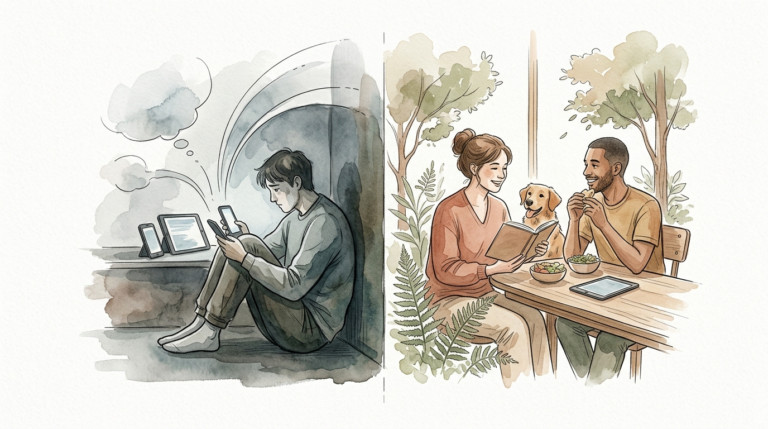
The child is given an iPad at 1:00 PM. They start by watching a cartoon, then click a suggested video of someone playing a video game. Three hours later, they are four levels deep into a “match-three” game that they don’t even like. When the parent takes the iPad away for dinner, the child screams and throws a toy.
Scenario B (Precision Intent):
The child and parent decide at 1:00 PM that the goal is to “Build a Virtual Garden” in a creative building game. They set a timer for 45 minutes. During the session, the parent asks how they are choosing which flowers to plant. When the timer goes off, the child shows the parent the garden, feels a sense of accomplishment, and moves on to help set the table.
The difference in these scenarios isn’t the device; it’s the intentionality. In Scenario B, the screen was a canvas. In Scenario A, it was a treadmill.
Final Thoughts
Reclaiming your child’s attention from the “void” of digital static is one of the most important parental challenges of the 2020s. It requires us to move beyond simple time limits and look closely at the cognitive state our children are in when they use technology. Precision usage empowers them; mindless consumption harvests them.
Start small. Look for the “Phantom Swipe” this evening. If you see it, don’t just snatch the device away. Use it as a moment to ask a question, to redirect the energy, and to remind your child that they are the master of the machine, not the other way around.
By focusing on Precision Intent, you aren’t just managing screen time—you are protecting your child’s curiosity, their ability to focus, and their mental well-being in an increasingly noisy world. Experiment with these strategies, be patient with yourself, and remember that digital wellness is a journey, not a destination.
Sources
1 cbwchc.org | 2 jewelautismcentre.com | 3 humanrightsresearch.org | 4 godforkidsapp.com | 5 global-edtech.com | 6 ny.gov | 7 parentselfcare.com | 8 youtube.com | 9 mayoclinic.org | 10 psychologytoday.com | 11 kidsmentalhealthfoundation.org | 12 itstimetologoff.com | 13 parent.com | 14 childrenandscreens.org | 15 navigatingthedigitaljungle.com | 16 childrenofthedigitalage.org | 17 lindnercenterofhope.org | 18 instituteofchildpsychology.com