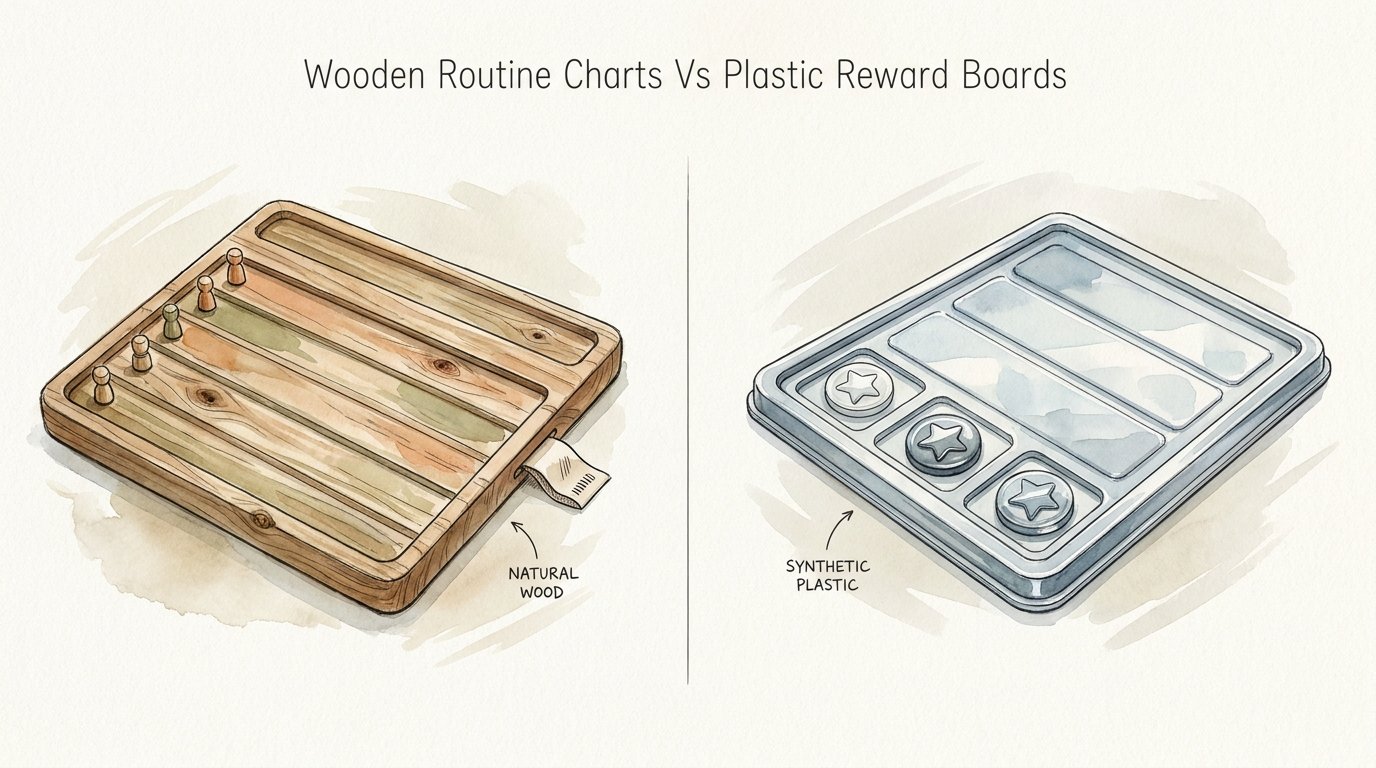
Wooden Routine Charts Vs Plastic Reward Boards
The sound of velcro is a stress trigger; the feel of wood is an anchor. Our homes are flooded with high-contrast, synthetic ‘educational’ tools that actually overstimulate a child’s nervous system. Switching to natural materials—wood, stone, and cotton—turns the routine chart into a grounding ritual rather than another loud demand for attention. You might think a schedule is just a schedule, but the medium is the message. When we choose natural materials, we tell a child’s brain that the world is a stable, predictable, and calm place.
Morning transitions do not have to be a battle of wills. Visual aids are the secret weapon for executive function, yet we often sabotage them with neon colors and scratchy plastic. This guide explains how to transform your home rhythm using the power of wood and intentional design. You will learn why the weight of a wooden token beats a flimsy sticker every single time.
Wooden Routine Charts Vs Plastic Reward Boards
A wooden routine chart is a visual map designed to guide a child through a sequence of events. It is not a scoreboard. Unlike plastic reward boards that rely on “if/then” transactions, a routine chart focuses on the “what/next” of daily life. These tools are common in Montessori and Waldorf environments because they respect the child’s need for order without overstimulating their senses.
Plastic reward boards often feature bright, primary colors and loud textures. They use stickers or velcro to track “good” behavior, which often triggers a dopamine loop based on external validation. In contrast, a wooden chart uses the physical weight of timber to ground the user. The tactile feedback of sliding a wooden door or moving a carved token provides a “sensory finish line” for a task. This helps the brain register that a job is truly done.
Real-world application looks like a morning flow. A child sees a wooden icon of a toothbrush. They complete the task and move the icon to a “finished” slot. There is no neon glare. There is no high-pitched “crinkle” of a laminate sheet. There is only the soft thud of wood on wood. This quiet interaction keeps the nervous system in a parasympathetic state, making transitions smoother and meltdowns less likely.
How to Implement a Wooden Routine System
Building a routine system requires more than just hanging a board on the wall. You are creating a roadmap for your child’s brain. Start by observing your current bottlenecks. Where does the morning fall apart? Is it the transition from breakfast to getting dressed? Identify the four to six key tasks that cause the most friction.
Select a location that is at the child’s eye level. The bathroom door or the hallway near their bedroom works best. Ensure the area is well-lit with natural or warm light to complement the wood. Avoid placing the chart in a cluttered “command center” where it has to compete with mail, keys, and chargers. Visual clarity is the goal.
Introduce the chart during a calm time, never in the middle of a rush. Walk through each task together. Let the child touch the wood and feel the grain. Explain that this is their tool to help them know what to do next. You are transferring the role of “boss” from your voice to the board. When the board says it is time for socks, you are no longer the one nagging; the board is simply providing the next step.
Practice the physical movement of the tokens. Show them how to move a “Morning” token to the “Done” side. Use a physical prompt at first. Place your hand over theirs and guide the movement. Gradually fade your assistance as they gain confidence. The goal is total independence where they check the board and execute the task without a single verbal prompt from you.
Benefits of Natural Materials in Home Rhythms
Biophilic design is the practice of connecting humans to nature within the built environment. Research shows that exposure to natural materials like wood reduces heart rates and lowers blood pressure. For a child with a sensitive nervous system, these physiological changes are the difference between a successful morning and a total burnout. Wood carries a specific “thermal comfort” that plastic lacks; it never feels shockingly cold or unpleasantly sweaty to the touch.
Sensory grounding is a massive advantage of timber. The weight of a wooden token provides proprioceptive input to the small muscles in a child’s hand. This input sends signals to the brain that help with body awareness and focus. Plastic is often too light to provide this feedback, leaving the child’s brain searching for more stimulation—often in the form of fidgeting or stalling.
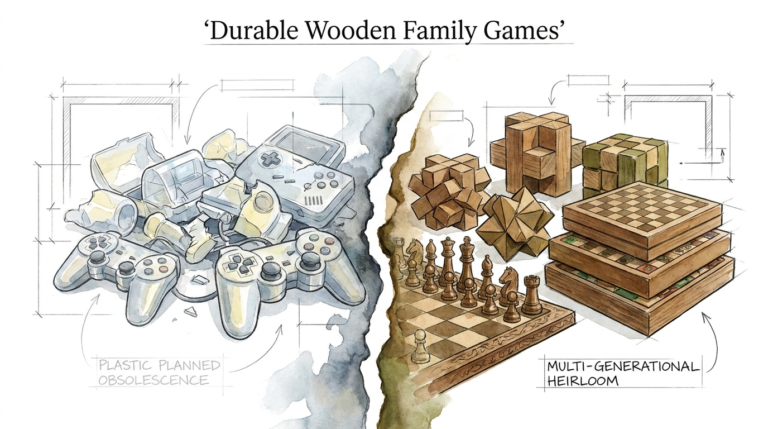
Longevity is a practical benefit that parents appreciate. Plastic charts crack, peel, and fade under UV light. Their adhesive backings fail, and stickers lose their tack. A well-made wooden chart is an heirloom. It withstands the “aggressive” handling of a frustrated toddler and can be sanded or refinished if it gets scuffed. This durability teaches the child to value their tools rather than seeing them as disposable junk.
Environmental health cannot be ignored. Many synthetic charts are made of PVC or contain phthalates, which can off-gas in small, unventilated spaces like bedrooms. Solid wood finished with beeswax or food-grade oil is non-toxic and safe for even the youngest children who might still explore objects with their mouths. You are creating a sanctuary, and the materials you choose are the foundation of that space.
Challenges and Common Pitfalls
The most common mistake is overcomplicating the board. Parents often try to include twenty different tasks, from “make the bed” to “meditate.” This creates a wall of noise that shuts down a child’s executive function. Keep the initial routine to a maximum of five steps. Once those are a habit, you can swap tokens for new challenges.
Upfront cost is a hurdle for many families. High-quality wooden tools are more expensive than printable PDF kits or dollar-store plastic boards. This expense is a reflection of the craftsmanship and the sustainability of the materials. Think of it as an investment in your home’s peace. A cheap board that gets ignored is more expensive in the long run than a quality tool that actually works.
Lack of customization can be frustrating if you buy a pre-made set. Your family might have unique needs, like “feed the chickens” or “put on hearing aids.” If the set doesn’t include these, the routine feels incomplete. Look for brands that offer blank tokens or custom engraving. Alternatively, you can use a fine-tip permanent marker or a wood-burning tool to create your own specific icons.
Maintenance is occasionally required. Wood is a living material that can expand or contract with humidity. If your home is very dry, a wooden sliding mechanism might become loose. If it is very humid, it might stick. A tiny bit of natural wax or even a drop of olive oil on a cloth can fix most friction issues. This is a small price to pay for a tool that doesn’t rely on batteries or brittle plastic tabs.
Limitations of Static Wooden Charts
Static charts are not ideal for families who travel frequently. A heavy wooden board is hard to pack in a suitcase. For families on the go, a portable cotton wrap with wooden tokens might be a better compromise. This maintains the tactile benefits while adding the flexibility needed for hotel stays or visits to grandparents.
Light-sensitive children might struggle if the chart has no internal illumination. While we want to avoid the “blue light” of screens, some children with visual impairments need high-contrast icons. Natural wood can sometimes have subtle grain patterns that make laser-engraved icons hard to see in dim hallways. Ensure your chart has high-contrast imagery, perhaps using non-toxic black paint on light maple or birch.
Age transitions can be a limitation. A chart with “put on pull-up” is great for a three-year-old but embarrassing for an eight-year-old. The system must be able to evolve. Modular wooden systems allow you to swap out “baby” icons for “big kid” tasks like “pack laptop” or “check planner.” If the board is too “cutesy,” the child will reject it as they seek more autonomy.
Comparison: Wood vs. Synthetic Materials
| Feature | Natural Wood Chart | Synthetic/Plastic Chart |
|---|---|---|
| Sensory Impact | Grounding, tactile, warm, quiet. | Stimulating, loud (velcro), cold. |
| Durability | High; can last decades. | Low; prone to cracking and peeling. |
| Aesthetics | Timeless; blends with home decor. | Cluttered; often visually “loud.” |
| Motivation Style | Intrinsic; focused on the task flow. | Extrinsic; focused on stickers/rewards. |
| Safety | Non-toxic; biodegradable. | May contain BPA/Phthalates; microplastics. |
Practical Tips for Success
Start your routine with a “connection” task. This could be a thirty-second hug or a quick “I love you” ritual. Placing this at the top of the chart anchors the morning in safety rather than just productivity. It tells the child that the routine exists to serve the family, not just to get them out the door.
Lighting matters more than you think. Place a small, warm-toned LED strip or a salt lamp near the routine chart. This creates a “zone of focus.” When the light is on, the routine is active. This visual cue helps children with ADHD transition their brain into “on-task” mode without the need for verbal instructions.
Use a “first/then” wooden board for particularly difficult transitions. This is a smaller piece of wood with only two slots. “First: Shoes. Then: Car.” This simplifies the world down to the immediate moment. It is an excellent tool for neurodivergent children who experience “task paralysis” when looking at a full day’s schedule.
Keep the tokens in a beautiful wooden bowl or a cotton drawstring bag next to the chart. The act of reaching into a bowl and selecting the next task is a sensory experience in itself. It turns a chore into a choice. This small element of autonomy significantly reduces power struggles.
Advanced Considerations for Executive Function
Executive function is the brain’s “air traffic control” system. It manages working memory, cognitive flexibility, and impulse control. Wooden routine charts act as an external hard drive for these skills. For a child who “forgets” to put on their shoes every single day, the chart isn’t just a reminder; it is a scaffold that supports their developing brain.
Transitioning from icons to words is a major milestone. As the child begins to read, you can flip the wooden tokens over to show the printed word. This associates the physical task with the abstract concept of language. Because the wood is permanent and solid, it provides a stable reference point for this transition.
Involve your child in the “audit” of the routine. Every few months, sit down together and ask, “Is this still working for us?” If they have mastered “brush teeth” so thoroughly that they do it automatically, you can retire that token. This teaches them metacognition—the ability to think about their own thinking and habits. They learn that routines are living systems that they have the power to change.
Consider the “Visual Noise” of your entire home. A wooden routine chart is most effective when the rest of the environment is also curated. If the chart is surrounded by plastic bins of neon toys, its grounding effect is diluted. Aim for a “low-arousal” environment where the most important information—like the daily rhythm—is the easiest thing to see.
Example Scenario: The Morning Transformation
Imagine a household where every morning is a series of escalating shouts. “Get your shoes on!” “Did you brush your teeth?” The child is overwhelmed by the verbal input and retreats into a daze or a tantrum. The parent is frustrated and late for work. This is a failure of the environment, not the child.
Now, introduce a wall-mounted wooden routine chart with six tokens: Potty, Get Dressed, Eat Breakfast, Shoes, Backpack, Hug. The parent wakes the child and simply points to the chart. The child walks over, feels the cool surface of the wood, and sees the “Potty” icon. They move the token and proceed.
The house is quiet. There are no “loud” demands. When the child gets stuck, the parent doesn’t yell; they walk over and tap the next wooden icon. The physical “thud” of the token moving provides the satisfaction of completion. By the time they reach the “Hug” token, the child is calm, dressed, and ready. The routine has become a grounding ritual rather than a source of conflict.
Final Thoughts
Shifting from plastic and velcro to natural wood is more than an aesthetic choice. It is a commitment to your child’s long-term nervous system health. You are replacing high-contrast stress triggers with anchors of stability. This transition recognizes that a child’s environment directly impacts their ability to regulate their emotions and manage their time.
The beauty of wood lies in its simplicity and its strength. It does not flash, it does not beep, and it does not demand. It simply waits, providing a clear path forward in a world that is often too loud. By choosing these materials, you are building a foundation of peace that will last far beyond the toddler years.
Experiment with your own rhythms. Start small with a single evening routine and watch how the tactile nature of wood changes the energy of your home. You will likely find that as the “visual noise” decreases, your child’s independence increases. This is the power of intentional design and natural materials in action.
Sources
1 ilslearningcorner.com | 2 youtube.com | 3 theottoolbox.com | 4 nhs.wales | 5 childrensfactory.com | 6 jlgarchitects.com | 7 tecribresearch.blog | 8 mokuomo.com | 9 youtube.com | 10 apa.org | 11 myplinkit.com | 12 sleeptrainingsolutions.com | 13 chop.edu | 14 youtube.com