Precision Water Transfer Activities For Toddlers
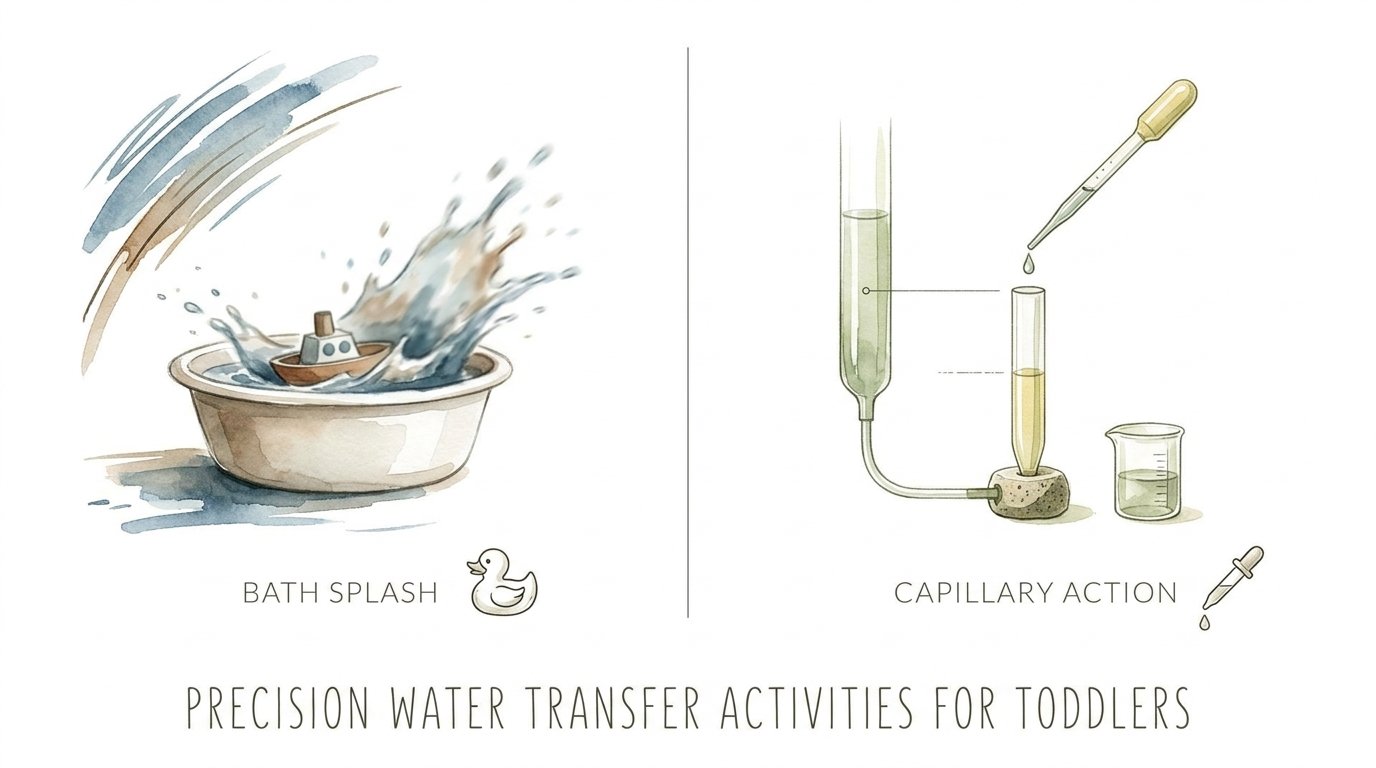
Splashing is fun, but precision is transformative. Watch the focus change when the goal is a single drop. We often think toddlers just need ‘sensory’ input, but they actually crave mastery. Moving from general water play to the high-stakes precision of a pipette builds the micro-muscles needed for writing years before they ever hold a pencil.
Every parent knows the scene: a toddler in a bathtub, enthusiastically sending waves over the side. It is chaotic, it is wet, and it is a vital part of childhood. But there is a quieter, more intense version of water play that happens when you swap the bucket for a dropper. This is where the magic of “precision water transfer” begins.
Precision water transfer is more than just moving liquid from point A to point B. It is a controlled, high-concentration exercise that bridges the gap between play and skill. When a child focuses on transferring one tiny droplet at a time, they aren’t just playing with water; they are training their brain and hands to work in perfect harmony.
This guide will dive deep into why these activities are a cornerstone of early childhood development. We will explore how tools like pipettes, sponges, and syringes turn a simple bowl of water into a sophisticated laboratory for fine motor growth. Whether you are a Montessori enthusiast or a curious parent, understanding the mechanics of precision play will change how you look at your toddler’s morning routine.
Precision Water Transfer Activities For Toddlers
Precision water transfer refers to any activity where a child moves water between containers using a specific tool that requires fine motor control. Unlike “pouring,” which uses larger muscle groups and gravity, precision transfer relies on tools like eyedroppers, pipettes, sponges, or small syringes. These tools require the child to isolate specific finger movements, such as the pincer grasp or the squeeze-and-release motion.
In the real world, these actions are the building blocks of independence. Think about the dexterity required to button a shirt, use a zipper, or eventually hold a pen to write a name. All these tasks require the same finger strength and hand-eye coordination that a toddler develops when they try to suck up exactly 2ml of blue-tinted water into a plastic pipette.
These activities are widely used in Montessori “Practical Life” curricula because they offer a clear “control of error.” If a child loses focus, the water spills or the droplet misses the target. This immediate feedback allows the child to self-correct without an adult needing to intervene. It builds a sense of autonomy and a “can-do” attitude that stays with them long after the water has dried.
Visualizing this concept is easy if you imagine the difference between a fire hose and a surgical needle. While general water play is the fire hose—broad, powerful, and messy—precision transfer is the needle. It requires the child to slow down, breathe, and align their vision with their physical movements. It is a form of “meditation through motion” for the under-five crowd.
How It Works: The Mechanics of Controlled Flow
To set up a precision transfer activity, you need to understand the underlying mechanics of the tools involved. Each tool targets a different set of muscles and requires a unique cognitive approach. Success starts with a well-prepared environment, usually a tray that defines the workspace and contains any inevitable drips.
The pipette or eyedropper is the gold standard for precision. To use it, a child must learn a three-step sequence: squeeze the bulb (expelling air), submerge the tip (creating a vacuum potential), and release the bulb (drawing water up). This sequence requires significant cognitive “sequencing” skills. It isn’t just a physical act; it is a logic puzzle that a toddler must solve repeatedly.
Sponges offer a different but equally valuable challenge. A child must learn to soak the sponge, lift it without dripping too much, and then use two-handed strength to wring the water into a second container. This builds “bilateral coordination,” which is the ability to use both sides of the body together. It also provides deep sensory feedback through the resistance of the sponge fibers.
Syringes (without needles, of course) introduce the concept of “push and pull” resistance. Moving a plunger requires steady pressure. If the child pushes too hard, the water shoots out too fast. If they pull too slowly, they don’t get a full draw. This teaches them to “grade” their movements—applying just the right amount of force for the desired outcome.
Practical steps for a successful setup include:
- Defined Boundaries: Always use a tray with a lip to contain the water and signal to the child where the “work” stays.
- Visual Indicators: Add a drop of food coloring to the “source” water. This makes the movement of the liquid much easier for the child to track visually.
- Minimalist Presentation: Start with just two containers—one full and one empty—placed from left to right to mimic the direction of reading and writing.
Benefits of Precision Play
The most immediate benefit of precision water transfer is the development of the pincer grasp. This is the ability to use the thumb and index finger to manipulate small objects. Pediatricians and occupational therapists look for this milestone because it is a prerequisite for self-feeding and, eventually, handwriting. Squeezing a pipette bulb is a targeted workout for these exact muscles.
Concentration is the “hidden” benefit. You will often see a toddler’s tongue poke out or their brow furrow as they work with a dropper. This state of “flow” is crucial for neurological development. When a child concentrates deeply on a physical task, they are strengthening the neural pathways associated with attention and executive function.
Hand-eye coordination reaches new levels during these activities. The child must aim the tip of the tool at a specific target—sometimes a very small target, like a single suction cup on a bath mat or a small circle on a tray. This requires the brain to process visual information and send precise instructions to the small muscles of the hand in real-time.
Finally, these activities foster emotional regulation. Water has a naturally calming effect. The repetitive nature of transferring liquid can be highly soothing for a child who is feeling overwhelmed or overstimulated. It gives them a sense of control over their environment, which is a powerful antidote to toddler-age frustrations.
Challenges and Common Mistakes
The biggest challenge for most toddlers is the “squeeze-submerge-release” sequence. Many children try to squeeze the bulb *after* the pipette is in the water, which just blows bubbles. This often leads to frustration. Instead of correcting them verbally, try to demonstrate the sequence slowly and silently, emphasizing the “squeeze” before the tip hits the water.
Another common mistake is choosing tools that are too large for small hands. A giant kitchen baster might seem fun, but if a two-year-old can’t comfortably grip the bulb, they will revert to using their whole hand (a palmar grasp). This defeats the purpose of fine motor precision. Always look for “child-sized” tools that fit their current developmental stage.
Over-filling the containers is a frequent error made by parents. If the bowl is full to the brim, a single bump will cause a massive spill. This can discourage a child who is sensitive to “making a mess.” Start with just an inch of water. It makes the goal feel achievable and keeps the stakes low while they are still learning the ropes.
Adult interference is the most subtle pitfall. It is tempting to step in and “help” when a child is struggling to get the water into the dropper. Resist this urge. The learning happens in the struggle. If you step in, you take away their opportunity to master the tool independently. Only intervene if the water is leaving the tray and entering the “danger zone” (like your laptop or the carpet).
Limitations and Constraints
Precision water transfer is not a “set it and forget it” activity for very young toddlers. While it builds independence, the presence of water always requires supervision. Furthermore, children under 18 months may lack the hand strength or cognitive sequencing required for a pipette, making it a source of tears rather than learning.
Environmental constraints are a reality. If you live in a space with wall-to-wall white carpeting, an indoor water activity—even a precise one—might be too stressful for the parent. In these cases, the activity is better suited for the high chair, the kitchen tile, or even the bathtub. If the parent is stressed about the mess, the child will pick up on that tension, and the focus will be lost.
Physical stamina is also a factor. Fine motor work is exhausting for a toddler’s brain and hands. A child might only engage with a dropper for five minutes before they start splashing or dumping. This isn’t a failure; it’s a sign they have reached their limit for precision work. It is important to recognize when the “work” has transitioned back into “gross motor play.”
Comparison: Bath Splash vs. Capillary Action
To understand the value of precision, it helps to compare the two main ways toddlers interact with water. Both are necessary, but they serve different developmental goals. While a “Bath Splash” is about sensory exploration and gross motor power, “Capillary Action” (the science behind pipettes and sponges) is about control and observation.
| Feature | Bath Splash (Gross Motor) | Precision Transfer (Fine Motor) |
|---|---|---|
| Primary Goal | Sensory input & fun | Mastery & concentration |
| Muscle Groups | Arms, shoulders, core | Fingers, wrists, hand arches |
| Tools Used | Buckets, cups, hands | Pipettes, droppers, sponges |
| Mess Level | High / Unpredictable | Low / Contained |
| Cognitive Load | Low (Cause/Effect) | High (Sequencing/Precision) |
Choosing between these isn’t an “either/or” situation. A child who has spent the afternoon at a splash pad might actually be more ready to sit down for a quiet pipette activity in the evening. The big, explosive movements “get the wiggles out,” leaving the brain ready for the intense focus required for precision work.
Practical Tips for Success
Start with a “Dry Run.” If your child has never used a pipette or tongs, let them try moving dry pom-poms or large beads first. This removes the variable of “wetness” and allows them to focus solely on the mechanical movement of the tool. Once they have the grip down, add the water.
Use clear containers whenever possible. Seeing the water level rise and fall inside the container—and inside the pipette itself—provides a visual “aha!” moment for the child. It helps them understand the concept of volume and displacement without you having to explain a single scientific term.
Keep a “Spill Kit” nearby. A small, child-sized sponge or a folded washcloth should be part of the activity tray. Show the child how to “dab” a spill immediately. This teaches them that mistakes are part of the process and that they have the power to fix them. It transforms a “bad” spill into a “good” opportunity for a new skill: cleaning up.
Vary the “Destination.” Once a child masters moving water from one bowl to another, make it harder. Give them a muffin tin and ask them to put one drop in each hole. Give them an ice cube tray or a collection of small jars. Changing the target keeps the activity fresh and forces them to adjust their aim and pressure.
Advanced Considerations for Practitioners
For those looking to scale these activities, consider introducing the concept of “surface tension.” You can do this by having the child see how many drops of water will fit on the surface of a coin before it spills over. This moves the activity from “practical life” into “early science,” requiring an even higher level of steady-handedness.
Color theory is another easy integration. Provide three containers of “primary” colored water (red, blue, yellow) and several empty containers. Let the child use their pipette to “cook” new colors. This adds a layer of creative decision-making to the fine motor task. They aren’t just moving water; they are experimenting with chemistry.
Grading the resistance is a great way to challenge an older toddler. Different sponges have different “squish” factors. Different syringes have different plunger tensions. By varying the physical effort required, you ensure that the hand muscles continue to be challenged as the child grows stronger. This is essentially “weightlifting” for the fingers.
Example Scenarios
Imagine a 2.5-year-old named Leo. Leo is currently obsessed with “doing it myself.” His parent sets up a tray with two small glass creamers and a blue plastic pipette. The left creamer is filled with water tinted with a single drop of red food coloring. The right creamer is empty.
Leo sits down and spends the first three minutes just blowing bubbles in the water—he hasn’t figured out the “squeeze first” rule yet. Instead of correcting him, his parent sits nearby and uses their own pipette to slowly demonstrate: “Squeeze… dip… let go.” Leo watches. He tries again. This time, the pipette fills halfway.
The look of pure triumph on Leo’s face as he moves that first bit of red water is worth the minor drips on the tray. He spends the next twenty minutes in total silence, moving the water back and forth. He is building his attention span, his hand strength, and his confidence, all through a few ounces of colored water and a plastic tube.
In another scenario, a 4-year-old might use a small syringe to fill “cells” in a piece of bubble wrap. This requires extreme precision to avoid splashing into the neighboring bubbles. This version of the activity focuses on “visual discrimination”—the ability to see small differences between objects—which is vital for distinguishing between letters like ‘b’ and ‘d’ later in school.
Final Thoughts
Precision water transfer is a humble activity with massive developmental payoffs. It takes the natural toddler love for water and channels it into a structured, skill-building exercise. By providing the right tools and a prepared environment, you are giving your child a chance to practice the focus and dexterity they will need for the rest of their lives.
Remember that the goal is not a dry tray or a perfect transfer. The goal is the concentration the child shows while trying. Every missed drop is a lesson in physics, and every successful squeeze is a win for their developing brain. It is a reminder that in the world of early childhood, the smallest movements often lead to the biggest breakthroughs.
Encourage your child to explore these tools at their own pace. Start simple, stay patient, and don’t be afraid of a little water. You might be surprised at how quickly a splashing toddler can become a focused scientist, one drop at a time. If you found this helpful, consider looking into other “Practical Life” activities like tonging or basic pouring to further support your child’s journey toward mastery.
Sources
1 earlylearningwithlori.com | 2 learnwithplayathome.com | 3 montessorimaterials.com | 4 brighterfuturesindiana.org | 5 theglobalmontessorinetwork.org | 6 beaminghealth.com | 7 napacenter.org | 8 pediastaff.com | 9 softplay.com | 10 nido.edu.au | 11 themontessoriroom.com | 12 pima.gov | 13 theottoolbox.com | 14 naeyc.org | 15 montessorifromtheheart.com | 16 learningtreechildcare.com | 17 montessorigeneration.com | 18 handsonaswegrow.com