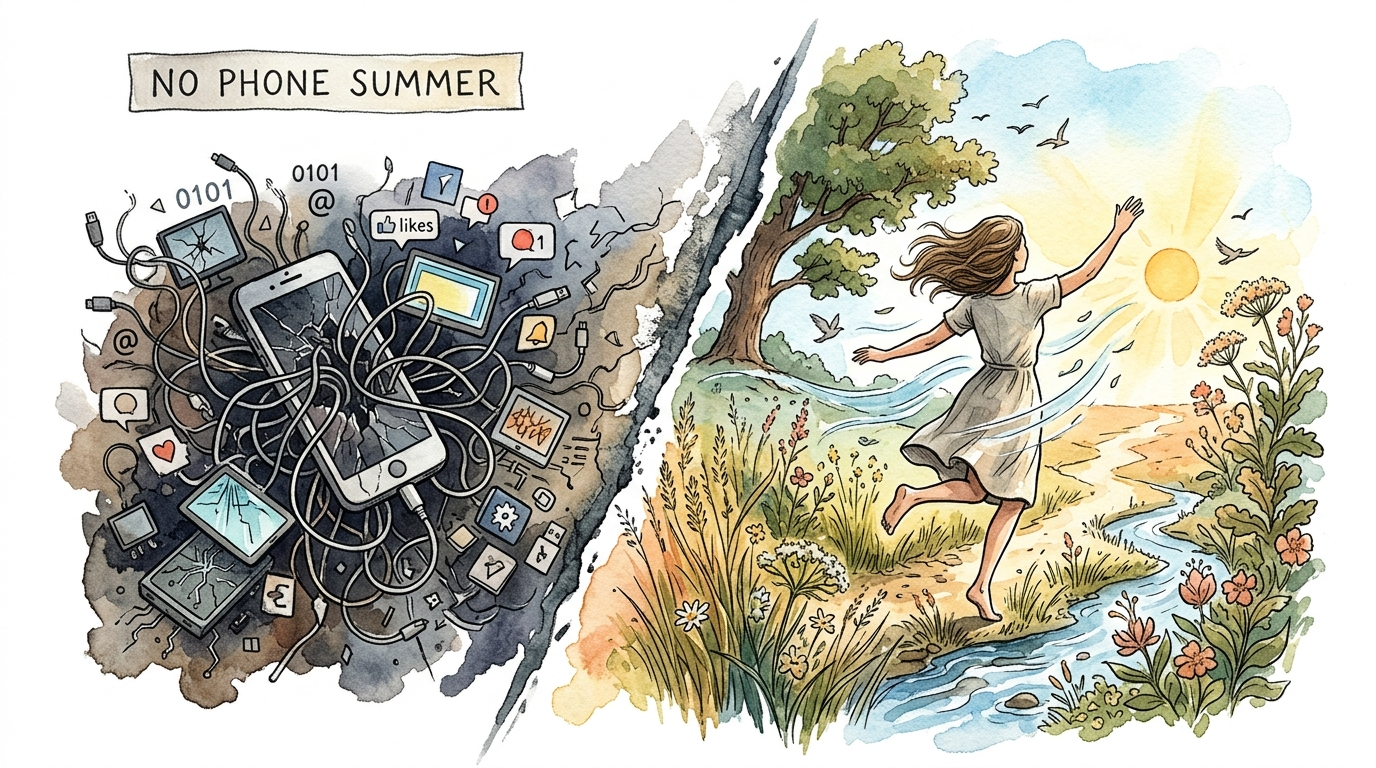
no phone summer
Are you spending your summer scrolling or living? See how turning off the ‘waste’ fuels your soul. We spend average 7 hours a day on screens. That’s 2,500 hours a year of ‘waste.’ This year, we’re turning that time into fuel for adventure. #NoPhoneSummer #DigitalDetox
Every notification is a tiny thief. It steals your focus, your mood, and your memory of the sunset you just missed. We have become a society of “glance-and-scroll” addicts, losing roughly 42% of our waking hours to digital displays. Recent statistics for 2026 show the average person will spend over 19 years of their life staring at a screen.
This guide is your roadmap to taking those years back. We are diving deep into the movement that is sweeping social media—ironically—to get us off social media. It is time to trade the digital waste for life fuel. Let’s look at how you can reclaim your summer and your brain.
no phone summer
A no phone summer is a lifestyle challenge focused on drastically reducing or eliminating non-essential smartphone use during the warmest months of the year. It is not about living in a cave or throwing your iPhone into the ocean. Instead, it is a deliberate choice to prioritize tangible, offline experiences over algorithmic feeds.
The movement has exploded in popularity, with “no phone summer” searches jumping 340% on platforms like Pinterest recently. It exists because the “voluntary increase” in screen time has reached a breaking point. People are feeling the “AI slop” fatigue—a weariness from repetitive, unoriginal digital content that provides no real fulfillment.
Think of it as a seasonal reset. In the real world, this looks like swapping a GPS for a paper map, a Spotify playlist for the sound of the wind, and a TikTok scroll for a physical book. It is used by families wanting to reconnect, professionals facing burnout, and Gen Zers looking for “analog” authenticity.
How to Do a Digital Detox Step by Step
Starting a digital detox requires more than just willpower; it requires a system. You are fighting against apps designed by neurobiologists to keep you hooked. To win, you need to change your environment before you change your habits.
The first step is the Digital Audit. Track your usage for 24 hours without judgment. Note when you reach for your phone—is it during morning boredom, work stress, or late-night loneliness? Seeing that you spent 95 minutes on TikTok alone can be the “shock” needed to trigger action.
Next, implement the “Parking Station” method. Choose a spot in your home, like a bowl by the front door, where your phone lives. The moment you walk inside, the phone stays there. This creates a physical barrier between you and the device, forcing you to be present with your family or your hobbies.
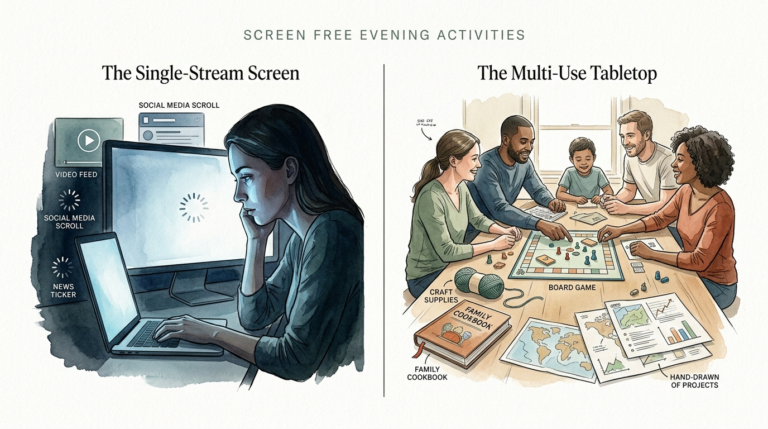
Finally, transition to “Single-Purpose Devices.” Much of our screen time is “justified waste.” We check the time, then see a notification, then spend 20 minutes scrolling. Swap your phone for a physical alarm clock, a wrist-watch, and a dedicated camera. When you remove the “all-in-one” temptation, the compulsion to scroll vanishes.
Benefits of Reclaiming Your Time
The practical benefits of a digital detox are measurable and immediate. Research shows that even a one-week break from social media significantly boosts mental health and reduces symptoms of anxiety and depression. When the blue light stops, your brain’s natural rhythms take over.
Your attention span is the first thing to return. The average human attention span has dropped to roughly eight seconds, but participants in digital detox trials report a measurable boost in sustained focus after just 14 days. You start to “deep work” again, finishing books and projects that previously felt impossible.
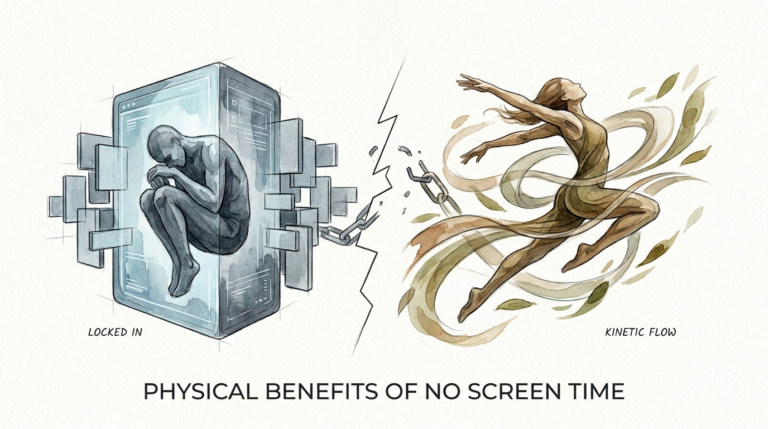
Physical health sees a massive upgrade as well. Better sleep is a guarantee when you eliminate late-night blue light, which interferes with melatonin production. You might also notice a reduction in “tech neck” and eye strain. Most importantly, you gain roughly 5 to 7 hours of “found time” every single day to invest in exercise, nature, and community.
Challenges and Common Mistakes
The biggest challenge is the “Withdrawal Phase.” Smartphones trigger dopamine releases in the nucleus accumbens, similar to a slot machine. When you stop, you will feel restless, bored, or even irritable. This is a sign that your brain is re-adjusting to lower levels of stimulation.
A common mistake is going “Cold Turkey” without a plan for the “Void.” If you remove the phone but don’t add a hobby, you will inevitably go back to the screen. You must have replacement practices ready—books, gardening tools, or a bike. Boredom is the “danger zone” where most detoxes fail.
Another pitfall is the “Information Trap.” We often tell ourselves we “need” the phone for news, weather, or coordination. While some of this is true, most of it is an excuse to keep the device in hand. Set specific “Check-In” windows—perhaps 10 minutes at noon and 5 PM—to handle essentials, then put the phone back in the parking station.
Limitations and Realistic Constraints
A total “No Phone” life is not realistic for everyone. Safety is a primary concern, especially for solo travelers or parents who need to be reachable in emergencies. Professional requirements also create boundaries; many jobs require two-factor authentication or Slack availability.
Environmental limitations also play a role. If you live in an area without reliable public transport, losing your GPS can be more than an inconvenience—it can be a hazard. We must acknowledge that the modern world is built around digital infrastructure.
The goal is “Intentionality,” not “Isolation.” If you have to use your phone for work, do it on a desktop where the “mindless scroll” is less likely. Use the device as a tool, not a tether. Credibility in a digital detox comes from finding the balance that works for your specific life situation.
Digital Waste vs. Life Fuel
Understanding the difference between digital waste and life fuel is the key to a successful summer. One drains your battery (and your soul), while the other recharges it.
| Factor | Digital Waste | Life Fuel |
|---|---|---|
| Attention | Fragmented, 8-second bursts | Sustained “Flow State” focus |
| Dopamine | Spiky, variable rewards (Cheap) | Steady, achievement-based (Rich) |
| Social | Passive, comparison-driven | Active, presence-driven |
| Complexity | Low effort, high friction later | High initial effort, high reward |
Practical Tips for an Analog Summer
If you want to make the shift stick, start with “Grayscale Mode.” Removing the vibrant colors from your screen makes apps like Instagram look dull and unappealing. It kills the dopamine spike that drives endless swipes. It is a simple toggle in your accessibility settings that changes everything.
Invest in “Tactile Hobbies.” Searches for “analog hobbies” like yarn kits and film photography are surging for a reason. Having something physical in your hands provides the “sensory friction” that digital screens lack. Whether it is gardening, painting, or building furniture, the act of creating something real is a powerful antidote to digital consumption.
Establish “Tech-Free Zones and Times.” The dinner table and the bedroom should be sacred. 77% of parents admit to using a device at the dinner table, which ruins the opportunity for connection. By making these areas phone-free, you create natural boundaries that protect your most important relationships.
Advanced Considerations for Practitioners
For those looking to go beyond the basics, consider “Dopamine Fasting.” This involves a 24-hour period where you avoid all high-stimulation activities, including screens, processed foods, and even music. This “resets” your receptors, making everyday tasks feel more engaging and less “boring.”
Think about “Neural Plasticity.” Your brain is constantly rewiring itself based on your habits. Constant scrolling strengthens the pathways for distraction. Deep, analog work strengthens the pathways for focus. By choosing a no phone summer, you are literally rebuilding a more resilient, capable brain.
Consider your “Intentional Tech Stack.” Instead of a smartphone, some advanced practitioners switch to “Dumb Phones” or devices like the Light Phone that only allow calls and texts. This removes the temptation at the hardware level. It is a bold move that signals a serious commitment to mental sovereignty.
The “Weekend Warrior” vs. “The Full 30”
How you apply this depends on your starting point. Let’s look at two scenarios to help you visualize your path.
Scenario A: The Weekend Warrior. You work a high-stress tech job. You can’t turn off your phone Monday through Friday. Instead, you implement a “Full Dark” weekend. From Friday at 6 PM to Monday at 8 AM, your phone stays in a locked drawer. You spend the time hiking and meal-prepping. You return to work on Monday with 2x the energy of your colleagues.
Scenario B: The Full 30. You are a student or a teacher on summer break. You commit to 30 days of no social media or streaming on your phone. You use a physical map for a road trip and write letters to your friends. By day 20, the “itch” to check your phone disappears. You discover you have time to learn a new language or finish a 1,000-piece puzzle.
Final Thoughts
A no phone summer is the ultimate act of rebellion in an attention economy. It is a move from being a consumer to being a creator. By turning off the digital waste, you aren’t just “saving time”—you are fueling your soul with real memories and genuine connections.
The data is clear: our current screen habits are unsustainable for our mental and physical health. But the solution is simple. Start small, be intentional, and embrace the friction of the real world. This summer, don’t just watch other people live their lives through a glass screen.
Take the leap and see what happens when you trade 2,500 hours of waste for a lifetime of adventure. Your brain will thank you, and your life will finally feel like your own again. Turn off the scroll, and turn on the world.
Sources
1 demandsage.com | 2 allconnect.com | 3 overlandsummers.com | 4 upandupaba.com | 5 explodingtopics.com | 6 ch-dc.org | 7 247dct.org | 8 kansascity.com | 9 miamiherald.com | 10 vice.com | 11 collaborativemn.com | 12 arizona.edu | 13 aap.org | 14 thejacobsladdergroup.org | 15 bloom-path.app | 16 blankspaces.app | 17 harvard.edu | 18 medicalnewstoday.com | 19 nih.gov | 20 mentalhealthproviders.org | 21 charleston.edu