Durable Crafts For Kids To Keep
Will this craft end up in a vacuum cleaner by Tuesday, or will your child give it to their own daughter in thirty years? Most ‘kids crafts’ are designed to occupy 20 minutes and then spend eternity in a landfill. By switching to ‘Legacy’ materials like copper, wood, and stone, we teach children that their time and effort are valuable. A plastic bead is a distraction; a forged wire bracelet is a proof of mastery that survives the test of time.

Kids have an innate desire to build things that matter. They know the difference between a flimsy paper mask and a wooden shield that can withstand a backyard battle. Using real materials changes the stakes of the creative process. It turns a rainy afternoon activity into a lesson in craftsmanship and durability.
The shift toward legacy materials isn’t just about the final product. It is about the relationship between the creator and the medium. Working with stone requires patience. Shaping copper demands focus. Carving wood teaches respect for natural grains. These are the building blocks of a capable, confident human being.
Durable Crafts For Kids To Keep
Durable crafts are objects made from high-quality, natural, or long-lasting materials intended to survive for generations. Unlike “disposable” crafts made from pipe cleaners, foam stickers, or plastic sequins, legacy projects use the same materials as professional artisans. Think of it as the difference between a fast-food toy and a hand-carved chess piece.
These projects exist to bridge the gap between play and real-world skill. In a world of digital screens and fleeting trends, a stone sculpture or a leather pouch provides a physical anchor. These items often find a permanent home on a mantle or a bookshelf rather than the bottom of a toy bin.
You see these materials used in historical artifacts that archaeologists dig up today. A copper pendant from 8700 B.C. still tells a story because the material refused to decay. When a child works with these elements, they are participating in a tradition that spans thousands of years. They aren’t just making a “craft”; they are creating a legacy.
How to Start the Legacy Crafting Journey
Beginning with durable materials requires a mindset shift from “keep them busy” to “help them build.” You do not need a professional workshop to start. Most legacy crafts can be done at a kitchen table with a few specialized but affordable tools.
Copper Wire Wrapping and Forging
Copper is a soft, forgiving metal that is perfect for young hands. Start with bare copper wire, which is easily found at hardware stores or online. Children can use jewelry pliers to bend the wire into shapes like spirals, hearts, or stars.
Hammering the copper is where the magic happens. A small ball-peen hammer and a steel bench block allow a child to “work-harden” the metal. Flattening the wire makes it stronger and gives it a professional, forged look. This process teaches them about material properties and the transformative power of a hammer.
Stone and Soapstone Carving
Soapstone is a metamorphic rock that is soft enough to be carved with simple wood files or even sandpaper. It has a “soapy” feel due to its high talc content. This makes it an ideal entry point for stone carving.
Kids can start with a pre-cut silhouette or a raw block. They use coarse sandpaper to shape the stone, gradually moving to finer grits for a glass-like finish. Finishing the piece with a little bit of beeswax or mineral oil brings out deep greens, browns, and blacks. The result is a heavy, cool-to-the-touch sculpture that feels significant.
Leatherworking and Stamping
Vegetable-tanned leather is a “living” material that ages beautifully. It starts as a pale tan and turns a rich mahogany over time with use and sunlight. For beginners, simple projects like key fobs, bookmarks, or basic pouches are best.
Wet the leather first—a process called “casing.” This allows the leather to take a permanent impression. Children can then use metal stamps and a mallet to indent patterns or their names into the surface. Leatherworking teaches kids that their work can be both functional and beautiful.
Benefits of Heirloom Crafting
Choosing legacy materials provides measurable benefits for a child’s development. The physical resistance of wood, stone, and metal forces a slower, more intentional pace. This is the ultimate antidote to the “instant gratification” culture of modern apps.
One major advantage is the development of fine motor precision. Threading a plastic bead is easy. Wrapping a 18-gauge copper wire around a mandrel requires grip strength and spatial awareness. These skills translate directly into better handwriting, better tool use, and improved hand-eye coordination.
Emotional resilience is another byproduct. If a child hits a stone too hard and it chips, they have to pivot. They learn to incorporate the “mistake” into a new design. Durable materials don’t just yield to every whim; they require a dialogue between the child and the medium. This builds a sense of mastery that plastic trinkets simply cannot provide.
Sustainable crafting also teaches environmental stewardship. When a child makes something from wood or stone, they are using materials that are either biodegradable or permanent. They learn to value quality over quantity. A child who spends three hours on a single leather wallet is less likely to crave ten cheap plastic toys from the dollar store.
Common Mistakes and How to Avoid Them
One frequent error is choosing materials that are too difficult for a child’s current strength level. For example, trying to carve oak as a first woodworking project will lead to frustration and dull tools. Start with softwoods like pine or cedar, or better yet, start with soapstone.
Another pitfall is using low-quality tools. Many “kids’ toolkits” are actually toys that don’t function properly. A dull saw or a plastic hammer is more dangerous than a sharp, high-quality one because the child has to use excessive force. Invest in real, small-scale tools designed for actual work.
Failure to prepare the workspace is a common hurdle. Legacy crafts can be messy. Stone carving produces dust. Woodworking creates shavings. Hammering metal is loud. Set up a dedicated area with a drop cloth and hearing protection if needed. Making the environment “work-ready” helps the child take the process seriously.
Many parents also step in too quickly to “fix” a project. A legacy craft is about the child’s journey, not the parent’s perfection. If the wire is a bit crooked or the leather stamp is off-center, leave it. Those imperfections are the “fingerprints” of the maker and often become the most cherished parts of the heirloom later on.
Limitations and When to Reconsider
Legacy crafting is not always the best choice for every situation. If you are in a time crunch or need a “party favor” activity for twenty kids, these materials may be too expensive or time-consuming. High-quality materials require an investment of both money and supervision.
Safety is a primary constraint. Working with copper wire means dealing with sharp ends. Woodworking involves blades. Stone carving creates fine dust that should not be inhaled. Very young children (under age 5) may lack the impulse control needed for these tools. Always assess the individual child’s maturity rather than just their age.
Space and noise can also be limiting factors. If you live in a thin-walled apartment, a Sunday afternoon of hammering copper bracelets might not make you the favorite neighbor. Some of these crafts are better suited for a garage, a backyard, or a local maker space.
Finally, consider the child’s interest. Some kids genuinely enjoy the quick, colorful results of traditional crafts. Forcing a child into a long-form stone carving project when they just want to paint with glitter can backfire. Legacy crafting works best when it is presented as an “upgrade” to their creative power.
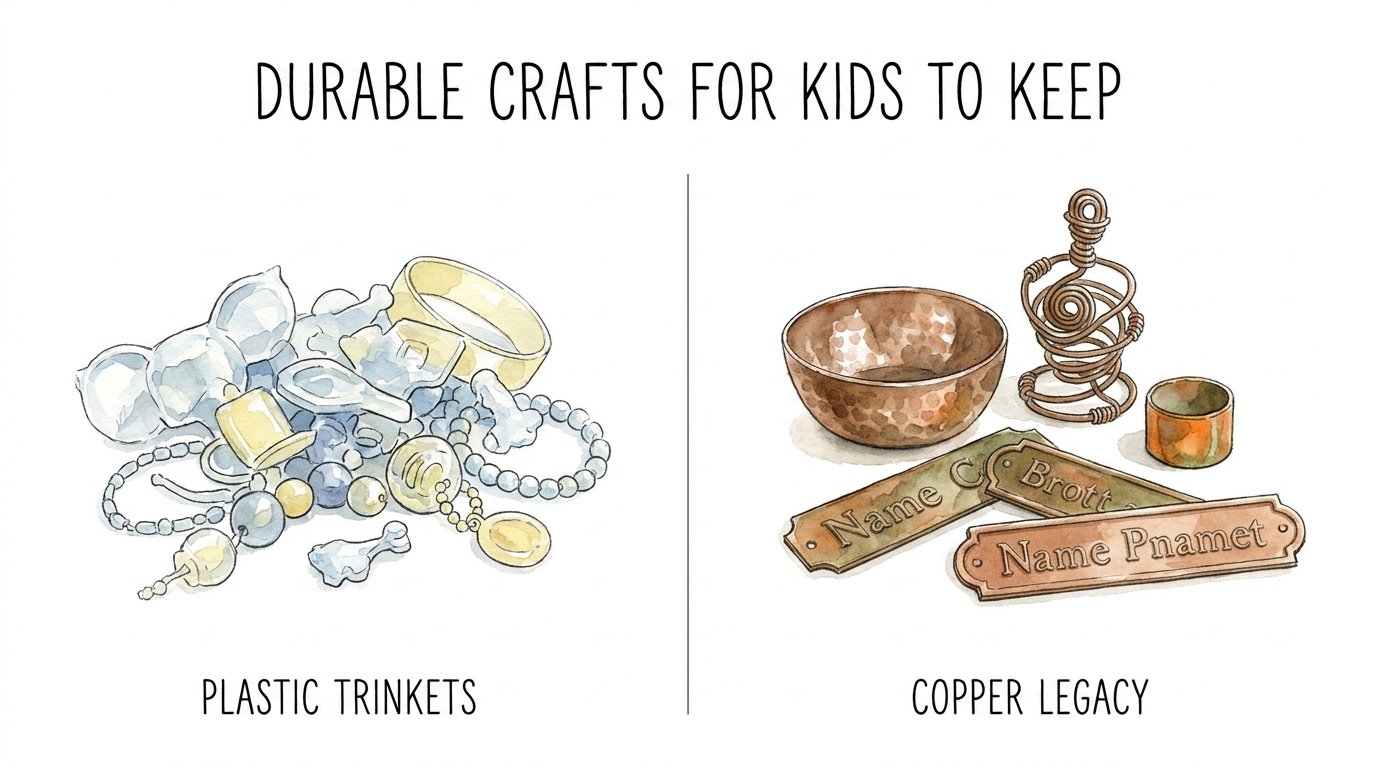
PLASTIC TRINKETS vs. COPPER LEGACY
Understanding the difference between disposable and durable crafts helps in choosing the right path for your family.
| Feature | Plastic Trinkets (Disposable) | Copper/Wood/Stone (Legacy) |
|---|---|---|
| Lifespan | Days to Weeks | Decades to Centuries |
| Skill Depth | Low (Mostly assembly) | High (Material manipulation) |
| Environmental Impact | High (Landfill waste) | Low (Natural or recyclable) |
| Sensory Experience | Uniform, Synthetic | Varied, Natural, Tactile |
| Cost per Project | Low ($1 – $5) | Medium ($10 – $30) |
| End Value | Clutter | Heirloom / Gift-worthy |
Practical Tips for Success
Start small to build confidence. A simple copper “S” hook or a sanded wooden block is a great first step. Completing a small project in one sitting gives the child a win and makes them want to try the next level.
Gather your materials from unconventional places. You can often find high-quality wood scraps at local cabinet shops for free or a small fee. Old copper plumbing pipes can be cut and hammered flat into heavy-duty bookmarks or tags. Nature itself provides “blanks” for stone painting or basic flint knapping.
Focus on the finish. A project looks 100% better when it is properly polished or waxed. Teach children how to use a polishing cloth on copper or how to apply a food-safe oil to wood. This final step transforms a “school project” into a professional-looking object.
Create a “Maker’s Mark.” Encourage your child to use a small metal stamp or a wood burner to sign their work. Adding their initials and the year gives the object historical context. It reinforces the idea that they are an author of their own creations.
Advanced Considerations for Serious Crafters
As children grow more skilled, they can move into advanced techniques like cold-connecting metal. This involves using rivets instead of glue to join pieces of copper or leather. Riveting is a mechanical skill that requires precision and provides a nearly indestructible bond.
Introduction to basic chemistry can enhance legacy crafts. Using “Liver of Sulfur” on copper creates an instant antique patina, turning shiny orange metal into dark, weathered bronze. This teaches kids about oxidation and how different elements interact with the environment.
Scaling up involves moving from decorative items to functional furniture or tools. A child who has mastered basic hammering can help build a simple “three-legged stool” or a birdhouse using joinery instead of just nails. This progression moves them from being a “crafter” to being a “builder.”
Consider the ergonomics of the tools. For older children, moving to full-sized but high-quality hand tools is a major milestone. A vintage hand-plane or a quality chisel feels different in the hand. Learning to sharpen these tools on a whetstone is the ultimate lesson in responsibility and maintenance.
Example Scenarios and Realistic Projects
Imagine a ten-year-old child who wants to make a gift for their grandfather. Instead of a paper card, they choose a 2-inch by 4-inch piece of copper sheet. They use a ball-peen hammer to create a “dimpled” texture across the surface. Using a metal stamp, they carefully punch the words “EST. 1950” into the center.
The child then files the edges until they are smooth and rounds the corners. They spend twenty minutes polishing it with a fine-grit cloth until it glows. That copper plaque is eventually mounted on a piece of reclaimed barn wood. It becomes a permanent fixture on the grandfather’s desk—a heavy, tactile reminder of his grandchild’s effort.
Another scenario involves a group of siblings finding a large, flat river stone. Instead of using markers that will fade, they use a small masonry chisel and a mallet to carve a single letter into the stone’s surface. They spend the afternoon smoothing the interior of the letter with wet-and-dry sandpaper. This stone becomes a “garden sentinel” that will stay in the family’s flower bed for the next forty years, regardless of rain, snow, or sun.
Final Thoughts
Shifting to legacy materials changes the way children view their own potential. When we give a child plastic, we tell them that their work is temporary and disposable. When we give them copper, wood, and stone, we tell them that their work is worth keeping.
Building things that last requires more time and more focus, but the rewards are exponentially greater. The pride a child feels when holding a heavy, hand-forged object is unmistakable. They aren’t just making “stuff”; they are learning that they have the power to leave a mark on the physical world.
Encourage your child to experiment with these “forever materials.” Start with one small project and watch how their attitude toward crafting shifts. You might find that the objects they create today become the most treasured family heirlooms of tomorrow. There is no better time to start building a legacy than right now.
Sources
1 youtube.com | 2 scholastic.com | 3 youtube.com | 4 iu.edu | 5 boratool.com | 6 howstuffworks.com | 7 parklanejewelry.com | 8 rainbowresource.com | 9 youtube.com | 10 kregtool.com | 11 nativeamericanactivities.com | 12 youtube.com | 13 ccthin.org | 14 alphabet-trains.com | 15 youtube.com | 16 youtube.com | 17 woodstore.net | 18 themountaintribe.vn | 19 youtube.com | 20 inventorsoftomorrow.com | 21 donnakernball.com | 22 youtube.com | 23 mycrappyhouse.com | 24 yale.edu | 25 makerstock.com | 26 teachingwoodwork.com