
kids screen time poster
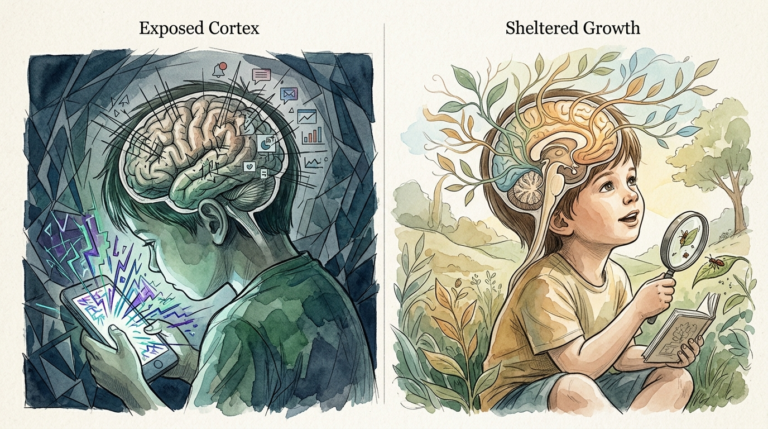
Will they remember the high score, or the time you built something together? The ‘high’ from a video game lasts minutes. The confidence from building a real-world project lasts a lifetime. Let’s trade temporary clicks for legacy skills.
Every parent knows the feeling of the “digital tug-of-war.” You tell your child it is time to put the tablet away, and suddenly the peaceful living room transforms into a courtroom of negotiations, pleas, and eventually, a meltdown. This friction often happens because the rules of the digital world feel invisible and arbitrary to a child’s developing brain. In the heat of the moment, a verbal “no” feels like a personal attack rather than a pre-established boundary.
A physical solution exists that bridges the gap between the abstract digital world and the concrete reality children understand. Shifting the focus from temporary dopamine hits to legacy character building requires a clear, visual roadmap. This is where a dedicated system for managing technology becomes an essential piece of home infrastructure rather than just another piece of paper on the fridge.
kids screen time poster
A kids screen time poster is a visual contract and daily roadmap that outlines exactly how, when, and why technology is used in the home. It serves as a neutral point of reference that removes the emotional weight from the parent-child relationship. Instead of the parent acting as a “screen-time warden,” the poster becomes the “boss” of the schedule, providing a predictable structure that children can see and touch.
These posters exist in various forms, ranging from simple checklists to complex “earn-and-burn” systems. In the real world, visual aids are used by pilots, surgeons, and engineers to ensure consistency and reduce cognitive load. For a child, a poster provides that same level of professional clarity. It helps them navigate their day without needing to constantly ask for permission or guess when their next digital window will open.
Visual schedules are particularly effective because they capitalize on the way the human brain processes spatial information. Children, especially those in the early developmental stages or those with neurodivergent traits like ADHD, often experience “time blindness.” They cannot easily perceive the passage of an hour spent in a video game. A physical poster makes these abstract concepts visible, turning “later” into a specific spot on a timeline.
The Psychology of the Visual Boundary
Research into child development shows that children feel safer and more cooperative when they know what to expect. A verbal rule can be forgotten or misinterpreted, but a poster remains constant. This consistency builds trust. When a child knows that “Screen time happens after the reading quest is complete,” they stop asking every ten minutes because the answer is already visible on the wall.
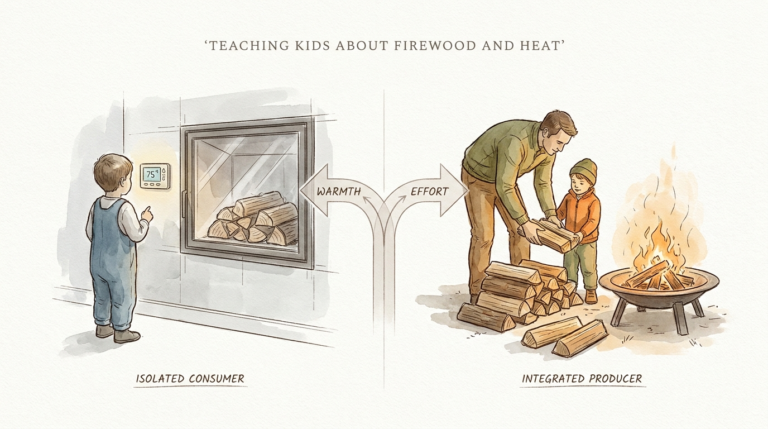
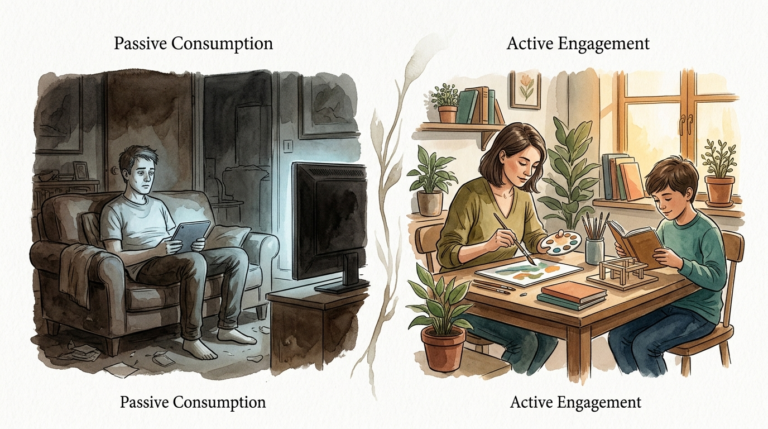
This tool also helps shift a child’s identity from being a passive consumer to an active producer. Many modern posters are designed with a “Producer vs. Consumer” layout, encouraging kids to create something in the real world before they consume content in the digital one. This subtle shift in framing helps build the legacy skills of creativity and problem-solving that last long after the device is powered down.
How to Create and Implement a Screen Time System
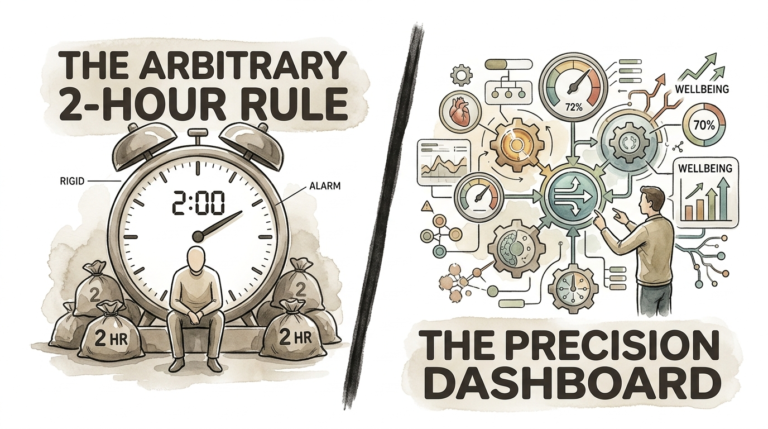
Building an effective screen time poster requires a move away from simple restrictions toward a “balanced ecosystem” approach. Current pediatric recommendations suggest focusing on the quality and context of media rather than just a stopwatch. The following process helps you build a system that sticks.
Step 1: The Values Brainstorm
Start by identifying what “legacy skills” you want your child to develop. These might include physical health, social connection, household contribution, or creative hobbies. Avoid making the poster entirely about what they *cannot* do. Instead, frame it as a “Daily Quest” or a “Success Map.” Use a large piece of poster board or a digital template that can be printed in a size that is easy to read from several feet away.
Step 2: Define the “Prerequisites”
Create a list of “Must-Do” activities that come before any “Want-To” digital time. This is often called the “First-Then” principle. A typical list might include:
- Bed made and room tidy.
- 30 minutes of outdoor movement or physical play.
- One “Creative Act” (drawing, building with blocks, writing).
- School work or chores completed.
- Water bottle finished and a healthy snack eaten.
These items should be clear, measurable, and achievable. If the task is too vague, like “be good,” the poster will fail because it leads back to negotiations.
Step 3: Design for Visual Clarity
Use color coding to differentiate between types of activities. For example, use green for “Active Production,” blue for “Essential Chores,” and yellow for “Digital Consumption.” Use icons or drawings for younger children who cannot yet read fluently. A picture of a sneaker clearly indicates “Outdoor Play,” while a picture of a tablet marks the “Digital Zone.”
Step 4: Establish the “When” and “Where”
Identify specific “Screen-Free Zones” and “Screen-Free Times” directly on the poster. Common best practices include:
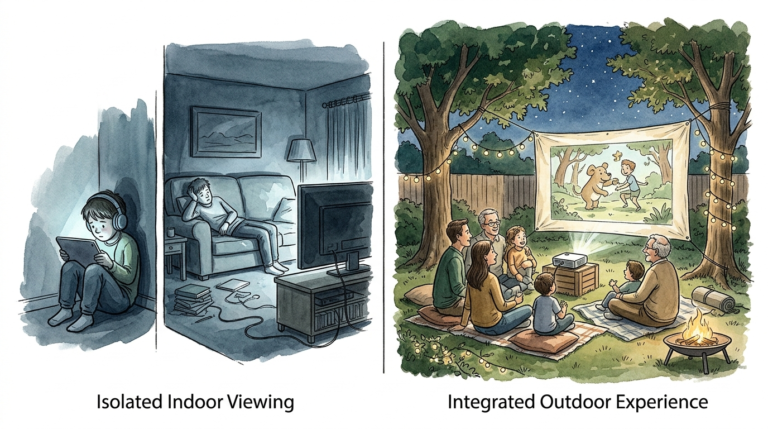
- No screens during family meals (promotes connection).
- No screens in bedrooms (improves sleep hygiene).
- A “Digital Sunset” at least 60 minutes before bedtime.
Placing these rules in writing makes them non-negotiable family standards rather than spur-of-the-moment decisions.
Benefits of a Physical Tracking System
Transitioning to a physical poster offers measurable advantages over verbal reminders or even digital parental control apps. The most significant benefit is the reduction of “decision fatigue” for the parent. When the rules are set in stone (or ink), you no longer have to decide on a case-by-case basis. You simply point to the chart.
Accountability shifts from the parent to the child. A child who checks off their own list of chores to “unlock” a gaming window is practicing executive function skills. They are learning to delay gratification, a core trait of successful adults. This process builds a sense of autonomy; the child feels they have earned their time through their own effort, which is a much more empowering feeling than being “granted” time by a gatekeeper.
Neurodevelopmental benefits are also profound. Research suggests that high-quality, interactive media can be beneficial, but it must be balanced with “agenda-less” play. A poster ensures that this balance is maintained daily. It protects the time needed for the brain to enter “default mode network” processing—otherwise known as boredom—which is the birthplace of deep creativity and self-reflection.
Challenges and Common Mistakes
Creating a poster is only half the battle; the implementation phase is where most systems fail. One common mistake is making the poster too complex. If there are 15 different tasks required to earn 10 minutes of screen time, the child will likely become discouraged and give up. The “barrier to entry” for real-world play should be low enough to be encouraging but high enough to be meaningful.
Consistency is the secondary hurdle. If a parent ignores the poster on a rainy Tuesday because they are tired, the child learns that the rules are flexible. This leads to increased “testing” of the boundaries later. To avoid this, the system should include a “Grace Clause” for special circumstances, like a family movie night or a sick day, so the exceptions are also part of the pre-agreed plan.
Another pitfall is using screen time as the *only* reward. If digital consumption is framed as the ultimate prize for every good deed, it inadvertently increases the value of the screen in the child’s mind. The goal is to integrate technology as one tool among many, not as the “gold at the end of the rainbow.” Including other rewards on the poster—like choosing the family dinner or an extra bedtime story—helps de-emphasize the screen as the sole source of joy.
Limitations and When This May Not Be Ideal
Physical posters work exceptionally well for toddlers, elementary-aged children, and younger teens, but they face limitations as children reach high school. For older teenagers, a poster on the fridge might feel infantilizing. At this stage, the “Digital Ecosystem” approach is more appropriate, focusing on digital literacy and self-regulation rather than a checkbox system.
Environmental factors also play a role. A poster system requires a stable home environment where the child spends most of their time. For families who are constantly on the move or co-parenting across two households, a physical poster might need a portable digital version to ensure the rules remain consistent across different environments.
The system also assumes that the parent is willing to model the behavior. A screen time poster for a child will rarely work if the parent is constantly on their own device in “Screen-Free Zones.” The effectiveness of the tool is directly tied to the “Model Healthy Use” principle. If the adult is not following the spirit of the poster, the child will eventually view the system as unfair and resist it.
Physical Posters vs. Digital Monitoring Apps
Many parents wonder if they can simply use “Screen Time” settings on an iPhone or a monitoring app instead of a physical poster. While apps are useful for hard cut-offs, they often lack the educational and collaborative elements of a physical chart.
| Feature | Physical Poster | Digital Monitoring App |
|---|---|---|
| Visibility | Always visible; serves as a constant reminder. | Hidden inside settings; usually only seen when time is up. |
| Child Involvement | High; kids can check boxes and help design it. | Low; usually a top-down restriction from the parent. |
| Psychological Impact | Builds self-regulation and executive function. | External control; may lead to resentment or “hacking.” |
| Flexibility | Easily adjusted for unique creative projects. | Rigid; often difficult to override for “good” screen use. |
| Cost | Near zero (paper and markers). | Often requires monthly subscriptions. |
The most effective strategy is often a hybrid approach. Use the physical poster to build the “habits of the heart” and the digital apps as a safety net to prevent accidental overages. This combination provides both the “why” (the poster) and the “how” (the app) for a healthy digital life.
Practical Tips and Best Practices
Placement is everything. The poster should be hung in a high-traffic area, such as the kitchen or near the “charging station” where devices are kept. If it is tucked away in a bedroom, it will be forgotten. Make the poster durable by laminating it or placing it in a glass frame, allowing the child to use dry-erase markers to check off their daily quests.
Involve the children in the creation process. Research into family contracts shows that children are far more likely to follow rules they helped create. Ask them, “What do you think is a fair amount of time for Minecraft?” or “What chores should be done before the iPad comes out?” This negotiation teaches them valuable communication skills and gives them a stake in the system’s success.
Focus on “active” versus “passive” screen time. Not all digital time is created equal. A child spent three hours coding a game or editing a video is using their brain differently than a child scrolling through short-form video clips. Consider having different “rates” for different activities. For example, educational or creative digital work might not count against the daily “recreational” limit.
Advanced Considerations: The Dopamine Reward Cycle
Serious practitioners of balanced parenting understand that screen time management is actually about managing the brain’s reward system. Video games and social media are designed to trigger dopamine releases, which can make real-world activities like reading or doing dishes feel “boring” by comparison. This is often referred to as a “dopamine baseline shift.”
A well-designed poster acts as a “dopamine detox” tool. By requiring a period of “low-stimulation” activity (like playing with LEGOs or drawing) before a “high-stimulation” activity (video games), you help protect the child’s ability to focus on less exciting but more important tasks. This neuroplasticity—the brain’s ability to adapt—is strongest in childhood. Using a visual system to regulate these loops helps ensure the prefrontal cortex develops the “brakes” necessary for lifelong self-control.
Modern pediatric experts emphasize the “Digital Ecosystem.” This means looking at screens not as a separate category, but as part of the whole child’s life. If the child is sleeping well, doing well in school, and has physical friends, the specific number of minutes on a screen is less important than the quality of their overall lifestyle. The poster should reflect this holistic view.
Example Scenario: The Saturday Morning Trap
Imagine a typical Saturday morning. In many homes, the child wakes up at 6:30 AM and immediately reaches for a tablet while the parents are still asleep. By the time the family gathers for breakfast, the child has already spent two hours in a digital fog, often leading to irritability for the rest of the day.
With a “Saturday Quest” poster in place, the rules change. The rule might be: “No screens before 9:00 AM.” Below this, the poster lists “Morning Options”:
- Build a fort.
- Listen to a podcast or audiobook.
- Draw a map of a made-up island.
- Set the table for a big breakfast.
Because the options are pre-vetted and visible, the child doesn’t feel “blocked”; they feel “directed.” By the time 9:00 AM arrives, they have already engaged their creative brain, making them much less likely to binge on content when they finally do get their device.
Final Thoughts
A kids screen time poster is more than just a list of rules; it is a tool for character transformation. It moves the family dynamic away from conflict and toward collaboration. By making boundaries visible and predictable, you are giving your child the gift of clarity and the opportunity to practice self-discipline in a world designed to distract them.
The goal is not to eliminate technology, but to master it. When you trade temporary clicks for legacy skills, you are teaching your child that they are a creator first and a consumer second. This mindset will serve them far longer than any high score ever could. Start with a simple piece of paper today, involve your kids, and watch as the household shifts from “just five more minutes” to “look what I built.”
Experiment with different formats until you find the one that fits your family’s unique rhythm. Consistency is the key that unlocks the value of the system. As your children grow, the poster will evolve, but the foundation of trust and accountability you build now will remain a permanent part of their character.
Sources
1 youtube.com | 2 screensdownfamilyup.com | 3 screensdownfamilyup.com | 4 centerforonlinesafety.com | 5 healthychildren.org | 6 lovetoknow.com | 7 medlineplus.gov | 8 aap.org | 9 commonwealthpeds.com | 10 thepragmaticparent.com | 11 betterscreentime.com | 12 childrenandscreens.org | 13 jessicasinarski.com | 14 mother.ly