offline family activities
Don’t just co-exist in the same room. Start creating in the same space. Offline doesn’t mean boring. It means high-level engagement. From backyard bushcraft to complex tabletop strategy, here is how we leveled up our family time.
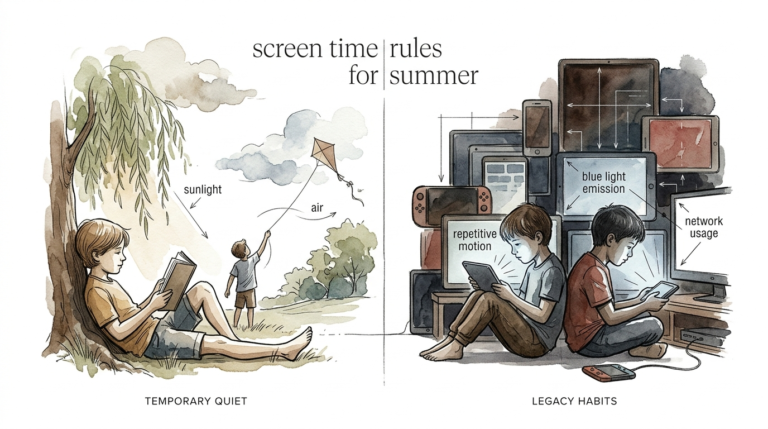
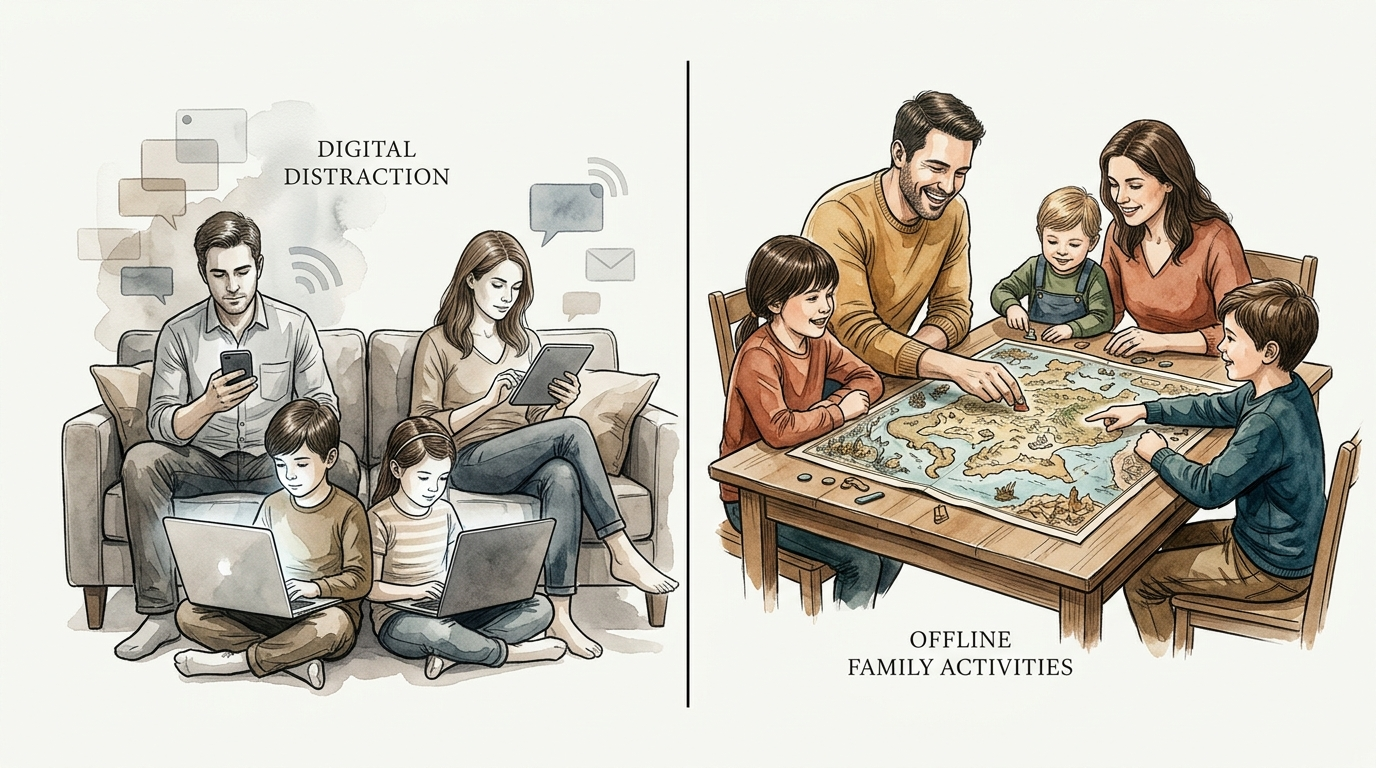
We live in an age of side-by-side scrolling. You are on your phone, they are on theirs, and the TV is humming in the background. It feels like connection, but it is just proximity. To truly connect, you need shared stakes and active participation.
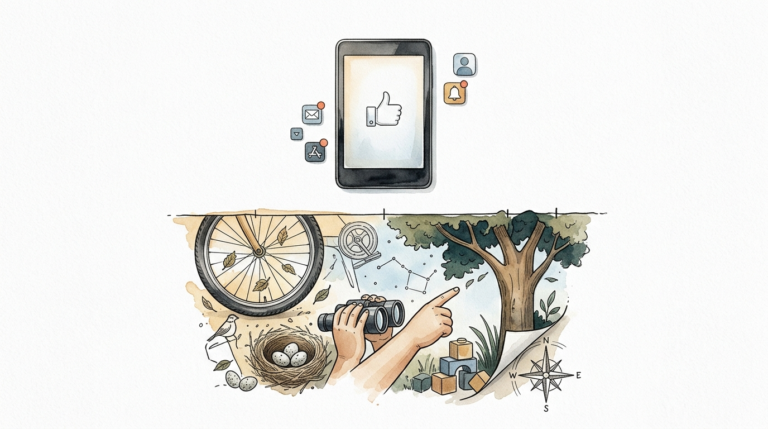
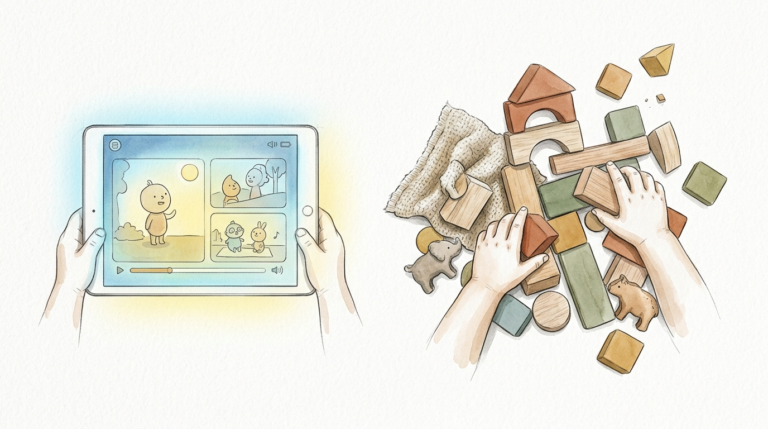
High-level engagement happens when the family moves from being consumers to being creators. Whether you are building a debris hut or navigating a complex board game, you are building memories that outlast any viral video. This is the shift from Standard Digital Distraction to Pro-Level Memory Making.
This guide isn’t just about “putting the phones away.” It is about replacing the digital void with something better. We are going deep into the systems, skills, and strategies that turn ordinary weekends into legendary adventures.
offline family activities
Offline family activities are intentional, hands-on experiences that require active mental or physical participation. Unlike passive entertainment, these activities demand decision-making, cooperation, and skill development. They exist to bridge the gap between “passing time” and “building a life.”
In the real world, these activities take many forms. Some families gravitate toward backyard bushcraft, where they learn to manipulate the natural environment using primitive tools. Others prefer complex tabletop strategy, using logic and social engineering to solve intricate puzzles. Then there are collaborative projects like gardening or DIY home repair, where the family works as a single unit to achieve a tangible goal.
These activities exist because humans are wired for “deep play.” We thrive when we face challenges that match our skill levels. When a family engages in these tasks, they aren’t just playing; they are practicing for life. They are learning how to fail, how to troubleshoot, and how to win together.
Think of it as a “skill tree” for your household. You start with basic tasks—like tying a knot or playing a simple card game—and eventually level up to complex engineering or multi-session narrative campaigns. Every step forward strengthens the bond between family members.
How to Level Up: Systems for High-Level Engagement
Success doesn’t happen by accident. You need a system to move from “bored in the living room” to “active in the space.” Here is how you can break down the major offline pillars into actionable steps.
The Bushcraft Progression
Start small in the backyard. You don’t need a national park to learn self-reliance. Begin with Knot Mastery. Teach the family the “Big Three”: the Square Knot, the Bowline, and the Clove Hitch. These are the building blocks of every shelter and tool you will ever make.
Once the knots are second nature, move to Shelter Dynamics. Use a simple tarp and some natural cordage. Challenge the family to build a lean-to that can withstand a garden hose “rain test.” This teaches spatial awareness and basic engineering principles in a high-stakes, high-fun environment.
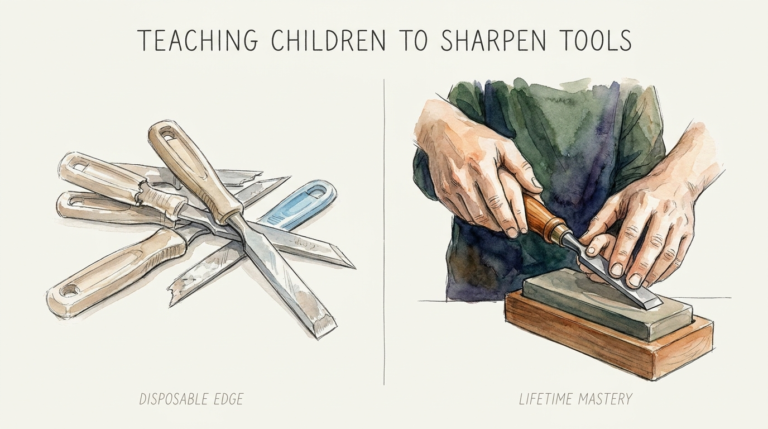
Finally, introduce Carving and Tool Use. Start with “Try Sticks”—pieces of wood where you practice making different types of notches. This builds fine motor skills and respects the “blood circle” safety rules. Eventually, you can graduate to carving functional items like spoons or tent pegs.
The Tabletop Strategy Framework
Tabletop gaming is the ultimate gym for the brain. Move past the “roll and move” games of the past. Start with Gateway Strategy games like Catan or Ticket to Ride. These introduce “resource management” and “route building” without overwhelming new players.
Level up to Cooperative Strategy. In games like Pandemic or Forbidden Island, the family plays against the game itself. This removes the “sore loser” dynamic and replaces it with “team-based problem solving.” You win together, or you lose together. It is a powerful bonding tool.
The final tier is Narrative Campaigns and Legacy Games. These games, like Pandemic Legacy or Dungeons & Dragons, carry a story across multiple sessions. Decisions you make in Week 1 affect the world in Week 10. This creates a shared history that the family will talk about for years.
Collaborative “Maker” Projects
Turn your home maintenance into a masterclass. DIY Repair is a goldmine for engagement. When the sink leaks, don’t just call a plumber. Turn it into a family briefing. Identify the tools, explain the mechanics, and assign “specialist” roles. One person is the flashlight technician; another is the parts manager.
Victory Gardens offer a seasonal cycle of engagement. Planning the layout is a geometry lesson. Planting is a sensory experience. Harvesting is the ultimate payoff. It teaches the family that some of the best things in life take time and consistent effort.
The Benefits of Going Pro-Level
Why choose a complex board game over a movie? Because the measurable benefits are massive. High-level engagement triggers “flow states”—those moments where you lose track of time because you are so focused on the task at hand.
Cognitive Resilience: Strategy games and bushcraft require “executive function.” You have to plan, prioritize, and adapt. Studies show that regular strategic play can improve memory and decrease the long-term risk of cognitive decline. For kids, it builds the mental “muscle” needed for math and logic.
Emotional Intelligence: Offline activities are “face-to-face” by design. You have to read body language. You have to negotiate. You have to handle frustration when a knot slips or a dice roll goes cold. This “social-emotional learning” is impossible to replicate through a screen.
Bonding Through Shared Stakes: When you are building a fire together, you have a shared goal. If the fire goes out, everyone is cold. This creates a sense of “us against the problem” rather than “me against you.” It builds a culture of mutual support that carries over into every other part of family life.
Challenges and Common Pitfalls
The transition from digital to analog isn’t always smooth. Expect some resistance. The “Digital Withdrawal” is real. When the brain is used to high-dopamine scrolling, a slow-paced board game can feel “boring” at first. This is a temporary hump you must cross.
The “Expert” Trap: Avoid being the “Commander” who does everything while everyone else watches. If you are the only one who knows the rules or how to tie the knots, the rest of the family will check out. Your goal is to be a mentor, not a boss. Empower them to make mistakes.
Scheduling Friction: High-level activities take time. A complex game can take two hours. A bushcraft project might take all afternoon. If you try to squeeze these into a 20-minute window between chores, you will fail. You have to protect the time. Treat it like an appointment.
Over-Complication: Don’t start with the hardest project. If you buy a 100-page rulebook for a family that only knows Checkers, you will hit a wall. Always aim for the “Goldilocks Zone”—just hard enough to be a challenge, but not so hard that it causes a meltdown.
Limitations and Realistic Constraints
Not every activity works for every family. You have to recognize your boundaries. Environmental limitations are real. If you live in an apartment, “backyard” bushcraft might look like “balcony” gardening or “living room” knot-tying. You have to adapt the activity to your space.
Budgetary constraints also play a role. Some high-end board games or specialized survival tools can be expensive. However, you don’t need the “pro” gear to have a pro experience. A $5 roll of paracord and a used board game from a thrift store provide 90% of the value of the expensive versions.
Age Gaps can be tricky. A 15-year-old and a 5-year-old have different capacities for complexity. In these cases, you need “layered activities.” For a tabletop game, the older child can manage the complex rules while the younger child “rolls for the team” or manages the game pieces. In bushcraft, the teen carves while the child gathers the wood.
Comparison: Passive vs. Active Engagement
It is important to understand what you are gaining by making this switch. Let’s look at the measurable differences between standard entertainment and pro-level engagement.
| Factor | Passive (Standard) | Active (Pro-Level) |
|---|---|---|
| Dopamine Source | Instant/Novelty (Scrolling) | Delayed/Achievement (Building) |
| Social Dynamic | Side-by-Side (Parallel) | Face-to-Face (Interactive) |
| Skill Level | Low/Static | Scalable (Skill Trees) |
| Memory Retention | Low (Fades quickly) | High (Story-driven) |
| Conflict Type | External (Distractions) | Internal (Problem-solving) |
Practical Tips for a Smooth Transition
Don’t just announce “No Screen Sunday” and hope for the best. You need to set the environment for success. Use a “Phone Jar.” Everyone, including the parents, drops their phone in a designated spot at the start of the activity. If the “leader” is checking emails, the system collapses.
Designate “No-Tech Zones.” The kitchen table and the backyard fire pit should be sacred ground. These are spaces where technology simply doesn’t exist. This creates a mental trigger: when you enter this space, your “active engagement” mode turns on.
The “Rules-Lite” Start: For games or skills, start with a “Quick Start” version. Don’t read the whole manual. Learn enough to start playing in five minutes. You can add the complex rules once the family is already hooked on the fun part.
Celebrate the Failures: In bushcraft, your first shelter will probably leak. In a strategy game, you will probably lose your first match. Make these moments funny. Turn “The Great Tarp Collapse” into a family legend. When failure is part of the fun, people are more willing to try hard things.
Advanced Considerations: The Long Game
Once you have the basics down, you can start building a Family Narrative. This is where the real magic happens. For tabletop groups, this means moving into “World Building.” Create a map of a fictional land together. Write down the history of your previous games. This turns a hobby into a shared mythology.
In bushcraft, think in Seasonal Cycles. Spring is for foraging and tracking. Summer is for water-based skills and shelter building. Fall is for fire-craft and wood processing. Winter is for gear maintenance and indoor carving. This keeps the engagement fresh all year round.
Consider Mentorship Tracks. As the kids get older, give them “Master” status in specific areas. Maybe your daughter becomes the “Fire Master” who leads every fire-starting session. Maybe your son becomes the “Game Master” who explains the rules of new tabletop titles. Giving them authority increases their “buy-in” and builds their leadership skills.
Scenario: The “Rainy Weekend” Transformation
Imagine it is Saturday morning. The rain is pouring. Usually, the family would drift to their separate screens for six hours of scrolling. Instead, you trigger the “Strategy Lockdown” protocol.
You pull out a Legacy Board Game. Because the game has a continuing story, the family is already invested. You spend the first 30 minutes recapping “what happened last time.” This builds narrative memory. Then, you play two sessions. There is shouting, laughing, and intense debate about whether to save the city or hoard resources.
By lunch, the rain clears. You move to the backyard for Cordage Practice. You gather some long grass or inner bark and spend an hour together twisting fibers into a “two-ply” rope. By the end of the day, you have a functional piece of gear made from scratch and a story about how the “Medic” in your game barely saved the team.
Compare this to the “Standard” Saturday. No one remembers what they saw on TikTok four hours ago. But everyone remembers the rope they made and the game they almost lost. That is the difference.
Final Thoughts
Leveling up your family time isn’t about being “anti-technology.” It is about being “pro-connection.” It is about recognizing that the most valuable thing you own is your collective attention. When you spend that attention on high-level, offline activities, you are investing in the foundation of your family.
The transition takes effort. It requires you to be a leader, a mentor, and sometimes a student. But the payoff is a household that doesn’t just “co-exist” in the same room. You are a team. You are a tribe. You are creators who know how to solve problems and make memories in the real world.
Start small this weekend. Pick one knot. Pick one game. Pick one project. Put the phones in the jar and see what happens when you start creating in the same space. You might find that the “offline” world is a lot more exciting than you remembered.
Sources
1 parentpowered.com | 2 cardboardempire.blog | 3 eohfamilies.org | 4 youtube.com | 5 pontchartrainpediatrics.com | 6 ourdayscalendar.com | 7 teachbesideme.com | 8 youtube.com | 9 reddit.com | 10 reddit.com | 11 reddit.com | 12 childrenstrustma.org | 13 laparent.com | 14 georgiabushcraft.com | 15 familius.com | 16 ttrpgkids.com