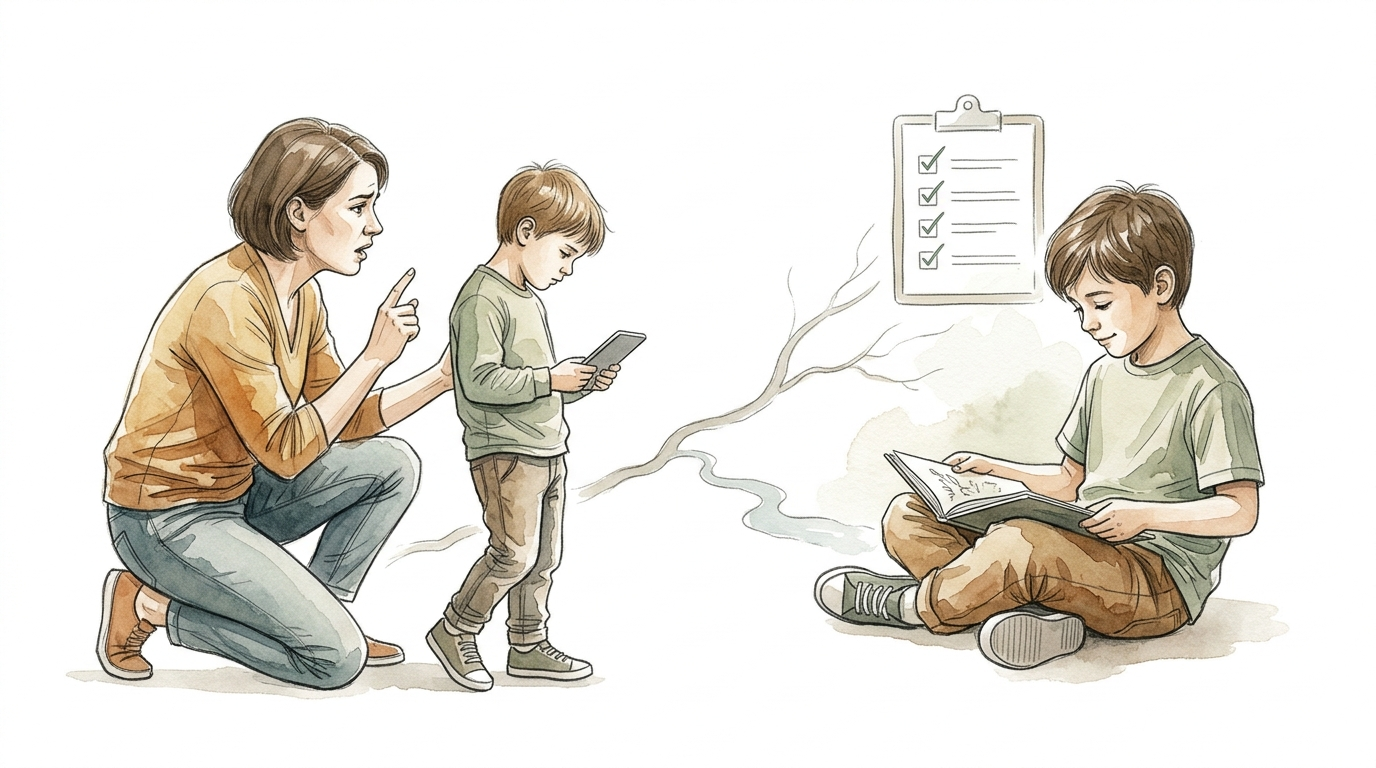
kids screen time checklist
Turn your daily tech battle into a teaching moment. Screens are a nuisance when there are no rules. They become an asset for teaching responsibility when you use this daily checklist.
Most parents find themselves caught in a cycle of “the constant nag.” You see your child slumped over a tablet, you feel the guilt rise, and you start the countdown. “Five more minutes!” you shout. When five minutes pass, the battle begins. This friction doesn’t just ruin the afternoon; it erodes the relationship between parent and child. It turns technology into a forbidden fruit and you into the digital police officer. But there is a better way.
The secret isn’t just “less time.” The secret is a system that shifts the burden of responsibility from your shoulders to theirs. By using a structured kids screen time checklist, you move away from being a time-cop and toward being a digital mentor. You stop fighting over the “off” switch and start teaching your child how to manage their own brain’s dopamine response. This guide will show you exactly how to build that system, why it works for their developing brain, and how to make it stick long-term.
kids screen time checklist
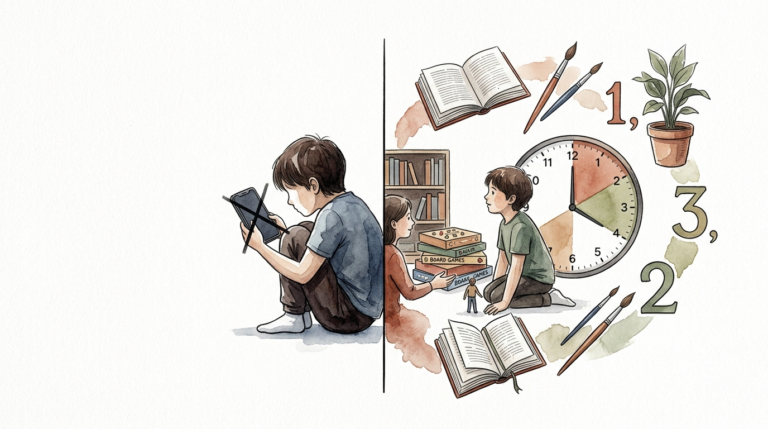
A kids screen time checklist is a simple, visual agreement that defines which “real-life” tasks must be completed before a child earns access to digital devices. It acts as a behavioral gatekeeper, ensuring that essential developmental needs—like physical movement, creative play, and household contributions—are met before the high-stimulation world of screens takes over. In the real world, this is often referred to as “Grandma’s Rule”: eat your vegetables before you get dessert.
In a modern household, the checklist serves as a contract. It removes the ambiguity of “Can I play now?” because the child already knows the answer. If the boxes aren’t checked, the tablet stays in the charging station. This approach is used by pediatricians and occupational therapists to help children develop executive function—the mental skills that include working memory, flexible thinking, and self-control. Instead of being a passive recipient of entertainment, the child becomes an active manager of their own schedule.
Think of the checklist as a training wheel for life. Eventually, we want our children to realize on their own that they shouldn’t spend six hours on YouTube when the lawn needs mowing or a project is due. By starting this habit early, you are hard-wiring the “effort-before-reward” circuit in their brain. This transforms the device from a constant source of family conflict into a tool for teaching self-governance.
How to Build Your Family’s Daily System
Creating a checklist that actually works requires more than just listing a few chores. You need to categorize tasks to ensure a balanced “brain diet.” A successful system usually follows a specific order of operations: hygiene first, responsibilities second, and enrichment third. When these categories are clear, the child understands that screen time is a supplement to a full life, not the main event.
Start by identifying the non-negotiables for your specific household. For most, this includes basic self-care like making the bed, getting dressed, and brushing teeth. For older children, it might include a “brain-gain” task, such as 20 minutes of reading or practicing a musical instrument. The goal is to ensure that by the time they sit down with a screen, they have already engaged their bodies and their minds in the physical world.
Next, define the “Done” state for each task. Ambiguity is the enemy of a checklist. Instead of “Clean your room,” use “Lego bricks in the bin and clothes in the hamper.” This prevents the inevitable argument where you think the task isn’t finished and they think it is. Clear definitions lead to clear boundaries. Once the physical environment is established, you can move on to the “Dopamine Bridge”—a term used to describe the transition from high-intensity screen use back to the real world. Ensure the checklist includes a “Post-Screen Task,” like five minutes of tidying up the device area, to help their brain reset.
The Cognitive Edge: Why Checklists Benefit the Brain
The primary benefit of a screen time checklist is the development of executive function. When a child looks at a list and decides which task to tackle first, they are practicing prioritization and planning. These are the same skills they will need later in life to manage a career or a household. Screens, by design, are “passive” and require very little executive function; the checklist provides the “active” counter-balance.
Another measurable advantage is the stabilization of mood. We know that screens provide massive hits of dopamine—the “feel-good” neurotransmitter. When a child spends hours in a high-dopamine state and is suddenly cut off, they experience a “dopamine crash,” which manifests as a meltdown or irritability. A checklist prevents this by making the screen time the *end* of a sequence of varied activities. Their brain has already been primed with the “slow-burn” dopamine of completing a puzzle or playing outside, making the transition easier.
Finally, a checklist fosters independence. There is a profound psychological difference between a parent saying “No” and a checklist saying “Not yet.” When the rules are posted on the fridge, the child is no longer fighting *you*; they are simply navigating the rules of the house. This reduces the “constant nag” and allows you to be the person who cheers them on when they finish their tasks, rather than the villain who takes the iPad away.
Common Pitfalls and Why They Happen
One of the most frequent errors parents make is using the checklist as a punishment. If the checklist becomes a weapon, the child will grow to resent the tasks on it. Instead, the checklist should be framed as a roadmap to success. The tasks aren’t obstacles; they are the “fuel” that earns the “fun.” When you frame it as a reward system, you tap into the child’s natural motivation.
Inconsistency is another major pitfall. If you enforce the checklist on Monday but let them slide on Tuesday because you’re tired, the system breaks. Children are highly attuned to “weaknesses” in a system. They will push and negotiate every single day if they think there is a 10% chance the rules won’t apply. To avoid this, the checklist must be the “Law of the Land.” If you need a break, build a “Screen-Free Day” or a “Bonus Screen Time” rule into the checklist itself rather than breaking the system manually.
Lastly, many parents set the bar too high. If a seven-year-old has fifteen items on their list before they can watch a show, they will likely give up before they start. The checklist should be challenging but achievable. Start with 4–5 core items and slowly add more as they get faster and more responsible. The goal is to build a “winning streak” where the child feels capable of meeting your expectations.
Limitations of the Checklist Method
While powerful, a screen time checklist is not a silver bullet. It works best for children who are neurotypical and have a baseline level of impulse control. For children with ADHD or other executive function challenges, a written list might feel overwhelming. These children may need a “visual schedule” with pictures instead of words, or a “Now/Then” board that only shows one task at a time.
Environmental factors also play a role. If the house is constantly buzzing with adult screen use, a child will struggle to follow their own checklist. Modeling behavior is the foundation of digital mentorship. You cannot expect a child to value “creative play” if they never see you engage in it. The checklist works best when it is part of a “Whole-Family Digital Plan” where even parents have boundaries on their phone usage during family time.
Additionally, the checklist may need to be suspended or heavily modified during illness, travel, or special holidays. Forcing a sick child to “play outside for 30 minutes” before they can watch a movie is counterproductive. The key is to have a “Regular Mode” and a “Special Occasion Mode” so the child understands that the system is flexible when life changes, but the core values remain the same.
The Nag vs. The Mentor: A Comparative Look
Understanding the shift from “The Constant Nag” to “The Digital Mentor” is essential for long-term peace. The following table illustrates how a checklist-based system changes the dynamic of the household.
| Feature | The Constant Nag (Nuisance) | The Digital Mentor (Asset) |
|---|---|---|
| Source of Control | Parent’s mood and voice. | The agreed-upon checklist. |
| Child’s Role | Passive/Negotiator. | Active Manager/Self-governing. |
| Daily Conflict | High (Frequent arguments). | Low (Rules are visible). |
| Skill Taught | Obedience or evasion. | Responsibility and planning. |
| Long-Term Outcome | Device addiction/Sneaking behavior. | Digital literacy and balance. |
Practical Tips for Implementation
To get started today, print or hand-write a checklist and place it in a high-traffic area, like the refrigerator or the back of the front door. Use a “dry-erase” surface so the child can physically check off boxes. This physical act of checking a box provides a small hit of accomplishment that bridges the gap to the larger reward of screen time.
Include a “Boredom Clause.” One of the most important items on a checklist is “15 minutes of doing nothing.” In our digital world, we have lost the ability to be bored, but boredom is where creativity is born. By requiring a period of “screen-free downtime,” you allow the child’s brain to wander, which is essential for problem-solving and self-reflection. Don’t be afraid if they complain; that discomfort is the feeling of their brain building new neural pathways.
Use a “Time-Block” approach rather than a “Minute-Counting” approach. Instead of saying “You get 60 minutes,” say “You get the block of time between 4:00 PM and 5:00 PM if your list is done.” This teaches them to manage their time. If they finish their checklist late, they have less time for screens. This is a powerful, natural consequence that doesn’t require you to be the “bad guy.” They simply learn that their efficiency directly impacts their leisure time.
Advanced Considerations: From Content to Context
For parents of older children and teens, the checklist should evolve from “What did you do before the screen?” to “What are you doing *on* the screen?” This is the core of the latest 2026 AAP guidelines. Not all screen time is created equal. Passive scrolling on TikTok is vastly different from learning to code, editing a video, or video-chatting with a grandparent. Your advanced checklist might include a requirement for “Active Creation” versus “Passive Consumption.”
Consider the “Digital Ecosystem.” Modern devices are designed to keep us engaged through autoplay and infinite scrolls. Teach your children about these “persuasive design” features. An advanced checklist item could be: “Check your settings and ensure autoplay is off.” By involving them in the technical setup, you are building their digital literacy. You are teaching them to see the “hooks” that apps use to steal their time, turning them from consumers into savvy users.
Privacy and safety should also be part of the advanced discussion. For tweens and teens, the “checklist” might be a weekly check-in where you review their privacy settings together or discuss a recent online interaction. This maintains the “Digital Mentor” relationship, where you are a consultant in their digital life rather than a warden. This trust is the most valuable asset you have as they navigate the complexities of social media.
Scenario: The Saturday Morning Success Story
Imagine a typical Saturday. In a “Nag” household, the kids wake up, grab their tablets, and stay in bed for three hours. By 10:00 AM, they are irritable, haven’t eaten a real breakfast, and the house is a mess. When the parent finally says “Enough!” the explosion is inevitable because the kids have been in a dopamine loop for hours.
Now, imagine the “Checklist” household. The kids wake up and know the rule: No screens until the Saturday List is done. They spend the first hour making breakfast, putting away the laundry, and playing with the dog in the yard. By 10:30 AM, they come to you with their completed checklist. They are energetic, they feel a sense of accomplishment, and their brains are ready for a reward. You say “Great job!” and they sit down for an hour of gaming. When the hour is up, the transition is smoother because they’ve already had a balanced morning. They move on to lunch without the meltdown because the “screens” were just one piece of a productive day.
In this second scenario, the parent didn’t have to shout once. The checklist did the heavy lifting. The child learned that work comes before play, and the parent got a clean house and happy kids. This isn’t a fantasy; it is the predictable result of a well-implemented system.
Final Thoughts
The goal of a kids screen time checklist isn’t to eliminate technology, but to integrate it into a healthy, balanced life. By shifting the focus from “counting minutes” to “completing responsibilities,” you empower your child to become self-governing. You move from the exhausting role of the constant nag to the rewarding role of the digital mentor. This small shift in strategy can radically change the atmosphere of your home and the trajectory of your child’s development.
Remember that this is a journey, not a one-time fix. Your checklist will need to grow and change as your child does. Be patient with the process, be consistent with the rules, and always keep the relationship at the center. When you stop fighting over the screen and start teaching responsibility, the device stops being a nuisance and starts becoming an asset for their future. Start small today, and watch how a simple list can transform your daily tech battles into teaching moments.
Sources
1 theottoolbox.com | 2 theottoolbox.com | 3 stayathomeactivitymom.com | 4 yourmodernfamily.com | 5 coffeepancakesanddreams.com | 6 healthychildren.org | 7 bloom-path.app | 8 edsurge.com | 9 choc.org | 10 concordiahanoi.org