kids daily routine chart no screens
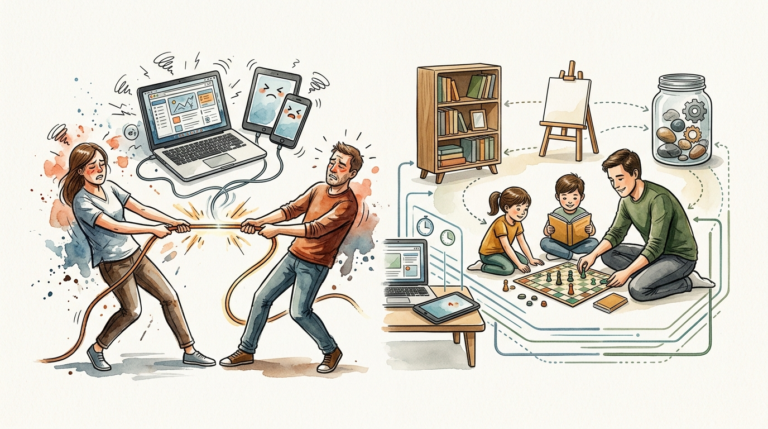
Stop fighting the morning routine. Replace the lecture with a system that actually flows. Is your morning a battle of wills? Static rules lead to friction. Dynamic routines lead to flow. Here is how we ditched the iPad and found our rhythm.
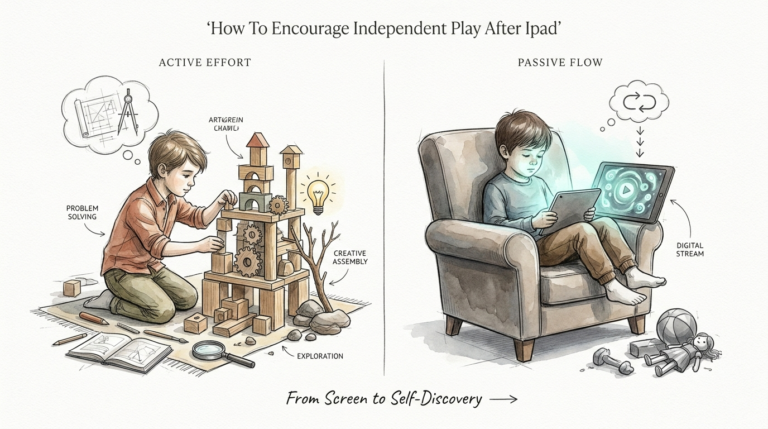
Mornings should be the launchpad for your child’s day, not a demolition derby of stress and screen addiction. For many families, the iPad has become a “digital babysitter” that helps parents get through the early hours, but the cost is hidden in the classroom. When a child starts their day with high-intensity digital stimulation, their brain enters a state of “bottom-up” reflex attention. This exhausts their conscious focus before they even step onto the school bus. Switching to a system that prioritizes physical engagement and visual clarity changes the entire family dynamic.
kids daily routine chart no screens
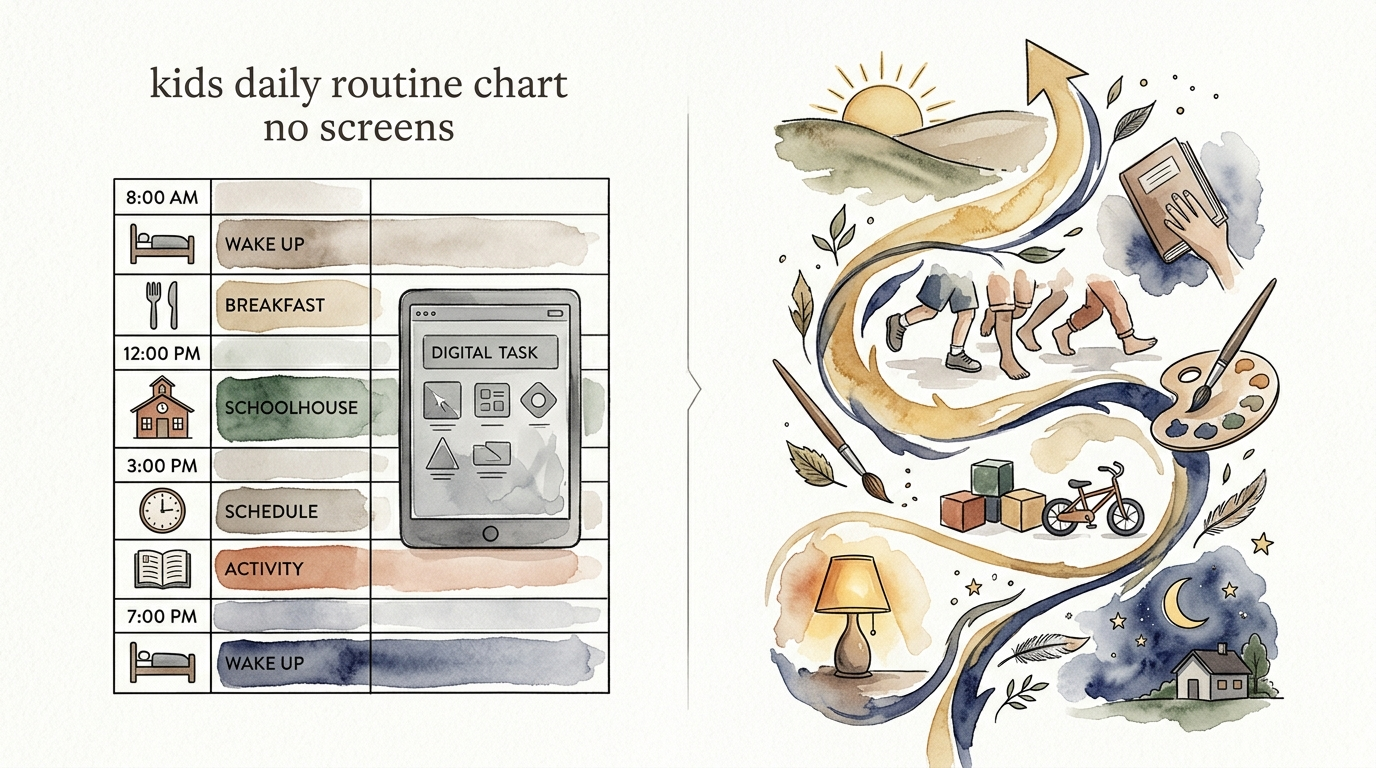
A kids daily routine chart no screens focus is a visual, interactive tool designed to guide children through their morning and evening tasks without the need for digital distractions. It serves as a physical roadmap for the brain. Instead of a parent hovering and shouting instructions, the chart becomes the “boss.” This shift from verbal nagging to visual tracking is essential for developing independence.
In the real world, these charts are often implemented using magnetic boards, laminated checklists, or Velcro-based “first-then” systems. They exist to bridge the gap between a child’s desire for autonomy and their still-developing executive function. For a child, a morning without a screen can feel like a vacuum. The routine chart fills that vacuum with predictable, manageable steps that provide a different kind of satisfaction—the dopamine hit of completion rather than the dopamine spike of a video game.
Think of the chart as a GPS for the morning. Without it, your child is wandering through a fog of “what do I do next?” while you are the frustrated passenger shouting directions. With a screen-free routine chart, the child takes the driver’s seat. They see the destination, they understand the turns, and they reach the finish line with their dignity—and yours—intact.
The Mechanics of a Screen-Free Morning Flow
Creating a routine that actually works requires moving away from the idea of a rigid “to-do list” and toward the concept of “flow.” A flow-based routine is sequential and sensory. It doesn’t just tell a child to “get ready”; it breaks down the complex neuro-motor actions into bite-sized pieces.
Start by identifying the non-negotiables. These usually include hygiene, dressing, and nutrition. Once these are identified, you must order them in a way that minimizes transitions. If your child struggles to leave the breakfast table, put dressing first so they are “launch-ready” before they sit down to eat.
Visual cues are the secret sauce. For younger children, a kids daily routine chart no screens should use actual photographs of the child performing the task. Seeing themselves brushing their teeth or putting on shoes makes the abstract concept of “getting ready” concrete. For older children, icons or simple text work well, but the physical interaction remains key. Moving a magnet from “To Do” to “Done” provides a tactile sense of progress that a digital app cannot replicate.
Why Screens Kill the Morning Momentum
Neuroscience shows that early morning screen time can negatively impact language ability and attention span. Research indicates that children exposed to screens before school are three times more likely to develop primary language disorders. This happens because screens provide “impoverished” stimulation. A child watching a fast-paced cartoon is not practicing the “top-down” attention required for reading or listening to a teacher.
The iPad is a transition killer. It creates a state of hyper-focus that is incredibly difficult to break. When you tell a child to “turn it off and put on your shoes,” you are asking their brain to perform a massive gear shift. This leads to the inevitable “battle of wills.” By removing the screen entirely and replacing it with a physical routine chart, you eliminate the hardest transition of the day.
Benefits of a Visual, Screen-Free System
Transitioning to a screen-free routine offers measurable improvements in household harmony. One of the primary advantages is the reduction of “parental fatigue.” When you stop being the one who reminds, nags, and corrects, your relationship with your child shifts from adversary to coach.
Self-regulation is another massive win. When a child follows a chart, they are practicing executive function skills like planning, initiation, and task switching. These are the same skills they need to succeed in math, reading, and social interactions. Over time, the chart builds “muscle memory” for the brain. The child stops asking “what’s next?” because the sequence is etched into their morning rhythm.
Independence breeds confidence. A child who can navigate their morning without a single verbal prompt feels capable. That sense of “I can do this” carries over into the school day. They arrive at the classroom feeling organized and ready to learn, rather than frazzled and overstimulated.
Common Mistakes and Pitfalls
Many parents fail because they make the routine too complex. A chart with 15 steps is a recipe for overwhelm. Keep it to five or six essential “anchor points.” If the chart is too long, the child will lose interest halfway through, and you will find yourself right back in the “nagging cycle.”
Consistency is the other major hurdle. If the chart is used on Monday and Tuesday but forgotten on Wednesday, the system breaks. The child needs to know that the chart is a non-negotiable part of the morning “law.” Another mistake is using the chart as a punishment. It should be a tool for success, not a list of things they “have to do” or else.
Avoid the “set it and forget it” trap. A child’s needs change as they grow. A chart that worked for a four-year-old will be insulting to a seven-year-old. Review the chart every few months to ensure it still reflects the child’s current level of ability and responsibility.
Limitations and Realistic Constraints
While a kids daily routine chart no screens is a powerful tool, it isn’t a magic wand. Environmental factors still play a role. If a child is consistently under-sleeping, no amount of visual scheduling will prevent a morning meltdown. Sleep hygiene is the foundation upon which the routine is built.
Illness and major life changes can also disrupt the system. During times of high stress or physical ailment, the “flow” may need to be simplified or temporarily abandoned in favor of more hands-on parental support. Understanding when to push the routine and when to offer extra grace is part of the “dynamic” approach.
For neurodivergent children, specifically those with severe ADHD or ASD, a standard chart might not be enough. These children may require higher-frequency “micro-routines” or the use of visual timers to help them understand the passage of time. The chart provides the structure, but the child’s individual neurology dictates the pace.
Static List vs. Dynamic Flow
Understanding the difference between a static list and a dynamic flow is crucial for long-term success. A static list is a “dumb” list of tasks. A dynamic flow is an interactive system that adapts to the morning’s energy.
| Feature | Static List | Dynamic Flow |
|---|---|---|
| Interaction | Passive (read only) | Active (move, flip, or check) |
| Flexibility | Rigid and unchanging | Can include choices (e.g., “pick your fruit”) |
| Cognitive Load | High (requires memory) | Low (visual anchors) |
| Engagement | Low (feels like chores) | High (feels like a mission) |
Practical Tips for Immediate Application
Laminate your chart. Using a dry-erase marker to check boxes is incredibly satisfying for kids. If you want a more tactile experience, use Velcro tabs so they can physically move a task from a “To Do” column to a “Finished” column. This physical movement is a signal to the brain that the task is officially closed.
Location is everything. Don’t hide the chart in a drawer. It should be at the child’s eye level in the location where the most tasks occur. This is usually the hallway near the bedrooms or the kitchen. If the child has to go looking for the chart, they will likely get distracted along the way.
Use “Habit Stacking.” This technique involves attaching a new, harder habit to an existing, easy one. For example, “Once your shoes are on (easy), you can pick your ‘Morning Basket’ activity (reward/new habit).” This creates a natural bridge from one task to the next without requiring a massive amount of willpower.
Advanced Considerations: The Dopamine Menu
For families who have successfully ditched the iPad, the next step is creating a “Dopamine Menu” of screen-free activities. Since the child is no longer getting their morning hit of dopamine from a screen, their brain will be looking for it elsewhere. If you don’t provide a healthy source, they will find it through “negative attention-seeking” or chaos.
A morning basket is an excellent alternative. Fill a small bin with low-stimulation, high-engagement items like Lego bricks, drawing supplies, or “look and find” books. When the routine chart is complete, the “reward” is 10 minutes of independent play with the morning basket. This keeps the brain engaged in “top-down” focus, preparing it for the academic challenges of the day.
Consider the sensory needs of the child. Some kids need “heavy work” in the morning to wake up their nervous system. Incorporating “push the laundry basket” or “carry the water bottles to the car” into the routine chart can provide the proprioceptive input they need to stay regulated.
Example Scenario: The 60-Minute Flow
Imagine a morning where the iPad stays in the charging station. The child wakes up and heads to the hallway where their kids daily routine chart no screens is waiting.
First, they flip the “Get Dressed” tab. They move to their room, put on the clothes laid out the night before, and return to the chart. Next, they see “Breakfast.” They head to the kitchen, eat their meal, and then clear their plate—another task on the chart. After breakfast, they move to “Bathroom.” They brush their teeth and wash their face, then flip that tab to “Done.”
The final 15 minutes before the car leaves are dedicated to the “Morning Basket.” Because they followed the flow and stayed screen-free, they have earned time to build a small Lego tower. When it’s time to leave, there is no screaming because they aren’t being ripped away from a high-dopamine video game. They simply put the Lego away and grab their bag. The transition is seamless.
Final Thoughts
Rethinking the morning routine isn’t just about getting out the door faster. It is about protecting your child’s developing brain and fostering a sense of capability that lasts a lifetime. The battle over the iPad is a symptom of a system that lacks clear, physical structure. By implementing a visual, screen-free routine, you are providing the external scaffolding your child needs until their internal executive function is fully built.
Experiment with different formats. Maybe your child prefers a “flip chart” or perhaps a magnetic board on the fridge works best. The specific medium matters less than the consistency and the removal of digital interference. A quiet, focused morning is possible, and it starts with a single piece of paper or a simple laminated board.
Start small. Choose one area where the friction is highest and apply these principles. Once that flow is established, the rest of the morning will naturally follow. You don’t need a lecture; you need a system. Use the power of visual schedules to reclaim your peace and set your child up for a day of genuine focus and success.
Sources
1 totalcommunication.com.sg | 2 bistacenter.org | 3 minimalistmomspodcast.com | 4 firstfiveyears.org.au | 5 harvard.edu | 6 harvard.edu | 7 smh.com | 8 metaoh.org | 9 napacenter.org | 10 mydailybloom.com | 11 skidamarinkkids.com | 12 cassiesmallwood.com