How Screen Time Affects Toddler Sleep Cycles
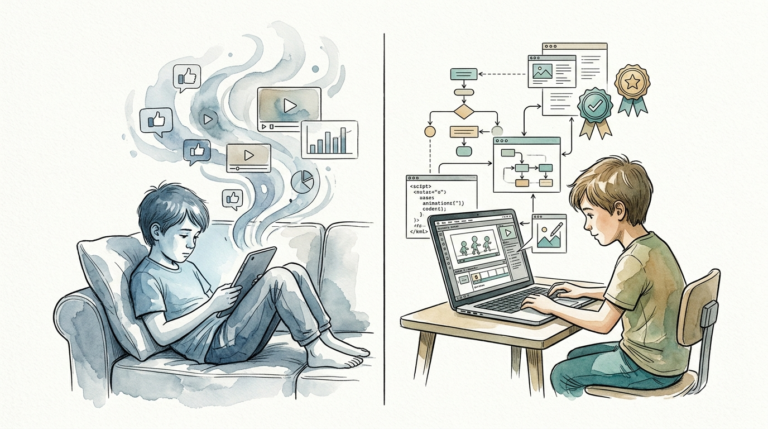
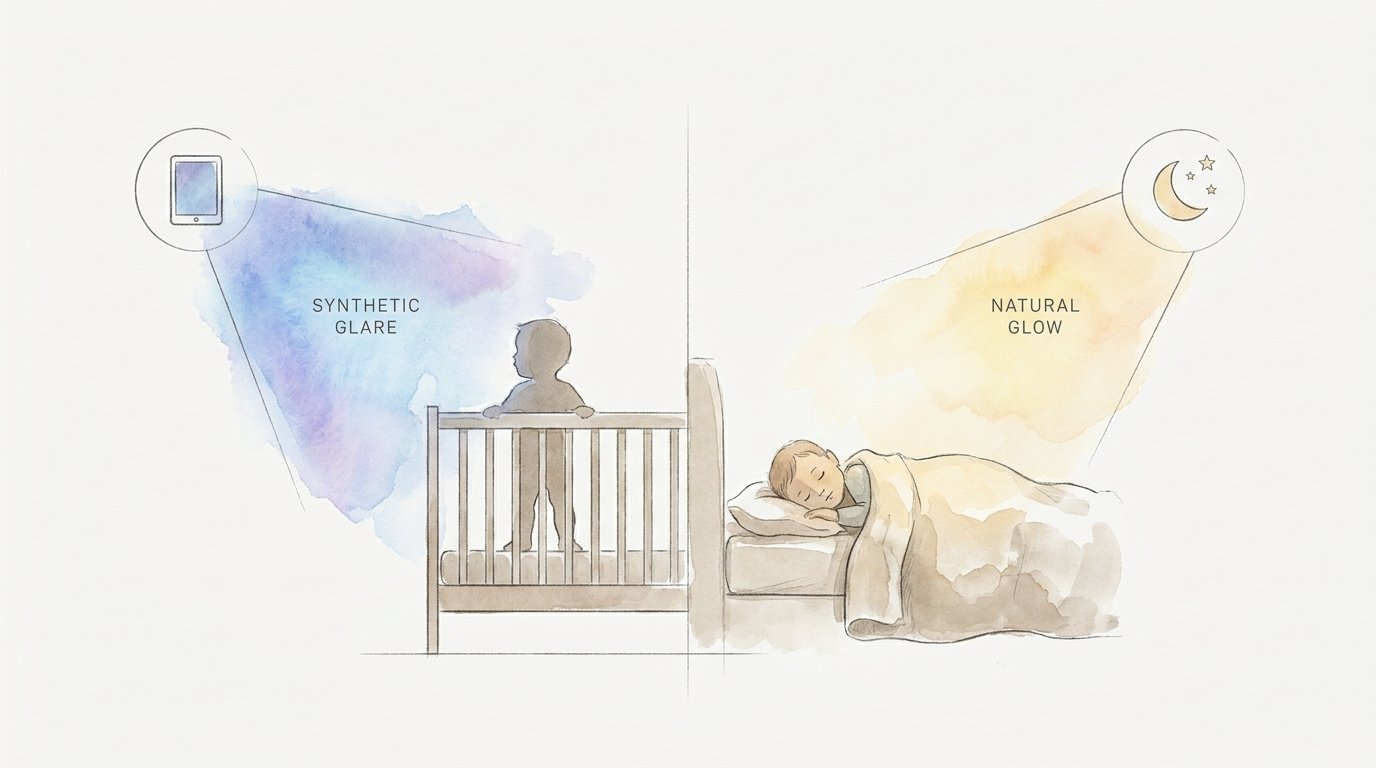
We are feeding our children’s brains ‘junk light’ and wondering why they can’t find the ‘off’ switch at night. A child’s nervous system was designed for the setting sun, not the 60Hz flicker of a high-definition tablet. One light triggers a stress response; the other triggers melatonin. It’s time to swap the synthetic glare for a natural glow and give their brains the rest they deserve.

Every evening, a silent battle takes place in millions of living rooms. Parents try to wind things down, yet their toddlers seem more “wired” than ever. We often blame the sugar in their juice or a lack of discipline. But the real culprit might be the glowing rectangle in their hands or the cool-white LED bulbs overhead.
The science is becoming impossible to ignore. Our children’s eyes are biological gateways. When we flood those gateways with artificial blue light, we aren’t just entertaining them. We are fundamentally altering their internal chemistry. This isn’t just about “screen time” as a concept; it’s about the specific physics of light and how it interacts with a developing brain.
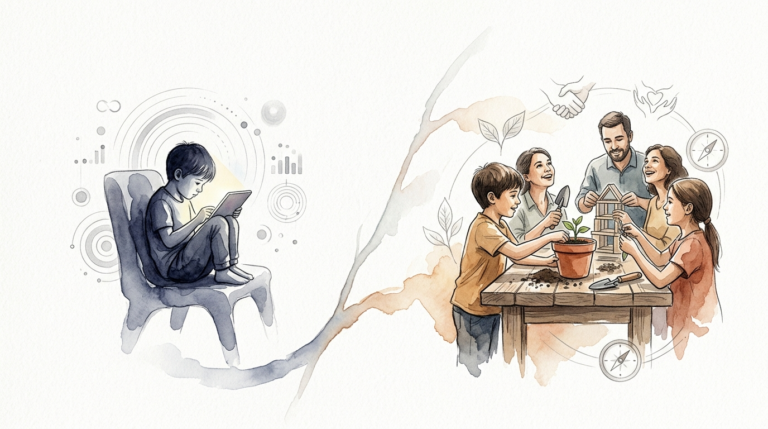
Understanding this connection is the first step toward reclaiming your child’s sleep. By shifting from a high-frequency digital environment to one that mimics the natural rhythm of the sun, you can help your toddler find their “off” switch. Let’s dive into how this synthetic glare is affecting our little ones and, more importantly, how we can fix it.
How Screen Time Affects Toddler Sleep Cycles
Toddler sleep cycles are delicate, high-speed versions of our own. While an adult might recover from a late-night Netflix binge, a toddler’s nervous system is far more sensitive. This is because their eyes and brains are still in a state of rapid development. Screens introduce a “junk light” profile that the human body never evolved to process after sunset.
In simple terms, screen time acts as a massive “stay awake” signal to the brain. Even if the content is “educational” or “calm,” the physical light hitting the retina tells the Suprachiasmatic Nucleus (the brain’s master clock) that it is high noon. This creates a state of internal jet lag. The sun has set, the house is quiet, but the toddler’s brain is convinced the day is just beginning.
Research indicates that children are significantly more sensitive to this light than adults. Their pupils are larger, and their lenses are clearer, meaning more “junk light” reaches the back of the eye. A single hour of screen exposure in the evening can suppress melatonin—the hormone responsible for sleep—twice as much in a child as it does in a parent. This suppression isn’t just a minor delay; it can effectively shut down the body’s natural drive to rest for hours.
This mismatch leads to the “tired but wired” phenomenon. You see a toddler who is clearly exhausted—rubbing their eyes, clumsy, irritable—yet they are running laps around the sofa. Their body is begging for sleep, but their brain is flooded with alerting chemicals triggered by the synthetic glare. This cycle often results in shorter sleep duration, more night awakenings, and a very difficult morning for the entire family.
The Biological Mechanic: How Light Controls the Brain
To fix the sleep struggle, we have to understand the hardware. The human eye contains specialized cells called intrinsically photosensitive Retinal Ganglion Cells (ipRGCs). These cells don’t help your child see shapes or colors. Instead, they are dedicated light sensors that communicate directly with the brain’s internal clock.
These sensors are particularly tuned to blue light—the kind found in abundance in tablets, smartphones, and energy-efficient LEDs. In nature, blue light is only found in high concentrations during the middle of the day. When these cells detect blue light, they send a signal to the pineal gland to stop producing melatonin. This is a survival mechanism designed to keep us alert during daylight hours.
The 60Hz Flicker and Neural Stress
Beyond the color of the light, there is the issue of “flicker.” Most digital screens and low-quality LEDs do not emit a steady stream of light. Instead, they pulse or “flicker” at frequencies like 60Hz. While our conscious mind cannot see this, the nervous system can detect it. This constant rapid pulsing can keep the brain in a state of high-frequency arousal, similar to a low-level stress response.
This flicker can lead to visual fatigue and “neural noise.” For a toddler with a developing sensory system, this can be incredibly overstimulating. While the natural glow of a candle or an incandescent bulb is a steady, “analog” light source, screens are “digital” and aggressive. Swapping the digital flicker for a steady, warm glow allows the nervous system to finally transition from “active/alert” to “rest/digest.”
Melatonin Suppression in Numbers
Studies have shown that exposure to bright electric light in the evening can suppress melatonin production by over 90% in preschool-aged children. This suppression can begin within just 10 minutes of exposure. Even after the screen is turned off, the effects can linger, delaying the “sleep onset” window by an hour or more. This is why “just five more minutes” of a show often turns into a two-hour bedtime battle.
The Benefits of Swapping Synthetic Glare for a Natural Glow
When you prioritize a “natural glow” over “synthetic glare,” the benefits are immediate and measurable. You aren’t just helping them sleep; you are supporting their overall neurological health and emotional stability. Here is what happens when you make the switch:
- Faster Sleep Onset: Without blue light blocking their melatonin, toddlers naturally feel the “sleep wave” hit them at the right time. They fall asleep significantly faster—often within 15–20 minutes of hitting the pillow.
- Deeper REM Cycles: A brain that isn’t overstimulated by flicker and high-energy blue light can enter deeper stages of sleep more quickly. This is where memory consolidation and emotional processing happen.
- Reduced Night Awakenings: Toddlers who follow a screen-free, low-blue-light routine tend to have more stable sleep cycles. They are less likely to wake up in a state of “alertness” in the middle of the night.
- Better Morning Moods: Quality sleep leads to a more regulated nervous system. Families often report fewer morning tantrums and better focus throughout the following day.
- Long-term Metabolic Health: There is a growing link between evening “junk light” and childhood obesity. By regulating the circadian rhythm, you help maintain healthy hormone levels that control appetite and energy use.
Challenges and Common Mistakes Parents Make
Changing a household’s light habits isn’t easy. We live in a world designed for convenience, and screens are the ultimate “digital babysitter.” However, many parents unknowingly sabotage their efforts with a few common mistakes.
The biggest mistake is the “Last Minute Shutdown.” Many parents allow screen time right up until the moment they want the child to sleep. They turn off the TV and expect the child to be asleep five minutes later. As we’ve learned, the brain needs time to clear the “stay awake” signals and start producing melatonin. A sudden shutdown usually results in a toddler who is physically in bed but mentally vibrating with energy.
Another common pitfall is “Hidden Blue Light.” You might turn off the TV, but then leave on bright, “daylight” LED bulbs in the bathroom during the bath and toothbrushing routine. These bulbs are often just as disruptive as a tablet. If the environment stays bright and “blue-enriched,” the brain remains in daytime mode, regardless of whether a screen is present.
Finally, there is the “Boredom Trap.” Parents often take away the screen but don’t provide a calming alternative. This leads to resistance and power struggles. The goal is to replace the high-stimulation screen with a low-stimulation “Natural Glow” activity. Without a replacement, the transition becomes a battle of wills rather than a physiological shift.
Limitations: When the Rules Might Change
While the goal is to minimize synthetic glare, there are realistic constraints. Not all light is “bad,” and not all screen use is created equal. Understanding these boundaries helps you stay consistent without becoming overwhelmed by “perfect” standards.
For example, video calls with family are often viewed differently by pediatric experts. The social connection and emotional bonding of a 10-minute call with a grandparent may outweigh the minor light exposure, especially if it happens earlier in the evening. In these cases, using a “night shift” mode or a blue-light-filtering app can mitigate the damage.
There are also environmental limitations. During winter months or in northern latitudes, natural light is scarce. You cannot rely on the “setting sun” if the sun sets at 4:00 PM. In these situations, you have to actively curate your indoor lighting to simulate a natural cycle. This is where “bio-adaptive” lighting or simple amber bulbs become essential tools rather than just “optional extras.”
Comparison: Synthetic Glare vs. Natural Glow
To visualize why this shift matters, let’s look at how these two environments compare across key factors that affect toddler development and sleep.
| Feature | Synthetic Glare (Screens/LEDs) | Natural Glow (Amber/Red/Dim) |
|---|---|---|
| Spectrum | High Blue/Green peaks. | Warm Orange/Red tones. |
| Melatonin Impact | Strong suppression (up to 90%). | Minimal to no suppression. |
| Nervous System | Triggers “Alert” response. | Triggers “Calm” response. |
| Brain Waves | High-frequency excitement. | Low-frequency relaxation. |
| Sleep Quality | Fragmented, late onset. | Consolidated, early onset. |
Practical Tips for a Low-Blue-Light Bedtime
Implementing a “Natural Glow” routine doesn’t require a total home renovation. It’s about making strategic changes to the environment in the 60–90 minutes before your toddler’s head hits the pillow. Here is how to build a better bedtime:
- The 60-Minute Screen Ban: Establish a firm “no screens” rule for at least one hour before bed. This includes TVs in the background. If you need music, use a dedicated audio speaker that doesn’t have a glowing screen.
- Switch to Amber or Red Bulbs: Replace the bulbs in your toddler’s bedroom and the bathroom with warm amber or red LEDs. These wavelengths are the least disruptive to melatonin production. They provide a “campfire” feel that cues the brain for sleep.
- Use the “Bedtime Box” Strategy: Fill a dedicated bin with low-stimulation, hands-on activities. Think puzzles, wooden blocks, coloring books, or soft dolls. When the screens go off, the Bedtime Box comes out. This gives the child something to look forward to that isn’t a screen.
- Dim the Rest of the House: You don’t need to live in total darkness, but dimming the main living area lights tells the whole family’s biology that the day is ending. Use lamps instead of overhead “big lights.”
- Morning Sun Exposure: Circadian hygiene isn’t just about the night. Getting your toddler into bright, natural sunlight for 15 minutes every morning helps “set” their clock, making it easier for them to feel tired when the evening rolls around.
Advanced Considerations: The Role of Red Light Therapy
For parents dealing with severe sleep resistance or night terrors, moving beyond “dimming the lights” to active red light exposure can be a game-changer. Unlike white or blue light, red light has a very long wavelength. It doesn’t just “not hurt” melatonin production; some studies suggest it may actually support the body’s natural transition into sleep.
Using a low-intensity red nightlight can provide a sense of security for toddlers who are afraid of the dark without the stimulant effect of a traditional white nightlight. It allows for “gentle visibility”—enough for a parent to check in or for a child to find their water bottle—without sending a “wake up” signal to the brain.
Furthermore, pay attention to “Light Temperature.” When buying bulbs, look for those rated at 2000K or lower. Traditional “Soft White” bulbs are usually around 2700K, which still contains a significant amount of blue light. Specialized “Sleep Bulbs” or “Sunset Bulbs” are designed to eliminate the blue spike entirely, providing a much safer spectrum for the evening.
Example Scenario: The Digital Detox Routine
Let’s look at a typical evening for the “Miller” family. Before their detox, 6:30 PM meant cartoons while Mom made dinner. The house was lit with bright, 5000K “Daylight” LEDs. Bedtime at 7:30 PM was a disaster; their 2-year-old would scream, jump on the bed, and finally collapse from exhaustion at 9:00 PM.
The New Routine: At 6:15 PM, the “Sunset Signal” happens. The TV goes off, and the main overhead lights are switched for floor lamps with amber bulbs. While dinner is finished, the toddler plays with a “Bedtime Box” containing magnets and a picture book under warm, dim light.
At 7:00 PM, they head to the bathroom, which now has a dim red nightlight instead of the bright vanity mirror. The bath is a calm, low-light experience. By 7:30 PM, the toddler is already yawning. Because their brain has had 75 minutes of “Natural Glow,” the melatonin is flowing. They are tucked in, the red nightlight stays on a low setting, and they fall asleep in under 10 minutes. No battles, no “junk light” buzz.
Final Thoughts
We are the first generation of parents raising children in a 24/7 “junk light” environment. It is a massive biological experiment, and the early results show that our children’s sleep is paying the price. By understanding that light is a powerful drug—one that can either trigger a stress response or a sleep response—you gain the power to fix the “off” switch.
The goal isn’t to live in the dark ages. It’s about being intentional with the synthetic glare we allow into our homes. By prioritizing a natural glow in the evening, you are giving your child’s nervous system the environment it was designed for. You are moving from a state of constant high-definition arousal to a state of natural, restorative rest.
Start small. Tonight, turn off the big overhead lights an hour before bed. Swap the tablet for a paper book. Observe the difference in your child’s eyes and their energy. Once you see the power of biological lighting, you’ll never want to go back to the synthetic glare again. Give their brains the rest they deserve, and you might just find you get a little more rest yourself.
Sources
1 lonestarneurology.net | 2 verizon.com | 3 sleepfoundation.org | 4 blockbluelight.com.au | 5 nih.gov | 6 nih.gov | 7 uconn.edu | 8 gsl.academy | 9 sleeplikegoldilocks.com | 10 childsleepspecialist.co.uk | 11 snoozly.io | 12 slumberpod.com | 13 firstthingsfirst.org