Traditional Dramatic Play Vs Electronic Toys
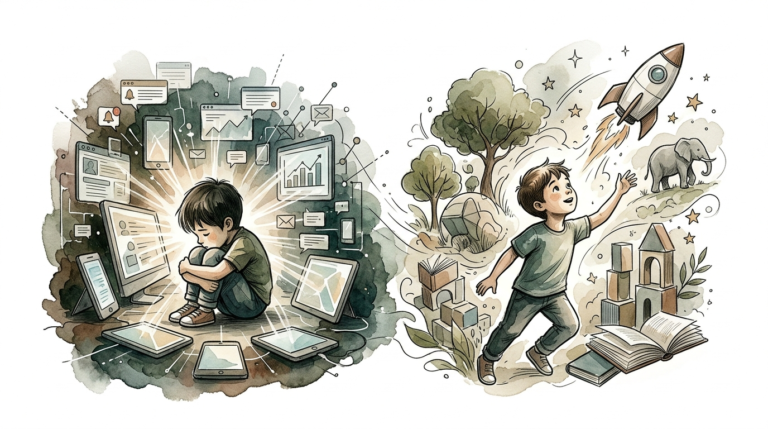
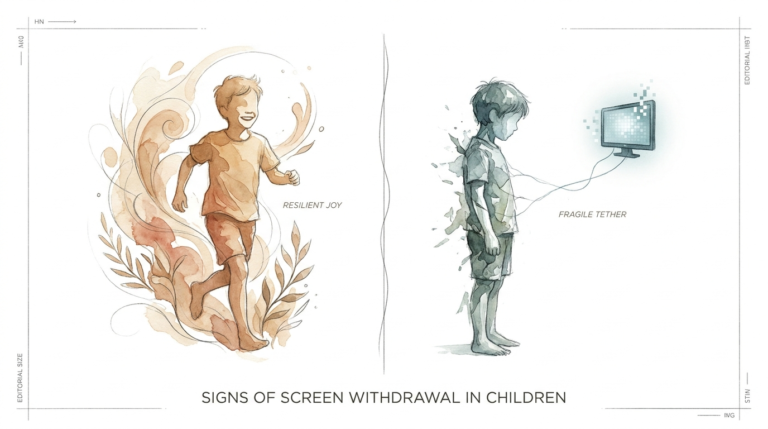
When the toy does the talking, the child’s brain stops thinking. Modern toys are designed to perform—they talk, they sing, and they tell the story. But ‘Then’ toys required the child to be the engine. We’ve traded the child’s inner voice for a pre-recorded chip, and it’s time to take the narrative back.

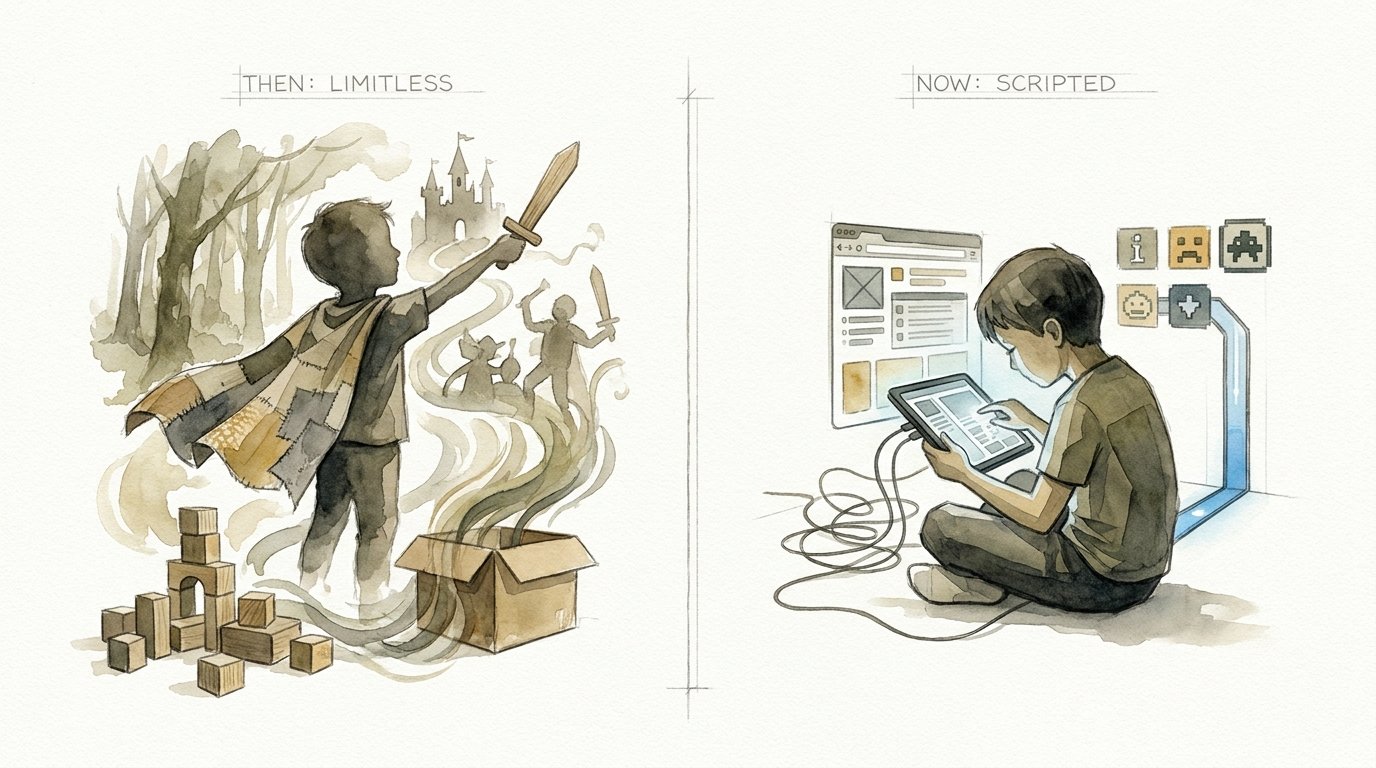
In the past, a simple wooden block could be a phone, a spaceship, or a piece of cheese. Today, a plastic phone actually rings, talks, and directs the child on what to press next. This shift from active to passive play changes more than just the noise level in your living room. It changes how a child’s brain develops.
Choosing the right tools for play matters because play is the “work” of childhood. You aren’t just buying a toy; you are choosing the software for your child’s imagination. Understanding the difference between traditional dramatic play and electronic gadgets helps you build a foundation for lifelong learning.
Traditional Dramatic Play Vs Electronic Toys
Traditional dramatic play involves children taking on roles and acting out scenarios using simple, open-ended props. This might look like a toddler “cooking” with a wooden spoon or a preschooler pretending to be a doctor with a scrap of fabric. These toys are silent until the child gives them a voice.
Electronic toys, on the other hand, are defined by their internal circuitry. They use lights, sounds, and pre-programmed responses to engage the child. While these “learning” toys are often marketed as educational, they frequently position the child as a spectator rather than the director of the action.
Research shows that when toys do too much, children do less. In studies of parent-child interaction, researchers found that electronic toys actually reduce the quality of communication. Parents talk less, ask fewer questions, and engage in fewer back-and-forth “conversational turns” when a toy is making the noise for them.
How Active Play Fuels Brain Growth
Active play works by forcing the child to create the logic of the game. When a child uses a stick as a magic wand, their brain performs a complex cognitive task called symbolic representation. They are holding two ideas at once: the object is a stick, but it represents something else.
This process builds the neural pathways required for abstract thinking and literacy. In traditional dramatic play, the child must also plan the sequence of events. They decide who is the “mommy,” what the “baby” needs, and what happens when the “dog” starts barking. This is the beginning of executive function.
Electronic toys often bypass this mental heavy lifting. If a button says “Press the red square,” the child is following a command. They are practicing reaction time and basic identification, but they aren’t practicing the creative synthesis required to build a world from scratch.
The Massive Benefits of the “Then” Approach
Traditional play offers measurable advantages that high-tech gadgets struggle to replicate. The most significant benefit is language acquisition. Because traditional toys don’t talk, the child and the caregiver must provide the dialogue. This leads to a richer vocabulary and better social cues.
Dramatic play also fosters deep emotional intelligence. When a child pretends to be a sad patient at a doctor’s office, they are practicing empathy. They are literally stepping into someone else’s shoes to understand a different perspective. Electronic toys rarely offer this level of social-emotional practice.
Open-ended toys also build physical persistence. A child building a tower of plain blocks has to deal with gravity and balance. If it falls, they must problem-solve and try again. Electronic games often provide “lives” or instant resets, which can inadvertently lower a child’s tolerance for real-world frustration.
The Challenges of the Instant Gratification Trap
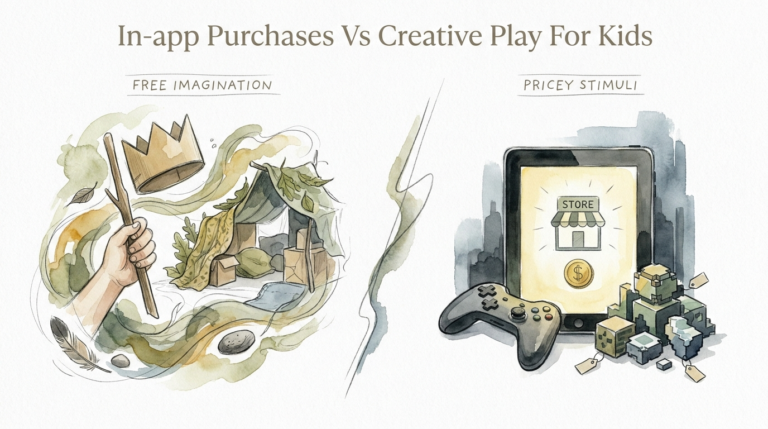
Modern parents face a major challenge: the “boredom” threshold. Electronic toys are designed by experts to trigger dopamine hits through flashing lights and “level-up” sounds. This makes traditional toys seem “boring” by comparison to a brain accustomed to high-speed stimulation.
Many parents fall into the trap of thinking a toy is educational just because it teaches letters or numbers. However, the medium is often more important than the message. A toy that “teaches” the ABCs by singing a song doesn’t necessarily help a child understand the concept of a letter in the way that drawing it in sand or building it with sticks does.
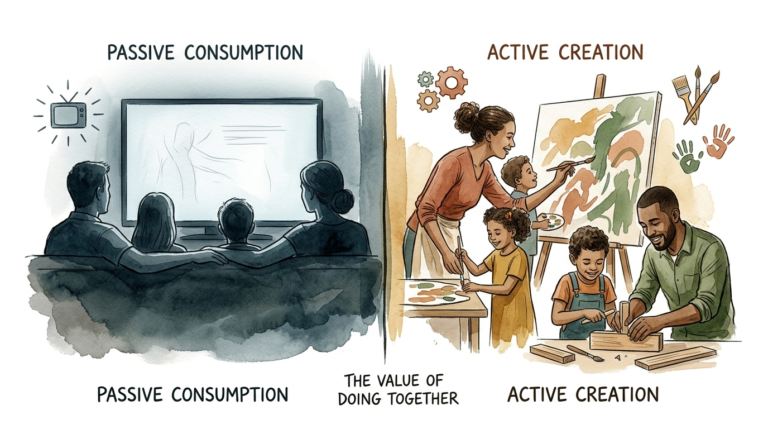
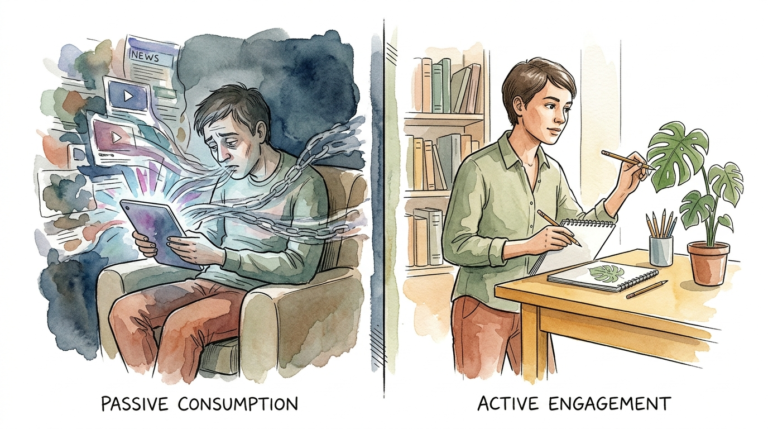
Over-reliance on electronic entertainment can also lead to shorter attention spans. When a child expects a toy to entertain them, they lose the ability to sit with a quiet object and explore its possibilities. This “passive consumption” habit can follow them into the classroom.
Limitations and Realistic Constraints
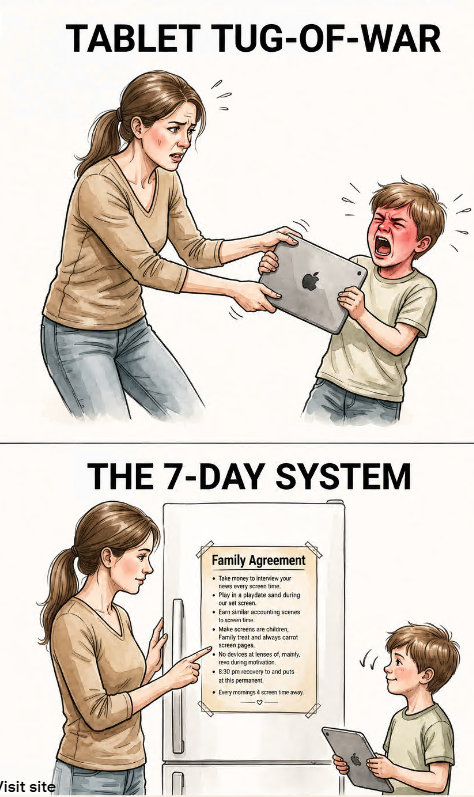
It is unrealistic to suggest that technology has no place in a child’s life. Electronic toys can be excellent for long car rides or situations where a parent needs a high-engagement “babysitter” for twenty minutes. They are highly portable and often very effective at keeping a child occupied in high-stress environments.
Some modern “smart” toys are also being designed with open-ended principles in mind, such as basic coding robots that require the child to build the logic. The limitation isn’t the electricity itself; it’s the “closed-loop” nature of the design. If there is only one right way to play with a toy, its educational value is limited.
Environmental factors also play a role. Not every home has the space for a massive wooden kitchen or a trunk full of costumes. In these cases, the “Then” approach isn’t about the size of the toy, but the versatility of the object. A single silk scarf can be more “limitless” than a dozen electronic gadgets.
NOW: SCRIPTED vs THEN: LIMITLESS
| Feature | Electronic Toys (Scripted) | Traditional Play (Limitless) |
|---|---|---|
| Primary Engine | The Battery / Microchip | The Child’s Imagination |
| Language Use | Passive Listening | Active Storytelling |
| Problem Solving | Following Directions | Creating New Solutions |
| Attention Span | Short Bursts (Stimulus Driven) | Sustained (Self-Directed) |
| Social Interaction | Solo / Competitive | Cooperative / Collaborative |
Practical Tips for a Limitless Playroom
Building a space for traditional dramatic play doesn’t require a huge budget. Start by auditing your current toy collection. Look for “90/10” toys—those where the child does 90% of the work. If a toy only does one thing, it’s a candidate for the donation bin.
Invest in high-quality “staple” items. Blocks, dolls, play food, and silks are the four pillars of a creative playroom. These items never go out of style and grow with the child. A toddler stacks the blocks; a five-year-old builds a complex marble run with them.
Rotate your toys to keep them fresh. Instead of having fifty toys out at once, try putting out five. When a child has fewer choices, they are forced to look deeper into the potential of each object. You will be amazed at how a child discovers new ways to use an “old” toy when it’s one of the few available.
Scaffolding the Story: Advanced Strategies
For parents who want to take play to the next level, practice the art of “scaffolding.” This means providing just enough help to keep the play moving without taking over the narrative. If the “restaurant” game is flagging, you might ask, “Oh no, the chef is out of eggs! What should we serve instead?”
Use “open-ended” questions during play. Instead of asking “What color is that block?”, ask “What are you going to build next?” or “How does the bear feel about that?” These questions prompt the child to think about intent, emotion, and future planning.
Encourage “mixed-age” play whenever possible. Older children naturally model more complex dramatic play for younger ones. They introduce subplots, character roles, and rules. This social hierarchy in play is one of the fastest ways for a younger child to develop advanced cognitive skills.
Example: The Cardboard Box Scenario
Consider a large cardboard box. In the “Now” world, you might buy a plastic “learning” house with buttons that say “Window” or “Door.” The child presses the button, hears the word, and moves on. The play is finite.
In the “Then” world, the cardboard box is a blank slate. On Monday, the child decides it is a cave, and they need to find “rocks” (socks) to hide inside. On Tuesday, it’s a car, and they use a paper plate as a steering wheel. On Wednesday, they take markers and turn it into a grocery store.
The child has practiced spatial awareness, motor skills, narrative construction, and artistic expression—all with a single piece of “trash.” They have navigated the transition from one reality to another using only their mind. That is the power of a “Then” toy.
Final Thoughts
Traditional dramatic play is not a relic of the past; it is a biological necessity. While electronic toys offer convenience and flashy entertainment, they cannot replace the deep, structural brain-building that happens when a child is left to their own devices. By choosing toys that require the child to be the engine, you are giving them the keys to their own cognitive development.
The goal isn’t to live in a world without technology, but to ensure that technology doesn’t become the primary architect of your child’s inner life. A balanced “play diet” should be heavy on the raw materials of imagination. When you provide the space and the simple tools, children will always find a way to create something extraordinary.
Start small by introducing one open-ended element today. Turn off the batteries and watch what happens. You might find that the most “educational” thing in your house isn’t the talking laptop, but the quiet child who finally has the room to hear their own thoughts.
Sources
1 bigblockcustoms.com | 2 nau.edu | 3 nau.edu | 4 queensletters.com | 5 edweek.org | 6 skyrockettherapy.org | 7 kipscoaching.com | 8 tylerpaper.com | 9 zekilearning.org | 10 pbs.org | 11 talkerresearch.com | 12 hypergogo.com | 13 momsbestfriend.com | 14 discoverytoys.us | 15 pennfoster.edu