How To Handle Ipad Withdrawal Tantrums
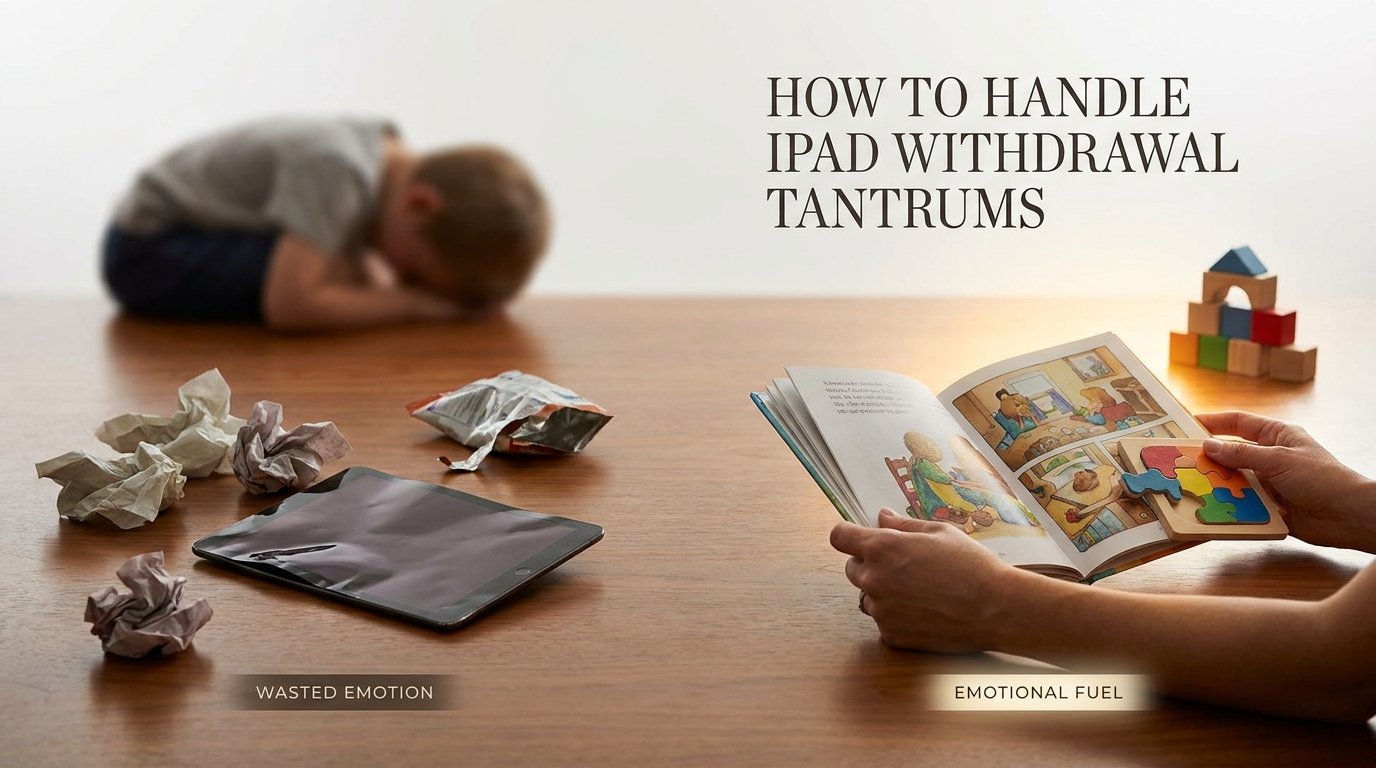
That ‘boredom’ scream isn’t a problem to be silenced—it’s raw energy looking for a mission. When the iPad goes away, the dopamine drops and the ‘restless energy’ spikes. Most parents see this as a meltdown. We see it as fuel. Utilizing ‘Heavy Work’—tasks that provide deep proprioceptive input—allows you to channel that tablet withdrawal into physical mastery and emotional regulation. Turn the scream into a sweat.

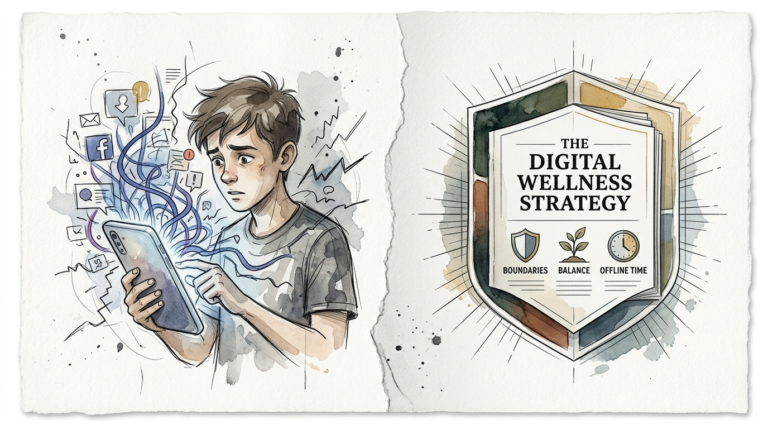
Every parent knows the look. The screen turns black, the device goes on the shelf, and suddenly the air in the room changes. It starts with a slump, moves to a whine, and eventually explodes into a full-scale emotional storm. This isn’t just “bad behavior” or a lack of discipline. It is a physiological response to a sudden drop in neurochemical stimulation. Your child’s brain was swimming in a high-speed, high-reward digital environment, and now it is hitting the wall of real-world physics.
The gap between the intensity of the screen and the stillness of the living room creates a vacuum. Most children try to fill that vacuum with noise, movement, and conflict. They are looking for a way to “feel” their bodies and wake up their nervous systems. Heavy work provides exactly what they are searching for. It replaces the artificial dopamine of the iPad with the natural, grounding feedback of muscle and joint resistance.
This guide will show you how to stop managing the symptoms of withdrawal and start directing the energy. You will learn how to build a sensory environment that makes the transition from digital to physical not only possible but productive. We are moving past the idea of “quieting down” and moving toward the concept of “powering up” in a way that centers the mind.
How To Handle Ipad Withdrawal Tantrums
iPad withdrawal tantrums are a distinct form of dysregulation caused by the “crash” that occurs when a high-dopamine activity is replaced by a low-stimulation environment. During screen time, the brain is flooded with rewards. Games and videos offer instant feedback, bright colors, and rapid transitions. When the screen disappears, the brain’s reward system experiences a deficit. This leads to irritability, restlessness, and a frantic search for the next hit of stimulation.
Most people mistake this for a simple tantrum—a demand for the return of the toy. While that is part of it, the underlying cause is often a sensory “hunger.” The child feels untethered and physically agitated. They may crash into furniture, yell at high volumes, or pick fights with siblings. These are all attempts to get the nervous system to fire. Instead of fighting the agitation, you can provide an outlet that satisfies the body’s need for input without the need for a screen.
Heavy work is the clinical term for any activity that pushes or pulls against the body’s muscles and joints. It targets the proprioceptive system—the internal sense that tells us where our limbs are in space. When a child engages in heavy lifting, pushing, or carrying, the brain receives “organizing” input. This input acts like a natural anchor. It tells the nervous system exactly where the body is, which has an immediate calming and grounding effect. This transition helps move the child from the frantic, scattered energy of withdrawal into a state of focused physical effort.
How Proprioception Works as a Natural Reset
The proprioceptive system is often called the “sixth sense.” It relies on receptors located in the muscles, joints, and ligaments. These receptors send constant signals to the brain about body position and force. For a child coming off a high-stimulation device, these signals are often drowned out by the mental “noise” of the dopamine drop. They feel “floppy” or “hyper,” because they aren’t getting enough internal feedback to feel secure.
Engaging in heavy work activates these receptors at a high intensity. When a child pushes a heavy laundry basket across a carpeted floor, every joint in their arms and legs is firing information to the brain. This “deep pressure” input is unique because it is almost always organizing. Unlike loud noises or bright lights, which can be overstimulating, the feeling of resistance tends to calm an overactive nervous system and wake up a sluggish one. It creates a “just right” state of arousal.
This process is the biological equivalent of a system reboot. By forcing the muscles to work against resistance, you are moving the child’s focus from their emotional distress to their physical presence. This shift in attention is vital. It allows the prefrontal cortex—the part of the brain responsible for logic and regulation—to come back online after being hijacked by the emotional centers during the withdrawal meltdown.
The Push-Pull System for Transitions
Transitions are the most dangerous time for meltdowns. Instead of letting the iPad time end with a “stop,” try ending it with a “mission.” This involves giving the child a specific, high-effort physical task the moment the device is put away. This prevents the “dopamine cliff” by immediately replacing the mental stimulation with physical resistance. You aren’t just taking away the screen; you are handing them a new, heavy-duty project.
Effective heavy work for transitions usually falls into two categories: pushing and pulling. These movements engage the largest muscle groups in the body, providing the most intense proprioceptive feedback. A child who is starting to whine might be directed to “help” move a stack of heavy books or “see how fast” they can push a chair across the room. The goal is to maximize the resistance and the effort required, turning the brewing frustration into a focused physical feat.
Step-by-Step: Turning Resistance Into Regulation
Success with heavy work depends on timing and intensity. You cannot wait until the child is in a full-blown “floor-kicking” meltdown to suggest a task. You have to catch the “yellow zone”—that moment of rising restlessness immediately after the screen goes off. Follow this sequence to bridge the gap from digital to physical.
Step 1: Set the Mission Before the Shutdown. Five minutes before the iPad goes away, announce the physical task. “When the timer goes off, we need to move these boxes to the hallway. I need your strongest muscles.” This prepares the brain for a shift in energy rather than a total loss of stimulation.
Step 2: Immediate Engagement. As soon as the device is docked, move directly to the heavy work. Do not leave a gap for the child to sit in their boredom. Hand them the heavy laundry basket or point them toward the “wall push-up” spot. The key is to start the muscle engagement before the emotional brain takes over.
Step 3: Add Resistance. If the task is too easy, it won’t provide enough sensory feedback. A light laundry basket isn’t heavy work; it’s just a chore. Fill it with books or water bottles. The child should have to lean into the work. You want to see them straining slightly—this is where the “heavy” part creates the regulation.
Step 4: Narrate the Effort. Use high-energy, validating language. “Look at those leg muscles working! You are pushing that like a bulldozer.” This provides the social dopamine that replaces the digital reward. You are rewarding the effort and the physical mastery, reinforcing the idea that being “strong” and “hardworking” feels better than being “bored.”
Household Heavy Work Activities
- The Laundry Sled: Fill a laundry basket with heavy items and have the child push or pull it across the carpet.
- Animal Walks: Challenge them to a “bear crawl” or “crab walk” race. These movements force the child to support their own body weight through their hands and feet.
- The Human Sandwich: If the child is seeking deep pressure, use couch cushions to “squish” them gently. This provides massive amounts of proprioceptive input to the whole body.
- Wall Push-Ups: Have them stand facing a wall and try to “push the house down.” Tell them they have to hold it for 30 seconds so the walls don’t move.
- Carrying Groceries: Give them the heaviest (unbreakable) bags to carry from the car or into the kitchen. The weight pulling down on the shoulders is highly grounding.
The Benefits of Channeling Withdrawal Energy
Switching from screen management to heavy work isn’t just about stopping a tantrum in the moment. It is about building a more resilient, self-aware child. When a child learns that they can “fix” their own bad mood by moving their body, they are gaining a life-long skill in emotional intelligence. They move from being victims of their own biology to masters of their own regulation.
The practical benefits are immediate. Heavy work improves body awareness, which often leads to better coordination and fewer “accidental” bumps and falls. It also builds physical strength and endurance. Most importantly, it creates a positive association with physical effort. Instead of seeing work as something to avoid, the child begins to see it as a way to feel powerful and “solid” in their own skin.
Furthermore, this approach improves the parent-child relationship. Instead of being the “iPad police” who takes away the fun, you become the “coach” who helps them through a tough transition. You are working with their biology instead of fighting against it. This shifts the home environment from one of constant power struggles to one of collaborative missions.
Challenges and Common Mistakes
The most frequent error is treating heavy work as a punishment. If you yell, “You’re acting out, go push the laundry basket!” the child will resist. Heavy work must be framed as a “job,” a “mission,” or a “challenge.” It should be something they do because they are strong and capable, not because they are “bad.” The moment it feels like a penalty, the regulatory benefits disappear because the child’s stress levels will spike, counteracting the calming input.
Another mistake is using tasks that are too light. Many parents ask their kids to do chores that don’t actually provide resistance. Carrying a single toy across the room is not heavy work. To get the proprioceptive reset, the muscles must be engaged significantly. If the child isn’t “leaning into it,” they aren’t getting the input they need to regulate. You have to ensure the “heavy” is actually heavy for their specific size and strength level.
Finally, consistency is key. If you only try heavy work once every three weeks when the meltdown is already at a level ten, it won’t work. The nervous system needs to be “primed.” By incorporating these movements into daily transitions—not just the bad ones—you teach the child’s brain to expect and utilize physical input for regulation. It becomes a habit rather than a last-ditch effort.
Limitations: When Heavy Work Isn’t the Answer
Heavy work is a powerful tool, but it is not a magic wand for every situation. If a child is truly exhausted, hungry, or sick, forcing them into a high-effort physical task will likely lead to more frustration. Sometimes the “meltdown” is a legitimate signal that the child has reached their absolute limit and needs rest or nutrition rather than more stimulation. You must be able to distinguish between “restless withdrawal” and “total exhaustion.”
There are also environmental constraints. If you live in a small apartment with thin floors, “stomping like a dinosaur” might not be an option. In these cases, you have to get creative with isometric exercises—like pushing hands together in a “prayer” position or pulling on a resistance band—that provide the same muscle tension without the noise or space requirements.
Lastly, some children have specific sensory profiles that make certain types of heavy work aversive. For example, a child with tactile defensiveness might hate the feeling of certain fabrics or the “squeeze” of a human sandwich. Always observe the child’s reaction. If an activity makes them more agitated or fearful, stop and pivot to a different type of input. The goal is regulation, not compliance with a specific exercise.
Practical Tips for Immediate Impact
To make heavy work a seamless part of your home, keep “mission-ready” items in plain sight. A designated “heavy box” filled with old books or water bottles can be kept near the charging station. This allows you to hand off a task within seconds of the iPad going away. The shorter the gap between screen and work, the more effective the intervention will be.
Use “timed challenges” to increase engagement. “I bet you can’t push this basket to the kitchen before I count to twenty!” The element of competition adds a layer of excitement that can help bridge the dopamine gap. It makes the physical effort feel like a game rather than a chore. Just ensure the focus remains on the “heavy” movement rather than just the speed.
- Create a “Strength Spot”: Designate a specific area of the house for wall push-ups or floor planks.
- Keep Resistance Bands Handy: These are cheap, portable, and provide massive amounts of pulling input for small spaces.
- Involve the Mouth: Sucking a thick smoothie through a straw or chewing on crunchy carrots provides heavy work for the jaw muscles, which is highly regulating.
- Monitor the “Peak”: If you see the child’s face getting red or their breathing becoming too erratic, slow the pace down but keep the resistance.
Advanced Considerations for Serious Practitioners
For those looking to go deeper, consider the concept of a “Sensory Diet.” This isn’t about food; it’s a planned schedule of sensory activities designed to keep a child’s nervous system organized throughout the day. Instead of using heavy work only as a reaction to iPad withdrawal, you can build it into the morning and afternoon routines. A “dose” of heavy work before the iPad even starts can help the child remain more grounded during their screen time, making the eventual exit much easier.
Understand the difference between “active” and “passive” proprioception. Active proprioception involves the child moving their own muscles (pushing, jumping). Passive involves something being done to them (weighted blankets, deep pressure massages). While both are useful, active proprioception is generally more effective for iPad withdrawal because it requires the child to engage their brain and body simultaneously. It forces the “thinking brain” to coordinate with the “moving body,” which is the fastest way to end a dysregulated state.
Track which movements work best for your child. Some kids respond better to “impact” (jumping, stomping), while others need “pressure” (hugs, weighted vests) or “exertion” (carrying, pushing). By keeping a simple log of what ends a meltdown the fastest, you can tailor your “mission” to their specific needs. This level of precision turns you from a frustrated parent into a sensory strategist.
| Input Type | Example Activity | Best For… |
|---|---|---|
| Exertion | Pushing a full laundry basket | High restless energy, “zoomies” |
| Impact | Jumping on a trampoline or floor | Aggressive outbursts, hitting, kicking |
| Pressure | Deep pressure bear hugs | Whining, emotional “floppiness” |
| Resistance | Pulling a heavy wagon or rope | Difficulty focusing, “brain fog” |
Example Scenario: The Living Room Sled Push
Imagine it’s 4:00 PM. Seven-year-old Leo has been on his tablet for an hour. His mom knows the 10-minute warning usually results in a scream, so she prepares the “sled.” She takes a plastic storage bin and fills it with four heavy textbooks and a couple of dumbbells. She places it on the carpeted living room floor.
“Leo, five minutes left. When the tablet goes in the charger, I need you for a heavy mission. The ‘sled’ is stuck and I can’t move it. I need your bulldozer legs.” Leo grumbles but acknowledges the task. When the timer goes off, the tablet is set aside. Leo starts to slump and his lower lip begins to tremble—the classic signs of the “dopamine drop.”
Mom doesn’t wait. “Leo! To the sled! Can you get it to the fireplace in under ten seconds? Go!” Leo drops to his hands and feet, puts his shoulders against the bin, and starts to push. He has to dig his toes into the carpet. His face turns slightly red. He is working. By the time he reaches the fireplace, he is breathing harder, his posture is upright, and the “mist” of the screen has cleared. He isn’t crying for the iPad; he’s asking if he can push it back the other way. The scream was successfully turned into a sweat.
Final Thoughts
Managing iPad withdrawal doesn’t have to be a battle of wills. It is a battle of biology. When you understand that the “boredom” scream is actually a cry for sensory input, everything changes. You stop being the person who takes things away and start being the person who gives the child what their body is actually craving: a sense of presence, power, and physical grounding.
Heavy work is one of the most effective, low-cost tools in a parent’s arsenal. It requires no special equipment—just an understanding of how to use the everyday objects in your home to create resistance. By channeling the “restless energy” of a meltdown into “heavy missions,” you are teaching your child how to navigate their own emotions through their own effort.
Start small. Identify one “heavy” task your child can do today. The next time the screen goes off and the agitation begins, don’t ask them to “be quiet.” Ask them to “be strong.” You might be surprised at how quickly the atmosphere in your home shifts when you stop fighting the energy and start giving it a mission.
Sources
1 childrenstherapycenter.com | 2 nspot.com.au | 3 leapsandboundsil.com | 4 neurodiverging.com | 5 childtherapycenterla.com | 6 drdunckley.com | 7 drroseann.com | 8 myscreencoach.com | 9 hopkinsmedicine.org | 10 thenoteninjas.com | 11 united4children.org | 12 baby-chick.com | 13 autismparentingmagazine.com | 14 thelearningtreeaba.com | 15 understood.org | 16 funandfunction.com | 17 griffinot.com | 18 gooddayswithkids.com | 19 bluebirddayprogram.com