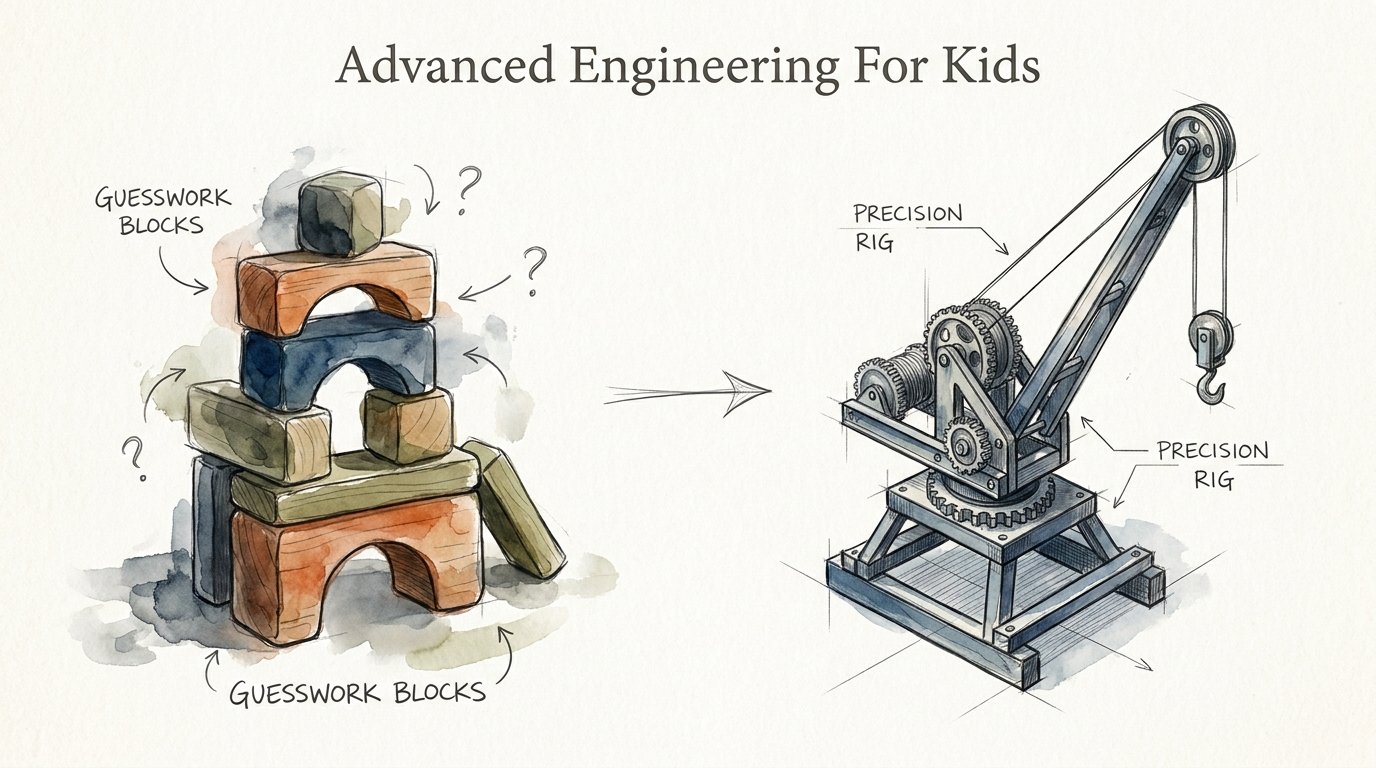
Advanced Engineering For Kids
The difference between a toy and a tool is the level of truth it tells your child about the world. We give kids blocks but rarely give them the tools to understand why they fall. By introducing a spirit level and a plumb line, you shift the activity from ‘playing house’ to ‘structural engineering.’ Watch their focus sharpen when they can finally prove their work is true.

Most children grow up in a world of rounded plastic edges and bright primary colors. These toys are designed for safety, but they often mask the fundamental laws of physics. Gravity becomes a nuisance rather than a measurable force. Balance is a matter of luck rather than geometry. When you hand a child a real spirit level, you are giving them a lens through which they can see the invisible lines of the earth. This is the moment play becomes purposeful.
Advanced Engineering For Kids
Advanced engineering for kids is not about complex calculus or drafting software. It is about the transition from haphazard stacking to precision construction. In the real world, engineers and builders do not guess if a wall is straight. They use physical constants—like the pull of gravity and the behavior of fluids—to verify their work. Introducing these concepts to children helps them build a framework for logical thinking that extends far beyond the playroom floor.
Engineering is the practical application of science to solve problems. For a child, the problem might be a wobbly tower or a bridge that collapses under the weight of a toy car. Advanced engineering at this level means identifying the cause of the failure. Is the base uneven? Is the vertical support leaning? Without tools, the child is left with guesswork. With tools, they have data.
Real-world engineers use spirit levels to ensure foundations are horizontal and plumb lines to ensure skyscrapers stand perfectly vertical. These tools represent “truth.” A spirit level doesn’t care about a child’s feelings or efforts; it only cares about the horizontal plane. This objective feedback is a powerful teacher. It removes the frustration of “it just won’t work” and replaces it with “the bubble is off-center, so I need to adjust the base.”
The Mechanics of Truth: Spirit Levels and Plumb Lines
Understanding how these tools function is the first step in mastering the engineering mindset. Each tool relies on a different physical principle to provide an accurate reading of the environment.
The Physics of the Spirit Level
A spirit level, also known as a bubble level, consists of a vial filled with liquid—usually colored alcohol or oil—and a small air bubble. Alcohol is used because it has low viscosity and a low freezing point, allowing the bubble to move quickly and accurately. The vial is slightly curved, so the bubble always seeks the highest point.
When the level is placed on a perfectly horizontal surface, the bubble rests exactly between the two marked lines in the center. If the surface tilts, the bubble migrates toward the higher end. This provides immediate, visual feedback. For a child, seeing that bubble move is a lesson in fluid dynamics and geometry. They learn that “level” means being perfectly parallel with the horizon.
The Gravity of the Plumb Line
The plumb line is perhaps the oldest engineering tool in human history. It consists of a weight, called a plumb bob, attached to a string. Gravity pulls the weight directly toward the center of the Earth, creating a line that is perfectly vertical, or “plumb.”
While a spirit level measures horizontal “truth,” the plumb line measures vertical “truth.” A wall can be perfectly straight but still leaning. The plumb line reveals this lean instantly. This tool teaches children about the relentless, invisible force of gravity. It shows them that every structure must align with this force to remain stable over time.
The Transition From Play to Precision
Moving from standard block play to precision engineering requires a shift in methodology. This process involves three distinct phases: Observation, Verification, and Adjustment.
Phase 1: Observation
Encourage the child to build as they normally would. Notice where they struggle. A tower might start to lean after the fifth block. Instead of stepping in to fix it, ask the child why they think it is leaning. This creates a moment of scientific inquiry. Observation is the foundation of all engineering.
Phase 2: Verification
This is where the tools come out. Introduce the spirit level. Place it on the floor or the base of the structure. Is the ground actually flat? Many playrooms have carpets or slightly uneven floors that doom a project before it begins. Using the level to verify the foundation teaches the child that precision starts at the bottom.
Next, use the plumb line against the side of the tower. Let the child see the gap between the string and the blocks. This visual evidence of a “lean” is much more convincing than a parent’s warning. It provides an objective standard that the child can see for themselves.
Phase 3: Adjustment
Once the error is identified, the engineering begins. The child must now figure out how to bring the structure back into “truth.” This might involve shimming the base with a thin piece of cardboard or realigning the center of gravity. Each adjustment is a test of a hypothesis. They are no longer just stacking; they are iterate-designing.
The Cognitive Edge: Benefits of Tool-Based Play
Handing a child real tools provides measurable developmental benefits. Research indicates that children who engage in STEM-related play early on develop stronger spatial reasoning and problem-solving skills.
1. Spatial Intelligence
Using levels and plumb lines requires children to visualize 3D space with high accuracy. They must understand the relationship between the horizontal and vertical planes. This strengthens the part of the brain responsible for mental rotation and spatial orientation, skills that are critical for future architects, pilots, and surgeons.
2. Persistence and Grit
Toys are often designed for “instant win” scenarios. Engineering tools are different. They reveal mistakes. This might be frustrating at first, but it teaches a child to view failure as information. When a child spends twenty minutes leveling a base to ensure a tower can reach the ceiling, they are building the mental muscles of persistence.
3. Understanding Physics
A plumb line is a physical manifestation of gravity. A spirit level is a lesson in equilibrium. Instead of reading about these forces in a textbook years later, the child has felt them in their hands. They understand that these forces are constant and predictable.
4. Self-Correction and Independence
Tools provide a “built-in” teacher. A child doesn’t need to ask an adult if their building is straight; they can check the level. This fosters a sense of autonomy and confidence. They learn to trust their own ability to verify the truth using the tools at their disposal.
When Precision Meets Friction: Common Mistakes
Working with precision tools is a skill that takes time to master. Beginners often run into several common pitfalls that can lead to inaccurate results.
Relying on the Naked Eye
The most frequent mistake is assuming something is “straight enough” without checking. The human eye is easily fooled by perspective and surrounding lines. A child might think a tower is plumb because it looks straight compared to the corner of the room, but the corner itself might be slightly off. Always encourage the use of the tool as the final authority.
Ignoring the Foundation
Junior engineers often focus on the top of their structure, trying to balance blocks as they go. However, a 1-millimeter error at the base can lead to a 10-centimeter lean at the top. Teaching kids to “level the deck” before they build upward is a fundamental lesson in structural integrity.
Moving the Tool Too Quickly
Spirit levels require a moment to settle. If a child bumps the table or moves the level too fast, the bubble will bounce. Precision requires patience. Teaching a child to wait for the bubble to stop moving is a subtle exercise in impulse control and mindfulness.
The Safety Paradox: Limitations and Constraints
There is a common fear that real tools are “dangerous” for children. While a metal spirit level or a heavy plumb bob requires supervision, the “danger” is often what makes them effective teachers.
Environmental Constraints
Real tools are sensitive. A spirit level won’t work well on a shaggy carpet because the tool won’t sit flat. This is a limitation of the environment, not the tool. Engineers must often create a “site” before they can build. This might mean placing a flat piece of plywood over the carpet to create a stable, level working surface.
Physical Maturity
While a three-year-old can understand the concept of a bubble, they may lack the fine motor control to hold a plumb line steady. Tools should be matched to the child’s developmental stage. A large, plastic-encased spirit level is great for a preschooler, while a professional-grade torpedo level might be appropriate for an older child.
The Risk of Frustration
Precision is hard. Some children may find the objective feedback of a tool discouraging if they are used to the “anything goes” style of play. It is important to frame the tools as “power-ups” that help them achieve bigger goals, rather than as “tests” they might fail.
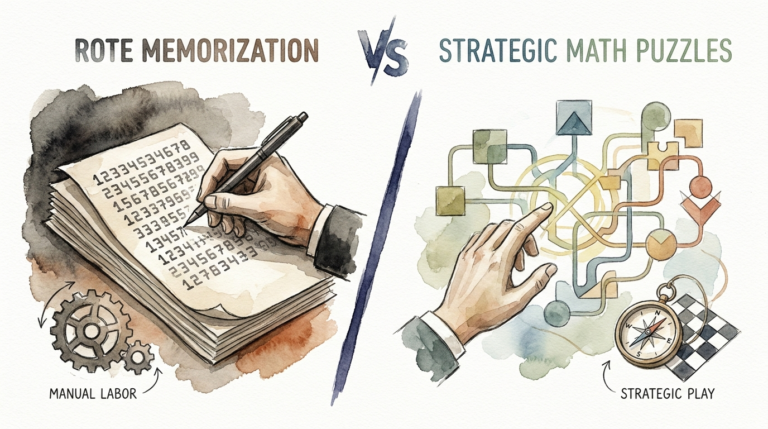
Guesswork Blocks vs Precision Rig
Understanding the difference between standard play and engineering play is best seen through a comparison of the two approaches.
| Feature | Guesswork Blocks | Precision Rig |
|---|---|---|
| Goal | Creative expression and stacking. | Structural integrity and truth. |
| Feedback | Subjective (it looks okay). | Objective (bubble is centered). |
| Failure Mode | Sudden, unexplained collapse. | Predictable lean that can be fixed. |
| Skill Level | Basic motor skills. | Advanced spatial reasoning. |
| Outcome | Temporary structures. | Engineered monuments. |
Setting Up Your Junior Engineering Site
Creating a space for precision play makes a significant difference in how a child engages with the tools.
- The Base Plate: Use a large, flat piece of MDF or plywood as the “job site.” This provides a hard surface where the spirit level can give an accurate reading.
- The Level Kit: Provide a 9-inch torpedo level for small builds and a 24-inch I-beam level for larger floor structures.
- The Plumb Station: Hang a plumb line from a doorway or a tripod. This gives the child a constant vertical reference point to compare their structures against.
- The Shim Shanty: Keep a box of “shims”—thin pieces of cardstock, craft sticks, or construction paper. These allow the child to make the tiny adjustments needed to bring a base into perfect level.
Advanced Concepts for Tiny Builders
Once a child understands the basics of level and plumb, you can introduce more complex engineering principles.
Structural Load Distribution
Ask the child to build two towers: one using only the level and one built by eye. Then, place a heavy book across the top of both. The engineered tower will almost always hold more weight because the load is being transferred directly down through the center of the blocks. This is a lesson in compression and load paths.
The 90-Degree Rule (Square)
Introduce a carpenter’s square. Explain that when a horizontal line (level) meets a vertical line (plumb), they create a “square” corner. This is the foundation of almost all human architecture. Challenging a child to build a perfectly square room is a massive leap in their construction ability.
Center of Gravity
Use the plumb line to show where the “weight” of a structure is falling. If the plumb line falls outside the base of the tower, the tower will fall. This makes the abstract concept of the “center of gravity” a visible, tangible reality.
Example: The Sky-High Spire Challenge
Imagine a child wanting to build the tallest tower possible using standard wooden blocks. Without tools, the tower inevitably begins to corkscrew or lean by the tenth level. The child becomes frustrated as the “gravity tax” is collected.
Now, introduce the Precision Rig approach.
1. The child first uses the spirit level to find the flatest part of the floor.
2. They place the first four blocks and use the torpedo level to ensure the top surface is perfectly horizontal.
3. As they reach the 20th block, they drop a plumb line from the top edge to the floor.
4. They notice the string is 2cm away from the base blocks.
5. Instead of adding more blocks, they use a paper shim under the left side of the foundation.
6. The plumb line moves back into alignment.
7. The tower continues to grow, eventually doubling the height of previous attempts.
This scenario proves that tools are not just “accessories.” They are performance enhancers. The child has transitioned from a builder to an engineer.
Final Thoughts
The transition from play to engineering is a fundamental milestone in a child’s cognitive development. By providing tools that tell the truth—like the spirit level and the plumb line—you give them the ability to verify their world. This moves them away from a reliance on guesswork and toward a mastery of physical laws.
Watching a child’s focus sharpen as they align a bubble or steady a weighted string is witnessing the birth of a scientific mind. They are learning that the world has rules, and that those rules can be understood and utilized to create incredible things. This knowledge builds a foundation of confidence that will serve them in every future endeavor, whether they become a professional engineer or a lifelong problem-solver.
Encourage your child to experiment with these tools today. Let them fail, let them measure, and most importantly, let them prove that their work is true. The structures they build may be temporary, but the precision and logic they develop will last a lifetime.
Sources
1 lovesongtomylife.com | 2 mtcopeland.com | 3 utexas.edu | 4 littlebinsforlittlehands.com | 5 imthecheftoo.com | 6 diy.org | 7 kiddle.co | 8 inventorsoftomorrow.com | 9 sandpal.com.au | 10 medium.com