How To Organize Kids Craft Supplies For Focus
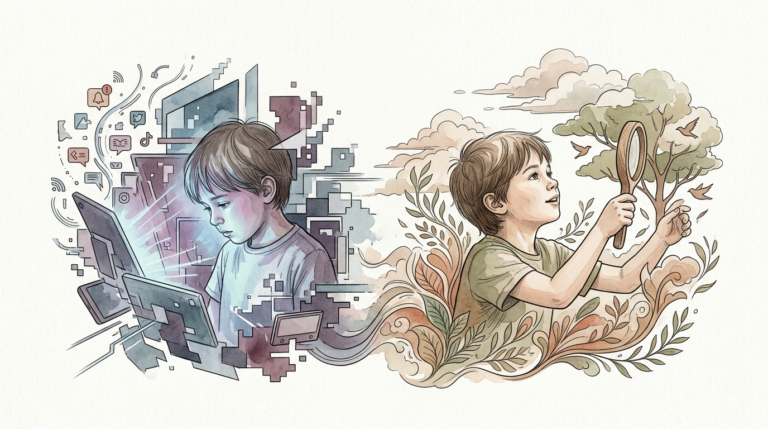
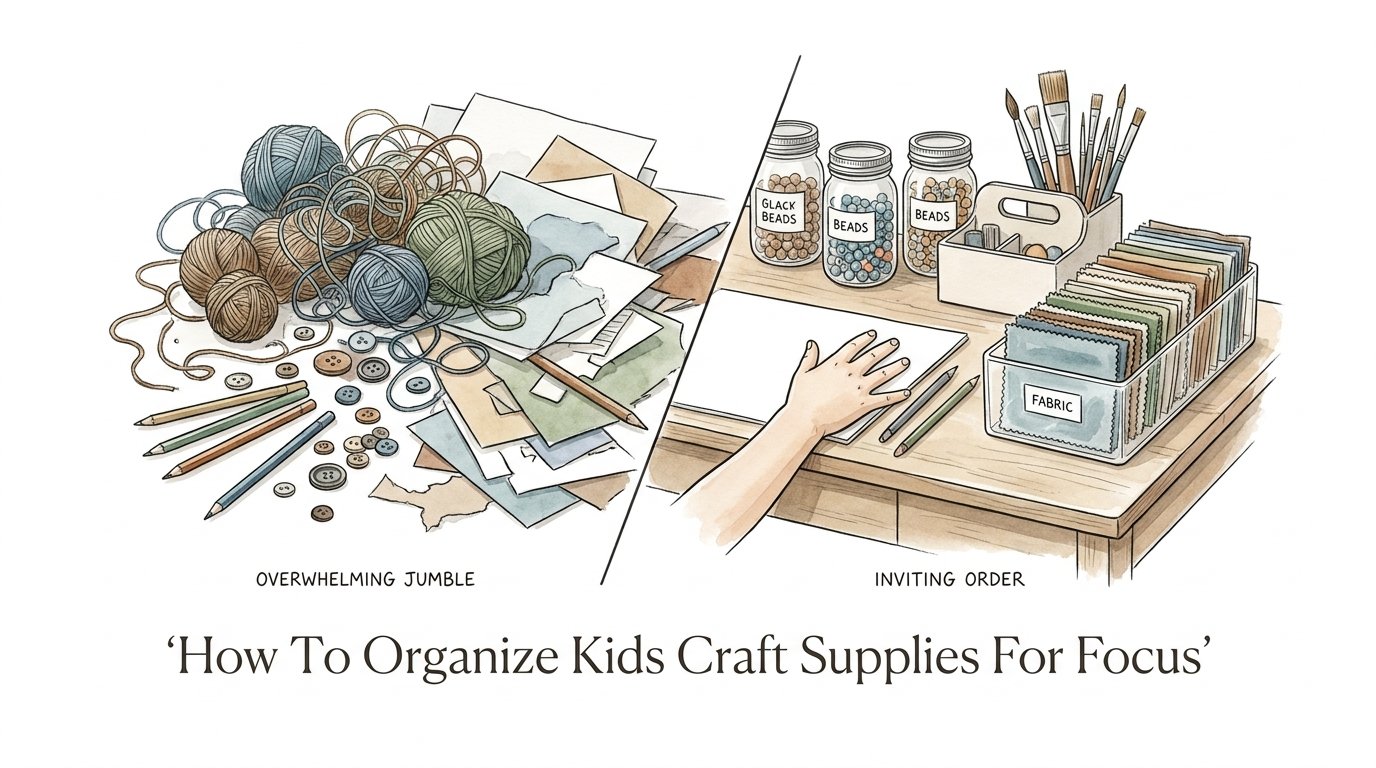
Why does a pile of junk paralyze their brain while a sorted tray ignites their imagination? We think giving kids ‘more’ options helps them play, but a jumbled bin of random parts actually triggers decision fatigue. When we transition from chaos to a curated tinker station, we aren’t just cleaning up—we’re lowering the barrier to entry for their creativity. See how categorization turns ‘trash’ into ‘tools.’
Most parents have witnessed the “doom bin” phenomenon. It is that massive plastic container filled with tangled pipe cleaners, dried-out markers, and half-used sticker sheets. While it looks like a treasure chest of possibilities to an adult, for a child, it represents a high cognitive load.
Research into child brain development shows that an organized environment can significantly improve problem-solving skills and social engagement. When a space is cluttered, the brain’s “conductor,” or executive function, has to work overtime just to filter out distractions. By organizing these supplies, we allow the child to focus entirely on the act of creation rather than the frustration of searching.
How To Organize Kids Craft Supplies For Focus
Organizing for focus means creating a system where the physical environment supports the child’s internal creative process. It is a shift from “storing stuff” to “staging invitations.” In the world of early childhood education, specifically the Reggio Emilia approach, the environment is often called the “third teacher.” This means the way you present materials actually teaches the child how to use them.
A focused craft station typically uses clear containers, open shelving, and defined “zones” for different types of activities. Instead of hiding everything in deep, opaque drawers, we use “organization in view.” This allows the child to scan the room and instantly understand what tools are available. When they can see the red paper, the safety scissors, and the glue sticks in their own designated spots, the path from “idea” to “execution” becomes seamless.
This approach is used in professional art studios and high-end Montessori classrooms because it respects the creator. It acknowledges that a child’s time is valuable and that their creative “flow” is a fragile state that can be easily broken by a missing roll of tape or a blunt pencil.
The Step-by-Step System for Curated Creativity
Creating a functional tinker station requires more than just buying a few bins. It involves a systematic approach to sorting and staging. Following a workflow-based setup ensures that the most frequently used items are the easiest to reach.
Step 1: The Great Purge and Categorization
Start by gathering every single craft item in the house into one central location. This helps you see the sheer volume of what you own and prevents “double buying” in the future. Test every marker, sharpen every pencil, and throw away any “trash” that is truly beyond use.
Once you have a clean pile, sort items by type. Grouping like-items together—such as all adhesives in one pile and all textiles in another—is the first step toward reducing mental friction. Common categories include drawing tools, adhesives, paper, “loose parts” (like beads or buttons), and textiles.
Step 2: Choosing the Right Containment
Visibility is the most important factor in a child’s craft space. Clear plastic bins or glass jars are superior to wicker baskets or solid-colored totes because they allow for a quick visual scan. Shallow bins are generally better than deep ones; deep totes often become “black holes” where small items like googly eyes or sequins disappear to the bottom.
Consider using a rolling utility cart for smaller spaces. These three-tier carts allow you to move the entire “studio” to the kitchen table or out to the patio. Use the top tier for most-used items (markers and paper), the middle for adhesives and scissors, and the bottom for bulky items like recycled cardboard or felt.
Step 3: Labeling for Independence
Labels are not just for the parent; they are a tool for the child to maintain the system. For non-readers, use visual labels that include a photograph or a simple drawing of the object alongside the word. This builds literacy skills while clearly defining where things belong. When a child knows exactly where a glue stick goes, they are more likely to put it back without prompting.
The Cognitive Benefits of an Organized Space
The practical benefits of organization extend far beyond a tidy room. It actively shapes how a child’s brain processes information and handles tasks. In educational settings, a well-structured environment is known to support the development of executive function (EF).
Reduced Decision Fatigue: When a child is faced with a massive pile of unorganized materials, their brain experiences Hick’s Law—the more choices available, the longer it takes to make a decision. By categorizing supplies into 3-5 clear options, we help them move past the “What should I do?” phase and into the “How should I make this?” phase.
Improved Focus and Attention Span: Visual clutter acts as a constant distraction. A clean workspace with only the necessary tools present allows the “wizard brain” (the part responsible for planning and logic) to stay in control, rather than the “lizard brain” (which reacts to sensory overload). Studies show that children in less-cluttered environments stay engaged in single tasks for significantly longer durations.
Independence and Self-Regulation: An organized space fosters a sense of ownership. When a child can successfully find their own supplies and clean up independently, they build self-esteem and a sense of agency. They learn that they are capable of managing their own projects from start to finish.
Common Challenges and How to Avoid Them
The most common mistake parents make is thinking that organization is a one-time event. It is actually a habit that requires a sustainable system. If the system is too complex, it will inevitably collapse.
The “Over-Categorization” Trap: While it might seem helpful to sort every bead by color, this level of detail is often too difficult for a child to maintain. Aim for “macro-categories” first. Put all beads in one bin, regardless of color. If the child proves they can handle that, you can refine the categories later. Start with broad groups to ensure the system is “kid-proof.”
Hidden Storage Failures: Storing supplies in deep drawers or high cabinets “out of sight, out of mind” often leads to materials being forgotten or replaced unnecessarily. If you must use drawers, ensure they are shallow and labeled on the outside. The goal is to maximize “viewable inventory” so the child can be inspired by what they see.
Maintenance Fatigue: Systems often fail because there is no designated time to reset. Establish a “5-minute studio reset” at the end of every craft session. Without this ritual, the curated station will slowly revert to a jumbled bin. Use a timer to make the cleanup feel like a quick game rather than a chore.
Limitations of the Organized Craft Space
While an organized station is ideal, it isn’t always possible in every living situation. High-density urban living or shared bedrooms may lack the space for a dedicated “atelier.” In these cases, portability is the only solution. A “grab-and-go” caddy is a compromise that provides some organization without requiring a permanent footprint.
Environmental constraints also play a role. If a home is naturally prone to dust or high humidity, open glass jars might not be practical for items like clay or delicate papers. Additionally, the age of the child is a major boundary. A system designed for a 10-year-old—featuring sharp needles and hot glue guns—is a safety hazard for a toddler. You must balance “accessibility” with “supervision requirements.”
Comparing Storage Approaches for Creativity
Choosing the right storage method depends on your space and the age of your children. Below is a comparison of two popular methods: the “Open Bin” approach and the “Compartmentalized Tray” approach.
| Feature | Open Bins (Macro) | Compartmentalized Trays (Micro) |
|---|---|---|
| Best For | Bulky items (yarn, fabric, boxes) | Small “loose parts” (beads, sequins) |
| Cleanup Ease | Very High (Fast toss-in) | Moderate (Needs sorting) |
| Visual Appeal | Casual/Practical | High/Artistic |
| Skill Level | Beginner / Toddlers | Advanced / Older Kids |
Practical Tips for Immediate Improvement
You can improve your child’s creative focus today without spending a fortune on new furniture. Small tweaks to how materials are presented can yield big results.
- The Rule of Three: Don’t put out every color of paint at once. Offer three specific colors that work well together. This “limitation” actually forces more creative thinking and reduces the mess.
- Rotate Your Stock: If you have 50 markers, put 10 out and hide the rest. When the first 10 get boring, swap them. Rotating supplies keeps the “magic” alive and prevents the station from becoming overwhelmed.
- Use Vertical Space: An IKEA Skådis pegboard or a back-of-the-door shoe organizer is a lifesaver for small rooms. It keeps counters clear while keeping tools within eye-level.
- Natural Lighting: Whenever possible, place the craft station near a window. Good lighting reduces eye strain and makes the colors of the materials more inviting.
Advanced Considerations: Loose Parts and Provocations
For parents who want to dive deeper into the educational side of crafting, consider the theory of “Loose Parts.” Loose parts are materials with no set instructions—like sticks, bottle caps, or pinecones. Unlike a “Lego kit” which has one outcome, loose parts can be anything.
Serious practitioners use “provocations” to spark interest. A provocation is a purposefully arranged display. For example, instead of just having a bin of clay, you might place a ball of clay on a wooden board next to three interesting shells and a small magnifying glass. You aren’t telling the child what to do; you are “provoking” their curiosity. This setup invites deep, investigative play that can last for hours.
Example Scenario: The Transformation of a “Junk Table”
Imagine a typical family dining table covered in a “craft pile.” It contains a box of crayons with broken tips, a tangled mess of yarn, and several half-finished coloring books. The child sits down, looks at the mess for two minutes, says “I’m bored,” and leaves to watch TV.
Now, imagine that same table after a reorganization. The crayons have been sorted by color into small glass jars. The yarn is neatly wound onto cardboard bobbins. Three sheets of high-quality watercolor paper are placed on a clean wooden tray next to a single cup of water and a set of paints. The child walks in, sees the “invitation,” and immediately begins experimenting with how the water hits the paper. Because the environment is calm and the tools are ready, the child’s brain can enter a state of “deep work” without the friction of a messy start.
Final Thoughts
Transforming a chaotic craft bin into a curated tinker station is one of the most effective ways to support your child’s cognitive development and creative spirit. It is not about having the most expensive supplies; it is about how those supplies are respected and presented. When we provide order, we provide the mental space necessary for high-level thinking.
Remember that organization is a living system. It should grow and change as your child does. What works for a four-year-old will need to be adjusted as they become a ten-year-old with more complex interests. Stay flexible, keep the “organization in view,” and always prioritize the child’s ease of use over your own aesthetic preferences.
By lowering the barrier to entry, you are giving your child a lifelong gift: the ability to see the world as a place filled with tools and possibilities rather than clutter and confusion. Start small, pick one category to organize today, and watch as your child’s imagination begins to ignite.
Sources
1 ourkidthings.com | 2 chromalabel.com | 3 lifewithlessmess.com | 4 youtube.com | 5 guidecraft.com | 6 lebonheur.org | 7 createroom.com | 8 kidshealth.org | 9 occupationaltherapy.com.au | 10 reflectionsciences.com | 11 simplicityhomeliving.com | 12 youtube.com | 13 thenopressurelife.com | 14 oxfordlearning.com | 15 createroom.com | 16 marcywillardphd.com | 17 bestcraftorganizer.com | 18 artfulparent.com | 19 justtoclaireify.com | 20 kurtzpsychology.com | 21 research-and-play.com | 22 reggio-inspired.com | 23 myteachingcupboard.com | 24 Source