Sand Tray Writing For Preschoolers
Why does the brain remember a letter traced in sand 10x faster than one tapped on a screen? The iPad ‘alphabet game’ promised mastery in a week. Six months later, he still couldn’t hold a pencil. We swapped the glass for a tray of salt and sand. The sensory resistance of the grains firing off neural pathways that a smooth screen never could. Sometimes the most ‘advanced’ tech is a box of dirt.
Every parent and educator wants to give children a head start in literacy. We often reach for the latest app or digital tool, thinking more tech means more progress. Science tells a different story about the developing brain. Physical resistance and tactile feedback are the real drivers of long-term memory. When a child drags a finger through sand, the brain is mapping coordinates, force, and texture all at once.
Writing is not just a mental exercise. It is a physical, sensory, and motor milestone. Moving from a glowing screen to a humble tray of sand might seem like a step backward. In reality, it is the most efficient way to build the “muscle memory” required for actual handwriting. Let’s look at why this low-tech method remains the gold standard for early childhood development.
Sand Tray Writing For Preschoolers
A sand tray is a shallow container filled with a fine-grain material like sand, salt, or cornmeal. It serves as a pre-writing tool that bridges the gap between seeing a letter and writing it with a pencil. In a Montessori or specialized early learning environment, it is often the first step toward literacy.
The concept is simple. A child uses their index finger to “trace” shapes, lines, or letters into the sand. Because there is no pencil to hold, the child can focus entirely on the form of the letter. This removes the mechanical struggle of the “tripod grip” and allows the brain to prioritize the visual-motor connection.
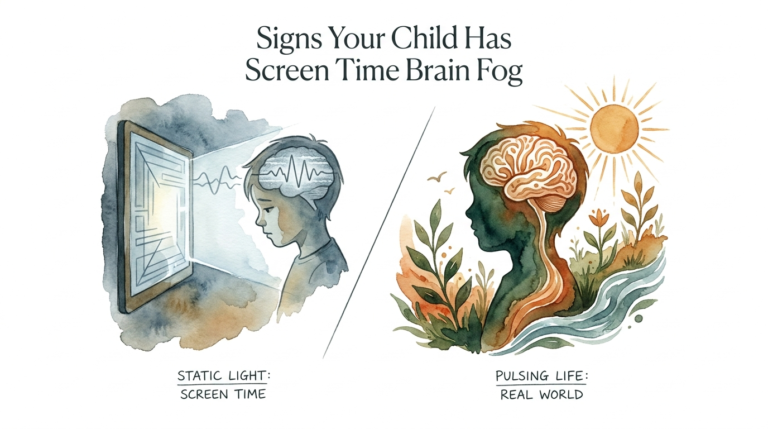
You will find sand trays in occupational therapy clinics, Montessori schools, and progressive preschools worldwide. They exist because they solve a fundamental problem: the “glass” problem. Digital screens offer zero resistance. The brain struggles to encode the specific “pathway” of a letter when the surface is perfectly slick. Sand provides the friction the nervous system craves to build permanent neural maps.
How It Works and How to Do It
Setting up a sand tray requires very little investment but follows a specific sequence to be effective. The goal is to move from gross motor movements to fine motor precision. You want to create an environment where the child feels safe to experiment and make mistakes.
First, choose a shallow tray with a distinct bottom color. A wooden tray with a dark blue or black base works best. When the child moves the sand, the contrasting color of the tray peeks through, providing immediate visual feedback of the letter they just formed.
Follow these steps for a successful setup and introduction:
- Fill the tray: Add just enough sand or salt to cover the bottom. A layer about 1/4 inch deep is ideal. If the sand is too deep, the letter shape will collapse under its own weight.
- Provide a visual guide: Place a “Sandpaper Letter” or a simple flashcard at the top of the tray. This gives the child a target to emulate.
- Model the movement: Use your index and middle fingers together to trace the letter in the sand. Always start from the top and move in the correct stroke order.
- The Reset: Show the child how to gently shake the tray or use a small brush to “erase” the work. This “shake to reset” feature is highly engaging for young children.
Avoid the temptation to use a pencil or a stick in the tray too early. The skin-to-sand contact is what triggers the sensory receptors in the fingertips. These receptors send high-resolution signals to the somatosensory cortex, which is the part of the brain responsible for processing touch.
Benefits of the Sand Tray Approach
The advantages of using a sand tray go far beyond just learning the alphabet. This tool addresses several developmental milestones simultaneously. It turns a static lesson into a dynamic physical experience.
1. Multi-Sensory Reinforcement (VAKT)
Learning scientists use the acronym VAKT: Visual, Auditory, Kinesthetic, and Tactile. The sand tray hits all four. The child sees the letter (Visual), hears the sound of the letter while they trace it (Auditory), moves their whole arm and hand (Kinesthetic), and feels the grit of the sand (Tactile). This “cross-talk” between different parts of the brain makes the memory stick.
2. Zero-Pressure Correction
Mistakes are the biggest hurdle in early writing. When a child makes a “bad” letter on paper, it is permanent. They see the mistake, feel frustrated, and may want to stop. In a sand tray, a gentle shake makes the mistake vanish. This encourages “trial and error,” which is the foundation of scientific learning and confidence.
3. Fine Motor Preparation
While the child isn’t holding a pencil, they are developing “finger isolation.” Using the index finger independently builds the small muscles in the hand. This strength and coordination are direct prerequisites for eventually holding a pencil with the correct grip.
4. Proprioceptive Input
Proprioception is the “sixth sense” that tells your brain where your body parts are in space. The resistance of the sand provides deep pressure to the joints of the finger. This helps the brain “locate” the hand and understand exactly how much force is needed to create a line.
Challenges and Common Mistakes
While the method is simple, there are common pitfalls that can diminish the educational value. Parents often treat the tray like a toy box rather than a focused learning tool.
One major mistake is using too much sand. If the tray is a deep pit of sand, the child cannot see the bottom. The visual feedback of the contrasting color is lost. The child ends up just digging or playing, which is great for sensory play but doesn’t teach letter formation.
Another issue is ignoring the “top-down” rule. Handwriting is a specific motor program. Letters are formed in a certain order for a reason—to prepare for the flow of sentences later. If a child “draws” a letter from the bottom up or in fragments, they are building a “bad” motor map. You must supervise the first few attempts to ensure they are tracing the stroke in the correct direction.
Finally, some adults try to force the transition to a pencil too quickly. If the child is struggling with the tray, they will certainly struggle with a pencil. The sand tray is where you “debug” the motor program. Keep them in the sand until the movement is fluid and automatic.
Limitations: When the Sand Tray May Not Be Ideal
No tool is universal. There are specific scenarios where a sand tray might be counterproductive or require modification.
Environmental factors are a primary concern. If you are in a carpeted classroom with thirty energetic toddlers, a tray of loose sand is a recipe for a logistical nightmare. In these cases, you might swap sand for cornmeal (which is easier to vacuum) or even a sealed sensory bag filled with hair gel.
Children with specific sensory processing disorders may also struggle. Some children have “tactile defensiveness.” The feel of dry sand or salt on their skin can be physically painful or highly distressing for them. For these children, forcing the sand tray will create a negative association with learning. In these cases, using a smoother medium like shaving cream or a silk-textured material is a better entry point.
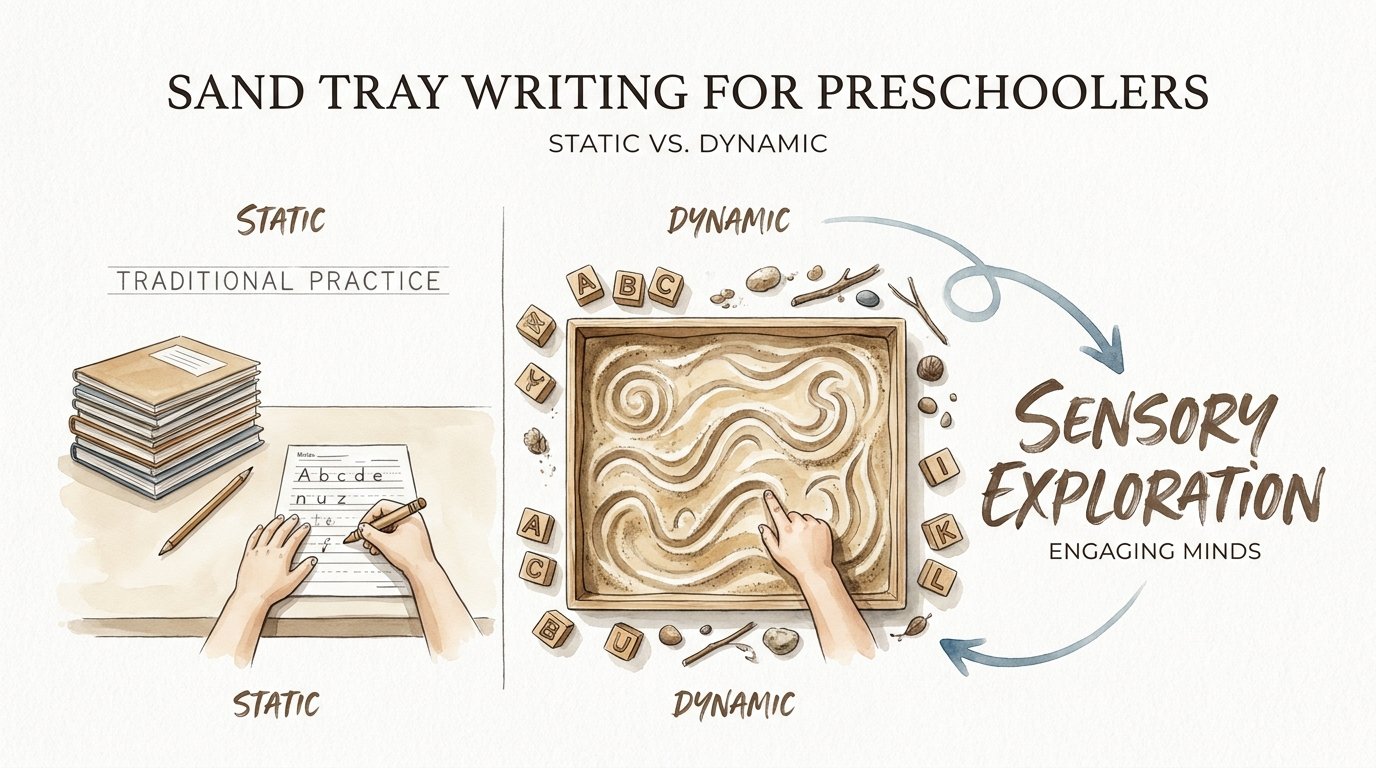
Static vs. Dynamic: Tactile Resistance vs. Digital Apps
It is helpful to compare the sand tray (a static, tactile tool) to digital writing apps (dynamic, visual tools). Both have their place, but they serve different neurological functions.
| Feature | Sand Tray (Static/Tactile) | Digital Apps (Dynamic/Smooth) |
|---|---|---|
| Resistance | High: Provides friction and tactile feedback. | Zero: Finger slides on smooth glass. |
| Motor Engagement | Whole arm and finger isolation. | Minimal hand movement. |
| Error Correction | Physical (shake to reset). | Automated (app fixes the shape). |
| Retention | Deep: Built through muscle memory. | Moderate: Often relies on visual recognition only. |
| Cost/Maintenance | Very low: Basic kitchen supplies. | High: Hardware and subscription costs. |
Apps often have a “snap-to” feature where the line automatically straightens out even if the child’s movement was sloppy. This creates a false sense of mastery. The sand tray never “cheats” for the child. If the line is wobbly, the sand shows it is wobbly. This honesty is what actually teaches the brain to refine its motor control.
Practical Tips and Best Practices
If you want to maximize the effectiveness of your sand tray, consider these “pro-level” adjustments used by experienced educators.
- Scent the medium: Add a drop of lavender or peppermint oil to the salt or sand. Scent is a powerful memory trigger. It associates the activity with a calm, focused state of mind.
- The Light Table Trick: If you have access to a light table, place the sand tray on top. The light shining through the “traced” lines makes the letters glow, creating an incredible visual incentive for the child to keep practicing.
- The Two-Finger Technique: Encourage the child to use both the index and middle fingers together. This mirrors the position they will eventually use when holding a pencil, further prepping those specific muscle groups.
- Keep it Level: Ensure the table surface is flat. An angled tray causes the sand to migrate to one side, which frustrates the child’s ability to see the shapes they are making.
Variation is key to keeping interest high. You don’t have to use sand every day. Swap it for rice, lentils, or even sprinkles on special occasions. Each material provides a different level of resistance and a different sound, keeping the sensory experience fresh.
Advanced Considerations for Long-Term Success
As the child masters basic shapes and letters, the sand tray can evolve. It isn’t just for three-year-olds. It can be used well into the first or second grade for more complex tasks.
For older children, the tray is an excellent place to introduce cursive. The fluid, connected nature of cursive is easier to learn in the “friction-free” environment of a tray before moving to the high-friction environment of paper. The continuous movement of cursive is naturally suited to the flow of sand.
You can also use the tray for “Orthographic Mapping.” This is the process the brain uses to store words for immediate retrieval. Instead of just tracing a single letter, have the child write a “sight word” or a phonetic sound. Hearing the sound and physically building it in the sand creates a much stronger bond between the grapheme (the letter) and the phoneme (the sound) than traditional worksheets.
Example Scenario: The Breakthrough Moment
Consider a four-year-old named Leo. Leo is highly energetic and loves his tablet. He can identify all the letters on the screen but struggles to even draw a circle on paper. His hand shakes, and he quickly gives up, calling himself “bad at writing.”
His teacher introduces a sand tray filled with fine black sand and a blue bottom. At first, Leo just wants to bury his toy cars in it. The teacher gently redirects him, showing him how to make a “giant C” like a crashing wave. Leo tries it. He feels the grit. He hears the “scritch” sound against the wood.
Because he can “shake it away,” his fear of making a mistake disappears. After three days, Leo isn’t just making waves; he is making the letters of his own name. Two weeks later, when he is handed a chunky crayon, his hand is steadier. The brain already knows the path of the “L” and the “e” and the “o.” The crayon is just a new tool for a path he has already traveled a hundred times in the sand.
Final Thoughts
Sand tray writing is a masterclass in “embodied cognition.” It proves that the most sophisticated learning happens when the body and mind work in unison. By removing the stress of the pencil and the distractions of the screen, we give preschoolers a “sandbox” for their minds to grow.
The tactile resistance of sand is not a relic of the past. It is a biological necessity for a brain that evolved to interact with a physical world. Whether you are a parent at home or a teacher in a classroom, a simple tray of dirt can be the most powerful piece of educational technology you own.
Start simple. A cookie sheet, some table salt, and a curious child are all you need. Watch as their confidence grows with every shake of the tray. You aren’t just teaching them to write; you are teaching their brain how to learn.
Sources
1 growinghandsonkids.com | 2 littledinosaurs.co.nz | 3 playtolearnpreschool.us | 4 lwtears.com | 5 wonderbaby.org | 6 waterfrontacademy.org | 7 handwritingsolutions.org | 8 medium.com | 9 mysidekicktherapy.com | 10 blogspot.com | 11 theottoolbox.com | 12 thedyslexiaclassroom.com | 13 toddlerinaction.com | 14 myplinkit.com | 15 annettemarie.org | 16 developlearngrow.com | 17 kidbrainiac.com | 18 via-montessori.com | 19 oclearningedge.com | 20 theraplatform.com