Signs Of Screen Time Overuse In Children
Does your child’s screen time leave them with a ‘digital hangover’ or a sense of lasting accomplishment? There is a thin line between a digital ‘habit’ and total ‘overuse.’ When the screen stops being a gateway to learning and starts being a sinkhole for energy, these 5 signs will appear. Don’t wait for the battery to die to realize the habit has become a hunger. It’s time to shift from fleeting content to legacy growth.
Signs Of Screen Time Overuse In Children
Screen time overuse occurs when digital consumption interferes with a child’s physical health, social development, or emotional well-being. It is no longer about the number of minutes on a clock. It is about the quality of the child’s life when the device is turned off.
Experts now look for “functional impairment.” This means the screen has started to crowd out essential life blocks like sleep, face-to-face social interaction, and physical movement. Research from 2025 suggests that the “digital hangover” is a real phenomenon where the brain remains overstimulated long after the screen is dark.
Common signs include a sudden lack of interest in non-digital hobbies. If a child who once loved drawing or playing outside now finds those activities “boring,” the dopamine threshold has shifted. The brain is effectively being “rewired” to expect the high-speed rewards of a digital environment.
Physical symptoms are also clear indicators. You might notice “tech neck,” eye strain, or frequent headaches. These are often the result of prolonged, static postures and blue light exposure. When these signs appear, the habit has transitioned into a state of overuse that requires immediate intervention.
Emotional Dysregulation and Irritability
One of the most immediate signs is the “extraction tantrum.” If a child reacts with intense anger or despair when the device is taken away, they are experiencing a dopamine crash. Their brain is struggling to regulate emotions without the external stimulation of the screen.
Social Withdrawal and Isolation
Watch for a decline in “pro-social” behaviors. Children overusing screens may stop seeking out friends or family members. They might become secretive about their device use. This withdrawal is often a sign that the digital world has become their primary source of comfort and validation.
Academic Decline and Focus Issues
The “infinite scroll” ruins a child’s ability to focus on “slow” tasks like reading a book or solving a math problem. Recent studies show that excessive social media use specifically links to increased inattention symptoms. If grades are slipping or homework takes twice as long, the screen may be the culprit.
The Dopamine Loop: How Screen Overuse Works
The mechanics of screen overuse are biological. Apps and games are designed using “persuasive design” techniques. These features, such as infinite scrolling and variable rewards, trigger the release of dopamine in the brain’s reward center.
Dopamine is the neurotransmitter responsible for “wanting” and “seeking.” In a digital world, the reward is always one click away. This creates a high-frequency loop that the developing brain is not equipped to handle. The prefrontal cortex, which acts as the brain’s “brakes,” is the last part of the brain to develop.
When a child is exposed to high-speed digital content, their brain adapts to that pace. Real life feels slow and unrewarding in comparison. This is why children often seem “zombified” or restless when they aren’t on a device. They are waiting for the next hit of digital stimulation.
Blue light also plays a critical role. It suppresses melatonin, the hormone that tells the body it is time to sleep. This disruption creates a vicious cycle. Poor sleep leads to irritability and poor focus, which leads the child to seek out more screen time as a coping mechanism.
Benefits of Shifting Toward Legacy Growth
Moving away from passive consumption toward “legacy growth” creates lasting cognitive and emotional benefits. Legacy growth focuses on activities that build skills, memories, and character. This shift restores the brain’s natural reward systems and improves overall resilience.
Enhanced Brain Architecture
Reducing screen time allows the prefrontal cortex to develop without constant interference. This leads to better executive function. Children become better at planning, impulse control, and emotional regulation. Their brains move from a “reactive” state to a “proactive” one.
Deep Social Intelligence
Real-world interactions require reading body language and tone of voice. These are skills a screen cannot teach. By reclaiming offline time, children build deeper empathy and stronger social bonds. They learn the nuances of human connection that are lost in text-based communication.
Improved Sleep and Physical Health
Better sleep is the most immediate benefit of a digital detox. When blue light is removed before bed, the body produces melatonin naturally. Children wake up feeling refreshed and ready for the day. This physical energy often translates into a renewed interest in sports and outdoor play.
Common Mistakes Parents Make with Screens
Many parents fall into predictable traps when trying to manage their child’s digital habits. These mistakes often stem from a lack of clarity or a desire for a quick fix. Understanding these pitfalls is the first step toward creating a healthier digital environment.
The “Cold Turkey” trap is a frequent error. Suddenly banning all screens without providing an alternative creates massive resentment. It triggers a stress response in the child that can damage the parent-child relationship. Transitions should be gradual and planned.
Using screens as a “default babysitter” is another common pitfall. While a tablet can provide a moment of peace, it teaches the child that the solution to boredom is a screen. This prevents the development of “self-entertainment” skills. Children who are never allowed to be bored never learn to be creative.
Inconsistent boundaries are perhaps the most damaging mistake. If the rules change every day, the child will constantly test them. Digital limits must be firm and predictable. When parents waver, they reinforce the child’s belief that enough whining will result in more screen time.
When Screen Time Might Be Necessary
Not all screen time is negative. In a modern world, digital literacy is a required skill. There are specific situations where screen use is beneficial and even necessary for a child’s development. Recognizing these exceptions prevents unnecessary guilt and conflict.
Educational and Remote Learning
Many schools use digital platforms for homework and research. These tools can be incredibly effective when used for active learning. The key is to distinguish between “active” use (building a project) and “passive” use (watching mindless videos).
Connecting with Distant Family
Video chatting is an exception to many screen time rules, even for very young children. Maintaining a relationship with a grandparent via a screen is a high-value social activity. The American Academy of Pediatrics recognizes video chatting as a healthy way to foster connection.
Digital Creation and Skill Building
Coding, digital art, and video editing are productive ways to use technology. These activities fall under “legacy growth” because they result in a tangible skill or product. The child is a creator, not just a consumer. This type of use should be encouraged within reasonable time limits.
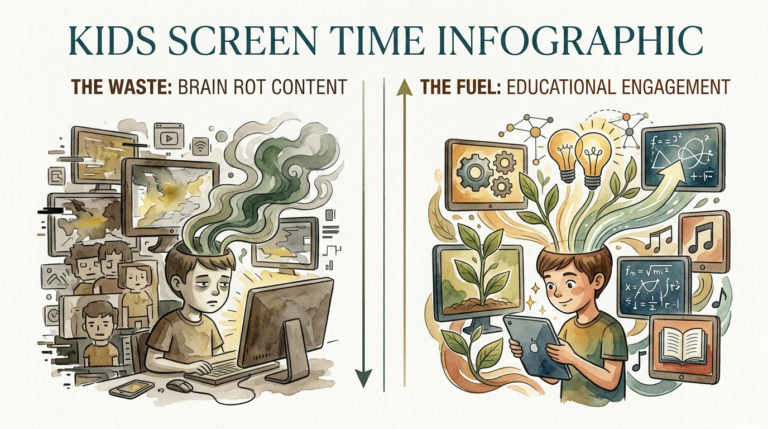
Passive Consumption vs. Legacy Growth
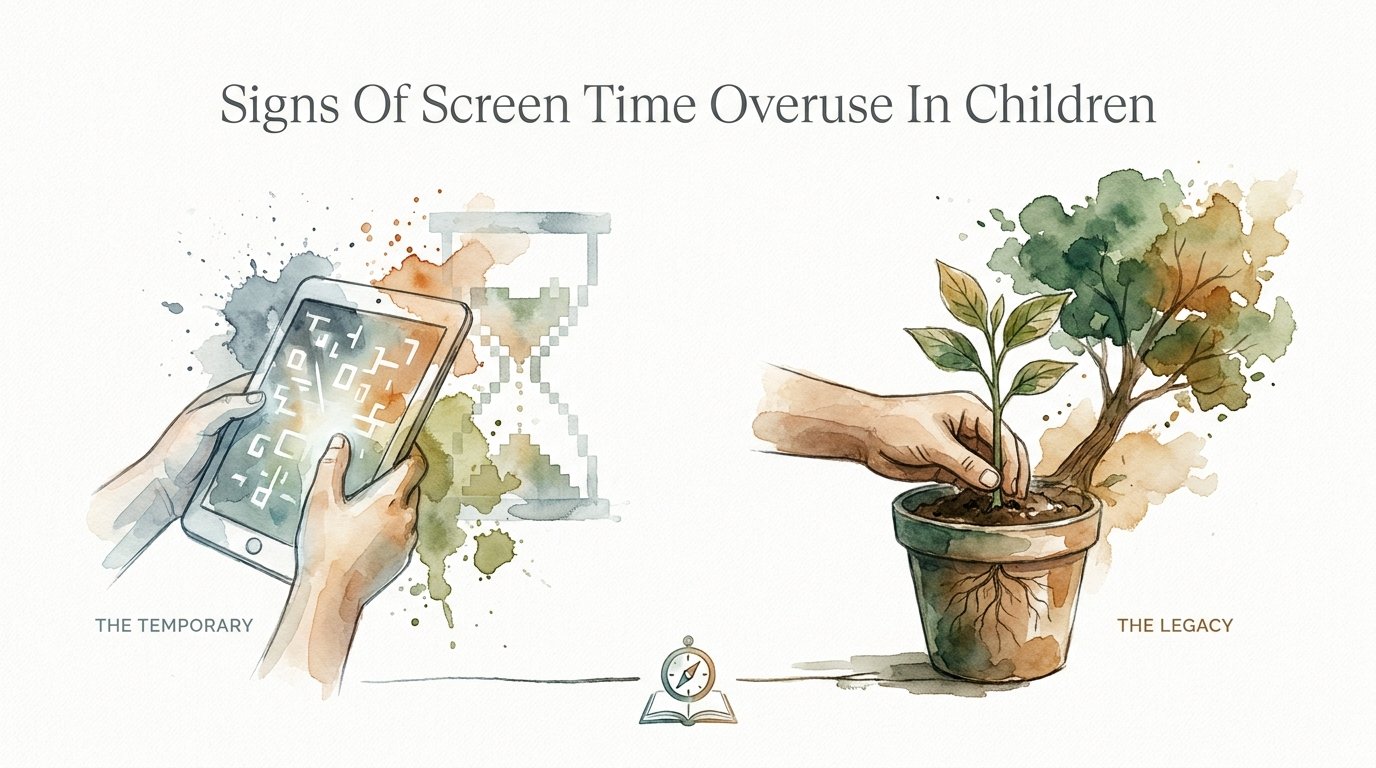
Understanding the difference between the “Temporary” and the “Legacy” is vital for long-term success. The following table highlights the core differences between these two types of digital engagement.
| Factor | Temporary (Passive) | Legacy (Active/Creative) |
|---|---|---|
| Brain Activity | Low (Reactive/Consumer) | High (Problem Solving/Creator) |
| Dopamine Type | Short-term spikes (Spikes/Crashes) | Long-term satisfaction (Steady) |
| Long-term Value | None (Fleeting content) | High (Skill acquisition) |
| Emotional Impact | Restlessness/Anxiety | Confidence/Accomplishment |
| Social Component | Isolation | Collaboration/Contribution |
Practical Tips for a Screen-Wise Home
Implementing a healthy digital culture requires small, consistent actions. You can start today by applying these research-backed strategies to your daily routine. These tips focus on “crowding out” the bad with the good.
The 20-20-20 Rule
To prevent eye strain, teach your child the 20-20-20 rule. Every 20 minutes, they should look at something 20 feet away for at least 20 seconds. This simple habit protects their vision and provides a necessary mental break from the screen.
Create a “Human Bridge” for Transitions
Instead of shouting “Turn it off!” from another room, walk over and engage with what your child is doing. Ask a question about their game. This creates a “human bridge” that helps their brain transition from the digital world back to the physical one.
Establish Screen-Free Zones
Designate the dining table and bedrooms as screen-free zones. Keeping devices out of the bedroom is the single most effective way to protect a child’s sleep. Use a central charging station in a common area where all devices “go to sleep” at a set time each night.
Model the Behavior You Want
Your children are watching your digital habits. If you are constantly scrolling at the dinner table, they will assume that is the norm. Set your own digital boundaries and let your children see you put your phone away to engage with them.
Advanced Insights: The Digital Distress Loop
For those looking to go deeper, it is important to understand the “bidirectional” nature of screen overuse. Research from the American Psychological Association in 2025 shows that screen time is often both a cause and a symptom.
Children struggling with social anxiety or depression often turn to screens as a coping mechanism. The digital world provides a “safe” space where they can control their interactions. However, this avoidance prevents them from developing the very skills they need to overcome their anxiety.
This creates a “Digital Distress Loop.” The more they struggle offline, the more they hide online. The more they hide online, the worse their offline skills become. Breaking this loop requires more than just a time limit. It requires addressing the underlying emotional needs of the child.
Parents should look for “mood-driven” scrolling. If a child reaches for a device every time they are sad, angry, or bored, they are using it as an emotional crutch. Teaching them healthy coping mechanisms, such as journaling or physical activity, is essential for long-term wellness.
Scenario: The Saturday Morning Transition
Imagine a typical Saturday morning where a child has been playing a high-intensity video game for two hours. The parent announces that screen time is over. Predictably, the child becomes irritable and defiant. This is the “digital hangover” in action.
A “legacy growth” approach would handle this differently. The parent might join the child for the last five minutes of the game, asking about their progress. Then, the parent introduces a high-value offline activity immediately, such as a trip to the park or a baking project.
By providing a “soft landing” and a clear, rewarding alternative, the parent helps the child’s brain transition. Instead of a conflict, the morning becomes a memory. The child learns that while screens are fun, the real world offers different, more lasting rewards.
This shift doesn’t happen overnight. It requires patience and a commitment to “Legacy” activities. Over time, the child’s brain adjusts. They begin to seek out the creative and social rewards of the physical world more frequently than the digital one.
Final Thoughts
The goal of managing screen time is not to eliminate technology. It is to ensure that technology serves the child, rather than the child serving the technology. By recognizing the signs of overuse early, you can prevent the “habit” from becoming a “hunger.”
Focus on building a “Legacy” rather than consuming the “Temporary.” Every hour spent creating, playing, or connecting offline is an investment in your child’s future brain health. These small shifts in daily routine create a foundation of resilience and focus that will last a lifetime.
Encourage your child to be a creator in a world of consumers. Start small, stay consistent, and remember that the most valuable thing you can offer your child is your undivided attention. Reclaim the balance today, and watch your child thrive in both the digital and physical worlds.
Sources
1 bark.us | 2 restpublisher.com | 3 luriechildrens.org | 4 choc.org | 5 aripi.or.id | 6 rochester.edu | 7 recordablebookbuddy.com | 8 westrikeback.com | 9 digitalcitizenacademy.org | 10 theguardian.com | 11 digiisocial.com | 12 compasschildcare.com | 13 childrenandscreens.org | 14 beaconservices.org.uk | 15 commonwealthpeds.com | 16 psychologytoday.com | 17 cedars-sinai.org | 18 sparkandstitchinstitute.com | 19 aap.org | 20 apa.org | 21 choc.org | 22 childrenandscreens.org