Screen Time Vs Fine Motor Skills In Children
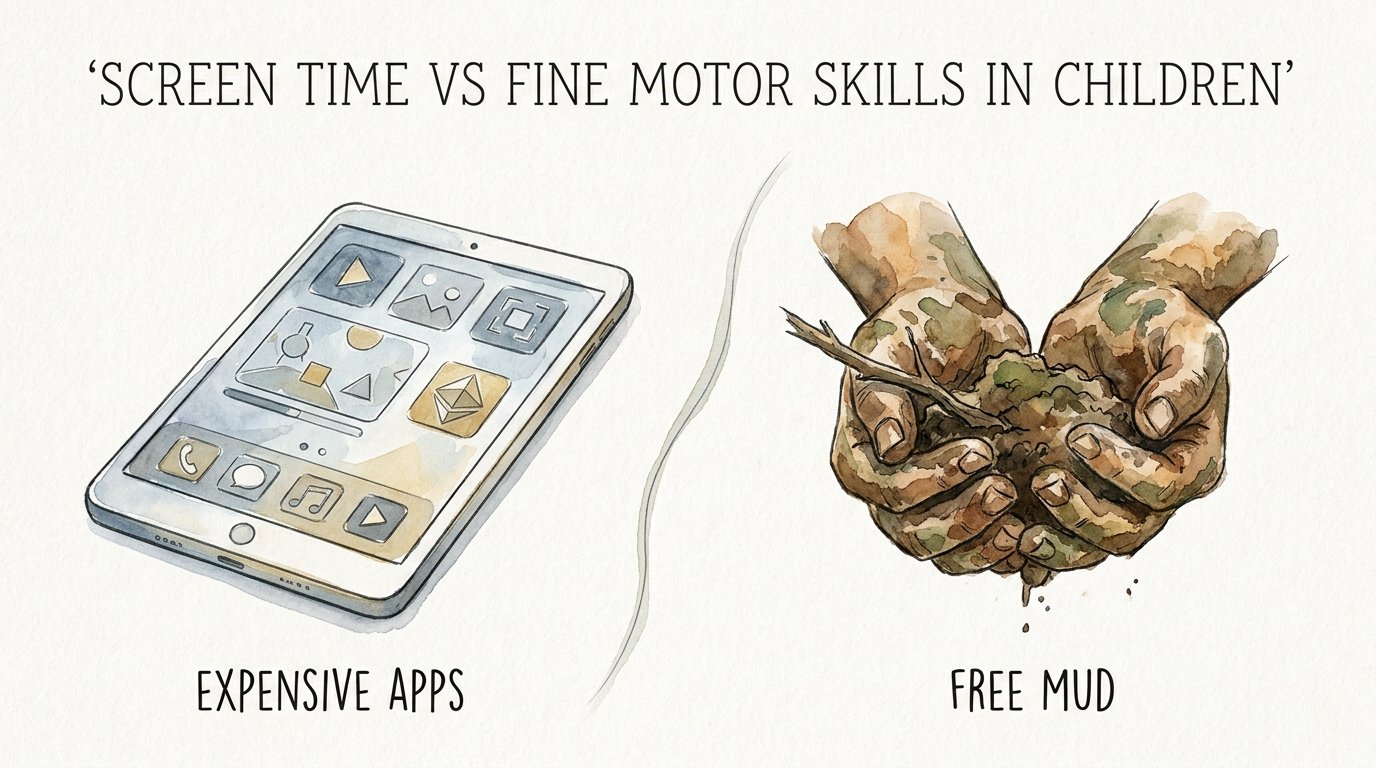
When a $1,000 device produces weaker hands than a free pile of dirt, it’s time to look at the developmental cost. We pay for ‘educational’ apps to boost brain power, but their hands are losing the ability to grip, squeeze, and create. One of the first signs of overuse isn’t just a tantrum—it’s the loss of physical dexterity. Here is why the best developmental tool in the world is currently in your backyard for free.

You might see your toddler navigate an iPad with the precision of a software engineer. It looks impressive at first glance. However, take a closer look at their fingers when they try to pick up a single cheerio or button a shirt. You might notice a fumble or a lack of strength that seems out of place.

This is the silent trade-off of the digital age. We are trading tactile resistance for glass-smooth efficiency. The result is a generation of children with “digital hands” that struggle with the physical world. Understanding this gap is the first step toward reclaiming your child’s motor development.
Screen Time Vs Fine Motor Skills In Children
Fine motor skills represent the coordination of small muscle movements in the hands and fingers. These movements are essential for daily tasks like writing, using a fork, and tying shoelaces. Historically, children developed these skills naturally through play. They stacked blocks, sorted pebbles, and poked at bugs in the garden.
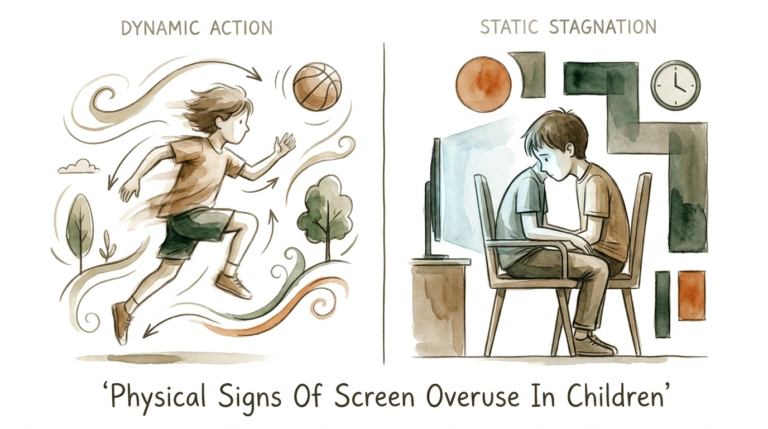
Today, screens are replacing these multi-dimensional activities. A tablet screen offers no physical resistance. Swiping left requires almost zero muscle activation compared to kneading bread or carving clay. This lack of resistance means the 27 bones and dozens of muscles in the hand never get a proper workout.
Research shows a direct correlation between high screen use and reduced grip strength. Occupational therapists are seeing more children enter school who cannot hold a pencil correctly. These children have the “swiping reflex” but lack the “pincer grasp.” Their hands are physically underpowered for the demands of a classroom environment.
Digital interaction is essentially a 2D experience in a 3D world. When a child interacts with a screen, they are only using one or two fingers in a repetitive motion. Real-world play involves the whole hand, the wrist, and the forearm. This physical engagement is what builds the neural pathways necessary for complex tasks.
The Mechanics of Manual Dexterity
Developing hand strength is about more than just muscle. It is about the sensory-motor loop that happens between the skin and the brain. Every time a child squeezes mud, their brain receives a flood of data about texture, weight, and temperature. This information helps the brain map out the hand’s capabilities.
The Role of Intrinsic Muscles
The small muscles located entirely within the hand are called intrinsic muscles. These muscles allow for precise movements, like threading a needle or drawing a circle. Tapping a screen does not target these muscles effectively. They need resistance and variety to grow strong and coordinated.
The Arches of the Hand
A human hand has three distinct arches that allow it to cup and hold objects. These arches develop through weight-bearing activities and manipulation of different shapes. Crawling on uneven ground or squeezing a ball of dirt helps these arches form. Without this physical stimulus, the hand remains flat and lacks the stability needed for handwriting.
Proprioception and Feedback
Proprioception is your “body sense” or the ability to know where your limbs are without looking. Tactile play provides intense proprioceptive feedback. When a child digs in a garden, they learn exactly how much force is needed to move the soil. A screen provides the same feedback regardless of the action, which confuses the sensory system.
Benefits of Sensory Play and Tactile Exploration
Sensory play is the ultimate brain-builder. It engages multiple senses simultaneously, which strengthens the neural connections in the brain’s “grasping network.” This network is what allows us to use tools and interact with our environment effectively.
One major benefit is the improvement of hand-eye coordination. In a digital app, the “physics” are simulated and often simplified. In the backyard, physics are real. A child must learn to balance a rock or pour water into a sandy hole without it collapsing. These successes build genuine confidence and physical competence.
Physical play also promotes bilateral integration. This is the ability to use both sides of the body at the same time. Holding a bucket with one hand while digging with the other is a complex neurological task. Screens rarely require this level of coordination, as they often focus on a single point of contact.
Cognitive Gains from Physical Work
There is a deep connection between manual dexterity and cognitive function. Studies have shown that children with better fine motor control often perform better in math and reading. The brain areas responsible for moving the fingers are closely linked to the areas responsible for processing abstract thoughts. Working with the hands is, quite literally, working the brain.
Comparison: Expensive Apps vs Free Mud
Choosing between digital tools and natural play often comes down to perceived value. However, when we look at the developmental return on investment, the results are surprising.
| Feature | Educational Tablet Apps | Backyard Mud and Dirt |
|---|---|---|
| Cost | $300 – $1,000 + Subscriptions | $0.00 |
| Muscle Activation | Low (Limited to 1-2 fingers) | High (Full hand, wrist, forearm) |
| Sensory Input | Static (Glass surface) | Dynamic (Varying textures/weights) |
| Resistance | Zero | Variable (Wet vs Dry) |
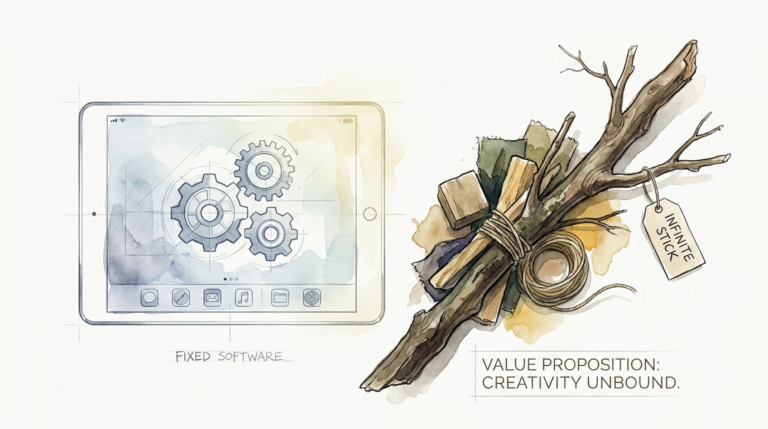
| Creative Freedom | Limited by Software Code | Infinite (Open-ended play) |
The tablet might teach a child to recognize a letter, but the mud teaches the child the physical strength required to write that letter. One provides information, while the other builds the infrastructure for learning.
Challenges and Common Mistakes
The biggest challenge for modern parents is the “convenience trap.” It is much easier to hand a child a phone in a restaurant than to carry a bag of tactile toys. We often prioritize quiet behavior over developmental needs. This short-term peace can lead to long-term physical delays.
A common mistake is assuming that “educational” content on a screen compensates for the lack of physical activity. Even the best math app cannot replace the physics of stacking real wooden blocks. Parents may see their child “winning” at a digital game and assume they are reaching milestones. In reality, they may be missing the foundational motor skills that underpin those milestones.
The Dopamine Loop
Digital devices are designed to provide instant gratification. Every swipe results in a bright light or a fun sound. This creates a high-dopamine environment that makes real-world play seem “boring” by comparison. A child may lose interest in dirt or playdough because those materials don’t “do anything” on their own.
The Sedentary Habit
Screens encourage a hunched posture and a lack of movement. Over time, this leads to weak core muscles. You might not think core strength matters for writing, but it does. Without a stable trunk, a child cannot stabilize their shoulder, which makes it impossible to control their hand for fine tasks like drawing.
Limitations: When Screens Are Not the Enemy
It is important to maintain a balanced perspective. Screens are not inherently evil. They are powerful tools for communication and specific types of learning. For children with certain disabilities, touchscreens provide a way to express themselves that might be physically impossible otherwise.
In some cases, digital art programs can help a child experiment with color and composition without the mess. The key is moderation and intentionality. If a child spends 30 minutes on a screen, they should ideally spend at least 60 minutes engaged in tactile, physical play to offset the sedentary time.
Environmental factors also play a role. Not every family has a safe backyard or easy access to nature. In these situations, indoor sensory bins filled with rice or beans can serve as a substitute. The goal is to provide resistance and variety, regardless of the setting.
Practical Tips and Best Practices
Rebuilding hand strength doesn’t require a gym membership or expensive equipment. You can turn daily chores and simple play into a motor skills workshop. The more variety you provide, the better the results.
- Embrace the Mess: Allow your child to play in the mud, sand, or water. These elements provide the best tactile feedback for developing hands.
- Ditch the Velcro: Choose shoes with laces and shirts with buttons. These daily “struggles” are actually valuable exercises for fine motor precision.
- Cooking Together: Let your child knead dough, stir thick batters, or peel oranges. These tasks require significant hand strength and coordination.
- Gardening: Digging in the soil and pulling weeds are high-resistance activities. They build the arches of the hand and strengthen the wrist.
- Art Beyond Crayons: Use clay, charcoal, or finger paints. Different mediums require different types of pressure and grip.
Focus on “open-ended” toys. Blocks, sticks, and cardboard boxes require the child to do the work. Unlike a digital game with a set path, these items force the child to plan, grip, and manipulate objects in space.
Advanced Considerations: The Brain-Hand Connection
The relationship between our hands and our brains is one of the most complex in the animal kingdom. In the human brain, a massive amount of real estate is dedicated specifically to the motor control of the hands. This is often visualized through the “Cortical Homunculus,” a map where the hands appear giant compared to the rest of the body.
When we stop using our hands for complex tasks, we aren’t just losing muscle. We are failing to stimulate large portions of our motor cortex. This can lead to a “thinning” of the neural density in these areas. For a developing child, this stimulation is non-negotiable for healthy brain architecture.
The Evolutionary Perspective
Human evolution was driven by the co-evolution of the hand and the brain. As our ancestors began using tools, their brains grew to accommodate the new skills. By removing the “tool use” phase of childhood and replacing it with “swipe use,” we are diverging from the very activities that made us human.
Long-term Academic Impact
Data shows that fine motor skills at age five are a better predictor of later academic achievement than early reading or math scores. This is because the self-regulation and focus required to master a physical task translate directly to the classroom. A child who can sit and thread beads for ten minutes has the “cognitive endurance” to sit and listen to a lesson.
Examples and Scenarios
Consider two different children at a birthday party. Child A spent their morning playing a tablet game where they “built” a virtual house. Child B spent their morning in the garden helping their parents plant flowers.
When it comes time to cut the cake or open presents, the differences become visible. Child B handles the scissors with ease and can peel back the tape on a gift without frustration. Child A struggles with the scissors, often becoming upset or asking an adult for help. The physical frustration often leads to a behavioral outburst.
This isn’t a lack of intelligence in Child A. It is a lack of physical experience. The “virtual house” didn’t teach Child A how to stabilize a piece of paper while moving a blade. It didn’t teach them the thumb-strength needed to puncture a box.
Another scenario involves the “Pencil Grip Test.” Ask a child to draw a straight line. A child with high screen time often uses a “palmar grasp,” holding the pencil in their whole fist. A child with high tactile play is more likely to use a “tripod grip,” using only their thumb and first two fingers. The tripod grip is the foundation of legible, effortless writing.
Final Thoughts
The transition from a tactile childhood to a digital one is happening faster than our biology can keep up. We are seeing the results in classrooms and doctors’ offices every day. Weak hands, poor posture, and limited focus are the “bugs” in the digital-only childhood.
Reclaiming your child’s development doesn’t require you to throw away your devices. It simply requires a shift in priority. Make the “pile of dirt” as accessible as the tablet. Encourage the mess, celebrate the dirty fingernails, and let them struggle with the buttons on their coat.
Those small physical challenges are the building blocks of a capable, confident adult. The next time you feel the urge to download a new “educational” app, take a look out the window instead. The best classroom your child will ever have is waiting in the backyard, and it doesn’t even need a charger.
Sources
1 nationalgeographic.com | 2 enablingdevices.com | 3 handwritingsolutions.org | 4 uconn.edu | 5 writesteps.com | 6 developlearngrow.com | 7 neurosciencenews.com | 8 occupationaltherapy.mt | 9 goldstarrehab.com | 10 psychologytoday.com | 11 jewelautismcentre.com | 12 bunnyhopkinstoys.com | 13 nih.gov