How To Channel High-energy Kids Into Household Chores
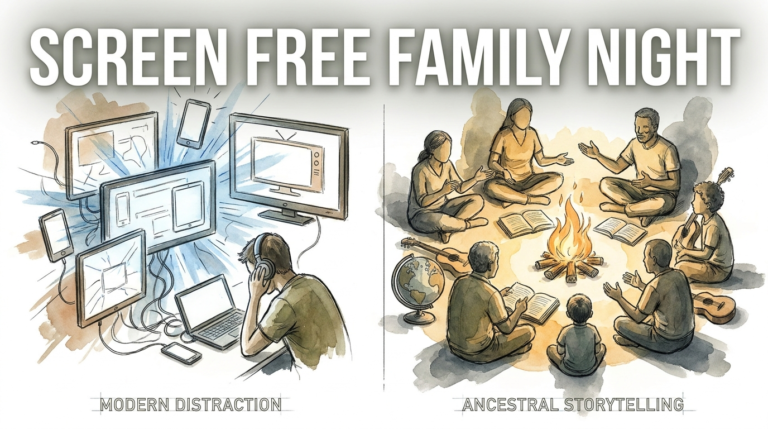
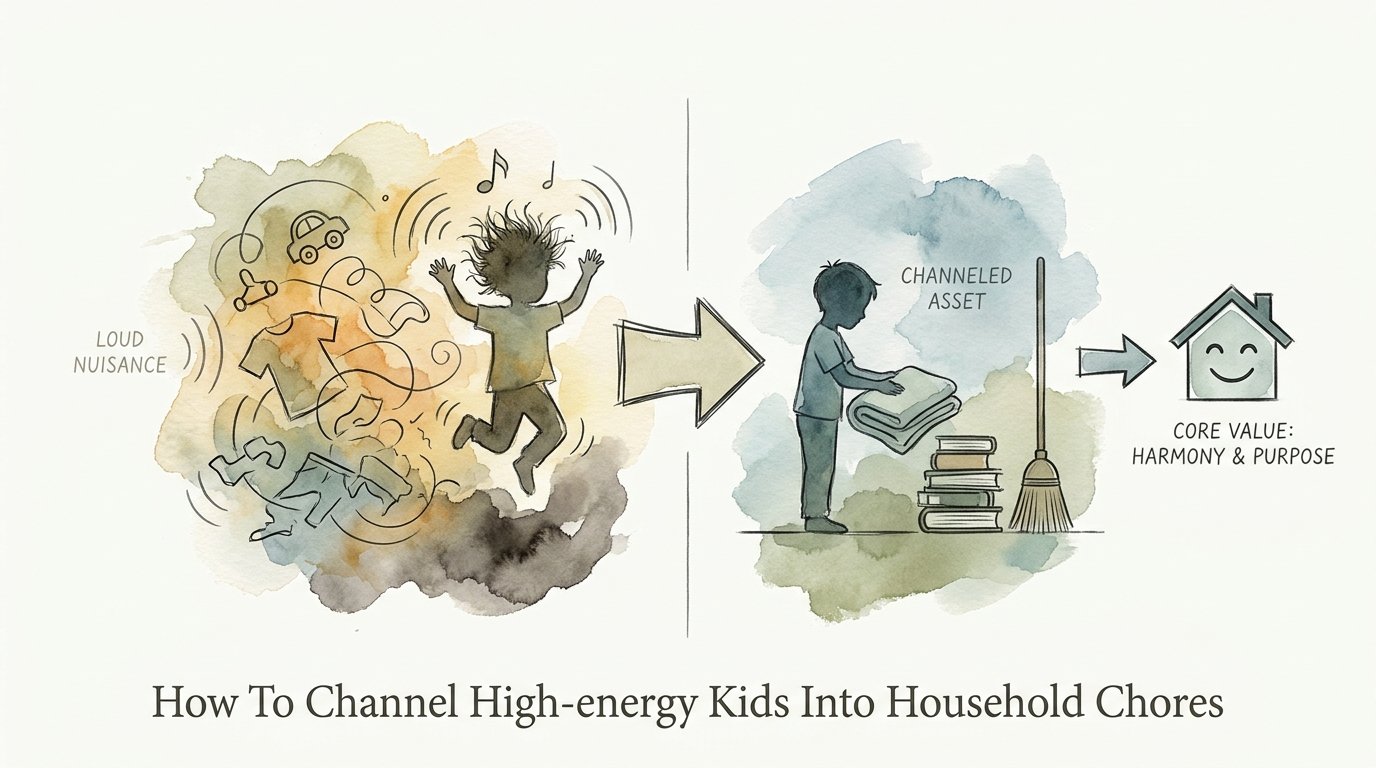
That ‘troublesome’ energy isn’t a problem to be silenced; it’s a power source waiting for a mission. When we see high energy as a nuisance, we reach for the iPad to ‘quiet’ them. When we see it as an asset, we give them a heavy job to do. One creates a zombie; the other creates a leader.

Parents often find themselves exhausted by the sheer momentum of a high-energy child. The running, the jumping, and the constant noise feel like a storm inside the living room. But this energy is actually a remarkable gift that simply needs a productive outlet. Instead of fighting against the current, you can learn to direct it.
Harnessing this vitality through household tasks isn’t just about getting help with the cleaning. It is a strategic way to help your child regulate their own body while building a deep sense of belonging. This guide will show you how to transform “troublesome” behavior into a powerful household asset.
How To Channel High-energy Kids Into Household Chores
Channeling high-energy kids into household chores is the process of using physically demanding tasks to meet a child’s sensory and emotional needs. This concept is rooted in the idea of “heavy work.” In the world of occupational therapy, heavy work refers to activities that push or pull against the body. These tasks provide proprioceptive input—the deep pressure that tells the brain where the body is in space.
High-energy children often “crave” this input. They might crash into furniture or jump off the couch because their bodies are looking for that grounding sensation. When you provide this input through a productive task, you satisfy their physical urge while teaching them valuable life skills.
In real-world terms, this looks like a toddler pushing a full laundry basket or a ten-year-old scrubbing the kitchen floor. These aren’t just chores; they are “missions” that require strength and focus. This approach shifts the dynamic from a parent constantly saying “stop” to a parent saying “I need your strength for this.”
The Mechanics of Movement: Why Heavy Work Works
Understanding the science behind movement helps you choose the right tasks. The human body has a “sensory diet.” Just as we need food to fuel our muscles, our nervous systems need sensory input to stay calm and focused. For many children, especially those with high energy or ADHD, the standard “sitting still” environment is a sensory desert.
Proprioception is the key. When a child carries a heavy stack of books or rakes a pile of leaves, their joints and muscles send signals to the brain. These signals have an incredible organizing effect. They lower stress hormones and increase “feel-good” neurotransmitters like serotonin. This is why a child often seems much calmer and more attentive after a period of intense physical exertion.
Heavy work provides a natural “reset” button. If you notice your child becoming “flighty” or starting to act out, they are often just dysregulated. A specific, heavy task gives them a target for that energy. It grounds them. It moves the energy from their head down into their hands and feet, where it can be used for something meaningful.
How to Implement the System: Turning Work into a Mission
Getting started requires a shift in how you present the work. If you treat a chore like a punishment, a high-energy child will resist it with the same intensity they bring to everything else. Instead, frame the work as a “special mission” that requires their specific set of skills.
Step 1: Identify the “Heavy” Tasks
Look for tasks that involve resistance. These are the “gold mine” activities for high-energy kids.
- Pushing: Mopping, vacuuming, or pushing a wheelbarrow.
- Pulling: Raking leaves, dragging a rug outside to shake it, or playing tug-of-war with the laundry bag.
- Lifting/Carrying: Carrying bags of groceries, moving stacks of books, or filling a bucket with water.
- Squeezing/Scrubbing: Scrubbing the bathtub, kneading bread dough, or squeezing out sponges.
Step 2: Assign a Title
Words matter. Instead of “helper,” try “Project Manager” or “Chief of Strength.” Tell them, “This job is too heavy for me to do alone; I need someone with your power to handle the heavy lifting.” This appeals to their desire for autonomy and competence.
Step 3: Gamify the Process
High-energy children thrive on competition and speed. Use a timer to see how fast they can “clear the landing zone” (pick up toys). Create a “points system” where heavy tasks earn more “power credits” than light tasks. Make it a challenge. “I bet you can’t get all these groceries into the kitchen in under three minutes.”
Benefits of Channeled Energy
The advantages of this approach extend far beyond a clean house. Long-term studies, including the famous Harvard Study of Adult Development, have shown that children who do chores are more likely to be successful and happy as adults.
Psychological Strength
When a child completes a difficult task, they build “self-efficacy.” This is the internal belief that they can handle challenges. For a high-energy kid who is often told they are “too much” or “too loud,” being told they are “strong” and “capable” is a powerful narrative shift. It builds confidence from the inside out.
Executive Functioning
Chores require planning and sequencing. A child has to figure out which groceries go in the fridge first and how to stack the wood so it doesn’t fall. These are high-level brain functions. Regular practice with chores strengthens the frontal lobe, helping with focus, time management, and emotional regulation in all areas of life.
Sense of Belonging
Contributing to the household makes a child feel like a vital member of the “pack.” It moves them from being a consumer to being a contributor. This sense of importance reduces the need for “negative attention-seeking” behaviors. They don’t need to yell for attention when they are already being praised for their hard work.
Challenges and Common Mistakes
Even with the best intentions, parents often run into roadblocks. The most common mistake is “commanding” instead of “commissioning.” When you bark orders, the child’s natural drive for independence kicks in as defiance.
Another frequent pitfall is the “perfection trap.” If a seven-year-old mops the floor, it might not be spotless. If you immediately go behind them and redo it, you crush their sense of competence. You are telling them their contribution wasn’t good enough. Instead, focus on the effort and the energy spent. You can teach better technique over time, but you cannot easily rebuild broken motivation.
Speed is also a trap. It is often “faster” to just do it yourself. However, doing everything for a child robs them of the opportunity to develop grit. Every time you step in to “save” them from a heavy task, you are preventing their nervous system from getting the very input it needs to calm down.
Limitations: When to Pull Back
While channeling energy is effective, it is not a universal fix for every situation. You must be aware of physical and emotional boundaries.
Environmental limitations are real. You cannot ask a child to shovel snow if the temperature is dangerously low. You shouldn’t ask a small child to carry items that are heavy enough to cause injury. Safety always comes first. Always supervise new tasks to ensure they are using proper form, especially when lifting.
Situational awareness is also key. If a child is sick, overtired, or genuinely overstimulated to the point of a meltdown, adding a chore might backfire. Sometimes, the body needs rest instead of more work. Learn to distinguish between “excess energy” and “stress-induced dysregulation.” Heavy work is a tool for the former, but the latter may require quiet time and connection.
Loud Nuisance vs. Channeled Asset
It helps to see the difference between these two states in a clear format. This comparison shows why the shift in perspective is so vital for the health of the family.
| Feature | Loud Nuisance | Channeled Asset |
|---|---|---|
| Energy Direction | Chaotic, unfocused, disruptive. | Targeted, productive, helpful. |
| Parental Role | “Police officer” (Stopping behavior). | “Coach” (Directing behavior). |
| Child’s Feeling | Frustrated, “bad,” misunderstood. | Capable, strong, important. |
| Nervous System | High arousal, seeking input. | Regulated, grounded, calm. |
| Long-term Goal | Compliance and silence. | Responsibility and leadership. |
Practical Tips for Daily Success
Making this a permanent part of your life requires small, consistent adjustments. You don’t need a massive overhaul; you just need a new lens.
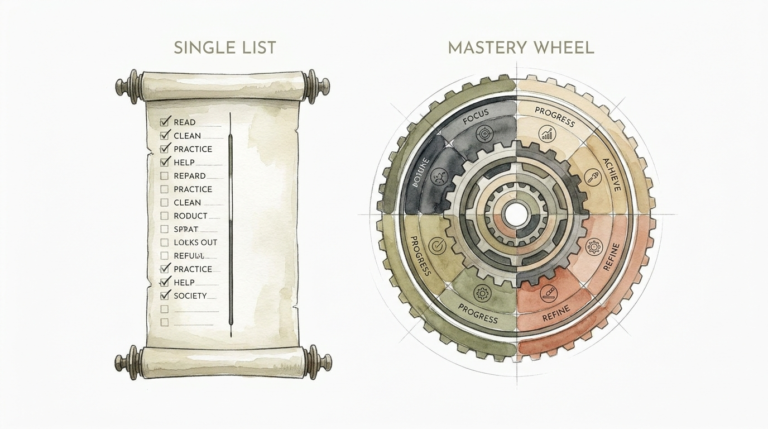
- Use Visuals: Create a “Power Chart” with pictures of the heavy tasks. Let them check off their missions.
- Set the Scene: Play high-energy music while they work. Let them dance-mop or “power-walk” the trash to the curb.
- Offer Choices: Give them two heavy options. “Do you want to be the Grocery Grunt or the Garden Digger today?” Autonomy increases buy-in.
- Praise the Process: Instead of “good job,” say “I saw how hard you used your muscles to move those chairs!” Be specific about their effort.
- Work Together: Especially at first, be the “Co-Captain.” Show them that work is something the family does together, not something they are sent away to do alone.
Advanced Considerations: Scaling and Mastery
As your child grows, their need for “heavy work” will evolve. What was a “heavy” task at five will be easy at twelve. You must scale the difficulty to keep the sensory benefits active.
For older children, focus on “Mastery Projects.” This could be learning how to build a raised garden bed or being responsible for the entire lawn care routine. These tasks require sustained effort and problem-solving. It moves them from simply “burning energy” to “honing a craft.”
Think about leadership. Can your high-energy older child lead a “team” of younger siblings in a basement clean-out? Teaching them how to direct others’ energy—while using their own for the heaviest lifting—is the ultimate training for future leadership roles. This is where a “troublesome” kid becomes a truly powerful adult.
Realistic Scenario: The Grocery Haul
Imagine you just arrived home with ten bags of groceries. Your high-energy eight-year-old is bouncing off the walls, making noise, and getting in the way as you try to unload.
Instead of telling them to “go play somewhere else,” you stop. You look them in the eye. “I have a massive mission, and I need a heavy lifter. These bags are too much for me. Can you take all the heavy milk and juice containers straight to the kitchen?”
The child’s demeanor changes instantly. They grab the heavy jugs. They feel the weight in their arms and the tension in their legs. Their brain gets that “heavy work” hit it was looking for. By the time the car is empty, they aren’t just tired; they are settled. They helped the family. They used their power for good. You didn’t just survive the grocery haul; you used it to regulate your child.
Final Thoughts
Transforming high-energy behavior into a household asset is a marathon, not a sprint. It requires patience and a willingness to see strength where others see a struggle. By focusing on proprioceptive “heavy work,” you provide your child with the biological tools they need to stay calm.
You are doing more than just cleaning your house. You are teaching your child that their intensity is a gift. You are showing them that they have a role to play in the world and that their contributions matter. This foundation of competence will serve them for the rest of their lives.
Start small today. Find one “mission” that requires a bit of muscle. Invite your child into that work. Watch how their body responds to the weight and the responsibility. You might just find that the child who was once your loudest nuisance becomes your most reliable teammate.
Sources
1 discoveryworldschools.com | 2 united4children.org | 3 neurodiverging.com | 4 embolden.world | 5 childdevelopmentinfo.com | 6 understood.org | 7 brainbalancecenters.com | 8 understood.org | 9 gohenry.com | 10 understood.org | 11 carefirstpt.com | 12 psychologytoday.com | 13 uhhospitals.org | 14 hotgroundgymds.com | 15 sascoriver.com | 16 mom.com | 17 aacap.org | 18 connectpediatrictherapy.com | 19 lemonlimeadventures.com