Social Signs Of Screen Addiction
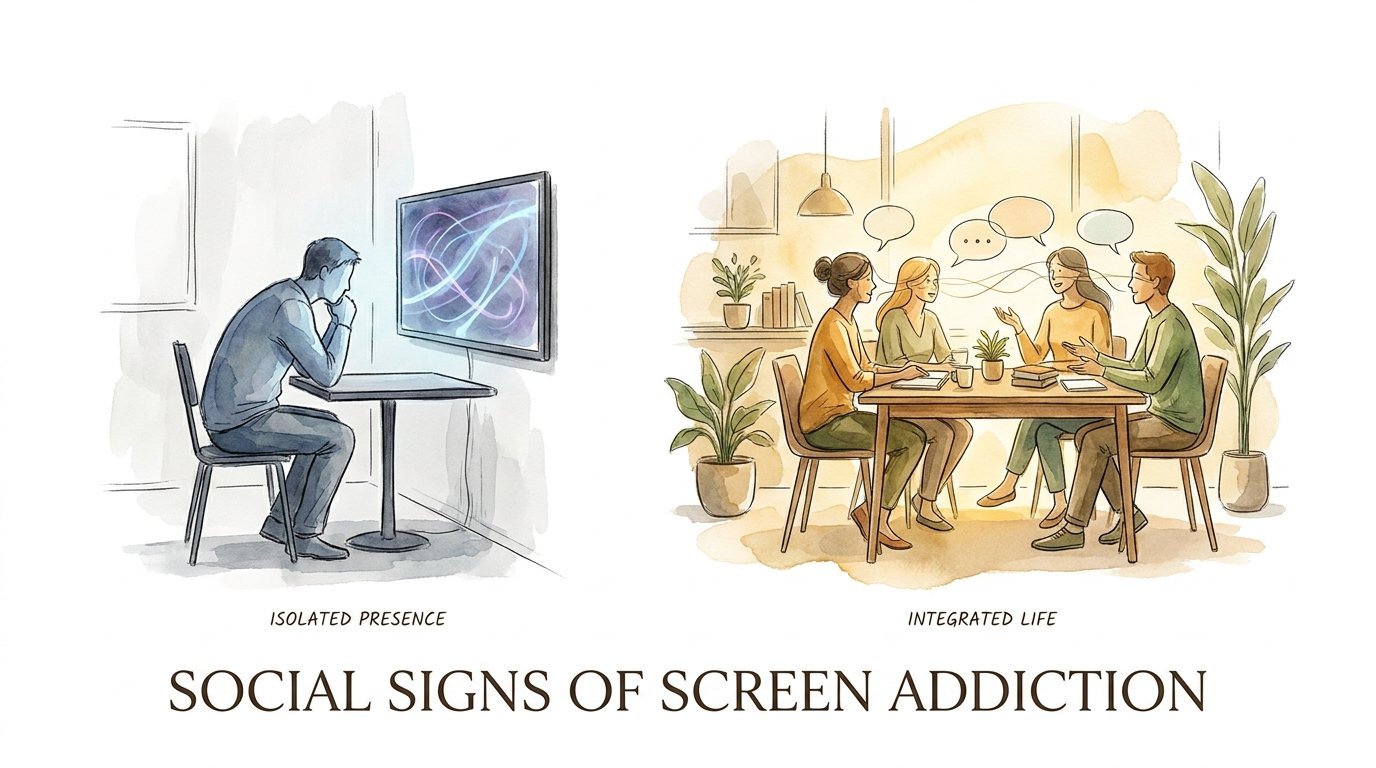
Is your child physically at the table but mentally five thousand miles away?

The most dangerous sign of overuse isn’t just the minutes spent; it’s the miles of mental distance created. When a child chooses a digital avatar over a real-world sibling, the family system begins to fracture. We must choose integration over isolation every single day.

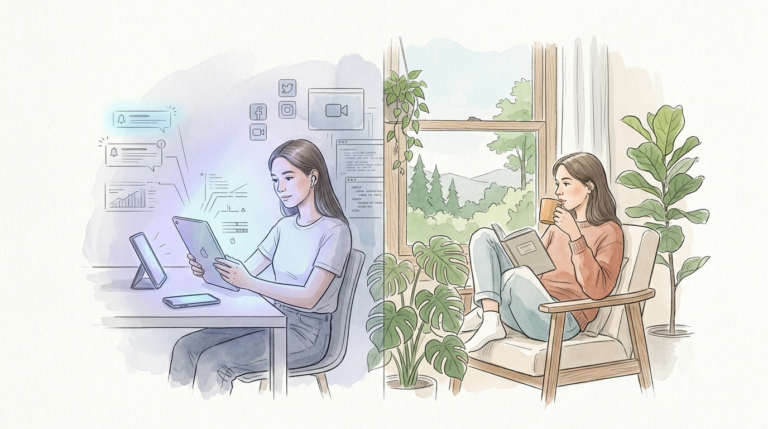
Living in a hyper-connected world means we are often more disconnected than ever. This phenomenon is what we call an ISOLATED PRESENCE. It happens when a family sits in the same room but lives in separate digital universes. To fix this, we need to move toward an INTEGRATED LIFE where technology serves the family, not the other way around.
Modern parenting requires us to be digital architects. We are building the foundations of how our children interact with the world. This guide will help you spot the warning signs and rebuild the bridge between the screen and the soul.
Social Signs Of Screen Addiction
Social signs of screen addiction go beyond just looking at a phone. They are behavioral shifts that show a child is prioritizing a virtual world over their physical reality. These signs often emerge slowly before becoming the new normal.
Common indicators include a total loss of interest in previous hobbies. If a child who loved soccer or drawing now only wants to game, that is a red flag. Social withdrawal is another major symptom. You might notice they avoid face-to-face interactions with friends or family to stay online.
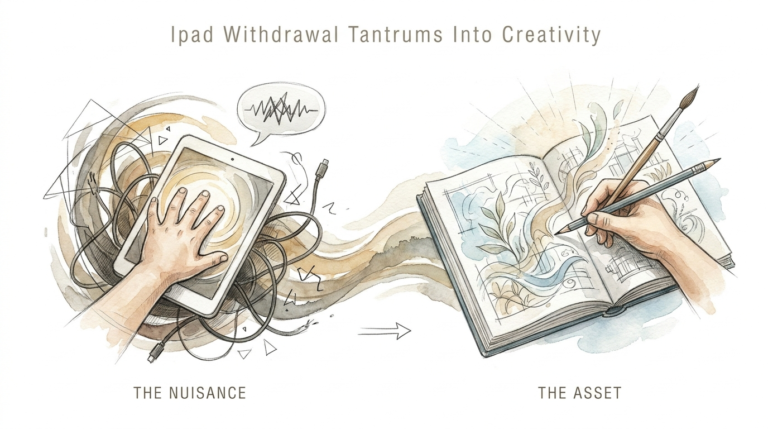
Real-world situations often trigger these signs. Watch for “transition rage.” This is intense irritability or aggression when asked to put a device away. They aren’t just annoyed; they are experiencing a chemical crash from a dopamine high.
Lying about usage is also a hallmark of addiction. If your child is sneaking devices into bed or hiding tabs when you walk by, the relationship with technology has become compulsive. They are no longer in control of the habit.
The Dopamine Loop: How Screens Hijack the Developing Brain
Understanding why screens are so addictive requires looking at the brain. The human brain is wired to seek rewards. Technology companies use this biology to keep users engaged for as long as possible.
The Nucleus Accumbens and Reward
The nucleus accumbens is the brain’s reward center. Every like, notification, or level-up triggers a surge of dopamine. This chemical tells the brain, “This feels good, do it again.” For a developing brain, these hits are much more powerful than they are for adults.
Weakening the Prefrontal Cortex
The prefrontal cortex is responsible for impulse control and planning. It doesn’t fully develop until the mid-20s. Excessive screen use can actually desensitize dopamine receptors. This means a child needs more and more stimulation just to feel “normal.”
Over time, this creates a “brain rot” effect. The child becomes impulsive and struggles with boredom. Real-world rewards, like finishing a book or having a conversation, feel too slow and unrewarding.
How to Transition to an Integrated Life
Moving from isolation to integration isn’t about a total ban. It is about restructuring how technology fits into your home. You must move from being a “screen police officer” to a digital mentor.
Step 1: Create a Family Media Plan
Sit down as a family to decide the rules. Consistency is the most important factor. If the rules change every day based on your mood, your child will keep pushing boundaries. Decide on specific “tech-free” zones like the dining table and bedrooms.
Step 2: Practice Active Mediation
Instead of just handing over a tablet, get involved. Co-viewing and co-playing are powerful tools. If your child is into a specific game, ask them to teach you how to play. This turns an isolated activity into a shared social experience.
Step 3: Narrate Your Own Tech Use
Children learn by watching you. When you pick up your phone, explain why. Say, “I’m checking the weather for tomorrow, then I’m putting this away.” This teaches them that tools have a specific purpose and a stopping point.
Benefits of Digital Integration
Choosing an integrated life offers measurable benefits for a child’s development. It restores the natural flow of family communication and emotional growth.
Improved Emotional Intelligence: Face-to-face interaction is how children learn to read body language and tone. Screens strip away these nuances. Reclaiming physical interaction helps them build empathy and social skills.
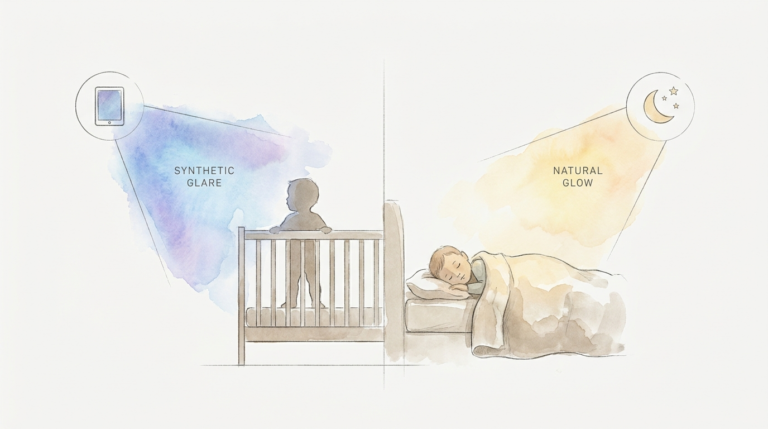
Better Sleep Quality: Removing screens 60 minutes before bed prevents blue light from suppressing melatonin. More importantly, it stops the “racing brain” caused by high-stimulation content. Better sleep leads to better moods and improved school performance.
Increased Resilience: Real life involves boredom and frustration. When a child can’t escape into a screen, they learn to self-soothe. They develop the “mental muscle” needed to handle life’s challenges without a digital crutch.
Challenges and Common Mistakes
Many parents fall into the same traps when trying to manage screen time. These mistakes often stem from a desire for a quick fix rather than long-term change.
Using Screens as a Reward or Punishment
This is the most common error. When you use a screen as a reward, you increase its value in the child’s mind. You make it the “ultimate prize.” Similarly, using it as a punishment can lead to resentment and secretive behavior. Rules should be based on health and balance, not behavior.
The “Cold Turkey” Trap
Suddenly banning all technology usually backfires. It creates a “forbidden fruit” effect. Teens, in particular, may find ways to use devices behind your back. This destroys trust and makes it impossible for you to mentor their digital habits.
Inconsistent Modeling
You cannot expect your child to stay off their phone if you are scrolling through Instagram at dinner. Parental hypocrisy is a major barrier to change. If you want an integrated life, you must lead the way.
Limitations: When the Method Faces Reality
It is important to acknowledge that technology is not optional in the modern world. We cannot live in 1995. There are practical boundaries to how much we can restrict screens.
Schools now require digital literacy. Homework is often assigned through apps and portals. If you are too restrictive, your child may fall behind academically. This is where the “quality over quantity” rule becomes essential. Educational use should be viewed differently than passive scrolling.
Socially, teens use screens to maintain their friend groups. Total isolation from digital social spaces can lead to “Fear of Missing Out” (FOMO) and actual social exclusion. The goal isn’t zero screens; it’s ensuring those screens don’t replace physical life.
Isolated Presence vs. Integrated Life
| Feature | Isolated Presence | Integrated Life |
|---|---|---|
| Primary Focus | Individual digital escape. | Shared family experiences. |
| Communication | Fragmented and interrupted. | Intentional and focused. |
| Role of Technology | A distraction or babysitter. | A tool for learning or connection. |
| Boundary Style | Reactionary or non-existent. | Proactive and agreed upon. |
Practical Tips for Immediate Change
You can start improving your family’s digital health today. Use these actionable steps to break the cycle of isolation.
- Establish a “Parking Lot” for Devices: Create a central charging station in a common area. All phones go there at a set time each evening.
- Set “No-Tech” Windows: The first hour after school and the hour before bed should be screen-free. Use this time for conversation and winding down.
- Curate the Content: Not all apps are equal. Replace passive scrolling apps (like TikTok) with creative ones (like music production or coding).
- Schedule Analog Adventures: Plan activities that are impossible to do while on a phone, such as hiking, swimming, or playing a board game.
- Use Grayscale Mode: Turning your phone’s display to black and white makes it much less stimulating for the brain. This works for kids, too.
Advanced Considerations for Long-Term Wellness
As children grow, the challenges change. Serious practitioners of digital wellness must look at the “hidden” drivers of addiction.
Algorithms are designed to keep us scrolling. Teach your children about how these systems work. When they understand they are being “hacked” for profit, they often become more critical of their own usage. This builds digital agency.
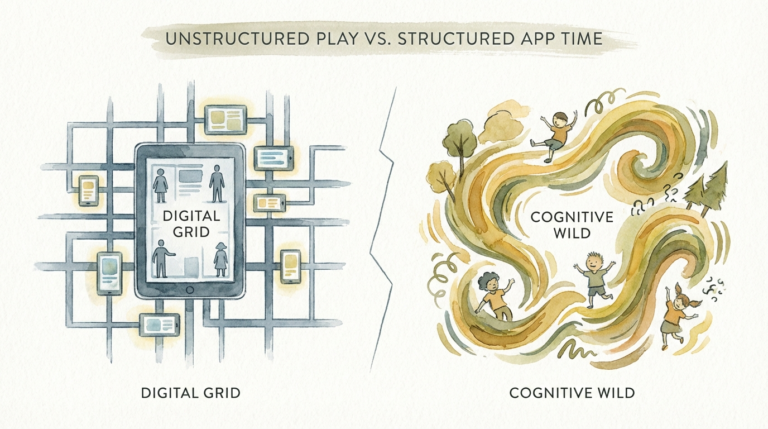
Consider the “displacement effect.” Every hour spent on a screen is an hour NOT spent developing a real-world skill. Help your child find a “High-Flow” hobby. This is an activity that is challenging enough to require full focus, like learning an instrument or a sport. These activities provide a deeper, more lasting sense of satisfaction than digital hits.
Examples and Scenarios
Scenario 1: The Dinner Table Disconnect
A family sits down for dinner. The teenager has their phone in their lap. The parent is checking an email. This is Isolated Presence. To move to an Integrated Life, the parent should put their phone in a drawer first. Then, they should implement a “basket rule” where all family members drop their devices before the meal starts.
Scenario 2: The Car Ride Scroll
During a 30-minute drive, children are usually on tablets to stay quiet. This misses a key opportunity for “low-stakes” conversation. In an integrated model, the car becomes a tech-free zone for short trips. This encourages kids to look out the window, daydream, and talk to each other.
Final Thoughts
Reclaiming your child’s attention is a marathon, not a sprint. It requires patience and a willingness to be uncomfortable. You are not just managing “minutes”; you are protecting their capacity for deep focus and real-world connection.
The goal is to move from a state where screens dictate the family’s energy to one where the family controls the screens. Every time you choose a conversation over a notification, you are winning. Start small, be consistent, and lead with empathy.
Experiment with these strategies this week. You might be surprised at how quickly the “mental distance” begins to shrink. The table is waiting; it’s time to bring everyone back to it.
Sources
1 artfulparent.com | 2 parentselfcare.com | 3 nyp.org | 4 who.int | 5 nicklauschildrens.org | 6 thejacobsladdergroup.org | 7 healthywithin.com | 8 childrenandscreens.org | 9 psychologytoday.com | 10 compasshealthcenter.net | 11 everymoviehasalesson.com | 12 thechildunplugged.com | 13 digitalwellnesslab.org | 14 instrucko.com | 15 suncloudhealth.com | 16 aacap.org | 17 childrenandscreens.org