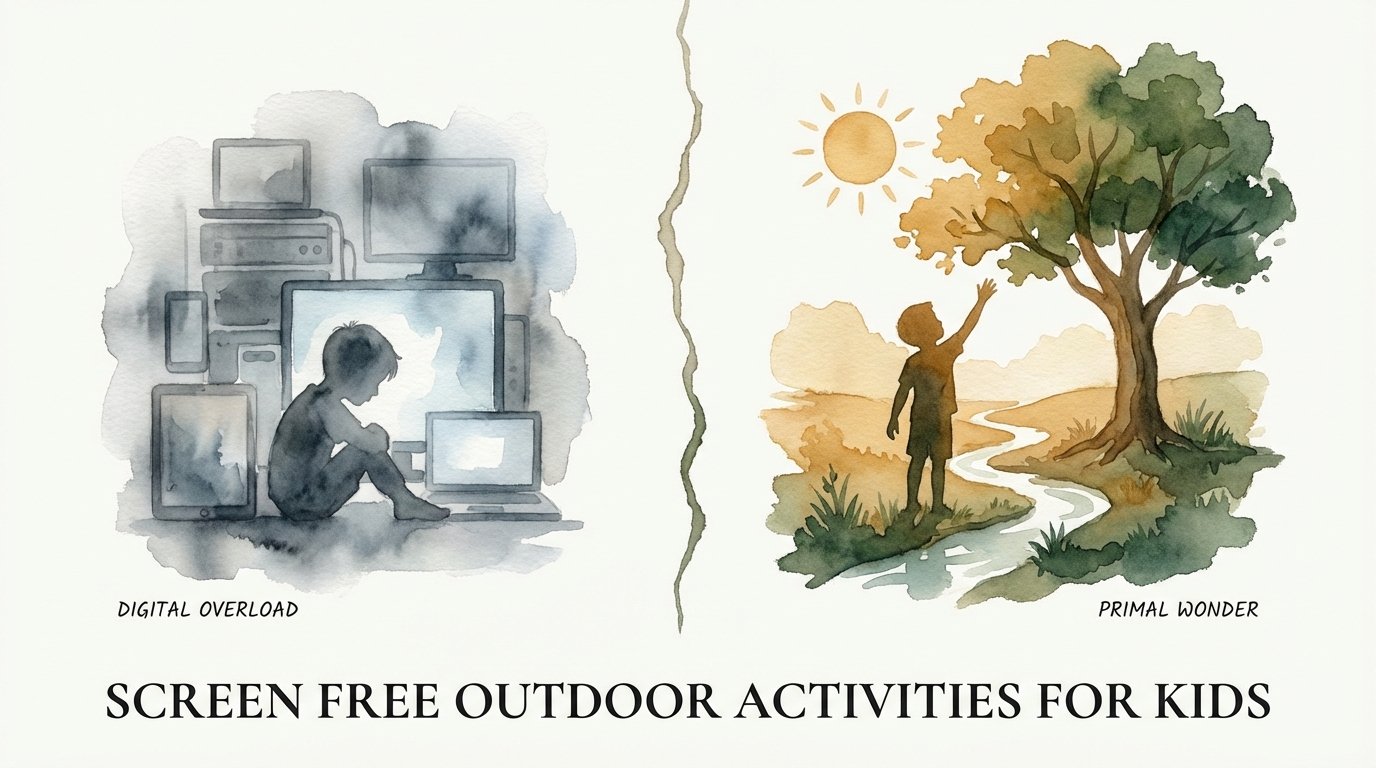
Screen Free Outdoor Activities For Kids
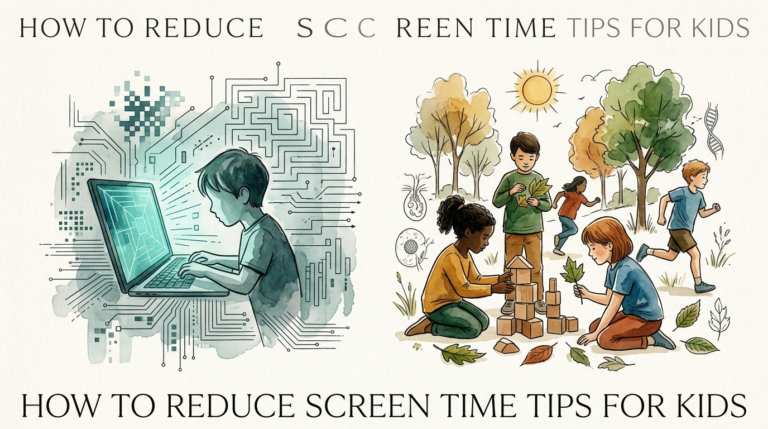
Why is the simplest activity actually the most brain-boosting? We swapped tablets for trees and witnessed a behavioral revolution. Modern convenience is stealing our children’s innate ability to focus and explore the real world. Every glowing rectangle offers a shortcut to dopamine, but it bypasses the deep, structural growth that only the unpredictable outdoors can provide.

Parents often feel the pull of the digital world because it is easy and immediate. However, true cognitive resilience is built in the mud, under the sun, and through the trial and error of physical movement. Returning to the basics is not a step backward; it is a leap toward a more capable, focused, and emotionally regulated child. This guide explores how to reclaim childhood through intentional, nature-based play.

Screen Free Outdoor Activities For Kids
Screen free outdoor activities for kids are any form of play or exploration that occurs in a natural or open-air environment without the use of digital devices. These activities prioritize physical movement, sensory engagement, and independent problem-solving. In a world where the average child spends several hours a day on a screen, “green time” serves as the essential antidote to “screen time.”
These activities exist because the human brain evolved to process complex, multi-sensory information from the natural world. While a tablet offers two-dimensional stimulation, the outdoors provides a 360-degree classroom of shifting light, varying textures, and unpredictable challenges. You might see these activities used in Forest Schools, nature-based therapy, or simply in a backyard where a child is left to their own devices—the physical ones.
Real-world examples include everything from building a stick fort to tracking the path of an ant colony. These moments require a child to use “soft fascination,” a type of attention that restores cognitive energy rather than depleting it. By moving the play space outside, you are shifting from a passive consumption model to an active exploration model.
The Mechanics of Nature Play: How It Works
Nature play works by engaging the whole body and the whole brain simultaneously. When a child balances on a fallen log, their vestibular system (balance) and proprioceptive system (body awareness) are working in overdrive. This physical data feeds into the prefrontal cortex, the area of the brain responsible for executive functions like planning and emotional control.
To implement a screen-free lifestyle, you must shift your perspective from being an “entertainer” to being a “facilitator.” Your role is to provide the environment and the tools, then step back. This process allows the child to enter a “flow state,” where they are fully immersed in their task without the need for external digital pings.
Step-by-step implementation usually looks like this:
- Assess the environment: Identify a safe but varied space, such as a local park, backyard, or wooded trail.
- Provide loose parts: Instead of fixed toys, offer “loose parts” like sticks, stones, ropes, and buckets. These have infinite uses.
- Embrace the boredom: Initial resistance is normal. Allow the child to feel bored for 10–15 minutes; this is the “creative vacuum” that eventually leads to deep play.
- Observe and support: Watch for what sparks their interest and provide minimal guidance to keep the momentum going.
Proven Benefits of Outdoor Exploration
Scientific research from 2024 and 2025 continues to confirm that outdoor play is a cornerstone of holistic development. Studies show that children who spend significant time in green spaces exhibit better school readiness and stronger psychosocial skills. The benefits are not just anecdotal; they are measurable and long-lasting.
Practical benefits include:
- Improved Executive Functioning: Unstructured play requires children to create their own rules and goals, which strengthens the brain’s ability to plan and self-regulate.
- Attention Restoration: Unlike the high-intensity “directed attention” required for screens, nature allows the brain to rest and recover, leading to better focus in the classroom.
- Physical Literacy: Navigating uneven terrain builds gross motor skills, coordination, and cardiovascular health more effectively than a flat gym floor.
- Enhanced Vision: Regular exposure to natural light and the opportunity to focus on distant objects have been linked to a reduced risk of nearsightedness.
- Immune Support: Contact with diverse microorganisms in soil and air can actually strengthen a child’s immune system over time.
Challenges and Common Mistakes
The biggest hurdle for many families is the “I’m bored” wall. Screens have conditioned children to expect instant, high-octane entertainment. When that is removed, there is a withdrawal period. Many parents make the mistake of caving in too early or trying to over-program the outdoor time with structured games.
Another common pitfall is the fear of “risky play.” Adults often hover, saying “be careful” every few seconds. This constant interruption prevents children from learning how to assess their own limits. If a child never faces a small, manageable risk, they never develop the resilience to handle larger ones.
Mistakes often happen because of a lack of preparation. Heading outside without the right gear for the weather or without a clear “starting point” (like a simple bucket of water) can lead to a quick return indoors. Consistency is key; a single trip to the park won’t undo years of digital habits.
Limitations: When the Great Outdoors is Out of Reach
Realistic constraints exist, and it is important to acknowledge them. Families living in dense urban environments may lack immediate access to safe green spaces. In these cases, “outdoor play” might be limited to a concrete balcony or a crowded public square. While not ideal, these spaces still offer fresh air and a change of scenery.
Extreme weather is another boundary. While the Scandinavian philosophy says “there is no bad weather, only bad clothing,” safety must come first in cases of extreme heat, air quality alerts, or dangerous storms. In these moments, you may need to bring nature-based elements indoors, such as a sensory bin filled with pinecones and dried beans.
Physical accessibility can also be a trade-off. Not all trails or parks are designed for children with mobility challenges. Finding inclusive play spaces requires extra research and planning, but the cognitive benefits of nature immersion remain just as vital for these children.
Green Time vs. Screen Time: A Practical Comparison
| Feature | Screen-Based Activity | Outdoor Nature Play |
|---|---|---|
| Attention Type | High-Load Directed Attention | Soft Fascination (Restorative) |
| Physical Engagement | Sedentary / Fine Motor Only | Full Body / Gross & Fine Motor |
| Sensory Input | 2D Visual and Auditory | Multi-Sensory (Tactile, Olfactory, etc.) |
| Brain Reward | Rapid Dopamine Spikes | Sustained Flow and Satisfaction |
| Social Dynamics | Isolated or Virtual | Collaborative and Real-World |
Practical Tips and Best Practices
If you want to make the transition easier, start with “invitations to play.” Instead of telling a child to “go play outside,” set up a simple prompt. A magnifying glass next to a patch of weeds or a pile of old pots and pans in a dirt patch (a DIY mud kitchen) acts as a visual hook that draws them into an activity.
Prioritize the right gear. Investing in high-quality rain boots, waterproof pants, and sun hats removes the physical discomfort that often ends outdoor sessions prematurely. When a child is dry and comfortable, they are far more likely to stay engaged for hours.
Consider the “1000 Hours Outside” challenge as a motivational tool. Tracking your progress on a physical chart can turn the habit into a game for the whole family. It also helps parents realize how often they default to indoor activities when outdoor time is actually feasible.
Advanced Considerations: The Forest School Philosophy
For those who want to go deeper, look into the principles of Forest Schools. This educational model focuses on long-term, learner-led immersion in the same natural environment. By visiting the same spot repeatedly, children develop a deep “sense of place.” They notice the changing seasons, the life cycles of plants, and the shifting behavior of local wildlife.
Advanced outdoor play also involves “risky play” categories. These include play at height (climbing), play with speed (sliding or biking), and play with tools (supervised whittling or gardening). These activities are not about being reckless; they are about teaching children to perform their own internal risk assessment.
Serious practitioners also emphasize “biomimicry” and survival skills. Teaching a child how to build a waterproof shelter from branches or how to identify edible plants moves play into the realm of lifelong competency. This builds a profound sense of agency—the feeling that they can influence and navigate the world around them.
Example Scenario: The Backyard Adventure
Imagine a Saturday morning where the tablets are put away. Instead of the usual cartoon routine, you hand your eight-year-old a “Nature Bingo” card. They head into the yard to find five specific items: a heart-shaped leaf, a smooth stone, a feather, a bug with spots, and something that smells like pine.
As they search, they notice a trail of ants leading under a rock. They spend 20 minutes observing the ant highway, discussing how the ants communicate. Later, they find a large stick and decide it’s the centerpiece for a “fairy house.” They gather moss, acorns, and twigs, using their fine motor skills to balance the structures.
By the end of the afternoon, they haven’t asked for a screen once. They are covered in dirt, physically tired, and remarkably calm. Their brain has spent the last three hours in a state of high-level problem-solving and creative synthesis. This is the “behavioral revolution” in action.
Final Thoughts
Screen-free outdoor activities for kids are more than just a way to pass the time; they are an investment in a child’s future cognitive and emotional health. By choosing the messy unpredictability of nature over the sterile reliability of a screen, you are giving your child the tools to thrive in a complex world.
The transition may require patience and a few loads of extra laundry, but the rewards are undeniable. You will see a child who is more resilient, more observant, and more connected to the reality of the physical world.
Start small this weekend. Turn off the router, open the door, and let the primal wonder of the outdoors do the rest. Your child’s brain—and your own peace of mind—will thank you for it. Experiment with different environments and watch as their natural curiosity takes over.
Sources
1 citherapies.com (https://www.citherapies.com/blog/worth-the-risk-benefits-of-risky-play/) | 2 greenchildmagazine.com (https://www.greenchildmagazine.com/rain-or-shine-school/) | 3 beelievepediatrictherapy.com (https://www.beelievepediatrictherapy.com/post/screen-free-summer-fun-activities-to-keep-kids-engaged-and-off-screens) | 4 investinginchildren.on.ca (https://investinginchildren.on.ca/parent-resources) | 5 ncsu.edu (https://cface.chass.ncsu.edu/news/2025/04/30/the-developmental-importance-of-outdoor-play-for-children/) | 6 langmobile.com (https://langmobile.com/en/blog/hidden-power-of-outdoor-play/) | 7 pentagonplay.co.uk (https://www.pentagonplay.co.uk/news-and-info/forest-school-benefits) | 8 childrenandscreens.org (https://www.childrenandscreens.org/learn-explore/research/does-screen-use-affect-early-cognitive-development/) | 9 forestschoolfinder.co.uk (https://forestschoolfinder.co.uk/understanding-6-core-principles-forest-schools) | 10 creativenatureacademy.org (https://www.creativenatureacademy.org/blog/top-ten-benefits-of-forest-school) | 11 kidsfirstservices.com (https://www.kidsfirstservices.com/first-insights/the-benefits-of-outdoor-play-for-child-development) | 12 unicef.org (https://www.unicef.org/eca/stories/importance-outdoor-play-and-how-support-it) | 13 rasmussen.edu (https://www.rasmussen.edu/degrees/education/blog/benefits-of-risky-play/) | 14 bu.edu (https://www.bu.edu/childrens-center/files/2020/07/Risky-Play.pdf) | 15 goodrootsfamilyed.com (https://www.goodrootsfamilyed.com/activities/benefits-amp-strategies-for-embracing-risky-play)