How Screens Affect Child Sleep
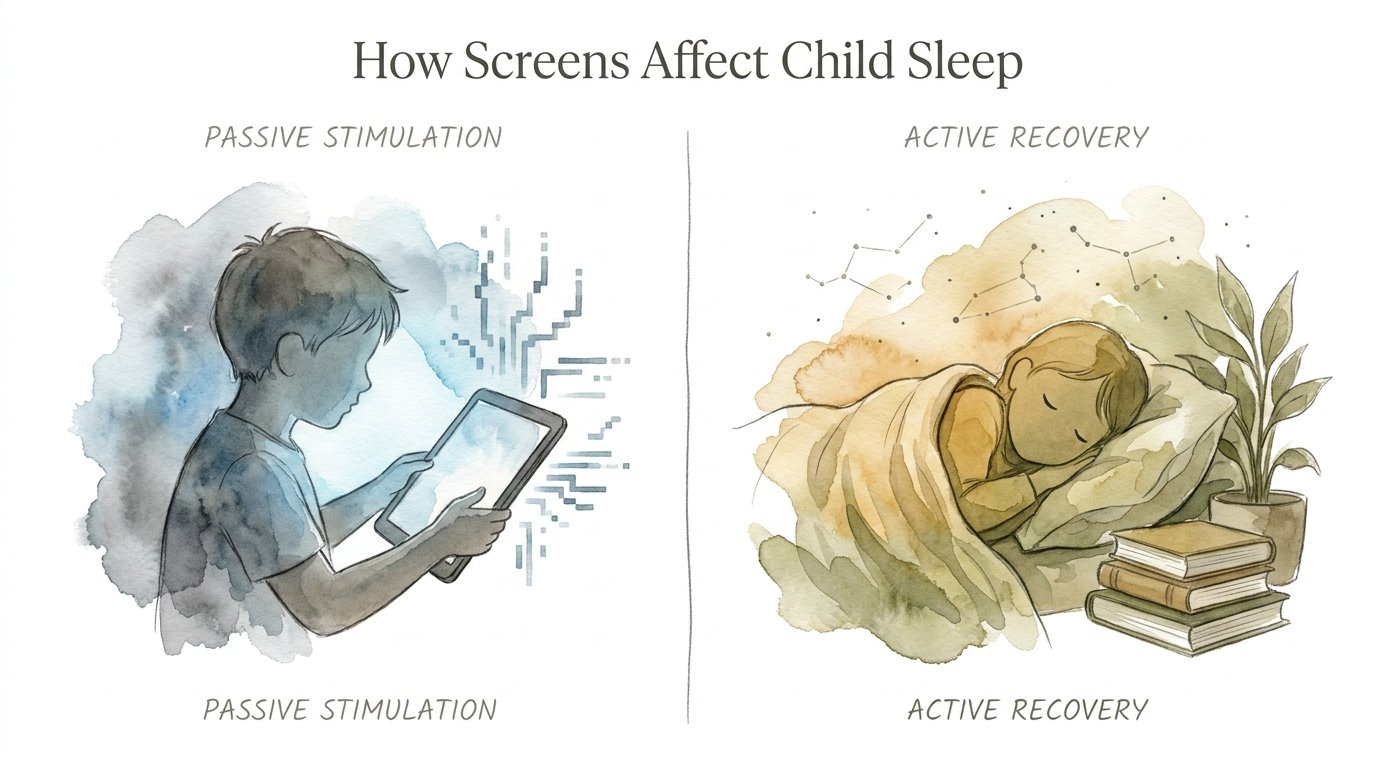
We are feeding their brains ‘junk light’ and wondering why they can’t find the ‘off’ switch at bedtime. The human brain evolved to follow the sun, not the refresh rate of a tablet. Passive consumption of blue light mimics noon-day sun, telling your child’s brain to stay alert when it should be repairing. True rest is an active biological process that a screen effectively hijacks.

Modern parenting often feels like a constant battle against the glow of a glass rectangle. We use screens for education, connection, and sometimes just ten minutes of peace. However, the physiological cost of this convenience is higher than most realize. The biological clock inside your child’s head is being reset every time they swipe, scroll, or stream in the evening hours.
Understanding the mechanics of sleep is no longer a luxury for parents. It is a fundamental survival skill in a world where artificial light never sleeps. This guide explores why screens are so disruptive and how you can reclaim your child’s sleep through intentional habits and environmental changes.
How Screens Affect Child Sleep
Screens disrupt sleep primarily through the suppression of melatonin, the hormone responsible for signaling to the body that it is time to rest. Digital devices emit a specific wavelength known as blue light, which has a short, high-energy wavelength of approximately 400 to 500 nanometers. This specific frequency is nearly identical to the light found in bright midday sun.
When this light hits the retina, it sends a powerful signal to the suprachiasmatic nucleus in the brain. This area acts as the body’s master clock. It tells the pineal gland to halt melatonin production immediately. For a child, whose eyes are still developing, this effect is far more pronounced than it is for an adult. Children have larger pupils and clearer lenses, allowing significantly more light to reach the back of the eye.
Research indicates that even dim screen light can suppress a preschooler’s melatonin levels by up to 90%. This creates a state of physiological confusion. The child’s body believes it is noon, while the clock on the wall says it is 8:00 PM. This mismatch leads to delayed sleep onset, meaning it takes much longer for the child to fall asleep once the lights go out.
Beyond the light itself, screens provide high levels of cognitive stimulation. Fast-paced videos, interactive games, and social alerts keep the brain in a state of high alert. Instead of winding down, the nervous system stays locked in a sympathetic “fight or flight” mode. This makes the transition to sleep feel like a physical struggle rather than a natural descent into rest.
The Mechanics of Junk Light and Digital Overstimulation
The term “junk light” refers to artificial light that lacks the full spectrum of natural sunlight, specifically the heavy concentration of blue light without the balancing effects of red or infrared light. In nature, as the sun sets, blue light diminishes and red light increases, which signals the body to start repairing cells.
Screens provide the opposite. They offer a constant, unyielding stream of blue-rich light that keeps the brain’s “on” switch flipped to the maximum position. This process involves several key systems in the body:
- The Melatonin-Cortisol Seesaw: Melatonin and cortisol work in opposition. When melatonin is suppressed by screen light, cortisol levels often remain elevated. This keeps the child “tired but wired,” a state where they are physically exhausted but mentally incapable of settling down.
- Photic Drive: This is the brain’s response to light intensity. High-intensity light from a screen held close to the face creates a stronger “drive” for alertness than a television across the room.
- The Dopamine Loop: Many apps and games are designed to trigger small hits of dopamine. This neurotransmitter encourages the brain to stay engaged and seek “one more” video or level. This creates a psychological barrier to bedtime that mimics addiction.
Children who engage with interactive media—such as video games or social apps—experience a more significant delay in sleep than those who watch a single, slow-paced movie. The requirement for constant input and decision-making prevents the prefrontal cortex from entering the relaxed state necessary for deep sleep.
Benefits of Implementing a Digital Sunset
Restoring a natural light-dark cycle in your home offers measurable benefits for a child’s physical and mental health. When you eliminate junk light in the hours leading up to bed, the brain can finally engage in what scientists call “Active Recovery.”
One of the most immediate advantages is a reduction in sleep onset latency. This is the technical term for how long it takes to fall asleep. Without the suppression of melatonin, children often fall asleep 30 to 60 minutes faster. This extra hour of rest significantly improves their mood and cognitive function the following day.
Improved sleep architecture is another major benefit. Deep sleep and REM cycles are essential for memory consolidation and emotional regulation. When screens are removed, these sleep stages become less fragmented. You may notice your child is less irritable, has a longer attention span at school, and is better able to handle frustration.
A digital sunset also fosters family connection. When devices go away, it creates space for analog activities like reading, storytelling, or board games. These activities involve “Active Recovery,” where the brain is engaged in a low-stress, high-reward manner that actually lowers cortisol levels rather than spiking them.
Challenges and Common Mistakes
The most common mistake parents make is relying on “Night Mode” or blue-light filters to solve the problem. While these settings shift the color temperature of the screen, they do not address the high-intensity brightness or the cognitive stimulation of the content. A yellow-tinted screen still tells the brain to stay awake if the child is playing an intense game.
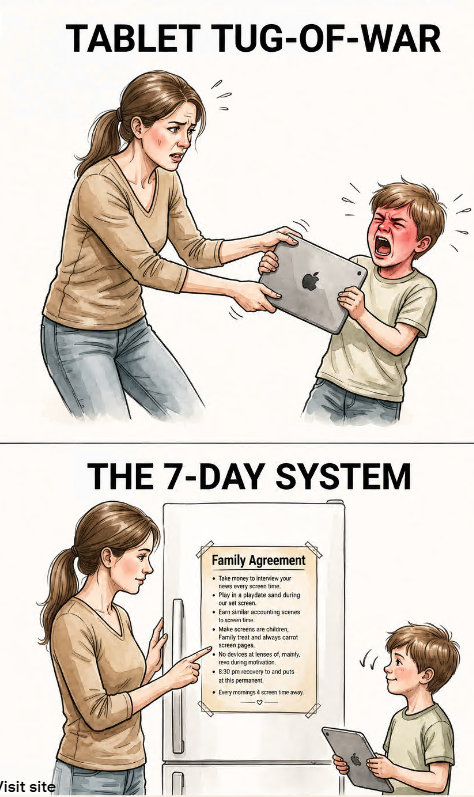
Another frequent pitfall is the “One Last Video” trap. Negotiating for just five more minutes of screen time keeps the dopamine loop active. Every time the parent gives in, the child’s brain receives a reward for resisting bedtime, which reinforces the behavior for the following night.
Using a tablet as a white noise machine or a nightlight is also problematic. If the screen remains on, even with a black background, it can still emit enough light to interfere with a child’s sensitive circadian rhythm. Many nightlights also use blue or cool-white LEDs, which are the worst colors for sleep hygiene.
Transitioning to a screen-free evening often meets with resistance. Many parents give up after a few nights of tantrums. However, these outbursts are often a sign of “digital withdrawal.” The brain is struggling to adjust to a lower-stimulation environment. Consistency is the only way to move past this phase.
Limitations and Realistic Constraints
Total elimination of screens is not always possible in the modern world. Many school-aged children have homework that must be completed on a laptop or tablet. In these cases, the “Digital Sunset” might need to be shifted rather than strictly enforced.
Environmental factors can also limit the effectiveness of sleep hygiene. If a family lives in a small apartment where the living room and bedroom share light, it is difficult to keep the child’s environment dark while others are awake. City light pollution from streetlamps can also seep through windows, mimicking the effects of junk light.
Certain neurodivergent children, such as those with ADHD or Autism, may have significantly different sensory needs. For some, a specific screen activity might be part of a rigid routine that provides comfort. In these specialized cases, the “all or nothing” approach to screens may require adjustment by a professional to ensure the child does not become overly distressed.
Passive Stimulation vs. Active Recovery
It is helpful to view the difference between screen time and traditional play through the lens of how the brain processes energy.
| Factor | Passive Stimulation (Screens) | Active Recovery (Analog) |
|---|---|---|
| Hormonal Impact | Suppresses Melatonin, Spikes Cortisol | Promotes Melatonin, Lowers Cortisol |
| Brain State | High-frequency Alertness (Beta waves) | Calm focus (Alpha/Theta waves) |
| Sensory Input | Artificial blue light, fast refresh rates | Natural light tones, tactile engagement |
| Sleep Quality | Fragmented REM, delayed onset | Consolidated sleep cycles, deep rest |
Passive stimulation effectively “borrows” energy from tomorrow. It keeps the child awake through artificial means, leading to a “sleep debt” that must be paid back eventually through fatigue or mood swings. Active recovery, such as building with blocks or looking at a physical book, allows the brain to “recharge” before the lights even go out.
Practical Tips for a Better Bedtime
Establishing a better environment does not require a complete lifestyle overhaul. Small, consistent shifts can produce massive results over time. Start by identifying the “anchors” of your evening routine and slowly replacing digital habits with analog ones.
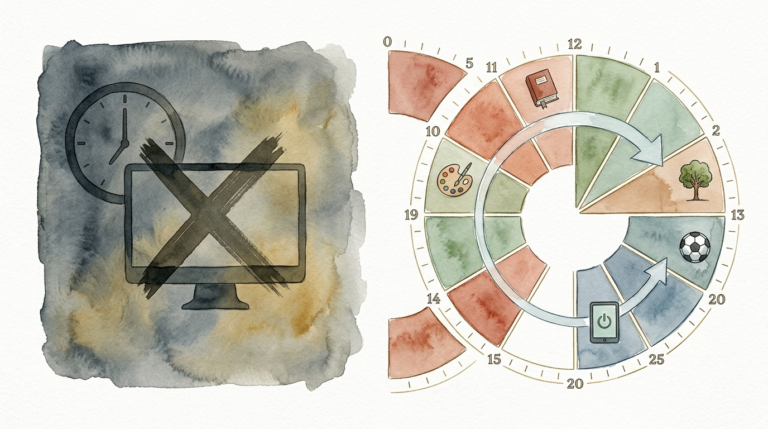
- The Two-Hour Rule: Aim to turn off all high-intensity screens at least 120 minutes before the target sleep time. This gives the pineal gland enough time to resume melatonin production.
- Warm Light Environment: Switch your home lighting to warm, amber, or red-toned bulbs in the evening. Avoid “daylight” or “cool white” LEDs in the bathroom and bedrooms.
- Create a Device Parking Lot: Establish a central charging station in the kitchen or hallway. All devices should “go to sleep” there at a set time, ensuring they never enter the bedroom.
- Morning Sun Exposure: The best way to fix a broken internal clock is to get the child outside in the sun for 10-15 minutes immediately after waking. This sets the timer for melatonin release 14 hours later.
- Low-Dopamine Transitions: Replace fast-paced cartoons with audiobooks or podcasts. This satisfies the desire for a story without the “junk light” and rapid visual changes.
Focus on the environment as much as the behavior. If the house remains brightly lit with overhead LEDs, the child’s brain will still struggle to wind down even if the screens are off. Dimming the physical lights is a powerful biological cue that no child can ignore for long.
Advanced Considerations for Circadian Health
Serious practitioners of sleep hygiene often look beyond just blue light. The concept of “Social Jetlag” is vital to understand. This occurs when a child has a very different sleep schedule on the weekends compared to school nights. This constant shifting of the internal clock is as physically taxing as flying across three time zones every Friday night.
Temperature also plays a role in the “Digital Sunset.” The body needs to drop its core temperature by about two to three degrees to initiate deep sleep. Screens and the lights associated with them can keep us physically active, which prevents this cooling process. Keeping the bedroom cool—around 65 to 68 degrees Fahrenheit—supports the brain’s transition into sleep.
Finally, consider the role of red light therapy. Some families use low-intensity red LED lamps in the evening. Unlike blue light, red light has a very long wavelength and does not suppress melatonin. Using red light for late-night bathroom trips or reading can keep the “sleep switch” in the on position.
A Real-World Example of Transformation
Consider a typical seven-year-old who spends 45 minutes on a tablet playing a fast-paced building game before bed. At 8:00 PM, the tablet is taken away, and the child is told to sleep. Because their melatonin is suppressed and their cortisol is spiked, they lay awake until 9:30 PM, tossing and turning. They wake up at 7:00 AM for school, having only received 9.5 hours of fragmented sleep.
Now, imagine the same child with a Digital Sunset protocol. At 6:30 PM, the tablet is parked. The family eats dinner under warm, dimmed lights. From 7:00 PM to 8:00 PM, the child listens to an audiobook while drawing. By 8:00 PM, their brain has already been producing melatonin for over an hour. They fall asleep by 8:15 PM and stay in deep, restorative sleep until 7:00 AM.
The second scenario provides nearly 11 hours of high-quality sleep. The difference isn’t just “more rest”—it is a completely different biological state that sets the child up for emotional and academic success the next day.
Final Thoughts
The fight against “junk light” is really a fight for your child’s developmental potential. We often treat sleep as a passive state of doing nothing, but it is actually the most productive time for a growing brain. It is when memories are filed, toxins are cleared, and growth hormones are released.
By reclaiming the evening hours from the grip of digital stimulation, you are giving your child a massive biological advantage. The goal is not to fear technology, but to respect the ancient rhythms of the human body.
Start small. Pick one night a week for a “Digital Sunset” and observe the changes in your child’s morning mood. Once you see the power of a synchronized circadian rhythm, you will realize that the “off switch” was never missing—it was just being held down by a screen.
Sources
1 daar.com.au | 2 drkristinedwards.com | 3 thelifetrackr.com | 4 chronobiologyinmedicine.org | 5 colorado.edu | 6 sleepfoundation.org | 7 tricitieskidsmatter.ca | 8 kidslox.com | 9 tichoeye.com | 10 mysweetsleeper.com | 11 nicolamorgan.com | 12 expressable.com | 13 wibehavioralhealth.com | 14 totalcommunication.com.sg | 15 researchgate.net | 16 nih.gov | 17 dntb.gov.ua