Traditional Outdoor Sensory Activities
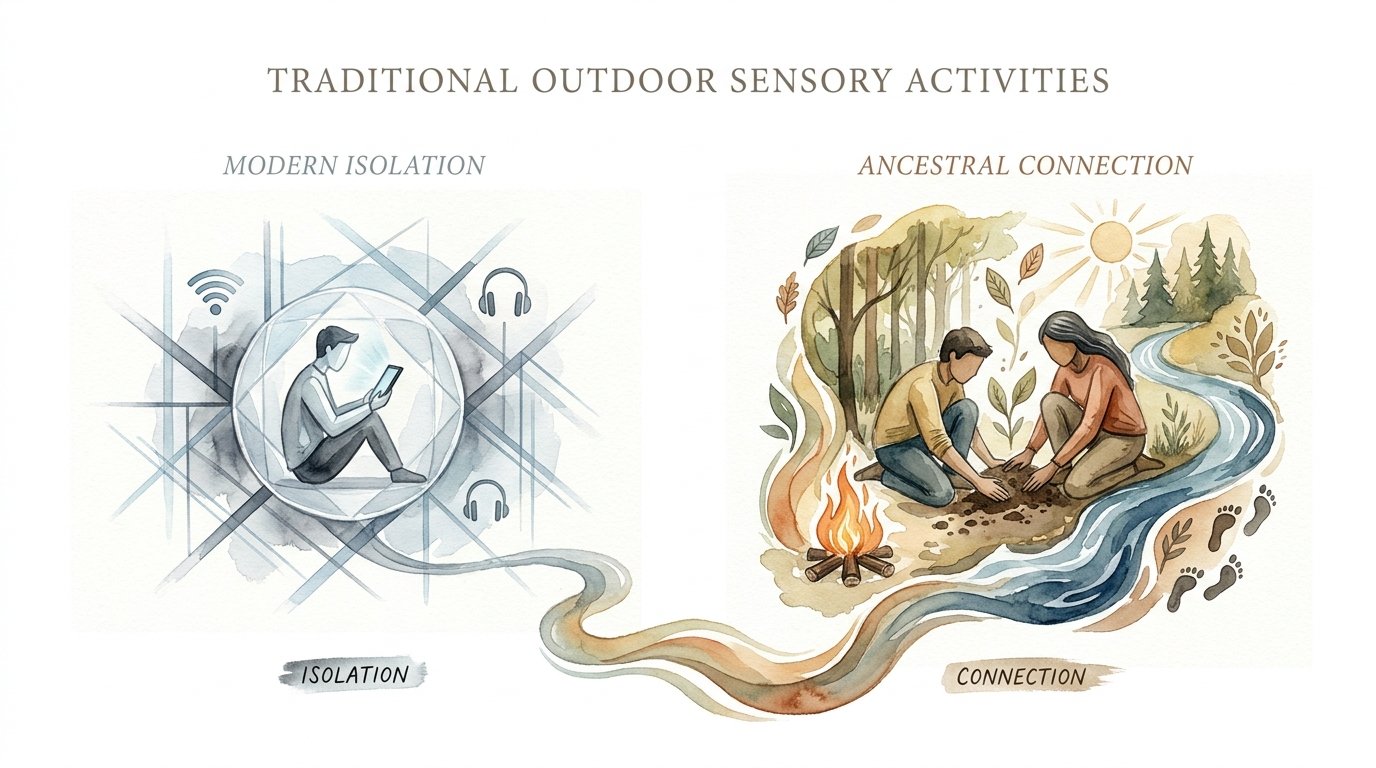
Why does a single spark hold more attention than a thousand colored beads? We’ve traded the communal hearth for the ‘sensory bin’ in the corner. Ancient wisdom knows that a child’s nervous system was built for the unpredictable crackle of a fire and the smell of real pine, not the sterile scent of factory-made dough. It’s time to reconnect their senses to the systems that built us.

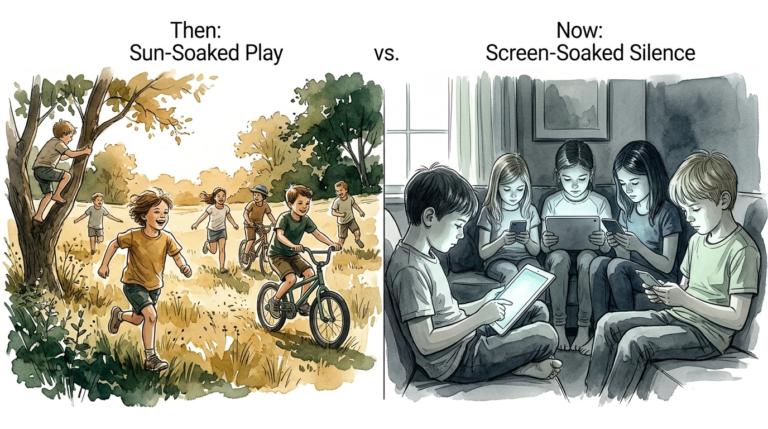
Modern childhood has become increasingly sanitized. We swap mud for kinetic sand and replace climbing trees with padded plastic mats. While these tools offer convenience, they lack the raw, high-fidelity sensory input that a growing brain craves. Traditional outdoor sensory activities are not just “playtime.” They are essential biological downloads that sync a child’s internal clock with the natural world.
Traditional Outdoor Sensory Activities
Traditional outdoor sensory activities are nature-based experiences that engage all seven (and sometimes eight) human senses. These activities rely on “loose parts”—materials like sticks, stones, water, and mud—to provide unstructured, open-ended play. Unlike a plastic toy with a single “on” switch, a pile of autumn leaves offers infinite variables.
These activities have existed for millennia. For most of human history, children learned the world through direct contact with the elements. Today, these practices are central to the “Forest School” movement and nature pedagogy. They are used in early childhood education to build resilience, foster creativity, and regulate the nervous system.
Real-world examples include:

- Mud Kitchens: Mixing soil and water to explore viscosity and texture.
- Fire Gazing: Watching the rhythmic movement of flames for visual tracking and calm.
- Stream Splashing: Feeling the resistance of moving water and the temperature shift of wet stones.
- Tree Climbing: Engaging the proprioceptive system through heavy muscle work and balance.
The Science of Sensory Grounding
How does it actually work? When a child interacts with the outdoors, they aren’t just getting dirty. They are receiving complex data. Natural environments are “high-fidelity.” This means the sensory input is rich, varied, and perfectly suited for human development.
The tactile system is the first to fire. Touching rough bark, smooth pebbles, or slimy moss builds “tactile discrimination.” This is the brain’s ability to understand the difference between textures. Research suggests that children using natural materials demonstrate 45% better sensory processing abilities compared to those using synthetic toys.
The vestibular and proprioceptive systems are next. These are the “hidden” senses. The vestibular system, located in the inner ear, manages balance. Walking on uneven forest floors or swinging from a low branch forces this system to calibrate constantly. The proprioceptive system deals with body awareness. Lifting a heavy log or pushing through thick brush provides “heavy work” that calms the nervous system.
The Biological Benefits of Wild Play
The advantages go beyond simple brain development. They reach into the very chemistry of the body. Exposure to the outdoors is a literal health tonic for the developing child.
One of the most fascinating benefits is found in the soil itself. Scientists have identified a soil microbe called Mycobacterium vaccae. This “friendly” bacteria triggers the release of serotonin in the brain. This is the same chemical targeted by antidepressants. Playing in the mud can literally make a child happier and more relaxed.
Immune health also takes a massive leap forward. The “Hygiene Hypothesis” suggests that our modern, ultra-clean environments might be causing the rise in allergies and asthma. Regular contact with the diverse microbes found in traditional outdoor play helps “train” the immune system. It learns to distinguish between real threats and harmless particles.
Physical benefits are equally measurable. Outdoor play is linked to better sleep, improved vitamin D levels, and a lower risk of myopia (nearsightedness). The long-range visual tracking required in an open field is a direct counter to the “near-work” of screens.
Challenges and Common Mistakes
The biggest hurdle isn’t the child; it’s the adult’s anxiety. We live in an era of “safetyism.” Many parents fear the mess, the cold, or the potential for a scraped knee. This fear often leads to over-supervision, which kills the benefits of the activity.
A common mistake is turning outdoor time into a structured lesson. If you are constantly telling a child “don’t touch that” or “do it this way,” you are high-jacking their sensory exploration. The brain learns best when it discovers the properties of mud or wood on its own terms.
Laundry is another practical challenge. Traditional play is messy. If you dress a child in “nice” clothes, you create a psychological barrier. They will subconsciously avoid the very textures they need to experience.
Limitations of the Method
Nature play is powerful, but it isn’t always accessible. For families in dense urban centers, a “wild” forest might be a two-hour drive away. Concrete jungles offer fewer opportunities for direct contact with raw elements.
Weather also plays a role. While the saying goes, “There is no such thing as bad weather, only bad clothing,” extreme conditions like heatwaves or blizzards are real constraints. Safety must always come first.
Physical accessibility is another factor. Traditional nature trails and climbing spots are not always designed for children with mobility challenges. In these cases, sensory experiences must be intentionally “brought in” or modified to ensure every child can participate safely.
Modern Bins vs. The Great Outdoors
It is helpful to compare the curated “sensory bin” found in modern playrooms with the traditional outdoor experience.
| Feature | Modern Sensory Bin | Traditional Outdoor Play |
|---|---|---|
| Complexity | Static and predictable. | Dynamic and unpredictable. |
| Microbiome | Sterile (plastic/dyed rice). | Rich (microbes/earth). |
| Movement | Fine motor focus (scooping). | Full-body (climbing/digging). |
| Cost | High (kits and bins). | Low (free natural materials). |
| Skill Level | Low (prescribed play). | High (risk assessment). |
Practical Tips for Best Results
Reclaiming this type of play doesn’t require a degree in forest pedagogy. It requires a shift in mindset. Start small and build your tolerance for the wild.
- The 15-Second Rule: When you feel the urge to yell “Be careful!” count to 15 first. Most of the time, the child will self-correct and manage the risk on their own.
- Gear Up: Invest in high-quality waterproof overalls and boots. When the child is dry and warm, they will stay engaged longer.
- Embrace Loose Parts: Stop buying plastic outdoor toys. Instead, provide a bucket, a shovel, and a pile of sticks. Let the child’s imagination do the heavy lifting.
- Follow the Senses: Encourage “listening walks.” Stop for 60 seconds and try to name every sound you hear. This builds auditory processing.
Advanced Considerations for Risky Play
For the serious practitioner, “risky play” is the gold standard. This doesn’t mean “dangerous” play. It means play where the child can recognize and evaluate a challenge.
Fire-building is an incredible advanced sensory activity. Under close supervision, letting a child help gather kindling and watch a small fire teaches them about heat, light, and safety. It demands high levels of focus and respect for the elements.
Using real tools, like a small whittling knife or a hammer, develops elite fine motor skills. It also builds executive function. The child must plan, execute, and stay mindful of their fingers. This level of engagement creates deep neural pathways that “easy” play simply cannot touch.
A Day in the Wild: Example Scenario
Imagine a group of children at a local park with a small wooded area. Instead of heading to the plastic slide, they head to a fallen log.
First, they explore the texture. They find moss, which is soft and damp, and peeling bark, which is rough and dry. This is a tactile masterclass. Next, they decide to move the log. This requires proprioception—they must use their large muscles and coordinate with each other.
Suddenly, it starts to drizzle. Instead of running inside, they watch how the water changes the dirt into mud. They smell the “petrichor”—the earthy scent of rain on dry ground. They are now engaging their olfactory and visual systems in a way no indoor bin could replicate. By the time they go home, their nervous systems are “tired-happy.” They are regulated and ready for deep sleep.
Final Thoughts
The sensory bin in the corner has its place, but it is a supplement, not a substitute. Traditional outdoor sensory activities provide the raw data that the human brain was designed to process. They build stronger immune systems, more resilient minds, and a deeper connection to the planet.
Getting dirty is a small price to pay for a well-regulated nervous system. The mess washes off, but the neural connections made while squishing mud or climbing a tree last a lifetime. It is time to step away from the plastic and back into the wild.
Start today by opening the back door. Let the “single spark” of nature catch your child’s attention. They don’t need a thousand beads; they just need the earth under their fingernails and the wind in their hair. Reclaiming this ancestral connection is the greatest gift you can give their developing brain.
Sources
1 theottoolbox.com | 2 montessori4teachers.com | 3 wildlingsforestschool.com | 4 coohom.com | 5 graflo.toys | 6 integrityinc.org | 7 mcm.org | 8 atouchofthewild.co.uk | 9 purdueglobal.edu | 10 cuddlesearlylearning.com.au | 11 frontiersin.org | 12 nationalgeographic.com | 13 natureplaywa.org.au | 14 jabaloo.com | 15 medium.com | 16 umkc.edu | 17 mypcd.org | 18 gvsu.edu