stopping the ipad kid
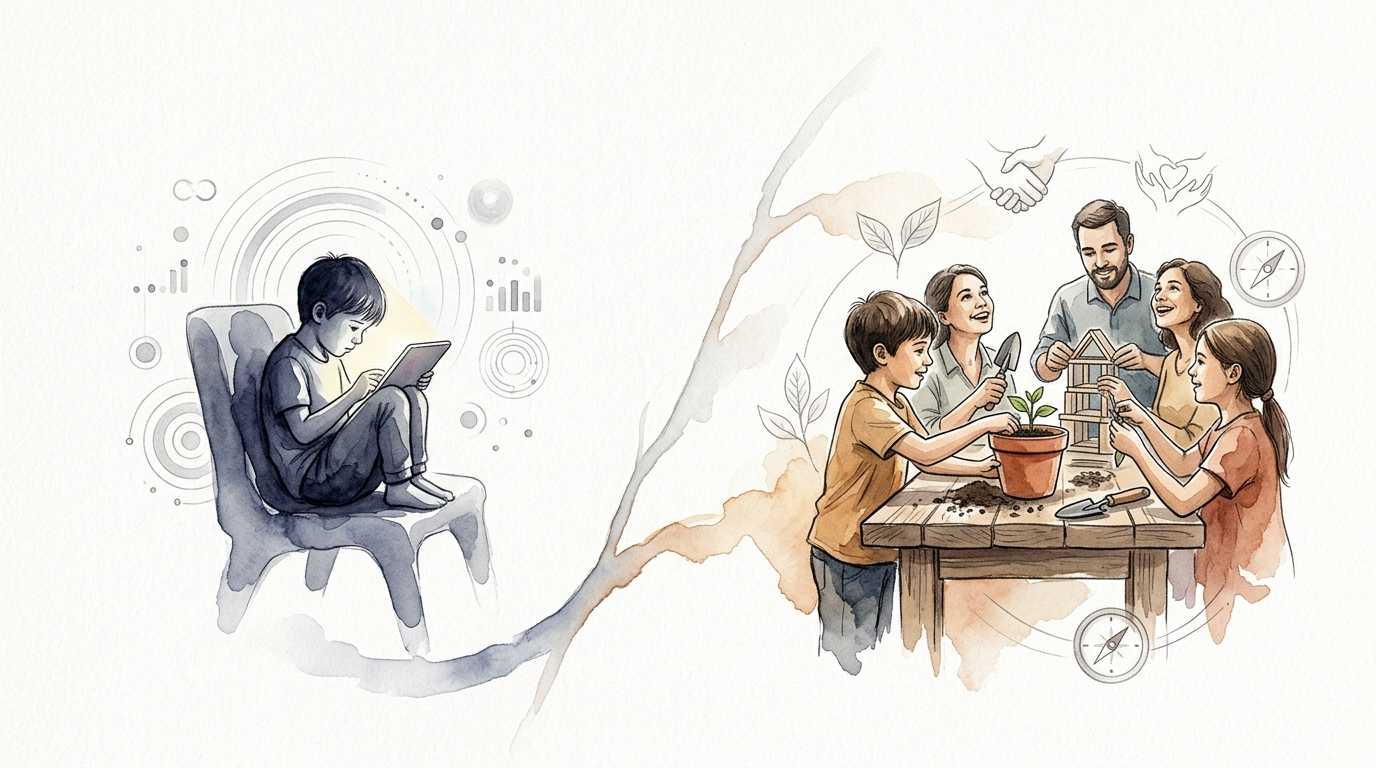
They don’t need a screen to stay busy; they need a role to play. The ‘iPad Kid’ isn’t a personality—it’s a habit of isolation. Move them from a spectator to a participant in your daily life.
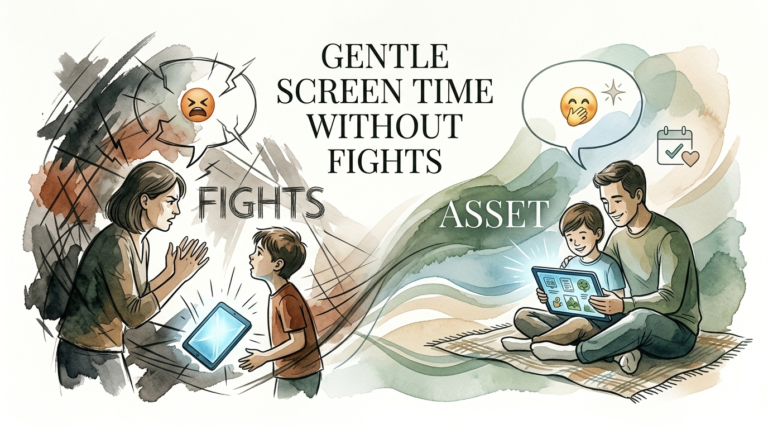
Many parents find themselves trapped in a cycle of digital management. You hand over the tablet to finish a meal, answer an email, or simply get ten minutes of peace. This isn’t a failure of parenting; it is a response to a world that has increasingly engineered children out of the “real” work of the household. We have traded their contribution for their compliance.
Introduction of the screen as a “digital pacifier” has created a generation of spectators. These children watch life happen through a piece of glass rather than engaging with the physical world. This shift matters because engagement is the primary driver of cognitive and emotional development. When a child moves from isolated consumption to integrated contribution, they aren’t just “helping out”—they are building a brain capable of focus, empathy, and resilience.
stopping the ipad kid
The term “iPad Kid” describes a child who relies heavily on digital devices for emotional regulation, entertainment, and social interaction. This phenomenon exists because screens offer a high-stimulation, low-effort reward system that the physical world cannot easily match. In real-world situations, we see this during long car rides, at restaurants, or in the grocery store where the device serves as a barrier between the child and their environment.
This habit of isolation often begins as a tool for convenience. Statistics show that nearly 40% of children have an iPad by the time they are two years old. By age five, 90% of the human brain has formed, largely through “serve and return” interactions with caregivers. When a screen replaces these interactions, the child misses the nuanced social cues and sensory feedback necessary for healthy growth.
Think of the screen as a treadmill for the eyes but a couch for the mind. The child is visually overstimulated while their hands, body, and social brain remain stagnant. Stopping the “iPad Kid” cycle isn’t about a total digital ban. It is about shifting the child’s primary identity from a consumer of content to a contributor to the family unit.
How to Transition to Integrated Contribution
Moving a child from a spectator role to a participant role requires a systematic shift in how you view “chores” versus “roles.” Integrated contribution means the child is part of the household’s heartbeat. They aren’t doing tasks to earn a reward; they are doing them because the family needs their specific skills.
Phase 1: Assessing the “Technoference”
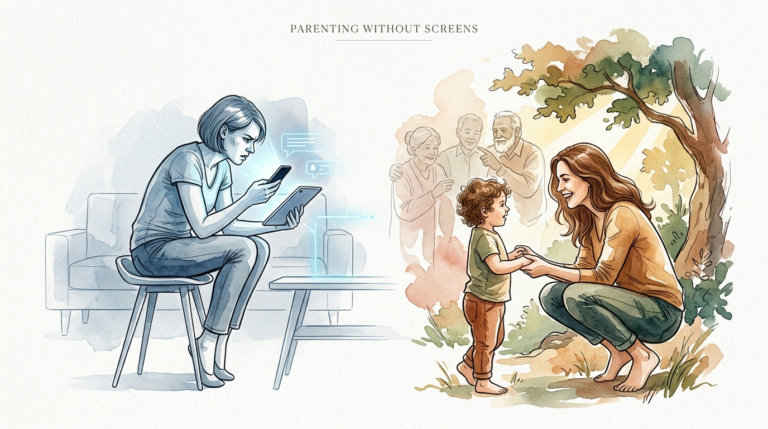
Start by looking at your own habits. Parental technoference—being attached to your phone while in the presence of your child—often models the exact behavior you want to stop. Children mirror the attention patterns of their adults. If the parent is a spectator, the child will follow suit.
Phase 2: Defining the Roles
Assigning “roles” is more effective than giving “chores.” A chore is a burden; a role is a status. For a toddler, the role might be “The Hydrator” (responsible for filling water bowls for pets). For a pre-teen, it might be “The Logistics Officer” (managing the weekly grocery list and checking the pantry). This gives the child ownership over a specific domain of the house.
Phase 3: The Montessori “Practical Life” Approach
Use the principles of the Montessori method to scale the world to the child’s size. If a task is too difficult, the child will default to the screen for ease. Provide stools, small pitchers, and child-sized brooms. The goal is to make contribution more accessible than consumption. When a child can successfully pour their own milk or sweep a crumb, they receive a hit of genuine dopamine—the dopamine of competence.
The Practical Benefits of Contribution
The transition from a screen-focused life to an integrated one produces measurable results. Research, including the 75-year Harvard Grant Study, found that childhood responsibilities are a primary predictor of professional success and happiness in adulthood. Individuals who contributed to their households as children tended to become more independent and collaborative adults.
Improved Executive Function
Executive function includes working memory, inhibitory control, and cognitive flexibility. Studies from the Australian Occupational Therapy Journal show that children who participate in “family-care” tasks, like meal preparation, exhibit significantly higher executive function scores. These tasks require planning, sequencing, and the ability to stop an impulse—skills the screen often erodes.
Emotional Regulation and Resilience
Screens are often used to calm a frustrated child. This prevents them from developing internal strategies to manage “big feelings.” Integrated contribution puts children in situations where they must deal with mild frustration—like a tower of folded laundry falling over or a spilled glass of water. Handling these small failures builds the resilience needed for major life challenges.
Social Integration and Empathy
When a child contributes, they see the invisible labor of others. They realize that dinner doesn’t “materialize” but is the result of effort. This awareness is the foundation of empathy. By participating in the work of the home, they move from a self-centered ego to a community-centered mindset.
Common Mistakes and Challenges
Many parents start with high energy but fail because of three common pitfalls. Understanding these can help you stay consistent when the screen’s siren song becomes loud.
The “It’s Easier If I Do It” Trap
Speed is the enemy of integration. It is always faster to load the dishwasher yourself. However, when you exclude the child to save five minutes, you lose an opportunity to build five years of competence. You must view the “mess” of their learning as a necessary investment in their future independence.
Making Contribution a Punishment
Never use “helping out” as a consequence for bad behavior. If you say, “You were rude, so now you have to fold the laundry,” you have successfully branded contribution as a negative experience. Instead, present it as a privilege of growing up. “Now that you’re six, you’re big enough to help with the recycling” frames the task as a milestone of maturity.
Perfectionism and Over-Correction
If a child wipes a table and leaves a streak, do not immediately re-wipe it in front of them. This signals that their contribution wasn’t “good enough.” Focus on the effort and the process rather than the final result. If the goal is a perfectly clean house, do it yourself. If the goal is a capable child, let the streaks stay for a while.
Limitations and Realistic Boundaries
It is important to acknowledge that we live in a digital world. Integrated contribution does not mean living in 1950. There are realistic constraints and times when the screen is a valid tool.
Safety and Physical Limits
Children should not be given roles that exceed their physical or safety capabilities. Sharp knives, heavy chemicals, and hot stoves require gradual, supervised introduction. Integration is a ladder, not a leap. Match the role to the child’s developmental stage to avoid injury or overwhelming anxiety.
When Screens Are Appropriate
The “iPad Kid” problem isn’t about the existence of the iPad; it is about its role as the primary caregiver. Digital tools can be used for “Integrated Consumption”—watching a tutorial together on how to fix a leaky faucet or using a navigation app to help the child lead the way on a family hike. The goal is to move from passive consumption to active, shared use.
Environmental Factors
High-stress periods, such as a move, a new baby, or a family illness, might require more screen time than usual. This is a survival tactic, not a lifestyle change. The key is to return to the contribution model once the environment stabilizes.
Comparing the Two Models of Childhood
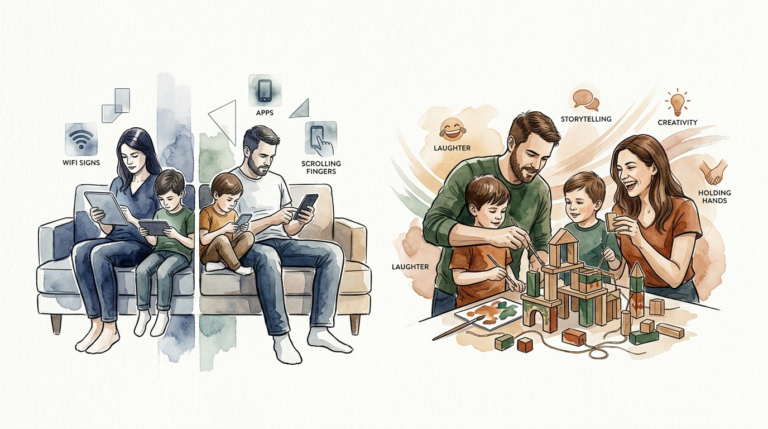
The following table highlights the measurable differences between a lifestyle of isolated consumption and one of integrated contribution.
| Factor | Isolated Consumption (iPad Kid) | Integrated Contribution |
|---|---|---|
| Primary Activity | Spectating/Watching | Participating/Doing |
| Skill Development | Passive reaction time | Executive function & motor skills |
| Social Outlook | Consumerist/Expectant | Collaborative/Helpful |
| Frustration Tolerance | Low; seeks digital escape | High; works through problems |
| Identity | Individual/Isolated | Member of a team |
Practical Tips for Daily Integration
Changing a family dynamic doesn’t happen overnight. Use these actionable steps to begin the transition today.
- The “Body Doubling” Technique: Children often want to be where the action is. If you are folding laundry, don’t send them away to play; have them sit with you and “sort” the socks. Your presence is the primary reward.
- Narrate Your Work: Talk through what you are doing. “I’m checking the mail to see if the electricity bill came.” This helps the child understand the systems of the house that they usually take for granted.
- Create “Entry-Level” Tasks: For very young children, focus on “transfers.” Moving wet clothes from the washer to the dryer or moving groceries from the bag to the counter. These are high-success, low-risk activities.
- Shift the Language: Instead of “Go do your chores,” try “The kitchen needs to be reset for breakfast, let’s work on it together.” The focus is on the needs of the environment, not the obedience of the child.
- Audit the Boredom: When a child says “I’m bored,” do not offer a screen. Boredom is the precursor to creativity. Offer a role instead. “I’m about to water the garden, do you want to be the Master of the Hose?”
Advanced Strategies: Project-Based Living
For parents who have mastered the basics, you can scale integrated contribution into project-based learning. This moves beyond daily maintenance into long-term responsibility.
The Family Board Meeting
Introduce a weekly five-minute “stand-up” meeting. Discuss the upcoming week’s challenges—maybe a busy Thursday with soccer practice or a guest coming for the weekend. Ask the children, “What do we need to do as a team to make sure this goes smoothly?” This builds high-level organizational skills.
Budget and Procurement Roles
As children get older, involve them in the “back-end” of the household. Give them a budget for one family meal. Let them research the best prices, write the list, and manage the checkout process. This teaches financial literacy and the value of resources in a real-world context.
The “Tech Support” Role
Use their natural digital affinity for the good of the group. If the Wi-Fi is acting up or a new appliance needs to be registered, let the child lead the troubleshooting. This transforms their “screen skills” into a service for others rather than an isolated hobby.
Real-World Example: The “Laundry Day” Scenario
Consider a typical Saturday. In the “Isolated Consumption” model, the parent spends two hours doing laundry while the child plays a game on a tablet in the other room. The child remains unaware of the effort, and the parent feels like a servant.
In the “Integrated Contribution” model, the process looks different. The toddler helps move the wet clothes (gross motor skills). The elementary-aged child matches the socks (pattern recognition and sorting). The teenager handles the folding of towels (spatial awareness and fine motor skills).
Throughout the hour, the family talks. They listen to music or discuss the week ahead. The laundry gets done slightly slower, but the child has learned that they are a necessary part of the household’s function. They feel seen, valued, and capable. When the task is over, they don’t feel a “withdrawal” from a screen; they feel the satisfaction of a job well done.
Final Thoughts
Stopping the “iPad Kid” cycle is not a battle against technology; it is a battle for connection. When we integrate our children into our daily lives, we give them something a screen never can: a sense of belonging and a proof of competence. They discover that their hands can change their environment and that their presence makes a difference to the people they love.
Transitioning from consumption to contribution is a slow process that requires patience, a tolerance for mess, and a shift in parental priorities. However, the rewards—higher executive function, greater empathy, and lifelong independence—are worth every spilled glass of milk and every crookedly folded towel.
Encourage your child to step out of the spectator’s box and onto the field of daily life. They don’t need to be entertained every second; they need to be needed. Start small, stay consistent, and watch as your “iPad Kid” transforms into a capable, contributing member of your world.
Sources
1 uhhospitals.org | 2 lionsroarnews.com | 3 wikipedia.org | 4 youthfirstinc.org | 5 youtube.com | 6 onecentralhealth.com.au | 7 nih.gov | 8 cornell.edu | 9 medium.com | 10 facebook.com | 11 keltymentalhealth.ca