bedtime screen time rules
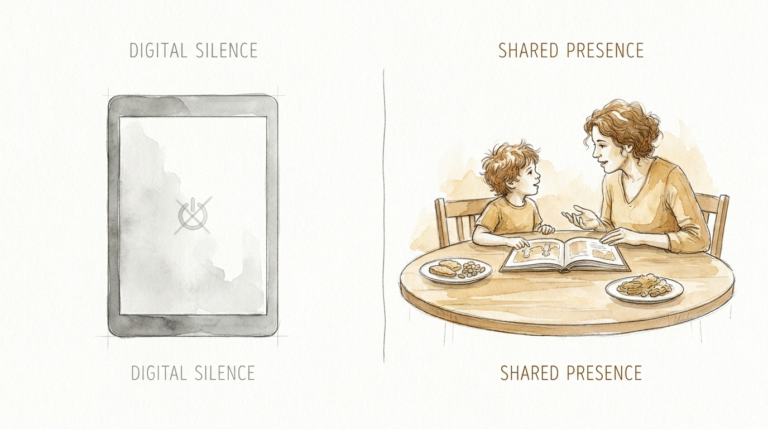
Screens steal sleep. Creation builds dreams. Swap the input for output. Blue light kills melatonin. But ‘boredom’ kills sleep too. Here is what we do for the hour before lights out to keep their brains creative, not consumed.
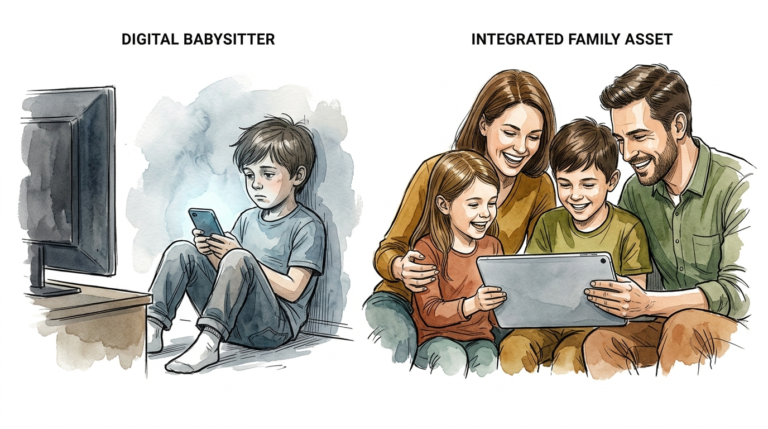
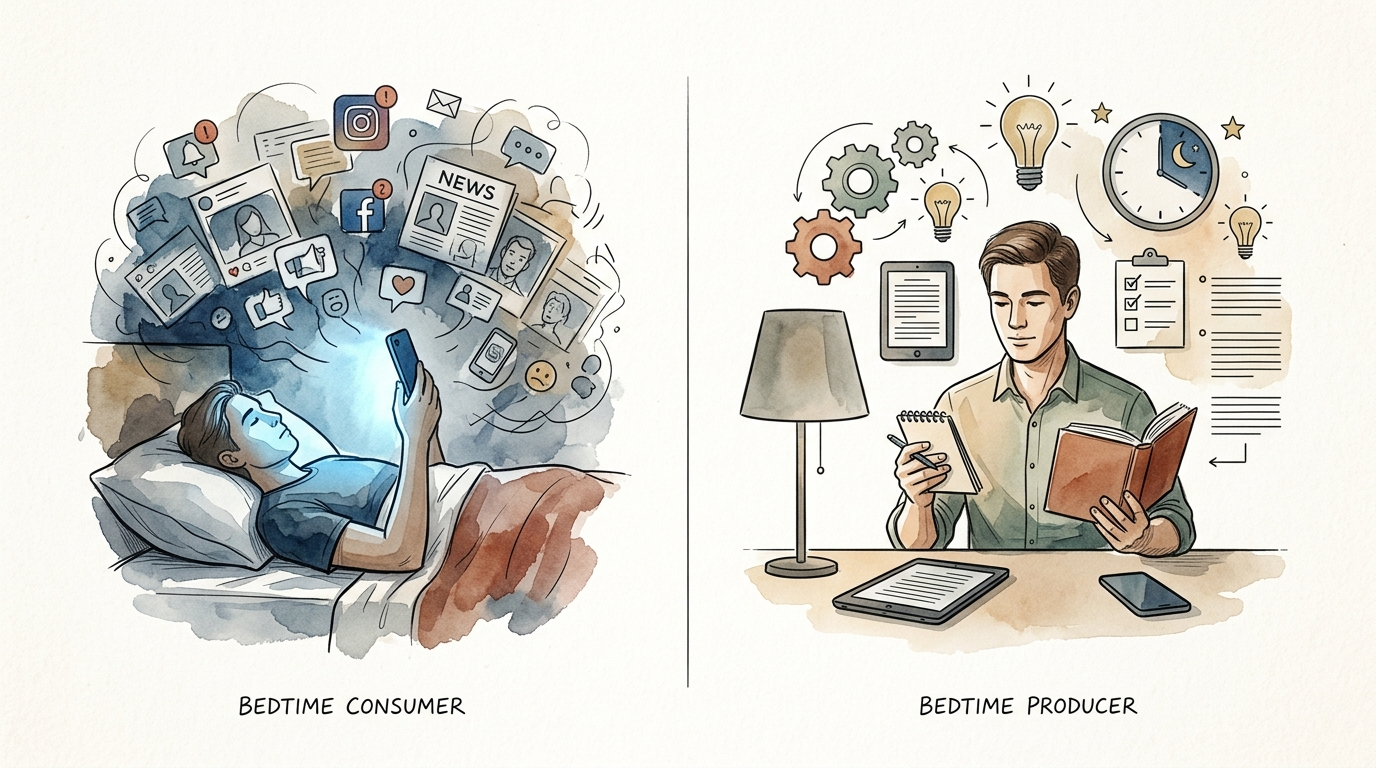
We live in an age of constant connectivity. Our pockets buzz. Our nightstands glow. We have replaced the natural dimming of the day with high-definition glare. Most of us spend the final hour of our day as Bedtime Consumers. We scroll through feeds we don’t care about. We watch videos we won’t remember. We are feeding our brains junk food right before they need to rest.
This habit does more than just keep us awake. It robs us of our most creative window. The period just before sleep is a neurological sweet spot. It is when the brain begins to bridge the gap between logical thought and dream-like intuition. By filling that space with someone else’s content, we miss our own best ideas. We are trading our potential for a hit of dopamine. It is time to change the rules.
bedtime screen time rules
Bedtime screen time rules are a set of boundaries designed to protect your circadian rhythm and mental health. These rules usually involve a “Digital Sunset.” This is a hard deadline for when electronic devices must be turned off. For most people, this happens 60 to 120 minutes before they plan to close their eyes.
These rules exist because our brains evolved to respond to light. Specifically, the blue light emitted by smartphones and tablets mimics the high-noon sun. When your eyes see this light at 11:00 PM, your brain stops producing melatonin. Melatonin is the hormone that tells your body it is time to sleep. Without it, you stay alert even when your body is exhausted.
In the real world, these rules act as a barrier against “Bedtime Procrastination.” This is the phenomenon where we stay up late because we feel we haven’t had enough “me time” during the day. We scroll to reclaim our autonomy, but we lose our rest in the process. Establishing strict rules creates a ritual that tells the brain the day is over and the work of creation—or rest—can begin.
How to Transition from Consumer to Producer
Shifting from a consumer mindset to a producer mindset at night is a process of lowering friction. You cannot simply stop scrolling; you must replace the habit with something more rewarding. This transition happens in three distinct phases.
Phase 1: The Digital Sunset
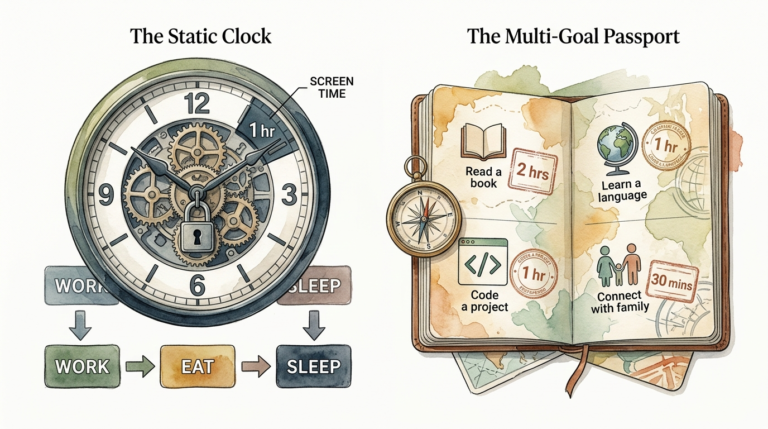
Set a recurring alarm for 60 minutes before bed. When it goes off, all screens go into another room. This includes phones, tablets, and laptops. If you use your phone as an alarm, buy a dedicated alarm clock. The physical absence of the device is the most effective way to break the loop.
Phase 2: Preparing the Environment
Lower the lights in your home. Use warm, amber-toned bulbs or candles. High-overhead lighting can be just as disruptive as a screen. Creating a “Creation Station” helps. This could be a comfortable chair with a notebook, a drawing pad, or a physical book. Make the tools of creation easier to reach than the tools of consumption.
Phase 3: Choosing the Output
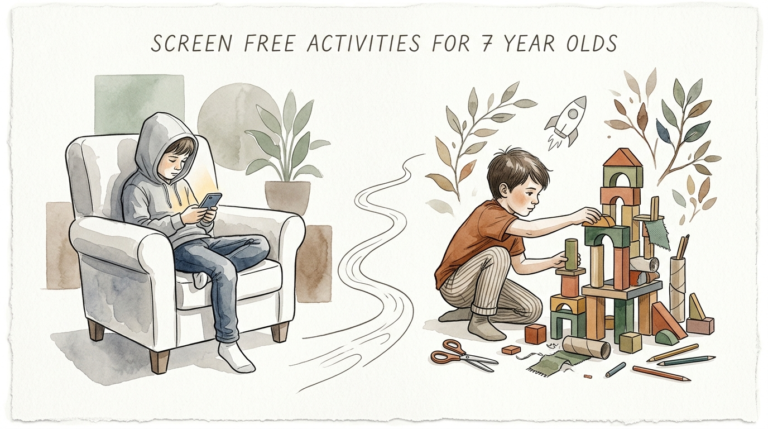
Instead of taking in information, let it out. This is where the producer mindset shines. You don’t have to build a masterpiece. You just need to engage in an analog activity that requires focus.
- Write a “brain dump” of everything you need to do tomorrow.
- Sketch a simple object on your nightstand.
- Read a physical book or a magazine.
- Engage in a slow, low-light hobby like knitting or assembling a puzzle.
The Benefits of Pre-Sleep Creation
The practical benefits of this approach are immediate and measurable. First and foremost, you will fall asleep faster. Studies show that people who avoid screens before bed reduce their sleep latency—the time it takes to drift off—by up to 30 minutes.
Beyond better sleep, pre-sleep creation fuels “N1” creativity. The N1 stage is the twilight zone between wakefulness and deep sleep. Researchers have found that spending just a few minutes in this state while thinking about a problem can triple your chances of finding a creative solution. When you are a producer, you are seeding your subconscious with high-quality material for your dreams to process.
You will also notice a significant reduction in morning anxiety. When you end your day by scrolling through news or social media, your brain stays in a state of high-alert. When you end your day by journaling or reading, you achieve a sense of “completion.” You go to bed feeling like you have contributed to your own life, rather than just witnessing the lives of others.
Challenges and Common Mistakes
The biggest challenge is the “Dopamine Withdrawal.” Scrolling provides a constant stream of small rewards. Analog creation is slower and requires more effort. Initially, you may feel restless or bored. This is normal. Your brain is recalibrating its reward system.
Common Mistakes Include:
- The “Just One More” Trap: Thinking you can check your email one last time. This resets your brain’s alertness and kills your momentum.
- Replacing the Phone with the TV: While the TV is further away, it is still a screen. It still provides passive consumption. The goal is to move from passive to active.
- Making Creation Too Difficult: Trying to write a novel before bed is overwhelming. If the task is too hard, you will go back to your phone. Keep it simple.
Limitations of This Method
This approach is not a magic bullet for clinical insomnia. If you have a biological sleep disorder, simply putting away your phone may not solve the problem. It is a tool for sleep hygiene, not a medical treatment.
There are also environmental limitations. If you live in a small space or a studio apartment, it can be hard to separate your “screen zone” from your “sleep zone.” In these cases, you have to rely on behavioral cues, like putting your phone in a drawer or using a physical “do not disturb” sign to signal the end of the day.
Finally, emergencies happen. If your job requires you to be on-call or if you have family members who might need you, a total digital blackout might not be feasible. In these situations, use “Focus Modes” on your device. Set it so only specific people can reach you, and keep the screen in grayscale to make it less appealing.
Practical Tips for Success
To make these rules stick, you need to optimize your surroundings. Start by switching your phone screen to grayscale in the evenings. This removes the “candy-colored” allure of apps. They become boring, making it easier to put the phone down.
Setup a “Creation Kit”:
Keep a small basket by your bed. Fill it with a high-quality pen, a notebook you enjoy writing in, and a book of puzzles or sketches. When the physical tools are inviting, you are more likely to use them.
Use Red Light:
If you need light to read or create, use a red-light lamp. Red wavelengths do not suppress melatonin production like blue or white light does. It creates a “cave-like” atmosphere that signals safety and rest to the primitive parts of your brain.
Advanced Considerations for Practitioners
For those who want to take their bedtime routine to the next level, consider “Neuroplasticity Priming.” Before you start your creative task, do 5 minutes of deep, diaphragmatic breathing. This shifts your nervous system from “Sympathetic” (fight or flight) to “Parasympathetic” (rest and digest).
In this relaxed state, your brain is more receptive to making new connections. If you are a writer, try “Morning Pages” in reverse. Instead of writing when you wake up, write three pages of stream-of-consciousness thought before bed. This clears the mental “cache” and allows your brain to work on deeper problems while you sleep.
If you must use a digital device, invest in an E-ink reader. These devices do not have the same refresh rate or blue-light intensity as tablets. They feel like paper and don’t offer the distraction of apps. It is a middle ground for those who aren’t ready to go fully analog.
Example Scenario: The Digital Sunset in Action
Imagine Mark, a software developer who suffers from “tired but wired” syndrome. He used to scroll Reddit until 11:30 PM, then toss and turn until 1:00 AM. His brain was in “Input Mode” right up until the moment he closed his eyes.
Mark implemented a 10:00 PM Digital Sunset. He bought a simple sketchbook and a set of pencils. Instead of scrolling, he spent 20 minutes drawing rough icons or UI layouts for a personal project. He wasn’t trying to finish them; he was just “producing.”
Within a week, Mark found that his eyes felt heavy by 10:30 PM. Because he had spent the hour creating, he felt a sense of pride rather than the “scroll-shame” of wasted time. He fell asleep faster and reported having more vivid, solution-oriented dreams. He switched from being a consumer of other people’s code to a producer of his own ideas.
Final Thoughts
The hour before bed is the most valuable time of your day. It is the transition between the world of doing and the world of being. When you fill that hour with screens, you are choosing to be a consumer in a world that already demands too much of your attention.
By establishing bedtime screen time rules, you reclaim your autonomy. You protect your biology and your creativity. You don’t need a fancy setup or a complex system. You just need to put the phone in another room and pick up a pen.
Start tonight. Set an alarm. Put the screen away. See what your brain creates when you finally give it the space to be bored. You might find that your best ideas haven’t been lost; they’ve just been waiting for the lights to go down.
Sources
1 frontiersin.org | 2 reddit.com | 3 empowersleep.com | 4 zmescience.com | 5 philcooke.com | 6 harvard.edu | 7 bioneurix.com | 8 jonathanstevens.com | 9 aanmc.org | 10 chronobiologyinmedicine.org | 11 nih.gov | 12 globalleadersinstitute.org