screen?free evening routine for families
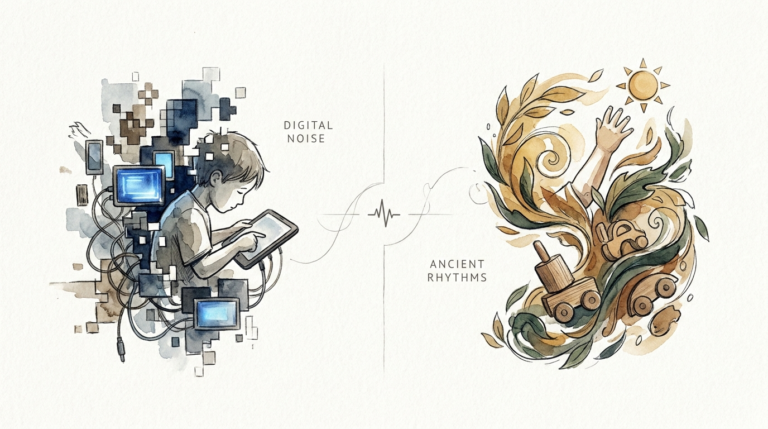
Stop consuming content and start producing memories. Trading the ‘watch’ for the ‘do.’ Watch how our family dynamic changed when we stopped being digital consumers and started being creators.
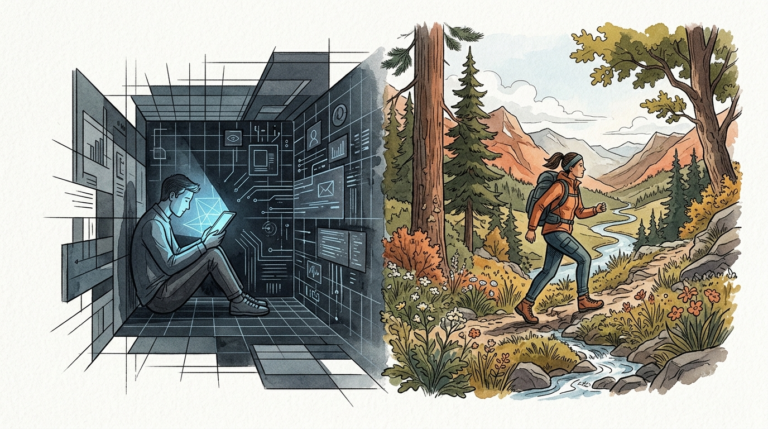
We live in an age where the default setting for a Tuesday night is a glow-in-the-dark living room. Most families finish dinner and immediately drift toward their separate glowing rectangles. It feels like relaxation, but often it is just a form of digital sedation. This is the difference between “getting through the night” and “owning the night.”
A screen-free evening routine for families is not about living in the stone age. It is about reclaiming the hours between dinner and bed for connection, skill-building, and real-world play. When you switch off the Wi-Fi, you switch on your family’s potential. You move from being passive spectators of other people’s lives to being the active producers of your own.
screen?free evening routine for families
A screen-free evening routine for families is a structured block of time after dinner where digital devices are intentionally sidelined in favor of analog activities. This includes smartphones, tablets, televisions, and gaming consoles. It is a commitment to “unplugged” interaction that prioritizes the biological and psychological needs of both children and adults.
In the real world, this routine serves as a “buffer zone” between the high-stimulation environment of school or work and the restorative state needed for sleep. Recent data shows that 49% of parents rely on screens daily to manage household responsibilities, yet 60% of those same parents report feeling guilty about that screen time. A screen-free routine exists to break that cycle of guilt and replace it with high-value interaction.
Think of it like a transition ritual. Just as an athlete warms down after a game, a family needs to “cool down” from the digital firehose. Instead of chasing dopamine hits through 15-second video clips, the family shifts to activities that produce serotonin and oxytocin—the chemicals of calm and bonding.
How to Transition: The Shift from Screens to Creation
Moving from a screen-reliant home to a “producer-focused” home does not happen overnight. It requires a tactical shift in how you view “boredom.” Most people view boredom as a problem to be solved by a screen. In a screen-free household, boredom is viewed as the necessary precursor to creativity.
The first step is a hard cutoff time. Establish a “digital sunset.” For many successful families, this is 6:30 PM or 7:00 PM. All devices go into a centralized charging station, preferably in a common area like the kitchen or a hallway. This removes the “phantom vibrate” syndrome where family members feel the urge to check pockets every few minutes.
Next, you must prepare the environment. If the TV is the focal point of your living room, your brain will crave it. Try reorienting furniture around a coffee table or a fireplace. Keep “activity kits” visible and accessible. This could be a basket of board games, a shelf of art supplies, or a dedicated “project table” where a half-finished puzzle or Lego set lives.
Finally, involve the kids in the “Producer” mindset. Instead of telling them what they *can’t* do, ask them what they want to *build*. Give them a mission. “Tonight, we are making a stop-motion video using physical clay,” or “Tonight, we are mastering three new card tricks.” When the focus is on a tangible output, the screen loses its luster.
The Science and Benefits of Unplugged Evenings
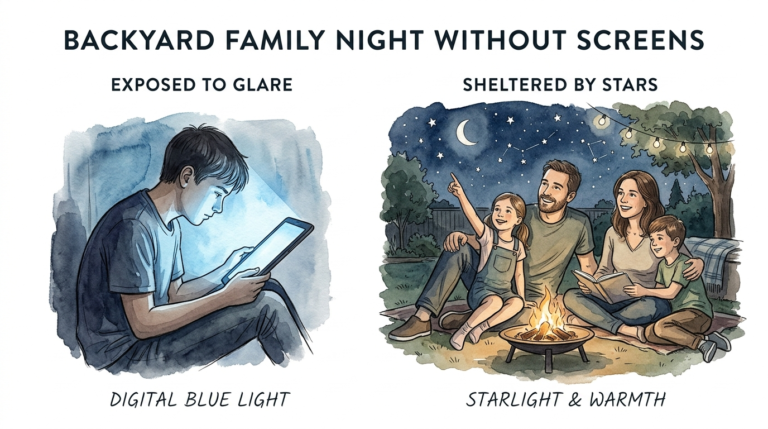
The benefits of a screen-free evening routine for families are measurable and immediate. The most significant impact is on sleep quality. Research shows that blue light from screens suppresses melatonin, the hormone responsible for sleep. By turning off screens at least one hour before bed, you allow the brain’s natural “sleep clock” to function, leading to faster sleep onset and better REM cycles.
Beyond biology, there is the benefit of socioemotional development. A 2025 meta-analysis highlighted that excessive screen use often crowds out real interaction, which is the primary way children learn empathy and social cues. When families engage in “active production”—like cooking together or playing a board game—they are practicing “serve and return” communication. This back-and-forth interaction is the “brain building” gold standard for childhood development.
There is also a profound “productivity” benefit for parents. When you stop scrolling, you suddenly find two to three hours of “found time.” Many parents use this to pursue their own hobbies, catch up on reading, or simply have deeper conversations with their spouse. You aren’t just giving your kids a better childhood; you are giving yourself a more meaningful adulthood.
Common Pitfalls and Why Transitions Fail
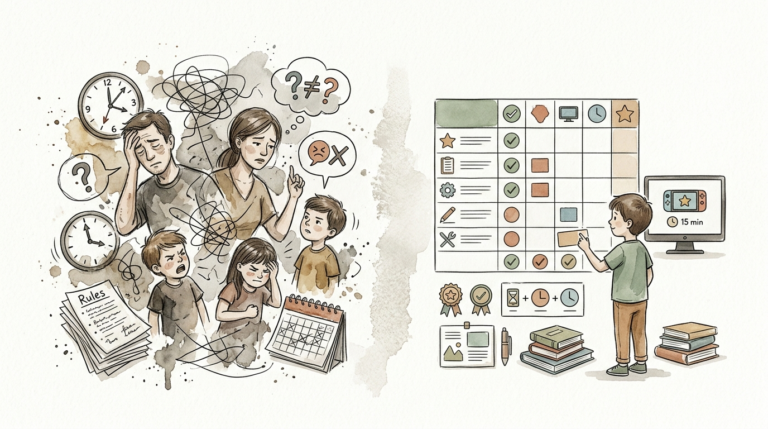
The biggest mistake families make is trying to go “cold turkey” without a plan. If you take away the tablet but provide no alternative, you get “techno-tantrums.” These are emotional outbursts caused by the sudden drop in dopamine. To avoid this, the transition should be “additive” rather than “subtractive.” Don’t just take away the screen; add a high-energy activity to replace the initial withdrawal.
Another common pitfall is the “parental double standard.” If you tell your children to put their devices away while you keep your phone on the arm of your chair, the routine will fail. Children mimic behavior more than they follow instructions. You must model the “active producer” lifestyle. If they see you reading a book or sketching, they will perceive that as the “normal” way to spend an evening.
Finally, families often fail because they choose activities that are too complex. If a screen-free activity requires 30 minutes of setup and 20 minutes of cleanup, you won’t do it on a tired Tuesday. Stick to “low-friction” activities. The goal is occupation and connection, not perfection.
Realistic Limitations and When Screens Make Sense
A screen-free evening routine for families doesn’t mean you can never watch a movie together. Total prohibition often leads to “rebound” consumption where kids binge on screens at friends’ houses. The goal is intentionality. A “Family Movie Night” on Friday is an intentional, shared experience. Mindless scrolling on a Tuesday is passive consumption.
There are also environmental limitations. If you live in a small apartment during a cold winter, “getting outside” might not be an option. In these cases, you have to be more creative with indoor “energy burners.” Using a garage for a “scooter gym” or setting up a living room obstacle course are valid trade-offs.
It is also important to recognize that some “screen” activities are actually active. Coding a game, editing a family video, or using a digital piano app to learn music are all “producer” activities. The litmus test should be: “Are we creating something, or are we just watching something?” If the screen is a tool for creation, it can occasionally have a place in the routine.
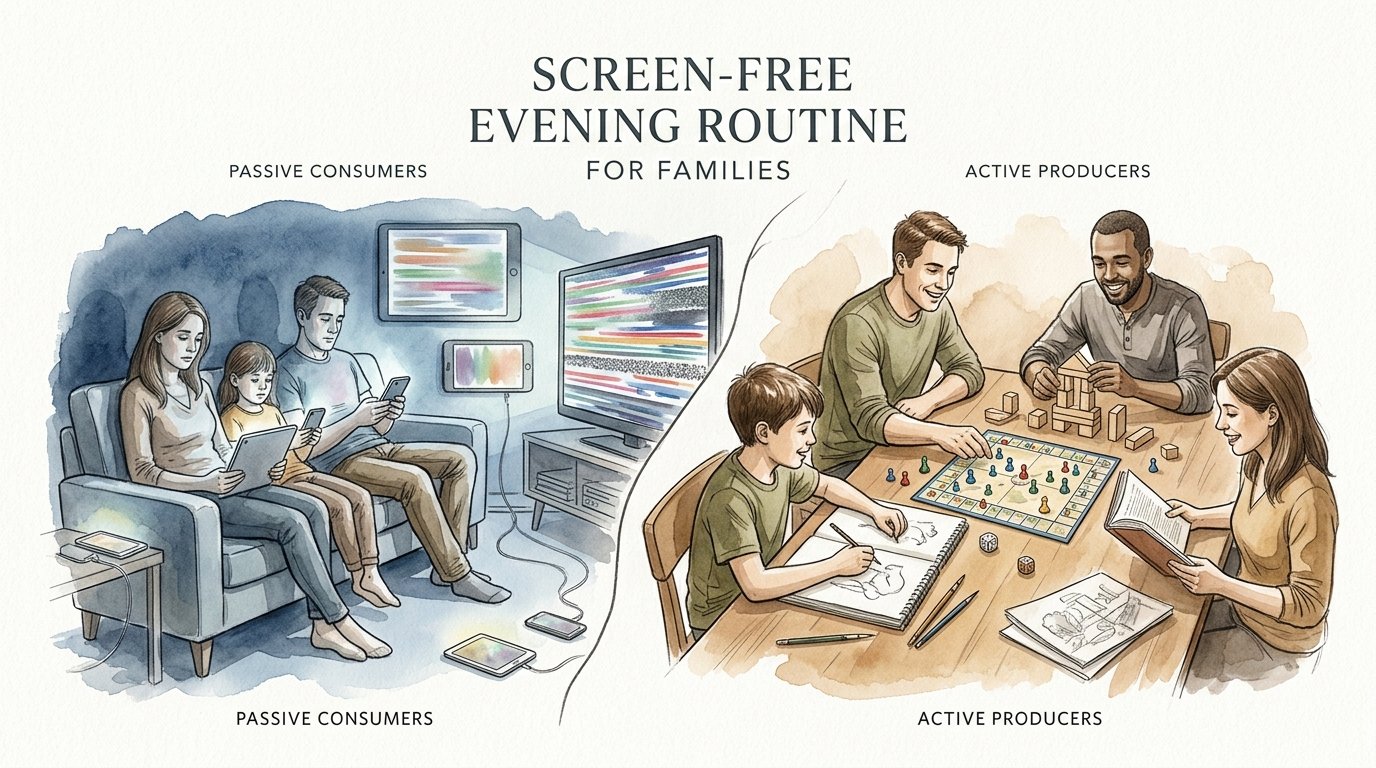
Passive Consumers vs Active Producers
Understanding the difference between these two states is the key to a successful family culture shift.
| Feature | Passive Consumer | Active Producer |
|---|---|---|
| Core Goal | Entertainment/Distraction | Creation/Skill Mastery |
| Brain State | Reactive (Alpha waves) | Engaged (Beta/Gamma waves) |
| Social Impact | Isolation (individual screens) | Connection (collaborative projects) |
| Long-term Value | None (temporary dopamine) | High (new skills/memories) |
| Energy Level | Low (sedentary) | Medium-High (movement/thought) |
Practical Tips for a Sustainable Routine
Consistency is more important than intensity. You don’t need a three-hour extravaganza every night. You just need a predictable rhythm. Start with “The Golden Hour”—the first 60 minutes after dinner is always screen-free.
Use the “Crowding Out” Method. Instead of focusing on the “No Screens” rule, focus on filling the schedule with so many fun alternatives that there is simply no time left for the iPad. If you have a puzzle going, a book you’re reading aloud, and a “helping game” in the kitchen, the screen isn’t being “banned”—it’s being ignored.
Batch Your Communication. Check all your “important” emails and texts at 5:00 PM. Tell your friends or colleagues that you are “going dark” for the evening. This prevents the “just one quick check” that inevitably leads to 40 minutes of scrolling.
Keep an “Ideas Jar.” When your kids are bored during the day, have them write down things they want to do (like “build a fort” or “learn to juggle”). When the “witching hour” hits after dinner and everyone is tired, you don’t have to think. Just pull a slip from the jar.
Evening Activity Categories
- Physical Energy: Indoor “hide and seek,” balloon volleyball, or a “night walk” with flashlights.
- Contribution: “Helping games” like soapy water dish stations or “chopping” salad with plastic knives.
- Creative: Watercolor painting, building a “box fort” from shipping deliveries, or clay modeling.
- Intellectual: Family read-alouds, strategy board games, or “storytelling circles” where everyone adds a sentence.
Advanced Considerations: Scaling Family Creativity
Once your family has mastered the basics of a screen-free evening, you can move into “Legacy Projects.” These are long-term creative endeavors that span weeks or months. This is where the true power of being an “Active Producer” shines.
One family might decide to “publish” a family newspaper. Every evening, kids write “articles” about their day, draw illustrations, and “print” (copy) them for relatives. Another family might work on a massive “world-building” project with Lego or cardboard, creating a sprawling city that evolves every night.
These advanced routines move the family from “doing activities” to “having a mission.” It fosters a sense of shared identity. Your kids won’t remember the 400 hours of YouTube they watched in 2025. They *will* remember the three months they spent building a five-foot-tall cardboard castle in the basement.
The “Maker Tuesday” Scenario: A Practical Example
Let’s look at how this works in a real-world home. It’s Tuesday night. The parents are tired. The kids are “wired” from school.
6:00 PM: Dinner. No phones on the table. The conversation is about “the best and worst part of the day.”
6:45 PM: The Digital Sunset. All phones go into the “dock.” The TV remains off.
7:00 PM: The Energy Burner. To handle the initial “fidgety” energy, the family does a 15-minute “Keepy Uppy” game with a balloon. Everyone is moving and laughing.
7:15 PM: The Creative Block. The “Project Table” has a half-finished 3D puzzle of the Eiffel Tower. The 10-year-old works on the structure. The 6-year-old “sorts” pieces by color. The parents assist while listening to some lo-fi music on a dedicated speakers (not a phone).
7:50 PM: The Wind Down. Puzzles are left as-is. The family moves to the couch for 20 minutes of a “Read-Aloud.” They are currently on chapter four of *The Hobbit*.
8:10 PM: Bedtime. The kids go to bed without the “blue light buzz.” They fall asleep in 10 minutes instead of an hour.
In this scenario, no one “missed” the internet. They were too busy being the protagonists of their own Tuesday night.
Final Thoughts
The transition to a screen-free evening routine for families is not a one-time event; it is a lifestyle design choice. It is the decision to prioritize the long-term development of your children and the long-term health of your relationships over the short-term convenience of a digital babysitter.
By trading “watching” for “doing,” you are teaching your children that they have the power to create their own entertainment. You are building a home culture where curiosity is the default and connection is the constant.
Start small. Pick one night this week. Put the phones in a drawer. Turn the TV to the wall. Watch what happens when the only thing “glowing” in the room is your family’s imagination. You won’t just be passing the time; you will be producing the memories that define your family’s history.
Sources
1 bloomokids.com | 2 planksip.org | 3 verizon.com | 4 harganpsychology.com.au | 5 msu.edu | 6 childrenshospital.org | 7 medium.com | 8 recordablebookbuddy.com | 9 brainbalancecenters.com | 10 substack.com | 11 sanfordhealth.org | 12 medium.com | 13 the-independent.com | 14 magicalkids.shop | 15 littledipperwellness.com | 16 tandfonline.com | 17 trinityhealth.com | 18 sourcecodecommunications.com | 19 researchgate.net | 20 kidsplaymuseum.org