after school screen time rules
Turn ‘zombie’ consumers into creative digital producers. After school is the prime time for brain drain. Flip the script: chores and creation first, mindless consumption last.

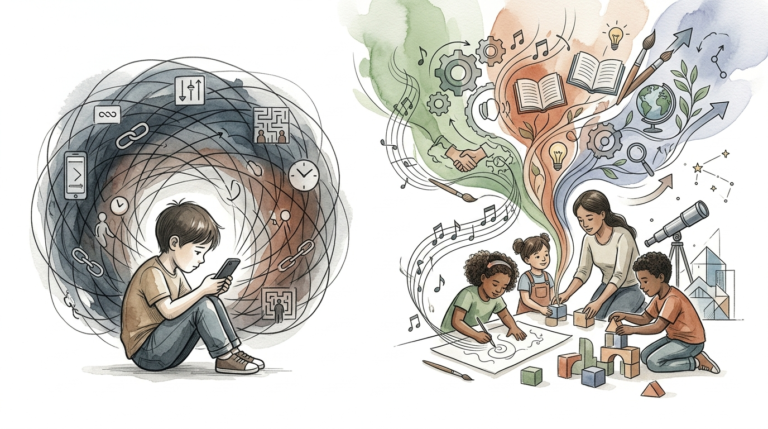
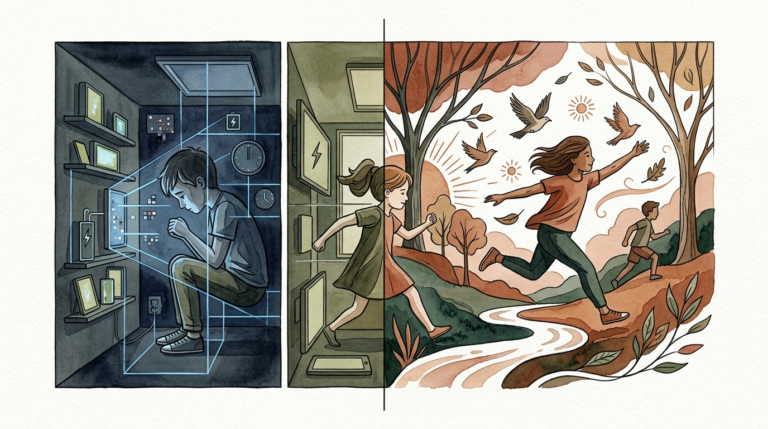
Most parents feel the weight of the “afternoon slump.” The kids come home, dump their bags, and immediately reach for a tablet or phone. Within minutes, they are locked in a trance-like state, scrolling through short-form videos that deliver rapid dopamine hits every 15 seconds. This isn’t just relaxation; for many developing brains, it’s a high-speed reward loop that makes real-world connection feel dull by comparison.

Recent data shows that U.S. teens now average more than eight hours of daily screen time, representing roughly 43% of their waking hours. For children aged 8 to 12, that number sits around five to six hours. Much of this time is spent on “passive consumption”—mindlessly watching others live, play, or create without contributing anything back to the digital or physical world.
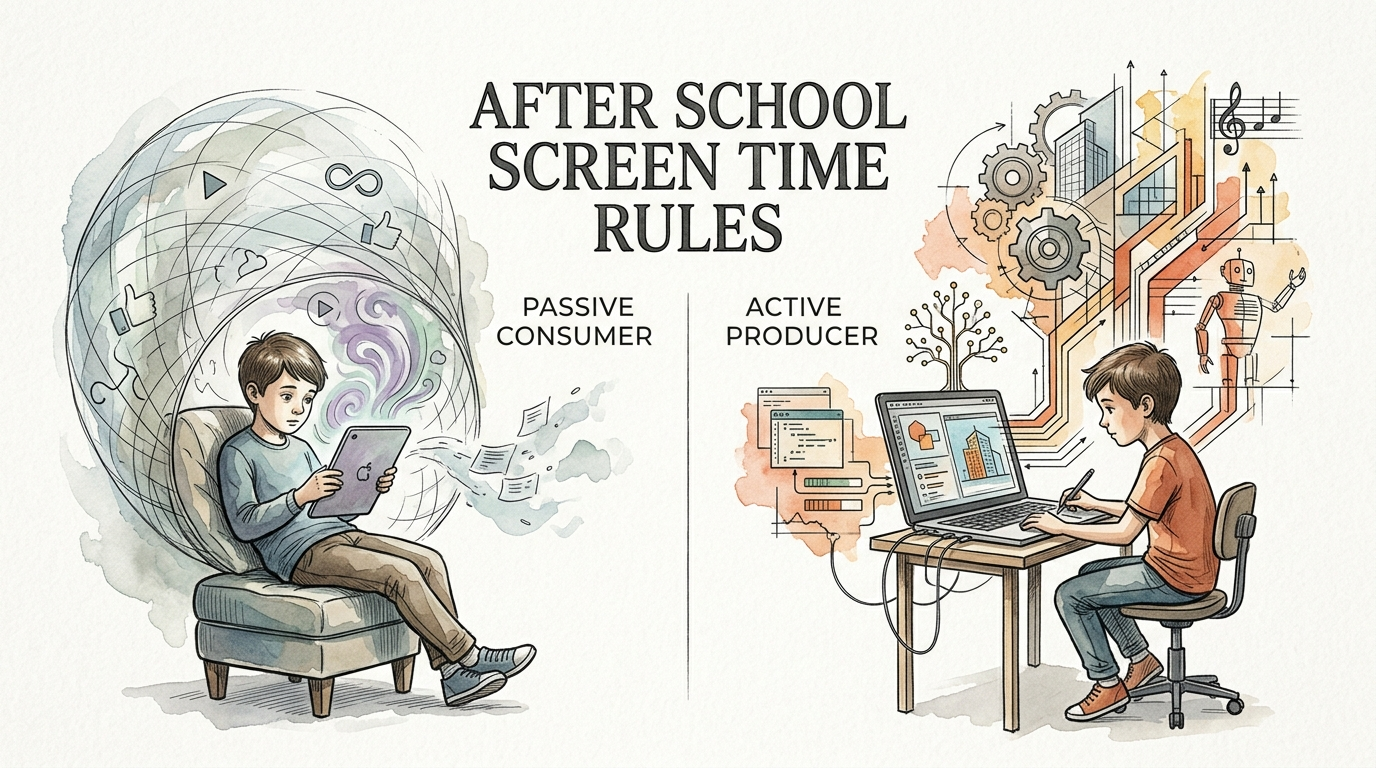
The goal isn’t to ban technology. It’s to change the relationship with it. By shifting from a Passive Consumer to an Active Producer, children move from being products of an algorithm to masters of their own tools. This transformation builds critical thinking, resilience, and technical skills that are essential for the future workforce.
after school screen time rules
Effective after school screen time rules are the foundation of a healthy digital home. These rules aren’t just about limiting minutes; they are about prioritizing development. Experts from the American Academy of Pediatrics (AAP) suggest that for children six and older, consistent limits must ensure that screens do not interfere with sleep, physical activity, or social connection.
A “First, Then” approach is one of the most successful systems parents use today. It works on a simple principle: First complete non-negotiable responsibilities (homework, chores, outdoor play), then earn access to the digital world. This teaches delayed gratification and helps children understand that screen time is a secondary activity, not the default state of being.
Real-world implementation often looks like a checklist. Before the Wi-Fi password is handed over, a child must check off items like “Bag unpacked,” “Homework finished,” and “30 minutes of physical movement.” This structure reduces the “brain drain” that happens when kids transition immediately from a structured school environment to an unstructured digital vacuum.
Another popular rule is the Digital Sunset. Research indicates that blue light from screens suppresses melatonin, the hormone responsible for sleep. Most experts recommend turning off all screens at least 30 to 60 minutes before bedtime to protect brain development and ensure deep REM sleep. Creating these clear boundaries helps the entire family transition from high-stimulation digital play to low-stimulation evening rest.
The Science: Passive Consumption vs. Active Production
The difference between scrolling and creating is neurological. Passive consumption, such as watching TikTok or YouTube Shorts, often leads to what researchers call “brain rot.” This happens when children overconsume low-effort content that doesn’t challenge their cognitive abilities. Rapid-fire videos train the brain to seek constant novelty, which has contributed to average attention spans on screens dropping to just 47 seconds.
Active production involves “deep work.” When a child codes a game in Scratch, edits a video in CapCut, or designs a 3D model in Tinkercad, they are engaging their prefrontal cortex. This part of the brain is responsible for planning, problem-solving, and impulse control. Creating digital content requires sustained attention and the ability to handle frustration—two things passive scrolling actively erodes.
Dopamine plays a massive role here. Passive media acts as a “dopamine magnet,” pulling children into a cycle of “more, more, more” without providing true satisfaction. Active production, while still rewarding, provides a different kind of fulfillment: the pride of accomplishment. Instead of a temporary high from a “like,” the child gains a permanent skill and a tangible result they can explain and share.
How to Transition: The Creator Framework
Flipping the script requires a deliberate plan. Start by identifying your child’s interests in the passive world and finding the “production” equivalent. If they love watching Minecraft videos, move them toward Minecraft modding or level design. If they enjoy digital art, introduce them to Procreate or Canva.
Follow these steps to build a creator-first environment:
- The Audit: Have your child track their screen time for three days. Ask them to label each hour as “Active” or “Passive.” Most are shocked by how much time disappears into the void of scrolling.
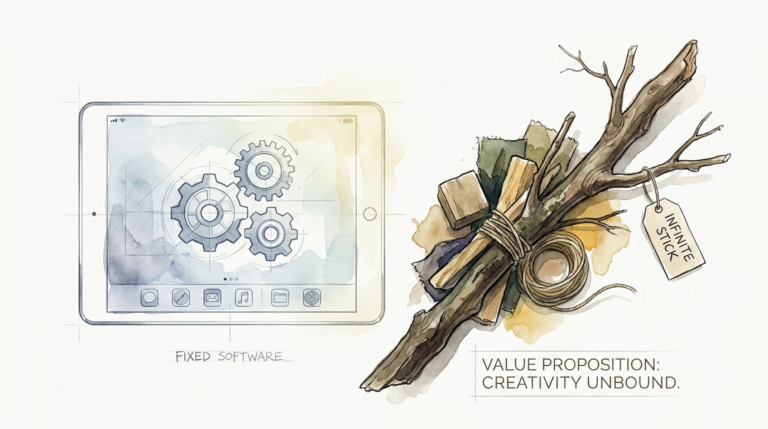
- The Toolset: Provide the right “digital hammers.” A tablet with a stylus for drawing or a laptop for coding changes the device’s purpose from a TV to a workshop.
- The 1:1 Ratio: Implement a rule where for every 30 minutes of passive consumption, they must spend 30 minutes in an active, creative pursuit. This balances the “junk food” of the internet with “nutritious” digital production.
Focus on “platforms, not products.” Avoid apps that guide children down a pre-set, gamified path. Instead, look for open-ended tools that allow for limitless exploration. The goal is for the child to be able to say, “Look what I made,” rather than “Look what I watched.”
Benefits of the Creator Mindset
The practical benefits of becoming a digital producer go far beyond just “less screen time.” It builds a portfolio of skills that future-proofs a child’s career. In a world increasingly dominated by AI and automation, the ability to create, curate, and think critically is the ultimate competitive advantage.
Measurable benefits include:
- Improved Cognitive Resilience: Learning to troubleshoot a line of code or a video transition builds the mental “muscle” needed to face difficult tasks without quitting.
- Digital Literacy: Creators understand how the internet works. They learn about algorithms, copyright, and digital citizenship through firsthand experience rather than just lectures.
- Emotional Regulation: Transitioning off a creative task is often easier than transitioning off a passive scrolling loop. Because they have achieved a sense of “completion” with their project, the brain is less likely to trigger a “dopamine crash” meltdown.
Furthermore, active screen time is linked to higher academic performance. A study found that children who spend their digital time on thinking and language-based tasks—rather than just mindless games—showed stronger cognitive development over time.
Challenges and Common Mistakes
One of the biggest pitfalls is over-structuring the creativity. If you turn digital production into “just more schoolwork,” the child will likely rebel. Creativity needs the freedom to be messy and even a little bit “useless.” The goal is engagement, not a professional-grade product on day one.
Another mistake is the Boredom Trap. Parents often rush to provide a device the second a child says they are bored. However, boredom is the space where imagination happens. When you remove the easy “out” of passive scrolling, children are forced to find creative ways to entertain themselves. Allow for that initial friction; it is a sign that the brain is beginning to rewire for active thought.
Finally, avoid the “all-or-nothing” approach. Completely banning passive screen time usually leads to secrecy or resentment. It is better to treat passive consumption like dessert—fine in moderation, but only after the “main course” of chores, creation, and real-world play has been finished.
Limitations: When This May Not Be Ideal
While digital production is superior to passive consumption, it is not a cure-all. High-intensity digital creation can still lead to eye strain, physical inactivity, and “tech neck.” Even active screen time must be balanced with outdoor play and face-to-face social interaction.
Age limits remain critical. The AACAP and AAP suggest that for children under two, screens should be avoided entirely (except for video chatting). For young children aged 2 to 5, screen time should be limited to high-quality, interactive programs with a caregiver present. Pushing a five-year-old into complex video editing might be developmentally inappropriate and lead to unnecessary stress.
There is also the “Interactive Paradox.” Some research suggests that highly interactive, fast-paced games can be just as overstimulating as passive scrolling. While the child is “doing something,” the rapid-fire reward systems can still lead to hyperarousal and behavioral issues. Parents must distinguish between productive interaction (creating) and reflexive interaction (fast-paced gaming).
Passive Consumer vs. Active Producer
| Feature | Passive Consumer | Active Producer |
|---|---|---|
| Cognitive Load | Low (Zoning out) | High (Problem-solving) |
| Dopamine Type | Fast hits (Novelty) | Sustained (Achievement) |
| Attention Span | Decreases (Fragments) | Increases (Deep Work) |
| Output | None (Zero value) | Tangible (Video, code, art) |
| Skill Level | Low / Static | High / Compounding |
Practical Tips and Best Practices
To successfully implement after school screen time rules, create a Creator Station. This is a dedicated space in the home—not the bedroom—where the tools of production live. Having a physical desk with a keyboard, mouse, and drawing tablet sends a signal to the brain that “this is where I build.”
Use “co-engagement” strategies. Instead of just setting a timer and walking away, spend the first 10 minutes helping your child start a project. Ask open-ended questions like, “What is the story behind this character?” or “How do you want this game level to end?” This parental involvement is one of the strongest predictors of positive digital outcomes.
Leverage technical tools to support your rules. Use routers or apps that allow you to block “distraction” sites (like YouTube or TikTok) while keeping “creative” sites (like Scratch or Tinkercad) open. This reduces the willpower needed for the child to stay on task. Consistency is your superpower; if the rules change every day based on your mood, the child will constantly test the boundaries.
Advanced Considerations
For older children and teens, digital production can transition into a professional-grade hobby. Encourage them to build a digital portfolio. This could be a private website or a curated folder of their best work. Seeing their progress over months and years builds an immense sense of self-worth that no “like” button can replicate.
Discuss the ethics of creation. As they start making things, talk to them about AI-generated content versus human-made art. Help them understand the value of their unique perspective. This prepares them for a future where “human-in-the-loop” creativity will be the most valued asset.
Finally, consider the “offline bridge.” A truly successful digital creator knows how to take their work back into the physical world. This might mean printing a 3D design, performing a song they composed, or showing a film they edited at a family movie night. This reinforces the idea that technology is a tool to enhance life, not a place to escape it.
Examples and Scenarios
Consider the “Minecraft Evolution.” In the Passive Scenario, a child watches 90 minutes of Minecraft “Let’s Play” videos on YouTube. They finish the session feeling restless, often begging for ten more minutes, and have gained nothing but temporary entertainment.
In the Active Scenario, the child uses that same 90 minutes to build a complex redstone circuit in their own Minecraft world or follows a tutorial to create a custom “skin.” They are learning logic, spatial reasoning, and technical execution. When the time is up, they have a “world” to show you. The transition to dinner is smoother because they feel a sense of pride in their work.
Another example is the “TikTok Pivot.” Instead of endlessly scrolling through a feed, a teen uses the CapCut app to edit a video of their basketball highlights or a time-lapse of their drawing. They are learning the principles of pacing, transitions, and storytelling. They are no longer the audience; they are the director.
Final Thoughts
The transition from a “zombie” consumer to a creative producer doesn’t happen overnight. It requires a shift in the family culture and a commitment to clear after school screen time rules. By prioritizing creation over consumption, you are giving your child the tools to navigate the digital age with intention and skill.
Remember that the goal is balance, not perfection. There will still be days when everyone just wants to zone out in front of a show—and that’s okay. The key is making sure that mindless scrolling is the exception, not the rule. Encourage your children to be makers, builders, and dreamers in the digital space.
Start small today. Ask your child to show you one thing they’ve made online recently. If the answer is “nothing,” it’s time to flip the script. Introduce a tool, set a boundary, and watch as they transform from a passive observer into a confident digital creator.
Sources
1 gabb.com | 2 ccrcca.org | 3 cacfp.org | 4 harvard.edu | 5 brainbalancecenters.com | 6 nationwidechildrens.org | 7 youtube.com | 8 youtube.com | 9 stillwareltd.com | 10 taroo.ai | 11 screenwiseapp.com | 12 cbwchc.org | 13 aacap.org | 14 instituteofchildpsychology.com | 15 substack.com | 16 kidsburgh.org