screen time checklist summer
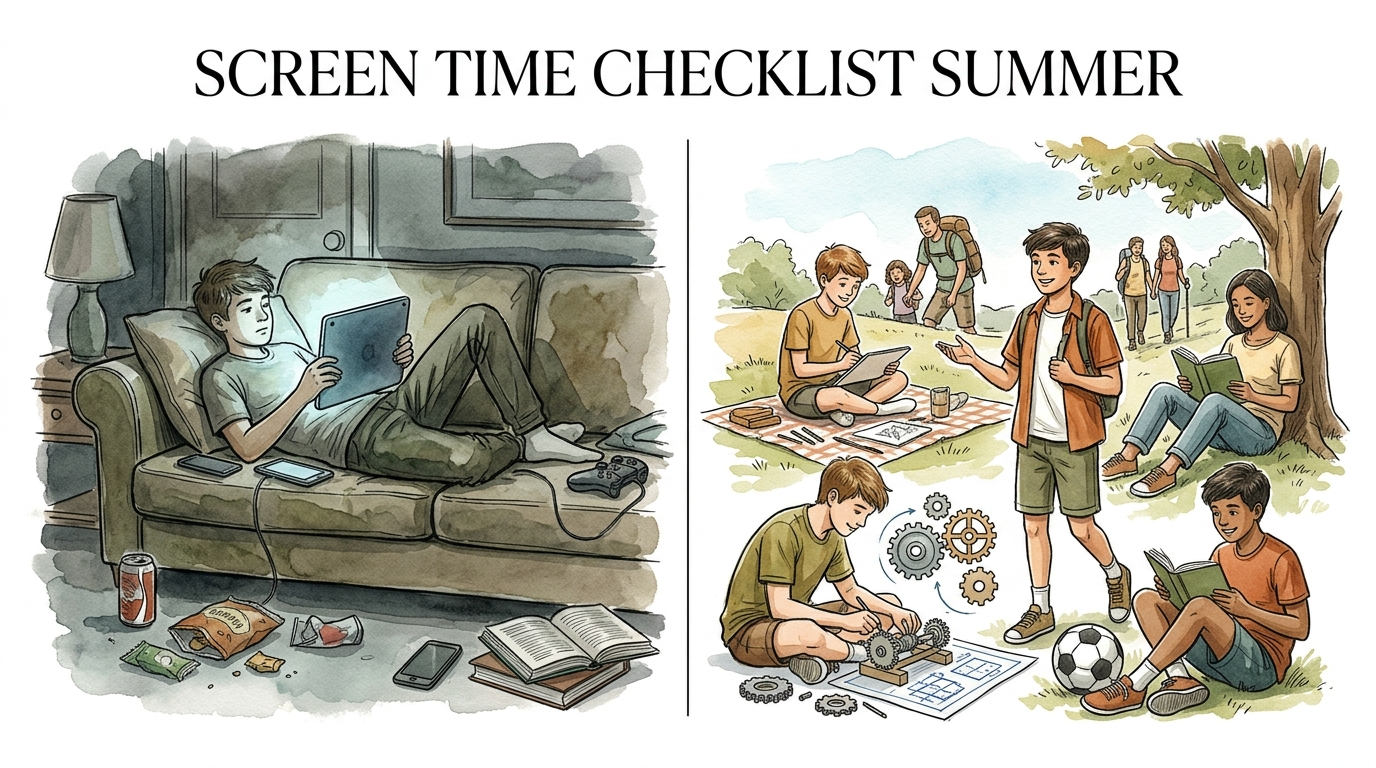
Upgrade your summer from a digital drain to a growth season. The ‘Standard Summer’ is a blur of blue light. Level up to a ‘Pro Summer’ by using a checklist that prioritizes skill-building, sunlight, and real-world adventure. Most people spend their warmest months scrolling through other people’s lives while their own potential sits on a shelf. A Pro Growth Summer changes that script. It turns the long days into an opportunity for personal evolution.
The transition from a structured school or work year to the open-ended nature of July and August often leads to a “digital slide.” Without the guardrails of a 9-to-5 or a bell schedule, screens become the default path of least resistance. This isn’t just about avoiding eye strain. It is about protecting your cognitive energy and physical health. Research shows that excessive sedentary behavior during these months can lead to measurable declines in focus and even physical fitness.
Shifting to a growth-oriented mindset doesn’t mean deleting every app or throwing your phone into a lake. It means moving from passive consumption to intentional action. You want to reach Labor Day feeling recharged and more capable than you were in June. This guide provides the framework to make that happen through a systematic approach to your digital habits.
screen time checklist summer
A summer screen time checklist is a strategic tool designed to balance digital entertainment with essential life activities. It functions as a gatekeeper for your attention. Instead of viewing screens as an entitlement, this system treats them as a reward for completing high-value tasks. It essentially creates a “pay-to-play” model for your devices, where the currency is your own productivity and well-being.
In the real world, these checklists are used by parents to maintain order and by high-performers to prevent burnout. They exist because humans are naturally prone to the “dopamine loop.” Modern apps are engineered to keep you engaged for as long as possible. A checklist acts as a physical interruption to that cycle. It forces you to pause and ask if you have fulfilled your basic human needs—like movement, hydration, and social connection—before diving into a digital rabbit hole.
Visualize this checklist as a daily mission log. You are not just “limiting” yourself; you are qualifying for your leisure time. When you use a structured list, you remove the mental fatigue of deciding what to do next. The path is already laid out. This reduces arguments in families and decreases “doom-scrolling” for individuals because the requirements for tech use are non-negotiable and clearly defined.
How to Design Your Pro Summer System
Building a successful system requires moving from a “time-limit” mindset to a “task-completion” mindset. Static limits often fail because they feel restrictive and arbitrary. A task-based system feels earned. Start by identifying the “Big Five” categories: Physical, Mental, Creative, Social, and Household. Every day should include a win in each category before the first screen turns on.
Movement must come first. The human body is designed to move in the morning sunlight to regulate its circadian rhythm. A simple rule like “No screens until a 30-minute walk” can transform your energy levels for the entire day. This physical requirement offsets the sedentary nature of gaming or streaming that might happen later. Sunlight exposure early in the day also helps with better sleep at night, creating a positive feedback loop.
Cognitive engagement is the next pillar. Summer often brings “brain drain,” where people lose a portion of their academic or professional sharpness. Dedicate at least 20 to 45 minutes to deep work or reading. This could be a new language on an app (active use), a physical book, or a complex hobby like coding or woodworking. The goal is to keep the prefrontal cortex active and engaged.
Household and personal responsibilities provide the necessary friction. Chores, meal prep, or organizing a cluttered space should be completed early. This ensures that when you finally sit down for a movie or a gaming session, you can do so with a clear conscience. There is no lingering guilt about what you “should” be doing, which actually makes the screen time more enjoyable and restorative.
Benefits of the Pro Growth Approach
Intentional summer planning yields massive dividends for mental health. Constant digital stimulation keeps the brain in a high-arousal state. Taking scheduled breaks allows your nervous system to return to a baseline “rest and digest” state. People who follow a structured checklist often report lower levels of anxiety and a higher sense of self-efficacy because they are achieving tangible goals every day.
Physical health improvements are immediate and measurable. Long-term studies have linked excessive summer screen time to higher BMI and increased risks of metabolic issues later in life. By prioritizing outdoor play and movement, you are literally protecting your future self. Increased step counts and vitamin D from sunlight exposure boost the immune system and improve mood regulation through natural serotonin production.
Creativity thrives in the “boredom gaps” that screens usually fill. When you remove the instant entertainment of a smartphone, your brain is forced to innovate. This is where new hobbies are born and complex problems are solved. A Pro Summer encourages this “active boredom,” leading to higher scores in creative thinking and better problem-solving skills in both children and adults.
Challenges and Common Mistakes
Consistency is the primary hurdle. Most systems fail within the first two weeks because they are too rigid or too ambitious. A common mistake is trying to do too much at once. If you go from six hours of gaming to zero, you will likely experience a “rebound effect” where you binge even harder after a few days. The solution is a gradual tapering or a “substitution” strategy where you replace one hour of screens with one specific activity.
The “I’m Bored” trap is another frequent pitfall. For many, boredom feels like a physical discomfort. When this happens, the instinct is to reach for a device. You must reframe boredom as a sign that your brain is ready to create. Have a “Boredom Jar” or a secondary list of “analog” activities ready. This could include drawing, building with blocks, gardening, or even just sitting quietly. Having a backup plan prevents the default slide back into digital consumption.
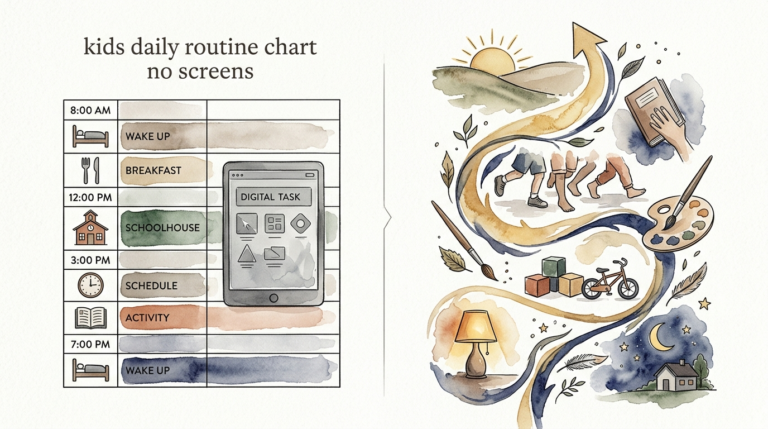
Parental burnout is a real challenge when implementing these rules for a family. It can be exhausting to constantly monitor a checklist. To avoid this, make the system as self-sustaining as possible. Use visual charts, timers, and clear consequences. If the checklist isn’t finished, the Wi-Fi password isn’t shared. Putting the responsibility on the individual—whether it’s a child or yourself—removes the need for constant “policing” and promotes personal accountability.
Limitations and Environmental Constraints
Regional weather patterns can disrupt even the best-laid plans. Heatwaves, thunderstorms, or poor air quality might make outdoor movement impossible. In these cases, the checklist needs to be adaptable. Indoor exercise, like yoga or bodyweight circuits, should be the designated “Rainy Day” alternative. Flexibility ensures the system doesn’t break just because you can’t go outside.
Social expectations and peer pressure present another boundary. If every friend is online at 2:00 PM, it becomes difficult to stick to a “no screens until 4:00 PM” rule. Communication is key here. Setting expectations with friends or family members about your “on” and “off” times can reduce the social friction. You might decide to have “Digital Power Hours” where everyone is online together, but outside of those times, the devices stay away.
Work-from-home realities often necessitate screen use. If your job or a child’s summer course is digital, you cannot simply ban screens. The distinction must be made between “Productive Screen Time” and “Passive Screen Time.” Work, learning, and creative output (like digital art) do not count against the “fun” screen time quota in the same way that scrolling social media does. This balanced understanding keeps the system realistic and functional.
Standard Summer vs. Pro Growth Summer
| Feature | Standard Summer | Pro Growth Summer |
|---|---|---|
| Primary Focus | Passive entertainment | Active skill-building |
| Daily Routine | Unstructured / Reactive | Checklist-driven / Proactive |
| Dopamine Source | Infinite scrolling / Gaming | Achieving real-world goals |
| Physical Activity | Incidental or low | Scheduled and prioritized |
| Cognitive Impact | Potential brain drain | Sharper focus and new skills |
Practical Tips for Immediate Success
Establish tech-free zones in your home. The dining table and bedrooms are the most critical areas. Keeping devices out of the bedroom improves sleep quality and prevents the “first thing in the morning” scroll. When you wake up, your brain is in a highly suggestible state. Filling it with news or social media immediately sets a reactive tone for the day. Start with a glass of water and a task from your checklist instead.
Use hardware solutions to help your software problems. Mechanical kitchen timers or apps that lock your phone can provide the external discipline needed to stay on track. If you find yourself mindlessly reaching for your phone, move the charger to a difficult-to-reach place. This simple “friction” makes the habit of checking your phone much harder to maintain, giving you those extra seconds to remember your checklist.
Batch your digital consumption. Instead of checking notifications 50 times a day, set two or three specific “windows” for digital engagement. This allows you to stay connected without being constantly interrupted. You will find that you are more efficient when you use tech with a purpose rather than as a background noise for your life. This practice builds “attentional control,” a skill that is becoming increasingly rare and valuable.
Advanced Considerations for High Performers
Serious practitioners should explore the concept of a “Dopamine Reset.” This involves a 24 to 48-hour period of zero digital stimulation. No phones, no TV, no music. The goal is to lower your baseline for stimulation so that simple activities, like reading or walking, become enjoyable again. A reset can “re-sensitize” your brain’s reward system, making it easier to stick to your checklist for the rest of the summer.
Focus on the “Output to Input Ratio.” Most people have a ratio heavily skewed toward input—reading, watching, and listening. A Pro Summer practitioner aims to increase output. This means writing, building, filming, or creating something. If you spend two hours watching YouTube tutorials on a hobby, you should spend at least two hours actually practicing that hobby. This ensures that tech is a tool for growth rather than just a way to kill time.
Incorporate “Digital Hygiene” as a core skill. This goes beyond just limiting time; it involves auditing what you consume. Unfollow accounts that trigger negative emotions or mindless comparison. Curate your feeds to include educational or inspiring content. Treat your digital diet with the same care you treat your physical diet. High-quality information leads to high-quality thoughts and actions.
Example Scenario: A Day in the Pro Life
Let’s look at a realistic daily schedule based on the Pro Growth model. The day begins at 7:30 AM. No phone is touched. Instead, the first hour involves hydration and a 20-minute stretching routine or outdoor walk. By 9:00 AM, the “Mental” task is addressed—perhaps 30 minutes of a coding course or reading a non-fiction book. The brain is fresh and ready for deep work.
Late morning is for “Household” and “Creative” wins. This could be meal prepping lunch and spending 45 minutes on a personal project, like gardening or painting. By noon, several major tasks are checked off. This is the first “check-in” window for digital messages, limited to 15 minutes. The afternoon is reserved for social connection or a larger outdoor adventure, like a hike or a trip to the pool.
By 4:00 PM, the individual has “earned” two hours of unrestricted screen time. Because the day was so productive, the gaming or movie session feels like a legitimate reward. The evening ends with a “Digital Sunset” at 9:00 PM, where all screens are turned off to allow the brain to wind down. This structure ensures that every day is a mix of growth and relaxation, preventing the summer from slipping away unnoticed.
Final Thoughts
The difference between a Standard Summer and a Pro Growth Summer is intentionality. A checklist isn’t a prison; it is a blueprint for a more fulfilling life. By setting clear boundaries for your digital consumption, you open up space for the experiences that actually matter. You will remember the skills you learned and the adventures you had far longer than the videos you scrolled past.
Start small if you need to. Choose three non-negotiable tasks for tomorrow and see how they change your relationship with your devices. Every time you choose a real-world activity over a digital one, you are strengthening your focus and reclaiming your time. This summer can be the season you finally break the cycle of digital drain and start your journey toward a more capable, energized version of yourself.
Commit to the process and watch how your perspective shifts. A well-managed summer creates momentum that carries into the fall and winter. You are building habits that will serve you long after the sun sets on the season. Take the first step today and turn your summer into a growth season.
Sources
1 tanagerplace.org | 2 besmartonline.info | 3 gmu.edu | 4 lifebyleanna.com | 5 idx.us | 6 abcpediatrictherapy.com | 7 stayfitmom.com | 8 universityofcalifornia.edu | 9 digitalwellnesslab.org | 10 digitalwellnesslab.org | 11 childmind.org | 12 raisingkidswithpurpose.com | 13 connectedfamilies.org | 14 youtube.com | 15 ucdavis.edu