Storytelling For Kids Without Screens
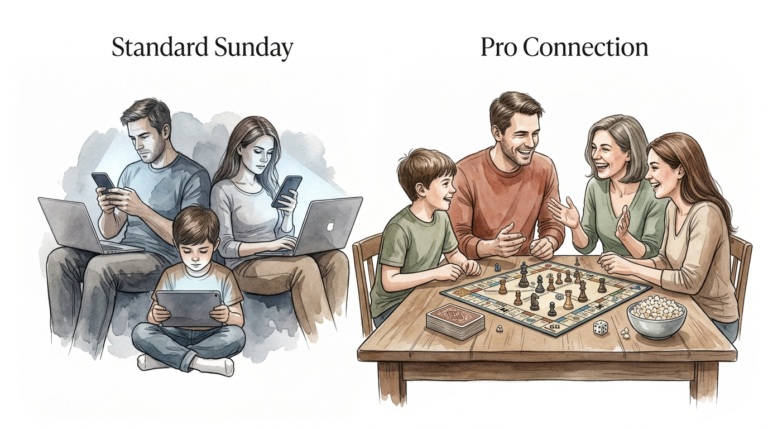
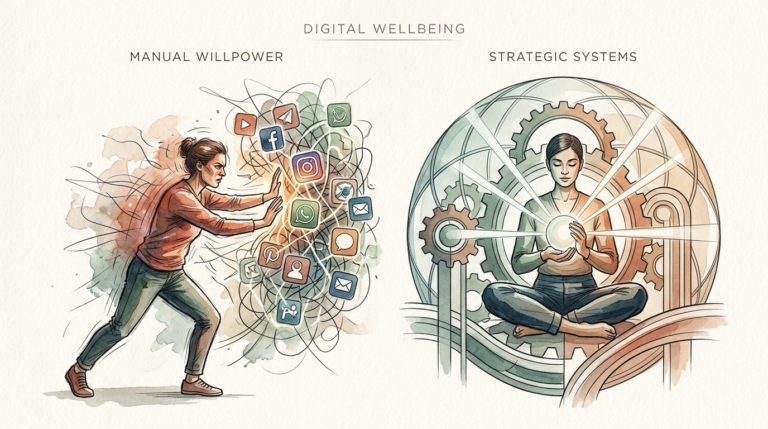
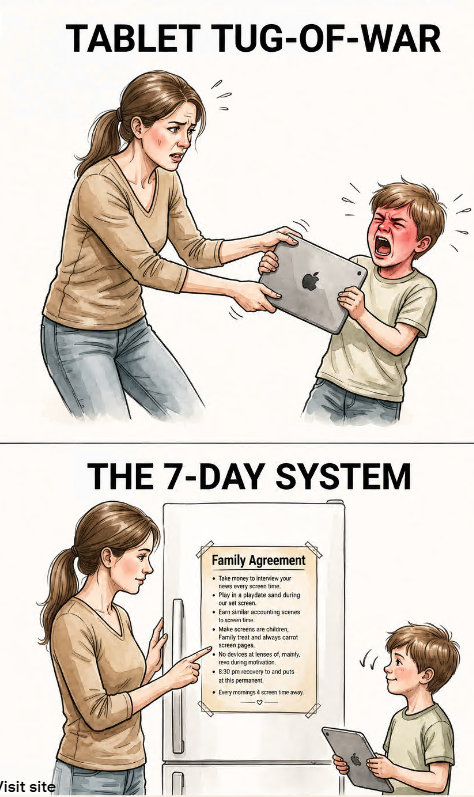
Our ancestors didn’t have iPads to stop the ‘I’m bored’ screams; they had the power of the shared story. We replaced the 60fps refresh rate with the rhythm of the human voice. During our 7-day reset, we stopped ‘scrolling’ and started ‘storytelling.’ The result? A child who didn’t just listen, but started contributing their own chapters to our family’s history.
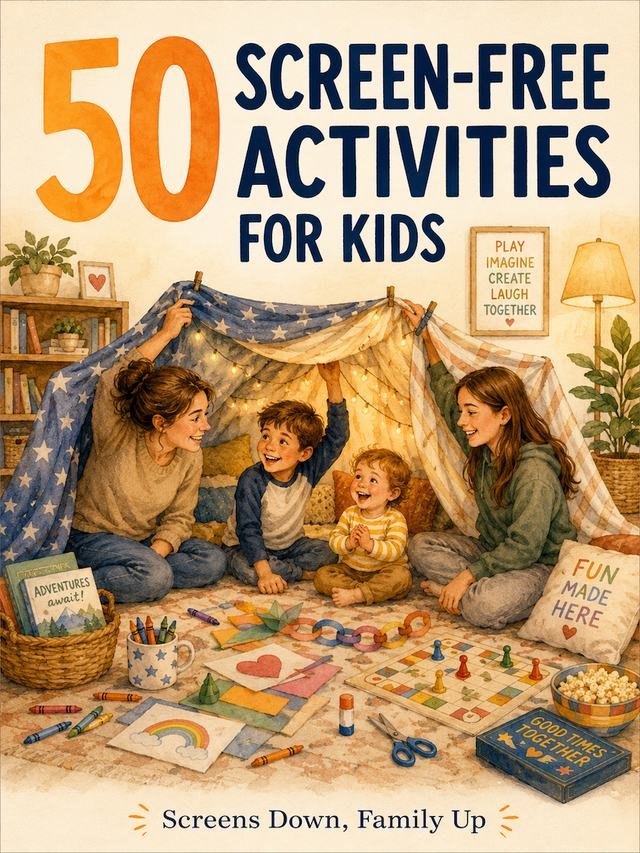
Modern life is loud. It is filled with flashing lights and algorithmic pings designed to capture attention without ever really holding it. We often think of storytelling as something that happens when we open a book or turn on a movie. But the most powerful form of narrative doesn’t require a battery. It requires presence.
When you strip away the digital noise, you find a child’s imagination is a high-definition engine waiting to be fueled. This guide will show you how to reclaim the ancient art of oral storytelling. We are moving away from passive consumption and toward active creation. It is time to turn off the pixels and light the fire of imagination.
Storytelling For Kids Without Screens
Storytelling for kids without screens is the practice of sharing narratives using only the human voice, gestures, and the shared space of imagination. It is an active, two-way exchange. Unlike a video that plays regardless of who is watching, a told story changes based on the listener’s reactions. It is a live performance where the parent is the creator and the child is the co-pilot.
This approach exists because the human brain is wired for narrative. Before the printing press or the smartphone, we sat around fires and shared histories. This wasn’t just for entertainment. It was how we taught survival, empathy, and values. In the real world, this looks like a father telling a “when I was little” story during a car ride or a mother inventing a fantasy world during bath time.
Think of it like the difference between a pre-packaged meal and a home-cooked one. A screen is the pre-packaged meal; it’s easy, but it lacks the nutrients of connection. Storytelling is the home-cooked meal. It takes more effort, but it feeds the soul and the mind in ways technology simply cannot replicate. It turns the “dead time” of chores or travel into a rich, creative playground.
How to Master the Art of Screen-Free Storytelling
You do not need to be a professional writer to tell a great story. You only need a beginning, a middle, and an end. Start with a character your child can relate to. This could be a talking squirrel, a brave knight, or even a version of the child themselves. Give that character a simple goal, like finding a lost golden acorn or reaching the top of a mountain.
The next step is to introduce a “bump in the road.” Conflict is the engine of any story. Maybe a bridge is out, or a giant giant is blocking the path. Ask your child for help. “What do you think Squirrel Nutkin should do?” This turns the story into a game. It forces them to problem-solve in real-time.
Use your environment as a prompt. If you are at the grocery store, the cereal boxes can become skyscrapers in a cardboard city. If you are at the park, a gnarled tree root can be the entrance to a dragon’s lair. Use descriptive words. Instead of saying the dragon was big, say his scales were as green as the grass and his breath smelled like burnt toast.
Keep your sentences short and your energy high. Modulate your voice to represent different characters. A squeaky voice for a mouse or a deep rumble for a giant makes the “theater of the mind” come alive. End the session on a cliffhanger if you want them begging for more. This builds anticipation for the next screen-free moment.
The Practical Benefits of the Oral Tradition
The benefits of oral storytelling are measurable and profound. Research shows that listening to a story stimulates areas of the brain responsible for language, visual imagery, and emotional processing. When a child hears a story, they have to build the world themselves. They are the director of their own internal movie.
Language skills skyrocket when kids engage in oral narrative. They hear new vocabulary in context. They learn how to structure sentences to convey excitement or suspense. Unlike a screen that often uses “fast-cuts” to maintain attention, storytelling requires sustained focus. It builds the “attention muscle” that is often weakened by short-form digital content.
Empathy is another massive win. By hearing about a character’s struggles and triumphs, children learn to step into someone else’s shoes. They experience fear, joy, and relief in a safe, controlled environment. This emotional intelligence is a critical life skill that helps them navigate real-world social situations. Plus, the bonding that happens during a shared story creates a secure attachment that no app can provide.
Challenges and Common Pitfalls
The biggest challenge is usually parent fatigue. After a long day of work, it is tempting to hand over the tablet. You might feel like you “aren’t creative enough.” This is a trap. Your child doesn’t need a Pixar-level plot. They need your voice and your attention. Perfection is the enemy of connection in this space.
Initial resistance from the child is also common. If they are used to high-dopamine digital rewards, a spoken story might seem “boring” at first. Their brain is literally waiting for the next flash of light. You have to push through the “boredom hump.” Once their imagination engages, the internal reward system takes over.
Another mistake is making the story too “preachy.” If every tale ends with a five-minute lecture on why they should clean their room, they will tune out. Let the moral be subtle. Show, don’t tell. Let the character face the consequences of a messy room within the story world. It is much more effective than a direct lecture.
When This Approach May Not Be Ideal
There are times when oral storytelling is difficult to sustain. If you are physically exhausted or ill, the mental effort of world-building can be overwhelming. In these cases, a high-quality audiobook or an illustrated book is a great middle-ground. It maintains the narrative focus without requiring the parent to be “on.”
High-stress environments, like a loud airport or a busy restaurant, can also break the spell. Storytelling requires a degree of quiet and focus. If the external noise is too great, it is hard for the child to maintain their internal imagery. It is better to wait for a “micro-moment” of calm rather than forcing a story in a chaotic setting.
Very young toddlers may also have a limited attention span for pure oral stories. They often need the visual anchor of a physical book or a puppet. This isn’t a failure of the method; it is just a developmental stage. You can gradually phase out the visual aids as their ability to visualize on their own improves.
The Feed vs. The Flame: A Modern Comparison
In the modern digital landscape, we often find ourselves trapped in “The Feed.” This is the endless scroll of content designed by algorithms to keep us clicking. In contrast, storytelling represents “The Flame.” It is intentional, warm, and requires effort to keep burning. It provides light rather than just noise.
| Feature | The Feed (Digital Media) | The Flame (Oral Storytelling) |
|---|---|---|
| Brain Activity | Passive Observation | Active Visualization |
| Pacing | Fast-Paced / High Dopamine | Rhythmic / Calm Focus |
| Connection | Isolated Consumption | Shared Human Experience |
| Customization | Algorithmically Generic | Specifically Personal |
Choosing “The Flame” doesn’t mean you never use technology. It means you recognize that technology is a tool, while storytelling is a foundation. One builds a consumer; the other builds a creator. The Feed is designed to take your time; The Flame is designed to give your child a legacy.
Practical Tips and Best Practices
Start small with “Micro-Stories.” These are 2-minute tales told during transitions, like walking from the car to the front door. It kills the “I’m bored” transition period and builds the habit. Use “Finish-the-Sentence” games to get them involved. “And then, the brave cat reached into the bag and found a…” and let them fill in the blank.
Create a “Story Jar.” Fill it with slips of paper that have one word on them: “Dragon,” “Space,” “Pizza,” “Grandma.” Let your child pick three slips and make a story using all three words. This gamifies the process and removes the pressure of coming up with a plot from scratch. It also shows them that stories can be found anywhere.
Best practices also include “The Call Back.” Reference stories you told weeks ago. “Remember when the Blue Dragon lost his keys? Maybe this squirrel found them!” This creates a sense of a shared, persistent universe. It makes the child feel like they are part of an ongoing history, strengthening their memory and their sense of belonging.
Advanced Narrative Techniques for Parents
For those who want to level up, look at the Hero’s Journey. It is the classic structure used in everything from Star Wars to Harry Potter. A hero leaves home, faces a trial, meets a mentor, and returns changed. You can apply this to the most mundane topics. A lost sock on its journey through the “Valley of the Dryer” is a hero’s journey.
Try “Sense-Linking.” As you tell the story, engage the other senses. If the character is in a cold cave, give your child a little shiver. If the character is eating a delicious apple, make a crunching sound. These sensory anchors help ground the imagination and make the story feel three-dimensional.
Use “Parallel Narratives” to help with real-world problems. If your child is afraid of the first day of school, tell a story about a little robot who is worried about his first day at the Robot Academy. Seeing a character navigate the same fear allows the child to process their own emotions from a safe distance. It is “bibliotherapy” without the book.
Scenario: The Rainy Day Grocery Quest
Imagine you are stuck in a long checkout line on a rainy Tuesday. Your child is starting to pull items off the shelves. Instead of reaching for your phone, you lean in and whisper, “Did you see that? The grocery store has been taken over by the Invisible Monkeys.”
The child stops. Their eyes widen. You continue, “They are looking for the Golden Banana. We have to make sure they don’t see us. If we stand very still, they think we are statues.” Suddenly, the boring task of waiting becomes a stealth mission. You ask, “Where do you think they are hiding?” The child points to the rafters. “There! Behind the signs!”
For the next ten minutes, you are both co-authors of a spy thriller. You didn’t just avoid a meltdown; you practiced observation, cooperation, and narrative structure. When you finally get to the car, you aren’t frustrated. You are both laughing about the Invisible Monkey who almost stole the eggs. That is the power of the shared story in action.
Final Thoughts
Storytelling for kids without screens is not a chore; it is a superpower. It transforms the mundane into the magical and the passive into the proactive. By stepping away from the 60fps refresh rate and leaning into the rhythm of the human voice, you give your child a gift that lasts a lifetime. You are teaching them that their mind is the most powerful entertainment device ever created.
This practice builds stronger brains, deeper empathy, and unbreakable family bonds. It requires no specialized equipment, no subscription fees, and no battery life. It only requires your presence and a willingness to be a little bit silly. The world is full of stories waiting to be told.
Start tonight. Turn off the TV ten minutes early. Sit in the dark. Start with the words, “Once upon a time…” and see where your child takes you. You might find that the best “feed” isn’t on a screen at all—it’s the one you create together.
Sources
1 businessinsider.com | 2 storybee.app | 3 qz.com | 4 yiaschools.com | 5 emergencyzone.com | 6 substack.com | 7 medium.com | 8 sjlittle.ca | 9 readersdigest.in | 10 cincinnatichildrens.org | 11 readbrightly.com | 12 medium.com | 13 scholarsandstorytellers.com | 14 ed.gov