screen free summer challenge
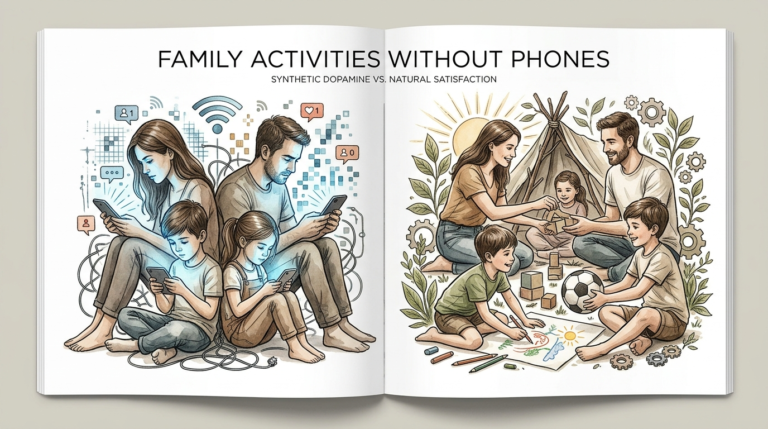
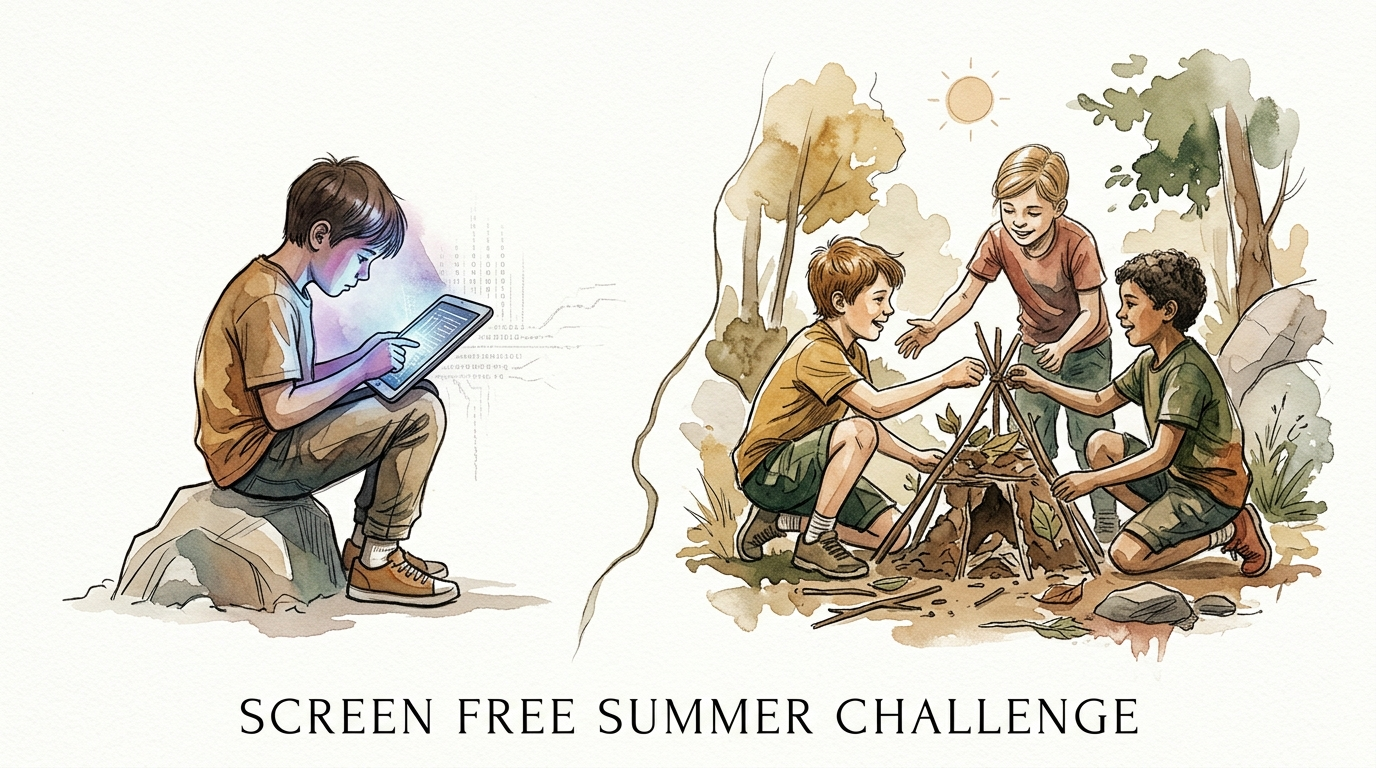
The best ‘social media’ was invented thousands of years ago: it’s called being outside. Humans weren’t built for glowing rectangles. Reclaim your biology this summer with a challenge that brings back the ‘old ways’ of play.
Our ancestors didn’t have algorithms. They had the tilt of the sun and the crackle of a fire. They didn’t have notification pings; they had the rustle of leaves that meant dinner or danger. This summer, we are going back to that baseline.
Modern life has us trapped in a cycle of digital isolation. We are more “connected” than ever, yet screen time for the average American adult has climbed to over 7 hours per day. For teenagers, that number often hits 9 hours. This isn’t just a habit; it’s a biological takeover.
We are inviting you to a different kind of connection. This guide is your roadmap to a summer defined by dirt under your fingernails, the smell of pine, and the actual, unedited voices of your friends and family. It is time to step away from the rectangle and back into the world.
screen free summer challenge
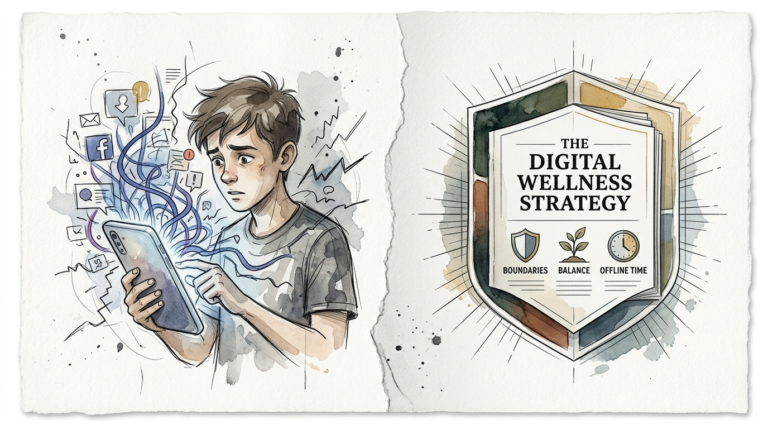
The screen free summer challenge is a intentional period of digital abstinence or significant reduction designed to recalibrate your brain’s reward system. It isn’t about becoming a luddite or throwing your smartphone into a lake. It is about reclaiming your attention from the billion-dollar companies that harvest it.
This challenge exists because our current environment is a mismatch for our biology. We evolved to seek out new information, social connection, and food. In the past, these required effort. Today, they are available in infinite supply through a glass pane, leading to a state of constant overstimulation.
Think of it like a dietary cleanse for your mind. Just as you might cut out processed sugar to reset your taste buds, you are cutting out “processed” digital hits to reset your capacity for joy. When you remove the constant high-octane dopamine of short-form videos and social scrolling, the “boring” parts of the real world—like watching a sunset or reading a physical book—suddenly become vibrant again.
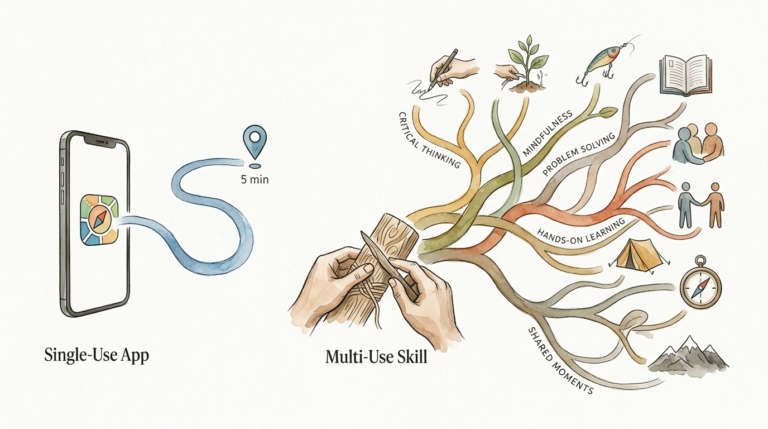
In real-world terms, this looks like a family deciding that from June to August, the phones stay in a basket by the door after 5:00 PM. It looks like a teenager learning to navigate the woods using a shadow stick instead of Google Maps. It is a return to ancestral play, where the world itself is the game.
How the Digital Reset Works
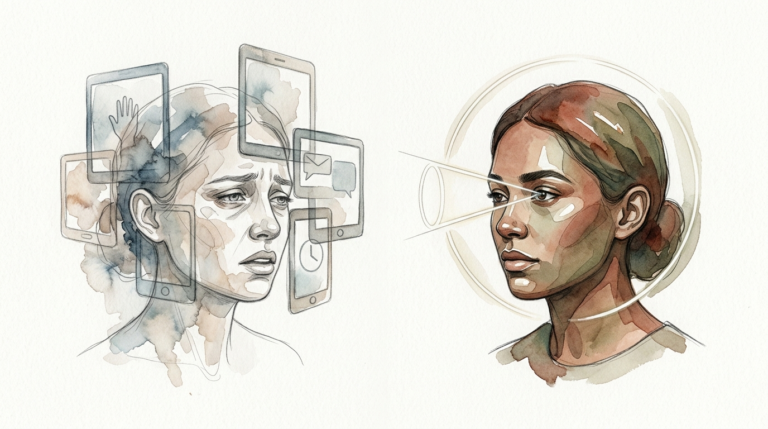
To succeed, you have to understand what you’re up against. Your brain is a dopamine-seeking machine. When you scroll through a feed, you are triggering the same reward pathways as a slot machine. This creates a high-frequency, low-effort dopamine loop that eventually desensitizes your receptors.
The challenge works by forcing a period of “boredom.” Boredom is actually a biological signal that you should be doing something productive or social. In the modern world, we “cure” boredom instantly with a screen, which silences that productive signal. By removing the screen, you allow that internal drive to resurface.
The reset typically follows a predictable biological timeline. Research into dopamine receptor recovery suggests that while you might feel “phantom vibrations” and intense cravings for the first 14 days, meaningful restoration of focus and mood usually begins after about 30 days of sustained reduction. To fully adoption a new habit and recalibrate your baseline, a 90-day “fast” is the gold standard for neuroplasticity.
Actionable steps to start your reset:
- The Digital Audit: Look at your current screen time report. Identify the “junk” apps—those that leave you feeling drained rather than inspired.
- Gradual Weaning: Start with a “Digital Sunset.” No screens after 8:00 PM. After one week, move it to 7:00 PM.
- Replace, Don’t Just Remove: You cannot leave a vacuum. If you take away the phone, you must provide the wood, the ball, or the book.
The Biological Benefits of Going Analog
The advantages of this challenge are not just “feel-good” platitudes; they are measurable physiological changes. When you swap the blue light of a screen for the natural light of the sun, you are directly impacting your circadian rhythm. Screens suppress melatonin by up to 99% in preschoolers and significantly in adults, leading to shallow, fragmented sleep.
Exposure to nature—specifically forest bathing (Shinrin-yoku)—has been shown to lower blood pressure and reduce cortisol levels. Trees emit phytoncides, airborne chemicals that, when inhaled, increase our body’s “natural killer” (NK) cells, boosting the immune system.
Psychologically, the “Attention Restoration Theory” (ART) suggests that urban and digital environments drain our cognitive resources. Nature, conversely, provides “soft fascination”—stimuli that allow our directed attention to rest and recover. This is why you feel a “clarity” after a long walk that you never feel after a long scroll.
Socially, the benefits are even more profound. In-person interactions require us to read non-verbal cues, a skill that is currently atrophying. Studies show that even five days at an outdoor, screen-free camp can significantly improve a child’s ability to recognize emotional expressions in others.
Common Mistakes and Pitfalls
The most frequent error is the “Cold Turkey Trap.” People decide to go 100% screen-free on a Monday morning without a plan for how they will handle work emails or emergencies. This leads to a quick “relapse” and a sense of failure.
Another mistake is failing to set Tech-Free Zones. If you allow the phone in the bedroom, you have already lost. The bedroom should be a sanctuary for sleep and intimacy, not a digital hub. If you use your phone as an alarm, buy a $10 analog clock. This removes the first temptation of the day.
Many parents also make the mistake of “policing” their children while staying glued to their own devices. Biology is caught, not taught. If you want your child to engage in ancestral play, you must lead the way. If they see you reading a book or gardening, they are far more likely to follow suit than if you are barking orders from behind your own glowing rectangle.
Finally, do not mistake “productive” screen time for a detox. Just because you are “learning” on YouTube doesn’t mean your brain isn’t still trapped in a high-stimulation, blue-light-emitting loop. During the challenge, aim for physical, tangible alternatives whenever possible.
Realistic Limitations and Constraints
We live in 2024, not 1024. Total digital avoidance is often impossible for the modern professional. If your job requires you to be reachable or if you are a freelancer, a “100% screen-free” goal might be a recipe for financial disaster.
In these cases, you must distinguish between Utility Use and Infinite Use. Utility use is checking a map, responding to a specific work ping, or paying a bill. Infinite use is the aimless browsing that follows. The goal of the challenge is to eliminate infinite use while strictly containing utility use to specific hours.
Environmental factors also play a role. If you live in an area with extreme heat or a lack of safe green spaces, “being outside” might be physically demanding or dangerous at certain times of the day. In these situations, focus on “Indoor Analog” play—board games, cooking from physical cookbooks, or learning a musical instrument.
Safety is another boundary. We do not recommend going into the deep wilderness without a way to contact emergency services. The challenge is about being intentional, not being reckless. Carry a phone for emergencies, but keep it turned off and at the bottom of your pack.
Modern Isolation vs. Ancestral Play
To understand why we are doing this, we must look at how far we have drifted from our biological roots. The following table compares the two modes of being.
| Feature | Modern Isolation | Ancestral Play |
|---|---|---|
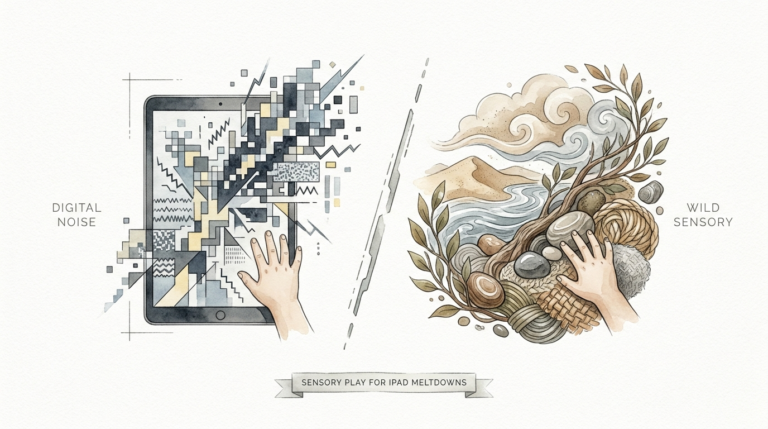
| Sensory Input | 2D Glass, Mono-tonal audio | 3D Texture, Full-spectrum light, varied smells |
| Dopamine Type | High-frequency, Low-effort (Cheap) | Delayed reward, High-effort (Deep) |
| Movement | Sedentary, “Tech-Neck” posture | Dynamic, Functional, Variable terrain |
| Social Nature | Performative, Asynchronous, Distant | Collaborative, Synchronous, Close-proximity |
| Attention | Fragmented (Avg. 47 seconds) | Sustained, Flow-state oriented |
Practical Tips for a Screen-Free Summer
If you want to survive the first 14 days, you need a strategy. This isn’t about willpower; it’s about environment design.
- The “Phone Bed”: Create a physical charging station away from the living areas. When the phone is “sleeping,” it is not in your hand.
- Analog Nav: Buy a paper map of your local area. Spend a Saturday exploring without using GPS. You will find that you actually remember the routes better when you have to pay attention to landmarks.
- The 10-Minute Rule: When you feel a compulsive urge to check social media, tell yourself you can do it in 10 minutes. Usually, the urge passes within 3 minutes if you engage in a physical task.
- The “Old Ways” Toolkit: Stock up on items that encourage deep play. A carving knife and some wood (for adults/older kids), a high-quality magnifying glass, a field guide to local birds, or a set of real tools for backyard projects.
Advanced Considerations: The 90-Day Reset
For those looking to truly “reclaim their biology,” a 90-day reset is the ultimate challenge. This is the approximate time it takes for your brain to down-regulate dopamine receptors that have been over-exposed to high-stimulation environments.
During this period, you may go through a “flatline”—a period where nothing feels particularly exciting. This is actually a sign that your brain is healing. It is recalibrating your reward threshold. Persistence during this phase is what separates a temporary “detox” from a permanent lifestyle shift.
As you progress, you will notice your internal monologue changing. Instead of thinking in “tweetable” moments or looking for the perfect photo op, you begin to experience events for their own sake. This is the return of the “social self,” where your identity is built on your actual experiences and relationships rather than your digital avatar.
Scenario: A Sample “Ancestral Saturday”
To help you visualize the concept, here is what a successful screen-free day looks like in practice.
06:30 AM: Wake up with the sun. No phone check. Drink water and step outside for 5 minutes of direct sunlight to set your cortisol rhythm.
08:30 AM: Morning “Foraging.” Visit a local farmer’s market. Interact with the growers. Smell the produce. Use a physical list and cash.
11:00 AM: Skill Building. Spend two hours practicing a “primitive” skill. This could be learning to tie five essential knots, identifying three edible plants in your backyard, or starting a fire with a bow drill.
01:30 PM: Communal Meal. No phones on the table. Focus on the taste, texture, and conversation.
04:00 PM: Unstructured Play. Go to a park or forest. Walk without a destination. Let “soft fascination” take over. Observe the patterns in the bark or the movement of the clouds.
08:00 PM: Digital Sunset. Light a candle or a small fire. Read a physical book or tell stories.
10:00 PM: Sleep in a dark, tech-free room.
Final Thoughts
The screen free summer challenge is not a punishment; it is a liberation. We have been sold a version of “connection” that has left us more isolated and anxious than any generation in history. By stepping back into the “old ways” of play, you are not losing the modern world; you are gaining yourself back.
Experiment with these techniques. Start small if you must, but start. Whether it is a weekend camping trip without devices or a full 90-day reset, the biological rewards are waiting for you. You will find that the world is much bigger, more colorful, and infinitely more interesting than anything a five-inch screen could ever show you.
Go outside. Get dirty. Reclaim your biology. The rectangles will still be there when you get back, but you might find you no longer need them quite so much.
Sources
1 naturalnavigator.com | 2 masterspas.com | 3 friendsoftheforestct.org | 4 ch-dc.org | 5 westgateresorts.com | 6 connecticutchildrens.org | 7 connecticutchildrens.org | 8 nih.gov | 9 ny.gov