reduce screen time for kids
Don’t just take away the screen—give them a sense of mastery. The most effective way to reduce screen time isn’t a lock-out app—it’s fostering a ‘Producer’ mindset. When kids build things, the screen loses its power.
The modern home often feels like a battlefield where parents fight for their children’s attention against an army of algorithms. You see the glazed look in their eyes as they scroll through endless short-form videos. It feels like an addiction because, in many ways, it is designed to be exactly that. However, the solution isn’t just to cut the Wi-Fi or hide the tablets.
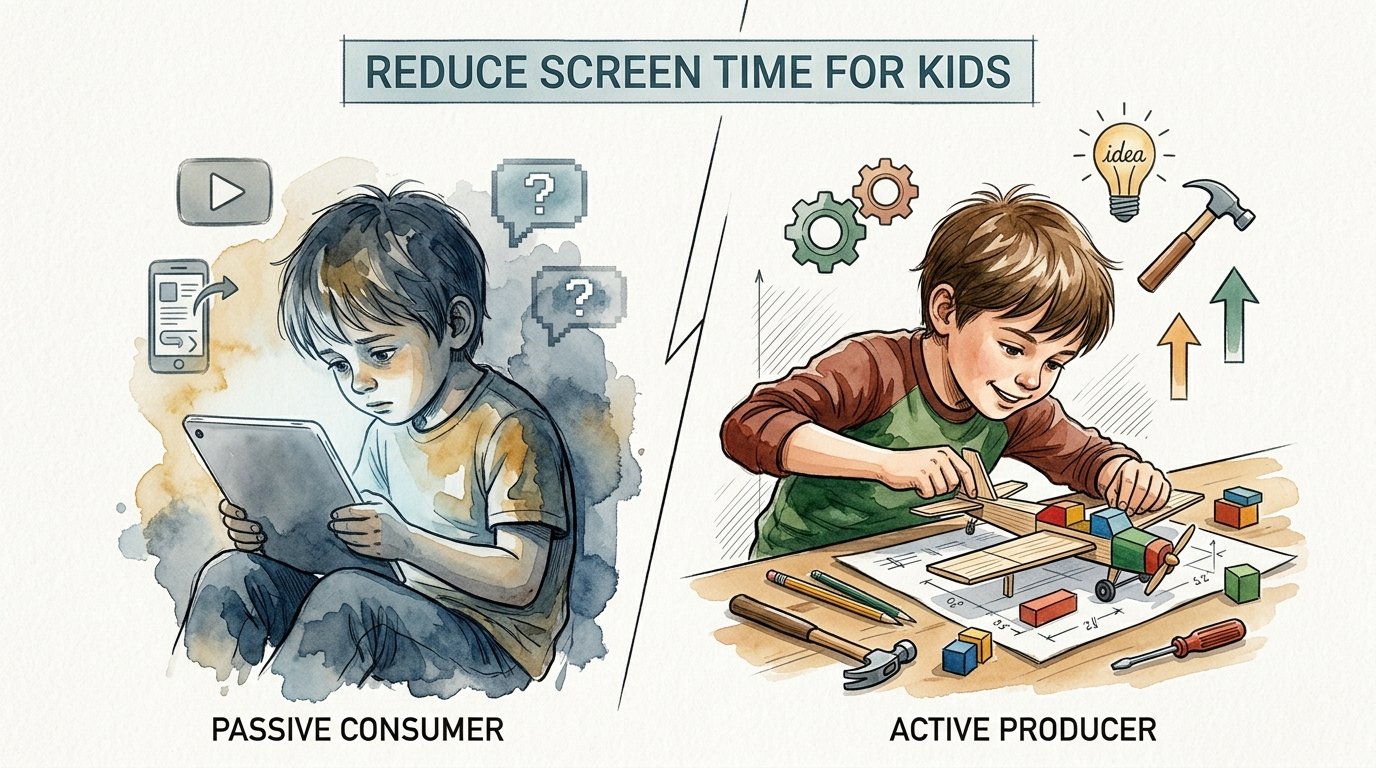
True digital balance comes from changing the relationship your child has with technology. Instead of being a passive audience member, they can become the director, the architect, or the engineer. This shift from “Passive Consumer” to “Active Producer” is the secret to lasting success. When a child learns to use a device as a tool rather than a toy, the nature of screen time changes forever.
This guide will show you how to move beyond simple restrictions. You will learn to guide your children toward a state of mastery where they control the machine. We will explore practical strategies, the science of digital habits, and the long-term benefits of this mindset shift.
reduce screen time for kids
To reduce screen time for kids effectively, we must first understand what we are actually fighting against. Screen time is not a single, uniform activity. It is a vast spectrum of digital experiences ranging from mindless scrolling to complex computer programming. Treating all minutes spent on a screen as “bad” is like treating all calories as “junk food.”
Reducing screen time is the process of minimizing passive consumption while encouraging real-world engagement and active digital creation. Passive consumption includes activities like watching autoplaying videos on YouTube or scrolling through social media feeds. These activities provide high-dopamine rewards with zero effort, which can quickly lead to compulsive behavior and “digital fatigue.”
In the real world, this looks like a child who spends four hours watching other people play Minecraft instead of playing it themselves. It is the teenager who scrolls through 300 TikToks before breakfast. By focusing on reduction, we aim to reclaim those hours for physical play, social interaction, and “Active Production.” This shift helps protect children from the documented risks of excessive use, such as sleep disruption and attention difficulties.
How to Foster a Producer Mindset
Moving a child from consumption to production requires a deliberate strategy. You cannot simply hand them a coding book and expect them to stop watching cartoons immediately. The transition happens in stages, moving from curiosity to skill-building and finally to independent creation.
Start by identifying their current “Passive” interests and finding a “Producer” alternative. If your child loves watching baking videos, don’t just turn off the TV. Hand them a mixing bowl and help them film their own “cooking show” on a phone. This bridges the gap between the digital world they enjoy and the physical world where they can achieve mastery.
Next, introduce tools that require active input. For younger children, this might be building-block games like Minecraft in “Creative Mode.” For older kids, it could involve digital art tablets, music production software like GarageBand, or beginner coding platforms like Scratch. The goal is to ensure that for every hour they spend consuming, they spend at least thirty minutes creating.
- The 1:1 Rule: Match every hour of entertainment with an hour of creation or physical activity.
- Curated Toolkits: Set up a “Production Station” with easy access to cameras, drawing tools, or microphones.
- Project-Based Goals: Instead of “playing on the computer,” give them a mission, like “design a house” or “edit a 1-minute family vlog.”
Benefits of the Producer Mindset
Shifting to an active role provides measurable benefits that extend far beyond just lower screen hours. When kids create, they engage their executive functions. They must plan, troubleshoot, and see a project through to completion. This builds resilience in a way that watching a video never can.
Active production also transforms the chemical reward system in the brain. Passive consumption triggers a “dopamine loop” where the brain craves the next hit of entertainment without effort. In contrast, creation provides “earned dopamine.” This is the sense of pride and accomplishment that comes from solving a difficult problem or finishing a piece of art.
Furthermore, these digital skills have massive real-world value. A child who learns to edit video or write basic code is developing a “Digital Literacy” that will serve them in any future career. They stop seeing technology as a magic box of entertainment and start seeing it as a powerful instrument for their own ideas.
Challenges and Common Mistakes
The biggest mistake parents make is relying solely on “lock-out” apps. While parental controls are useful tools for safety, they often lead to a “whack-a-mole” game. Tech-savvy kids quickly find ways to bypass time limits or use hidden browsers. Relying only on force creates a secretive environment rather than a collaborative one.
Another common pitfall is using judgmental language. Calling your child a “zombie” or labeling their interests as “brain rot” only builds resentment. This creates an “us versus them” dynamic that makes them more likely to retreat further into their devices. Instead of attacking the activity, focus on the missed opportunity for mastery.
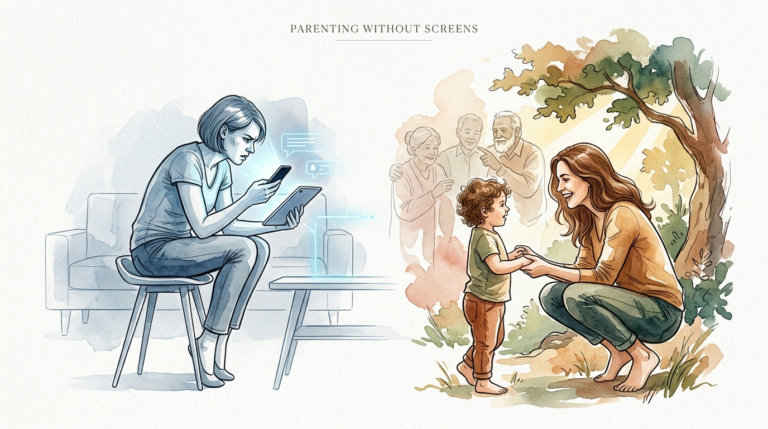
Finally, many parents forget to model the behavior they want to see. If you are constantly scrolling through your phone at the dinner table while telling your kids to “go outside,” the message is lost. Children are far more likely to adopt a producer mindset if they see you using technology to learn a new skill or build something meaningful.
Limitations of Screen Time Reduction
It is important to acknowledge that not all “Producer” time is a perfect substitute for the real world. Even if a child is coding for four hours, they are still sedentary and staring at a screen. Physical health, eye strain, and the need for face-to-face social cues remain vital concerns regardless of how “productive” the digital time is.
Digital creation can also be highly stimulating. Activities like competitive gaming or complex video editing can lead to “hyperarousal.” If a child is still agitated, irritable, or unable to sleep after their “Active” screen time, it suggests that the total volume of digital stimulation is still too high. A balanced “tech diet” must always include significant portions of “Analog” time.
Environmental factors also play a role. If a child’s social circle only interacts through a specific game or platform, cutting them off entirely can lead to social isolation. In these cases, the goal should be “Digital Wellbeing”—finding the minimum amount of screen time required for social health while maximizing the quality of those interactions.
Passive Consumer vs. Active Producer
Understanding the difference between these two states is the key to a healthy digital home. Use the table below to evaluate common activities in your household.
| Activity Category | Passive Consumer (The Goal to Reduce) | Active Producer (The Goal to Foster) |
|---|---|---|
| Video Content | Binging YouTube Shorts or Netflix. | Filming, editing, or storyboarding a short film. |
| Gaming | Endless, repetitive “clicker” games. | Building complex systems in Minecraft or Roblox. |
| Social Media | Scrolling through feeds or “liking” posts. | Curating a digital portfolio or writing a blog. |
| Art & Music | Listening to Spotify on repeat. | Learning to compose beats or digital painting. |
| Coding & Tech | Watching tech reviews. | Building a simple website or learning Scratch. |
Practical Tips for Immediate Results
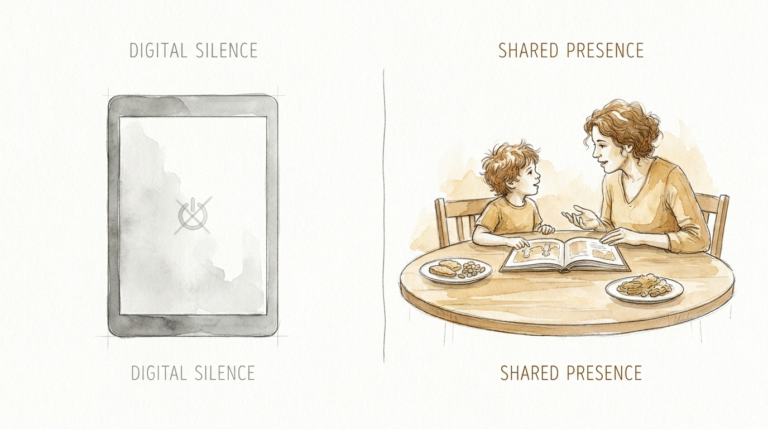
Start by creating “Sacred Spaces” in your home where screens are never allowed. The dinner table and bedrooms are the two most important zones. Removing the temptation of the screen in these areas forces the brain to look for other forms of engagement, such as conversation or reading.
Implement a “Screen-Free Sunday” or a specific “Unplugged Hour” for the whole family. During this time, every device goes into a designated “charging basket” in a common area. This levels the playing field and ensures that parents are not exempt from the rules they set for their children.
Use “Co-Engagement” as a bridge. Instead of sending your child away to their room with a tablet, sit with them. Ask questions about what they are doing. If they are playing a game, ask them to explain the strategy. This turns an isolated activity into a social one and allows you to steer them toward more creative features within the software.
- Charge Outside Bedrooms: Use a central charging station to prevent late-night scrolling.
- Visible Timers: Use physical kitchen timers so kids can see exactly how much “Consumption” time they have left.
- The “Boredom” List: Create a physical list of 20 non-screen activities they enjoy to consult when they feel “bored.”
Advanced Considerations for Teens
As children enter their teenage years, the strategy must shift from control to connection. Teens have a biological need for autonomy and social belonging. Simply banning apps will often backfire. Instead, focus on “Digital Citizenship” and self-regulation skills.
Encourage them to audit their own digital habits. Most smartphones now have “Screen Time” or “Digital Wellbeing” dashboards. Sit down once a week and look at the data together without judgment. Ask them, “How do you feel after spending two hours on this app?” Helping them realize for themselves that they feel “drained” or “anxious” is far more powerful than you telling them so.
Support their transition into professional-grade tools. If a teen shows interest in photography, help them get access to software like Adobe Lightroom. If they enjoy music, look into MIDI controllers. By treating their digital interests as serious hobbies or potential careers, you provide the “Mastery” they crave, which naturally displaces mindless consumption.
Example Scenario: The YouTube Transformation
Consider the case of a 10-year-old named Leo who spent three hours every day watching “Unboxing” videos and gaming influencers. His parents were frustrated by his irritability when the tablet was taken away. Instead of a total ban, they decided to foster a producer mindset.
They told Leo that if he wanted to watch YouTube, he had to spend half of that time learning how those videos were made. They bought him a cheap tripod for his phone and a basic green screen. Leo began researching lighting, scriptwriting, and simple editing techniques. He was still “on a screen,” but his brain was now working in overdrive.
Within three months, Leo’s passive consumption dropped by 60%. He was so busy “working” on his latest project—a stop-motion animation using his LEGO sets—that he often forgot to check his favorite channels. He wasn’t just a fan anymore; he was a peer to the creators he once only watched. His screen time became a source of pride rather than a source of conflict.
Final Thoughts
Reducing screen time is not about creating a tech-free vacuum. It is about filling that space with something better. By moving your child from a “Consumer” to a “Producer,” you give them the keys to the digital world. They learn that they are the masters of their tools, not the subjects of an algorithm.
This process takes time and patience. There will be days when the “Passive” pull of the screen is too strong, and that is okay. The goal is a long-term shift in mindset, not a perfect daily record. Focus on small wins and celebrate every time your child chooses to build, create, or learn something new.
As they grow, these habits of mastery will become their default setting. You aren’t just managing their minutes; you are building their character. Start today by looking for one area where your child can stop watching and start doing. The machine is a powerful servant, but a terrible master—help your children choose the right role.
Sources
1 thewhitehatter.ca | 2 techhealthyfamilies.com | 3 medlineplus.gov | 4 sbm.org | 5 expressable.com | 6 thevoiceofearlychildhood.com | 7 substack.com | 8 compuchild.com | 9 mayoclinic.org | 10 childrenandscreens.org | 11 gabb.com | 12 childrenandscreens.org | 13 sparklestories.com | 14 ckfamilyservices.org | 15 notconsumed.com | 16 hprc-online.org | 17 sparkandstitchinstitute.com | 18 mindfulmamamentor.com | 19 childrenandscreens.org