parenting without screens
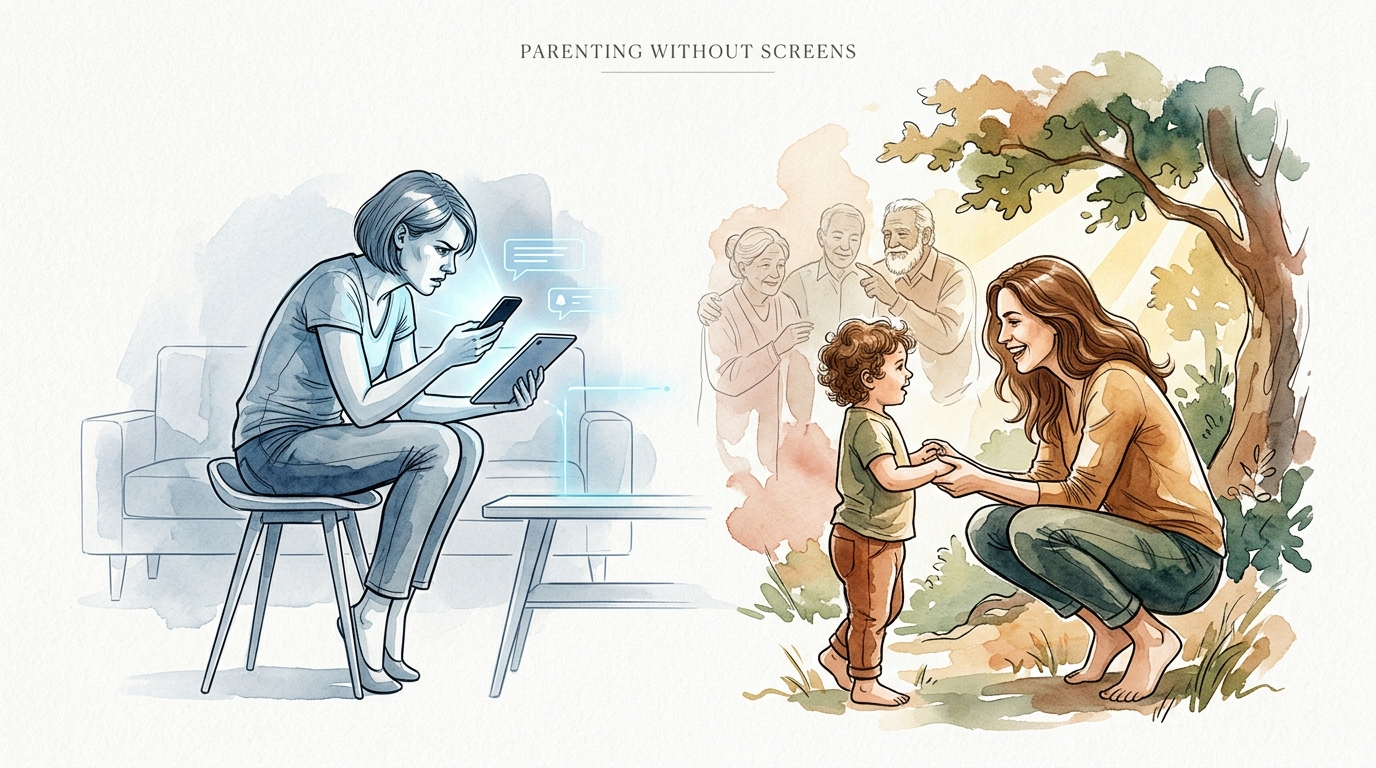
We’ve traded ancient connection for modern distraction. It’s time to reclaim the family bond. For thousands of years, humans raised children without screens. It’s not just possible—it’s powerful. Here is how we transitioned to a screen-free life.
Modern parenting often feels like a frantic race against an algorithm. We are surrounded by digital noise that promises to educate our children while giving us a moment of peace. Yet, many families are discovering that this convenience comes at a steep price. The “digital pacifier” might solve a tantrum today, but it often erodes the very connection we crave.
Living without screens is not about being anti-technology. It is about being pro-connection. It is a choice to prioritize human voices over speakers and physical movement over scrolling. This guide explores how to break the digital loop and return to a way of raising children that aligns with our ancestral roots.
parenting without screens
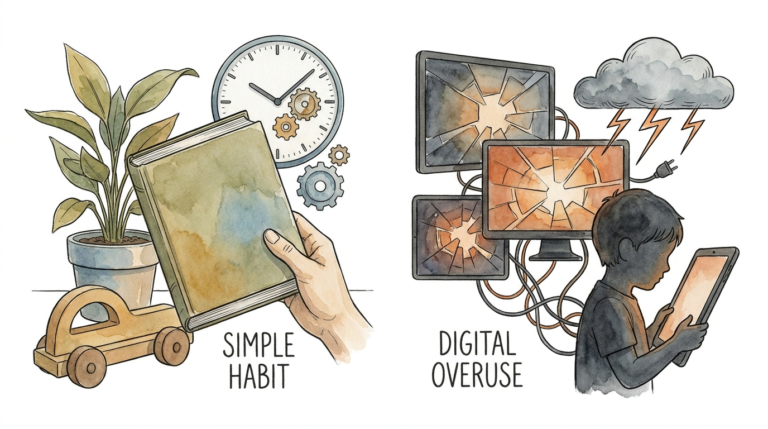
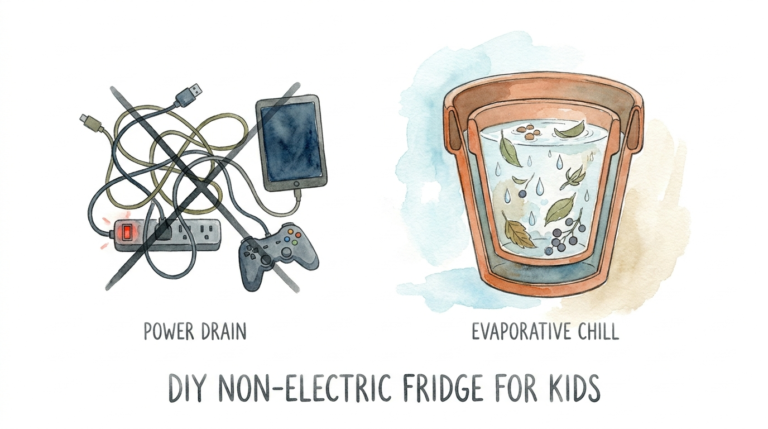
Parenting without screens is a lifestyle choice where digital entertainment—tablets, smartphones, televisions, and video games—is removed or severely restricted in a child’s daily environment. It is a commitment to providing an “unplugged” childhood. Instead of relying on a glowing rectangle for entertainment, children are encouraged to engage with the physical world, their peers, and their own imagination.
This approach exists because modern research and ancient wisdom both point to the same truth: children thrive on interaction, not observation. Real-world situations like waiting at a restaurant or a long car ride become opportunities for conversation or observation rather than “dead time” to be filled with media. It is about teaching a child how to exist in the world without a constant stream of external stimulation.
Think of screens like a high-sugar snack. They provide a quick hit of dopamine, but they don’t provide the long-term “nutrients” for brain development. Parenting without screens replaces that quick hit with the “slow food” of real-life experiences. It helps children develop a higher baseline for boredom, which is the necessary fertile ground for creativity and problem-solving.
The Hidden Cost of the Digital Pacifier
Current statistics show a staggering shift in how children spend their time. In 2024, nearly 81% of children under the age of 13 now have their own personal device. Even more alarming, daily YouTube usage for children under the age of two has risen from 24% to 35% in just five years. The average American child now clocks in over 7 hours of screen time daily, which is more than double the amount many parents believe is ideal.
The science of the developing brain suggests that this “monolithic” approach to screen time crowds out essential activities. Research from the American Psychological Association indicates that the harm signal is strongest when screens replace sleep and real-world interactions. A 2025 study in JAMA Pediatrics found that excessive screen time in late childhood is linked to depressive symptoms in early adolescence, often mediated by poor sleep and altered white matter organization in the brain.
Children need in-person, live interactions to achieve critical social and emotional developmental tasks. These include learning to identify and label emotions, regulating intense feelings through co-regulation with a caregiver, and developing empathy. Screens cannot provide the feedback loop required for these foundational skills. When a screen replaces a parent’s face, the child loses a piece of the social puzzle they are trying to solve.
How to Transition: A Step-by-Step Guide
Transitioning to a screen-free life can feel overwhelming, especially if your family is currently deep in the digital loop. You do not have to do it all in one day. Success comes from intentionality and a clear plan that everyone in the household understands.
Step 1: The Personal Audit
Analyze your own screen habits first. Children are natural mimics. If they see you constantly scrolling, they will view the device as the most important object in the room. Start by designating screen-free zones for yourself, especially during mealtimes and the first hour after you get home. Your presence is the primary alternative to the screen.
Step 2: The Soft Launch or the Hard Reset
Decide whether a phased approach or a “cold turkey” reset works best for your family. A “Screen-Free Week” is an excellent way to test the waters. It allows everyone to see what life looks like without the digital noise. Use this time to observe where the friction points are—usually during transitions like “after school” or “before dinner.”
Step 3: Creating a “Yes Space”
Set up an environment that encourages independent play. A “Yes Space” is a safe area where children can explore everything without hearing “no.” Stock this area with open-ended toys like blocks, silks, or sensory bins. When the environment is rich with possibilities, the child won’t feel the “pull” of the screen as strongly.
Step 4: Education over Prohibition
Explain the “why” to your children if they are old enough to understand. Tell them that screens are like “brain candy”—fun for a minute but they make our brains feel tired and grumpy if we have too much. Involving them in the process reduces the feeling of punishment and turns it into a family challenge.
The High-Energy Benefits: Why We Unplug
The benefits of an unplugged childhood are measurable and immediate. Parents often report a significant decrease in “digital tantrums”—the meltdowns that occur when a device is taken away. Without the constant dopamine spikes from apps, a child’s nervous system begins to regulate at a more natural pace. This leads to better emotional regulation and a calmer household environment.
Sleep quality improves dramatically. Blue light from screens disrupts the natural circadian rhythm, making it harder for children to fall and stay asleep. Removing screens, especially in the two hours before bed, allows the brain to produce the melatonin needed for deep, restorative rest. Better sleep results in improved focus and mood the following day.
Physical health is another major advantage. Screen-free children are naturally more active. They climb, jump, and run because they aren’t tethered to a chair. This movement is essential for developing gross motor skills and preventing the sedentary habits linked to childhood obesity. Furthermore, eye strain and “tech neck” issues disappear when children spend more time looking at the horizon than at a handheld display.
Navigating the Challenges and Pitfalls
One of the biggest hurdles is parental stress. Research shows that 49% of parents rely on screens daily because they lack affordable childcare or need to manage responsibilities like cooking dinner. Using a screen as a “babysitter” is often a survival mechanism. To avoid this pitfall, you must find “offline” ways to buy yourself time, such as involving children in chores or setting up a rotating toy system.
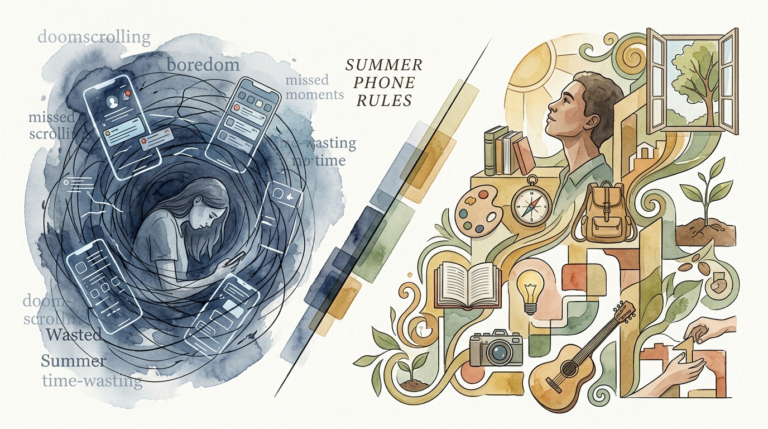
Social pressure can also be a challenge. When every other child at a birthday party has a tablet, your child may feel left out. This is where the “Modern Isolation vs Ancestral Connection” dynamic comes into play. You are choosing a different path that values community and presence. To combat isolation, seek out like-minded families or groups that prioritize outdoor play and real-world connection.
Another common mistake is failing to provide alternatives. You cannot simply remove the screen and leave a vacuum. If you take away the tablet but don’t provide books, art supplies, or your own attention, the experiment will fail. Boredom is good, but a complete lack of resources leads to frustration. Ensure your home is stocked with “low-tech” tools for engagement.
Limitations: When the Method Faces Reality
A completely screen-free life may not be practical for every family. For parents working from home without external help, a short period of screen time might be the only way to attend a critical meeting. In these cases, focus on quality over quantity. Choose high-quality, educational programming and watch it with the child to provide context and interaction.
Specialized needs must also be considered. For some neurodivergent children, certain digital tools can assist with communication or sensory regulation. In these instances, the screen is a therapeutic tool rather than a distraction. The goal is to avoid “mindless” consumption, not to eliminate every possible digital interaction that could provide a benefit.
Educational requirements in older children also present a boundary. As children enter middle and high school, computers become necessary for research and assignments. The transition from “no screens” to “functional screens” requires a gradual introduction of digital literacy. You are teaching them how to use technology as a tool, not a toy.
Comparison: Screen-Free vs. Screen-Managed
Most families fall into one of two categories: those who go entirely screen-free and those who manage screen time through strict limits. Both approaches have their place, depending on the age of the children and the family’s lifestyle.
| Factor | Screen-Free Approach | Screen-Managed Approach |
|---|---|---|
| Complexity | High initial effort to change environment. | Moderate; requires constant monitoring. |
| Behavioral Impact | Fewest “digital tantrums”; better regulation. | Potential for “limit-testing” and daily negotiations. |
| Social Integration | May feel like an outsider in tech-heavy circles. | Easier to “fit in” with modern peer groups. |
| Skill Development | High focus on physical and imaginative play. | Mix of physical and early digital literacy. |
Practical Tips for an Unplugged Home
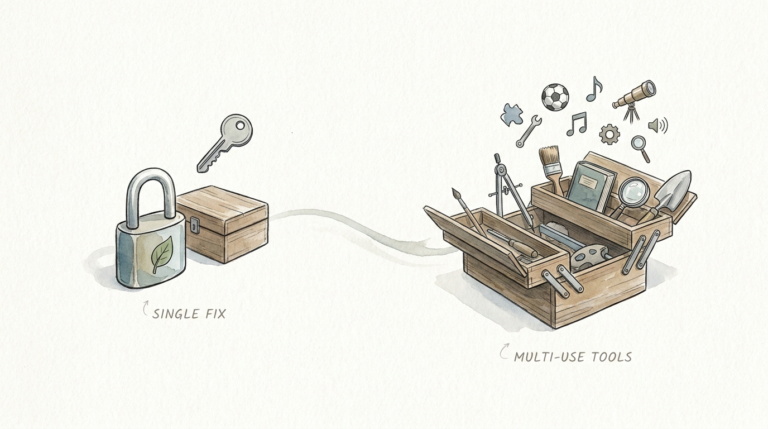
Success in a screen-free home depends on having a “toolkit” of activities ready to go. When a child says they are bored, do not rush to entertain them immediately. Allow them to sit in that boredom for a few minutes; it is often the precursor to their best ideas. However, having a few “go-to” options can help during difficult transitions.
- Toy Rotation: Keep only a few toys out at a time. Rotate them every week to keep the environment feeling “new” and exciting.
- Audiobooks and Music: These provide a narrative or rhythm without the visual overstimulation of a video. They are great for long car rides.
- The “Boredom Jar”: Fill a jar with scraps of paper containing ideas like “draw a map of the house” or “build a fort with three chairs.”
- Nature as the Teacher: Spend as much time outside as possible. The natural world offers infinite sensory input that no screen can match.
- Household Participation: Let children help with cooking, laundry, or gardening. It gives them a sense of purpose and teaches valuable life skills.
Advanced Considerations: Future-Proofing Kids
A common concern is that children will be “behind” in a tech-driven world if they don’t use screens early. However, research suggests that digital literacy is easily acquired later in life. A child who has developed strong critical thinking, focus, and social skills will be better equipped to handle the complexities of the internet than a child who has been “connected” since infancy.
Serious practitioners of screen-free parenting often focus on building “cognitive endurance.” This is the ability to focus on a single task for a long period without needing a “ping” or a notification. By protecting the brain’s attention span during the formative years, you are giving your child a competitive advantage in a world that is increasingly distracted.
Consider the role of “human-centric” technology. This might include using a digital camera for photography or a simple mp3 player for music. These devices perform a single function without the “sticky” features of social media or gaming apps. They allow children to engage with technology as a creative tool rather than a passive consumption device.
Example: A Day in an Unplugged Life
Consider a typical Saturday for a screen-free family. Instead of waking up and reaching for a tablet, the children head to the kitchen to help make pancakes. The morning is spent at a local park or on a nature trail, where they collect “treasures” like interesting rocks or leaves. There is no “background TV” noise; instead, there is music or the sound of birds outside.
After lunch, while the parents handle chores, the children engage in “independent play” with blocks or art supplies. They might experience ten minutes of complaining about being bored, but soon they are deep in a game of make-believe. The evening ends with a family board game and a long session of reading aloud before bed. The atmosphere is quiet, connected, and focused on the people in the room.
This scenario demonstrates that the absence of screens doesn’t leave a hole; it leaves space for the family to actually “be” together. The rhythm of the day is dictated by the needs of the people, not the demands of a device.
Final Thoughts
The transition to a screen-free life is a journey of reclaiming your family’s attention. It is a bold move in a world that rewards distraction. By choosing connection over convenience, you are giving your children a gift that will last a lifetime: the ability to be present, creative, and emotionally resilient.
Do not strive for perfection. Strive for progress. Even reducing screen time by half can have a profound impact on your child’s well-being. Start small, be consistent, and watch as your family bond strengthens in the quiet spaces that screens used to fill. You have the power to create a home where human connection is the primary source of entertainment.
Explore related ideas like “slow parenting” or “ancestral health” to further deepen your understanding of this lifestyle. The more you align your daily habits with your biological needs, the more natural and rewarding parenting becomes. It is time to unplug the devices and plug back into the family.
Sources
1 sparklestories.com | 2 thechildunplugged.com | 3 columbiadoctors.org | 4 mayoclinic.org | 5 ckfamilyservices.org | 6 boulderchildwhisperer.com | 7 pewresearch.org | 8 luriechildrens.org | 9 recordablebookbuddy.com | 10 childrenandscreens.org | 11 henryford.com | 12 first5california.com | 13 medium.com | 14 reddit.com | 15 facebook.com | 16 facebook.com | 17 fiu.edu | 18 daar.com.au | 19 modernparentingsolutions.org