how to limit screen time for toddlers
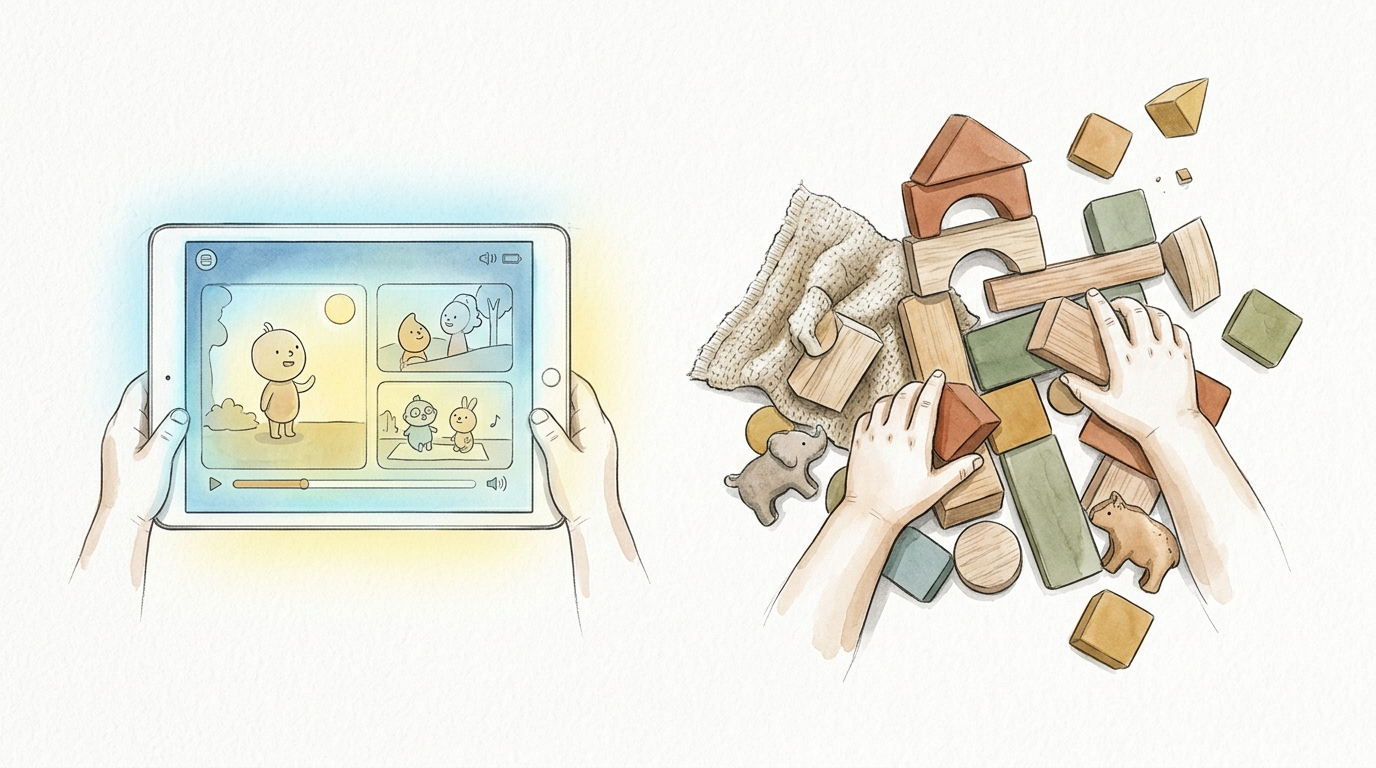
One device dictates the story; ten simple tools let them create it. An iPad does one thing: it captures attention. But raw materials like wood, fabric, and sand invite imagination, problem-solving, and motor skill development. Here is how we transitioned from a screen-centric home to a creative workshop for our toddler. ? #ToddlerLife #PlayBasedLearning #NoScreens
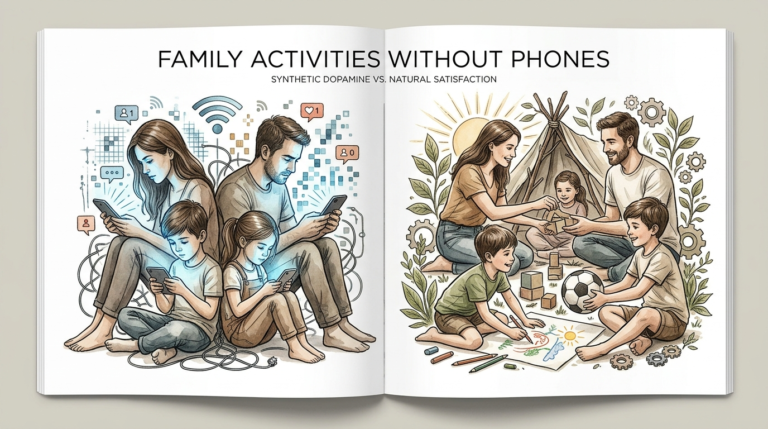
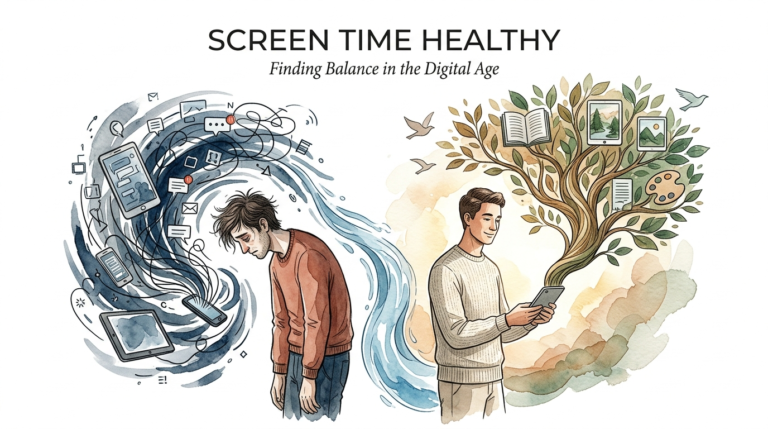
Parents today are locked in a silent battle with glowing rectangles. These devices offer a temporary “pause button” for busy households, but the long-term cost to a child’s development is becoming clearer every year. Transitioning away from constant digital stimulation isn’t just about taking something away. It is about replacing a passive experience with an active, tactile world that speaks to a child’s natural curiosity.
Creating a “creative workshop” at home changes the family dynamic. Instead of a child asking for a show, they reach for a bin of wooden blocks or a jar of smooth river stones. This shift requires intention, a bit of mess, and a new perspective on what “entertainment” looks like for a growing mind.
how to limit screen time for toddlers
Limiting screen time for toddlers means reclaiming the physical space and the schedule from digital interference. According to the latest 2024 and 2025 guidelines from the American Academy of Pediatrics, children under 18 to 24 months should avoid screens entirely, with the exception of video chatting with family. For children aged two to five, the recommendation is a maximum of one hour of high-quality, educational programming per day, ideally viewed with a caregiver.
Real-world situations often make these limits difficult to maintain. Screens are used as digital pacifiers in restaurants, “babysitters” during conference calls, and distractions during grocery store runs. However, the mechanism of the screen—fast-paced imagery and instant rewards—can overstimulate a toddler’s developing dopamine system. This makes the real world, which moves much slower, feel boring or frustrating by comparison.
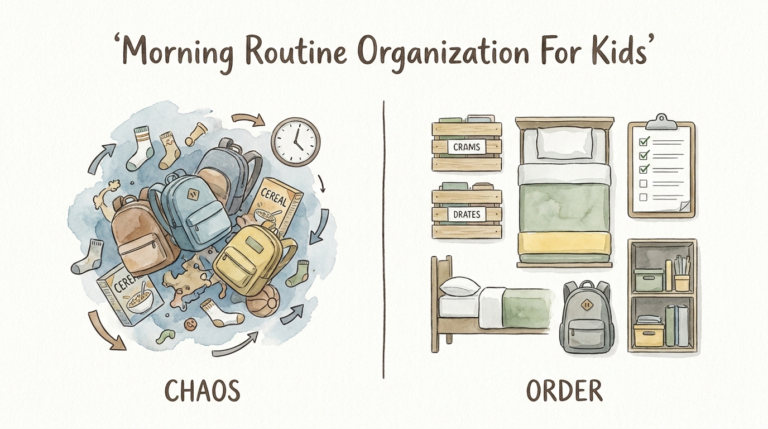
Limiting use starts with environmental design. If the tablet is always on the coffee table, it will be the first thing a child reaches for. Moving devices to high shelves or “charging stations” out of sight is the first practical step. This creates a friction-filled path to the screen and an open, frictionless path to creative tools.
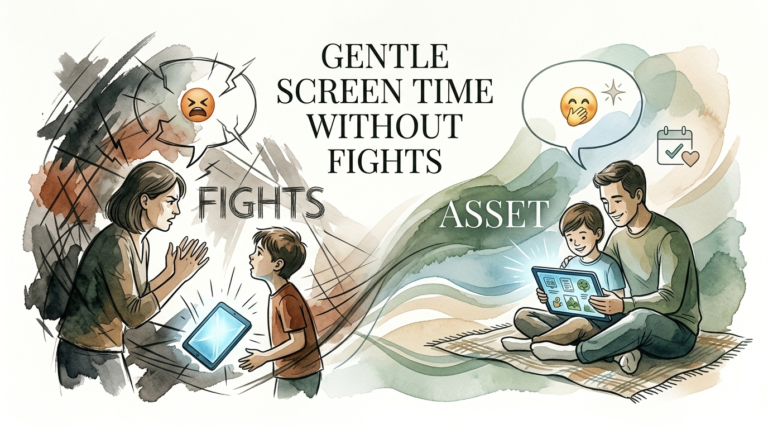
Consistency is the second pillar of limitation. Toddlers thrive on predictability. If the rules about the iPad change based on the parent’s stress level, the child will constantly test those boundaries with tantrums. Establishing clear “screen-free zones,” such as the bedroom and the dining table, helps define where digital life ends and real life begins.
How to Build the Creative Workshop
Building a creative workshop does not require a massive budget or a dedicated playroom. It requires a “yes” space where materials are accessible and the “wrong” way to play does not exist. This process begins by auditing the current toy collection and swapping “one-hit-wonder” toys—those that only do one thing when a button is pressed—for open-ended materials.
Start with a low, accessible shelf. An IKEA Billy or Flisat unit works perfectly for this. Instead of a toy box where everything is buried in a jumbled mess, use small, clear bins to display materials. Seeing the materials “beckon” to them is what triggers a toddler’s internal drive to create.
Introduce materials in “invitations to play.” A tray with a ball of playdough, three sticks, and some dried pasta is an invitation. You are not telling them what to make; you are providing the components of a story. The process usually follows these steps:
- Selection: The child chooses a bin based on their current interest.
- Exploration: They touch, stack, or move the materials to understand their properties.
- Construction: They begin to build a world, whether it is a “mountain” of fabric or a “river” of blue sand.
- Iteration: They change the plan as they go, learning that failure is just a new direction.
Focus on “loose parts.” These are materials with no specific set of instructions. Think of fabric scraps, cardboard tubes, pinecones, and wooden rings. These items are the backbone of a creative workshop because they can be a hat one minute and a piece of fruit the next. This flexibility is the polar opposite of a digital app where the path is pre-coded.
Benefits of a Play-Based Environment
Active play builds a child’s brain in ways a screen never can. When a toddler stacks physical blocks, they are learning about gravity, balance, and spatial awareness in a three-dimensional environment. This “heavy work” for the brain and muscles improves proprioception—the child’s understanding of their own body in space.
Fine motor skills see a massive boost in a creative workshop. Threading large beads, using safety scissors, and pinching clay strengthens the small muscles in the hands. These are the same muscles needed for writing, buttoning clothes, and using utensils later in life. Digital “swiping” uses only a single, repetitive motion that does not offer the same developmental value.
Emotional regulation is perhaps the most significant benefit. Screens provide an artificial “calm” that often ends in a “screen-time hangover”—a meltdown when the device is turned off. In contrast, creative play allows a child to work through frustrations in real-time. If a tower falls, they must decide to cry or rebuild. This builds resilience and executive function.
Language development flourishes in a workshop setting. While a screen talks *at* a child, open-ended play encourages a child to talk *with* themselves or a caregiver. They narrate their actions, label their creations, and engage in “serve-and-return” interactions that are the foundation of communication.
Challenges and Common Mistakes
The transition from screens to a creative workshop is rarely a straight line. The first major challenge is “boredom.” A child accustomed to the high-intensity stimulation of YouTube may find a bin of sand uninteresting at first. This is a form of digital withdrawal. Parents often make the mistake of giving in during this “boredom gap” instead of letting the child sit with the feeling until their imagination kicks in.
Mess is the second hurdle. A creative workshop is, by definition, messy. Sand will spill, and paint will occasionally miss the paper. Many parents abandon the workshop idea because the cleanup feels overwhelming. To avoid this, use “splat mats” or old shower curtains under the work area. Limit the amount of material in each bin—if they only have a small cup of sand, the mess can only be so big.
Another common mistake is “helicoptering” the play. Parents often feel the need to show the child the “correct” way to use the tools. This kills creativity. If the child wants to use a wooden spoon as a bridge for their cars, let them. The moment a parent takes over, the workshop becomes a classroom, and the child loses interest.
Finally, don’t ignore the “passive screen” effect. Leaving a TV on in the background, even if the child isn’t watching it, has been shown to reduce the quality of parent-child interaction and shorten the child’s focus during independent play. The workshop works best when the house is quiet and the focus is on the materials at hand.
Limitations of the Workshop Method
A creative workshop is not a magic solution for every moment of the day. There are realistic constraints that every family faces. Space is a major one. If you live in a small apartment, you cannot have a sand table and a wood-working bench. In these cases, the workshop must be “rotational.” Keep most materials in a closet and bring out only one or two at a time to keep the floor clear.
Time is another boundary. Setting up a creative invitation takes more effort than handing over a tablet. On days when a parent is sick or working from home under a deadline, the “creative workshop” might feel like a burden. It is okay to recognize that screens can be a tool in those specific, limited scenarios. The goal is balance, not perfection.
Physical safety is a boundary for younger toddlers. Loose parts like small stones or beads can be choking hazards. A workshop for a 12-month-old looks very different from one for a 3-year-old. Parents must constantly curate the materials to match the child’s developmental stage, which requires ongoing vigilance and effort.
The Single-Purpose Screen vs. The Multi-Purpose Playkit
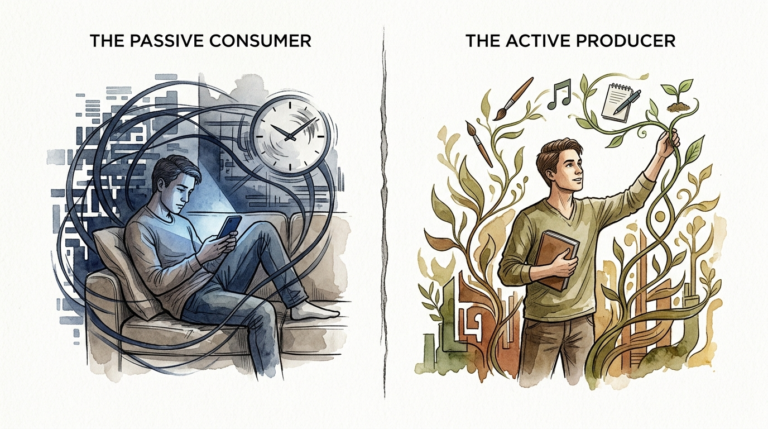
Choosing between a digital device and a physical playkit is a choice between consumption and creation. The following table highlights the fundamental differences in how these two “tools” interact with a toddler’s development.
| Feature | The Single-Purpose Screen | The Multi-Purpose Playkit |
|---|---|---|
| Cognitive Role | Passive Consumer | Active Creator |
| Sensory Input | Sight and Sound only | Touch, Weight, Texture, Sound, Sight |
| Problem Solving | Pre-defined paths | Infinite possibilities |
| Attention Span | Fragmented (fast cuts) | Deep Focus (flow state) |
| Motor Skills | Low (Swiping) | High (Grasping, Stacking, Cutting) |
Practical Tips for a Seamless Transition
Making the switch does not have to happen overnight. Start by “modeling” the behavior you want to see. If you want your child to play with clay, sit on the floor and start molding something yourself without inviting them. Curiosity will almost always draw them in. This is much more effective than telling them to “go play.”
Use a “visual timer” to manage the end of screen time. Toddlers have a poor sense of time, so a clock that shows a red sliver disappearing helps them anticipate the transition. When the timer goes off, the screen goes away, and a “bridge” activity begins. A bridge activity is something high-sensory, like a snack or a quick water-play session, that helps the brain shift gears.
Keep the “low-friction” materials ready. These are items that require zero setup. A basket of silk scarves or a tub of large wooden blocks can be used instantly. If the child has to wait ten minutes for you to prepare a “Pinterest-perfect” craft, they will likely ask for the iPad in the interim.
Implement a “toy rotation” system. Instead of having thirty toys out at once, display only five or six. When the child stops engaging with them, swap them for “new” items from the closet. This keeps the environment fresh and prevents the “toy fatigue” that leads back to screens.
Advanced Considerations: The Psychology of Flow
For the serious practitioner of play-based learning, the ultimate goal is to facilitate a “flow state.” This is the psychological state where a person is so immersed in an activity that they lose track of time. In toddlers, this looks like intense, quiet concentration on a task, such as pouring water between two cups or carefully lining up animals.
Achieving flow requires the right level of “challenge.” If a task is too easy, the child gets bored. If it is too hard, they get frustrated. The creative workshop should be “scaffolded.” This means providing tools that are just slightly above their current skill level, requiring them to stretch their abilities.
Consider the “Theory of Loose Parts,” originally proposed by architect Simon Nicholson. The theory suggests that the more “variables” an environment has, the more creative the child will be. A plastic slide is a constant; it is always a slide. A pile of cardboard boxes is a variable; it is whatever the child needs it to be. Expanding your workshop to include “industrial” loose parts like PVC pipes, tires, or wooden planks (for outdoor play) can take their problem-solving to a professional level.
Scenario: The Rainy Afternoon Shift
Imagine a Tuesday at 3:00 PM. It has been raining for hours. Usually, this is when the “tablet trance” begins because everyone is tired. Instead of the iPad, you pull out the “Texture Lab” bin. This bin contains a bag of dried lentils, three different sized funnels, and a collection of old yogurt containers.
You dump the lentils into a large under-bed storage tub on a splat mat. You don’t say anything. You just start pouring the lentils through a funnel. The sound of the “rain” hitting the plastic tub catches the toddler’s attention. Within minutes, they are sitting in the tub, feeling the cold seeds on their skin and experimenting with volume.
This activity lasts for forty-five minutes. During this time, the child is practicing fine motor control, learning about mathematical volume, and self-regulating through sensory input. When the activity is done, you spend five minutes sweeping up the strays. The child is calm, tired in a “good” way, and ready for a screen-free dinner. No meltdowns occurred. No batteries were required.
Final Thoughts
Transitioning from a screen-centric home to a creative workshop is a gift to your child’s future self. It builds the “mental muscles” of focus, creativity, and resilience that are increasingly rare in a digital world. While the iPad offers a quick escape, the workshop offers a deep connection to the physical world and the child’s own capabilities.
Start small. You do not need a complete overhaul today. Simply move the tablet to a high shelf and put out a basket of blocks. Observe how your child reacts to the space. You might be surprised to find that their imagination is far more powerful than any app ever created.
The mess will fade, but the neural pathways built during these years of active play will last a lifetime. Encourage the curiosity, embrace the sand on the floor, and watch as your toddler transforms from a viewer into a maker. Deepening your understanding of “open-ended play” or “Montessori environments” can provide even more tools for this journey, but for now, just let them create.
Sources
1 vanicraftstudio.com | 2 playgroupwa.com.au | 3 thenoteninjas.com | 4 quora.com | 5 childrenandscreens.org | 6 choc.org | 7 curiousneuron.com | 8 pinnaclemontessori.com | 9 developlearngrow.com | 10 kidsusamontessori.org | 11 cacfp.org | 12 aacap.org | 13 treehouseschoolhouse.com | 14 modernparentsmessykids.com | 15 united4children.org | 16 msu.edu | 17 childrenandscreens.org | 18 mayoclinic.org | 19 youtube.com | 20 youtube.com | 21 harvard.edu | 22 aap.org | 23 edsurge.com | 24 bunnyhopkinstoys.com | 25 creativecontinuumaz.com | 26 ourplayfullearningjourney.com | 27 getmanatee.com