family routines
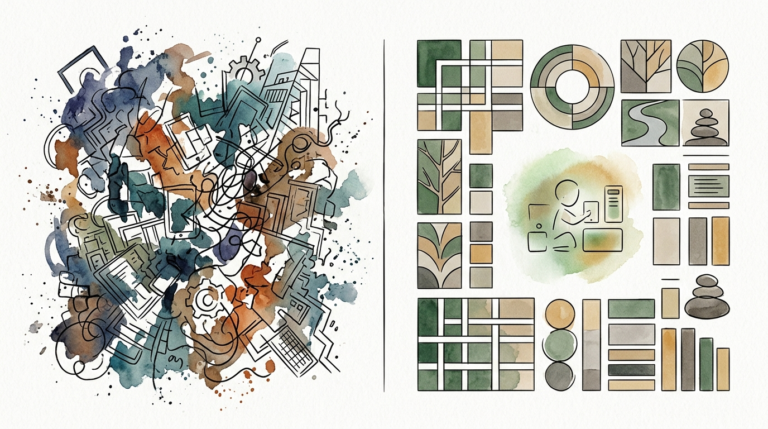
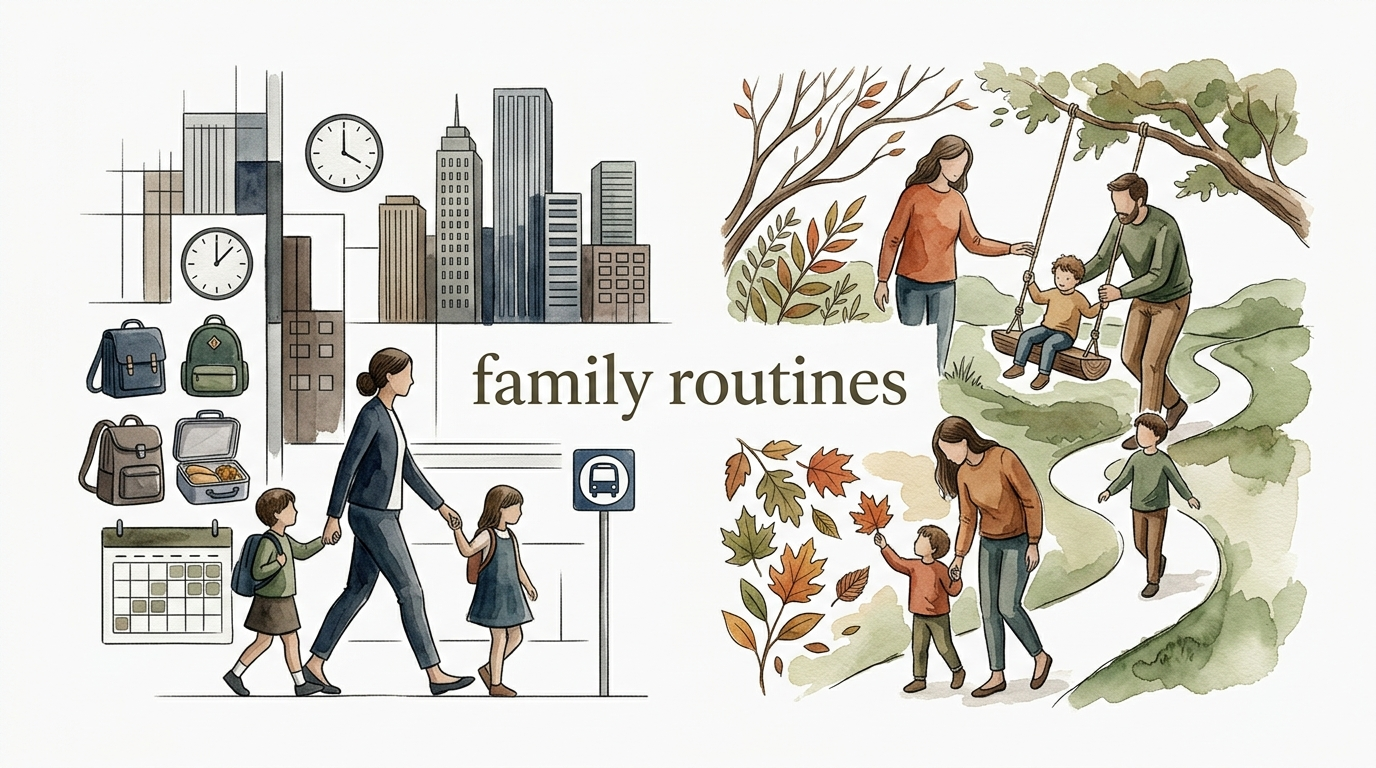
Trade the stressful schedule for a peaceful rhythm. Urban rigidity focuses on the clock. Wild rhythm focuses on the flow. Here is how to transition your family from a stressful schedule to a natural, peaceful daily rhythm.

Modern life often feels like a race against an invisible opponent. We wake up to jarring alarms. We rush through breakfasts. We spend our days meeting external deadlines that rarely align with how we actually feel. This is urban rigidity. It is a system built on efficiency and output, but it often leaves families feeling frazzled and disconnected.

Transitioning to a wild rhythm is not about abandoning your responsibilities. It is about shifting the foundation of your day from the ticking clock to the natural needs of your household. You can find a pace that breathes. This guide will show you how to move away from the frantic “hurry up” culture and toward a lifestyle that nourishes your family’s soul.
family routines
Family routines are the invisible architecture of a stable home. They are the repeated patterns of behavior that tell every member of the family what to expect next. While a schedule is a list of tasks tied to specific times, a rhythm is a sequence of events tied to the needs of the people involved.
Think of family routines as the heartbeat of your household. When the rhythm is steady and predictable, everyone feels safe. Scientific research suggests that children who grow up with predictable daily routines are less likely to struggle with attention problems or time management as adults. These routines create a sense of order in a world that often feels chaotic and overwhelming.
In a real-world setting, a routine might look like the “bath-book-bed” sequence. It does not matter if the bath happens at 6:45 PM or 7:15 PM. What matters is the order. The bath signals that the day is closing. The book provides connection. The bed offers rest. This predictable flow reduces anxiety because the child does not have to wonder what is coming next. They can simply exist in the moment.
Routines also serve as a “healing balm” for behavioral issues. When children know what to expect, their need to negotiate every transition disappears. Cooperation becomes the default because the flow of the day is a shared understanding rather than a series of demands from a parent.
How It Works: Establishing Your Natural Rhythm
Shifting from a schedule to a rhythm requires a change in perspective. You are moving from “What time is it?” to “What is the energy of the room right now?” This process works by establishing “anchors” throughout the day that guide your family through transitions without the need for constant verbal instruction.
The Power of Anchors
Anchors are the non-negotiable points in your day that remain consistent regardless of what else happens. Common anchors include mealtimes, wake-up rituals, and bedtimes. Everything else flows around these points. If lunch is an anchor, the activities leading up to it can expand or contract based on interest and energy levels.
In-Breath and Out-Breath
The Waldorf educational philosophy describes a healthy day as having an “in-breath” and an “out-breath.” An in-breath is a time of focus, quiet, and gathering in. Think of reading a book, drawing, or eating a meal. An out-breath is a time of expansion, movement, and interaction with the world. This might be playing outside or running errands. A peaceful rhythm balances these two energies. If you have too many out-breaths in a row, your children will likely become overstimulated and prone to meltdowns.
Visual Cues and Rituals
To make a rhythm work without a clock, you need sensory signals. Instead of telling a child it is time to clean up, you might play a specific “clean-up song.” Instead of announcing dinner, you might light a candle on the table. These rituals act as subconscious triggers that prepare the brain for the next phase of the day.
Benefits of a Flow-Based Life
Choosing a natural rhythm over a rigid schedule offers measurable advantages for both physical health and emotional wellbeing.
Reduced Cortisol and Stress: When the day is a series of “hurry up” commands, the body stays in a state of low-level fight-or-flight. Transitioning to a flow-based rhythm lowers cortisol levels. Everyone in the family becomes more resilient and less reactive to small stressors.
Synchronized Circadian Rhythms: Aligning your daily activities with natural light and biological needs helps regulate the suprachiasmatic nucleus (SCN), the brain’s internal clock. This synchronization leads to better sleep quality, improved mood regulation, and more consistent energy levels throughout the day.
Enhanced Child Autonomy: When a rhythm is well-established, children start to anticipate needs. A toddler might see the table being cleared and automatically go to get their shoes for outdoor play. This builds confidence and reduces the “power struggles” that often define morning and evening routines.
Deepened Connection: A rhythm creates “Sabbath moments”—intervals of calm and connection. Because you aren’t constantly checking your watch, you can actually look your child in the eye during a conversation. You are present in the flow rather than rushing toward the next item on a checklist.
Challenges and Common Mistakes
Moving away from urban rigidity is not always easy. The world around us is still built on clock-time, and this creates friction.
The “Transition Tantrum”: When you first shift your approach, things might get messier before they get better. Children who are used to being “managed” by a schedule may feel disoriented by the newfound flexibility. They might push boundaries or seem more clingy. Consistency in the new rhythm is the only way through this phase.
Overcomplicating the Flow: Many parents try to create “perfect” rhythms with too many steps. If your rhythm has fifteen distinct rituals for breakfast, it becomes just as rigid as the schedule you were trying to escape. Keep it simple. Start with one or two anchors and let the rest evolve naturally.
Ignoring Individual Needs: Every person has a different chronotype. Some are “larks” (morning people), and some are “owls.” A common mistake is trying to force a family rhythm that only suits the parent’s energy. A truly natural rhythm leaves room for individual variations in energy and appetite.
Limitations: When the Rhythm Must Yield
A wild rhythm is powerful, but it is not a magic solution for every situation. There are times when urban rigidity is a necessary tool.
Medical appointments, school start times, and professional deadlines are fixed points that you cannot ignore. A family that refuses to look at a clock may find themselves under immense external pressure. The goal is to keep the “wild rhythm” as the home’s baseline while maintaining the ability to switch into “clock-time” when the situation demands it.
Travel is another area where rhythms often fail. Different time zones and unfamiliar environments disrupt the biological cues that sustain your home flow. During these times, it is better to lean on very simple, portable rituals—like a specific bedtime prayer or song—rather than trying to maintain a full daily cycle.
Finally, some neurodivergent children may actually find “flow” to be stressful. While many thrive on predictable sequences, others require the extreme precision of a time-based schedule to feel safe. Always observe the person in front of you rather than adhering strictly to a philosophy.
Comparing Urban Rigidity vs. Wild Rhythm
To visualize the difference between these two approaches, consider the following factors:
| Feature | Urban Rigidity | Wild Rhythm |
|---|---|---|
| Primary Focus | The Clock / Deadlines | Energy / Biological Cues |
| Motivation | Efficiency and Output | Connection and Wellbeing |
| Transitions | Abrupt / Alarms | Gentle / Sensory Cues |
| Flexibility | Low / High Stress | High / Low Stress |
| Atmosphere | Frazzled / Rushed | Calm / Intentional |
Practical Tips for a Smooth Transition
Implementing a natural rhythm does not have to happen all at once. Small adjustments can create a ripple effect of peace throughout your home.
Morning “Slow Starts”: Ditch the alarm clock if possible. Use natural light to wake the family. Start the day with five minutes of “connection before direction”—cuddles, quiet talk, or a shared song before any instructions are given.
The “Sun-Down” Ritual: As the sun sets, begin a gradual dimming of the house. Switch off overhead lights and use lamps with warm tones. This signals to the brain that it is time to produce melatonin. Avoid screens in the two hours before bed to protect this natural process.
Mealtime Sanctuary: Make mealtimes a screen-free, work-free zone. Light a candle or play soft music. This turns a functional necessity into a rhythmic anchor that grounds the whole family.
Strewing and Invitations: Instead of directing your child’s play through a schedule, “strew” interesting items—books, nature finds, art supplies—in common areas. This invites the child into an “in-breath” activity without you having to manage their time.
Weekly Themes: Extend your rhythm to the week. Perhaps Mondays are for “Laundry and Soup,” and Fridays are for “Forest Walks.” This gives younger children a sense of time they can actually understand.
Advanced Considerations for Practitioners
For those who want to deepen their practice, consider how the environment and the seasons impact your family’s internal flow.
Light Hygiene: The biological clock is primarily entrained by light. Morning exposure to blue-rich sunlight is essential for setting the “wakefulness” timer. In the evening, the absence of this light is just as important. Advanced practitioners use red-shifted lighting in the evenings to mimic the setting sun and protect the family’s circadian health.
Seasonal Shifts: Your rhythm should not be the same in December as it is in July. In the winter, the “in-breath” naturally lengthens. There is a greater need for sleep, warmth, and indoor activities. In the summer, the “out-breath” dominates. Acknowledge these shifts rather than fighting them.
Inner Work of the Adult: The family rhythm is only as stable as the parents who lead it. If you are rushing internally, your children will feel that “urban rigidity” even if you aren’t looking at a clock. Practicing your own rhythmic habits—like a morning meditation or a consistent work block—allows you to hold the space for your children’s flow.
Example Scenario: The Morning Shift
Imagine the “Urban Rigidity” morning: The alarm blares at 6:30 AM. Mom shouts from the kitchen that everyone needs to be in the car by 7:15. The kids are groggy. There is a fight over a missing shoe. Breakfast is a granola bar eaten in the backseat. Everyone arrives at their destination with high heart rates and frayed nerves.
Now, imagine the “Wild Rhythm” morning: The room brightens naturally as the sun rises. Mom enters the room and sits on the edge of the bed for a few minutes of quiet connection. The “anchor” of breakfast is a warm meal eaten together at the table. While eating, they talk about what they might see on the way to school. There is a “transition song” played while putting on shoes. Even if they leave the house at the same time as before, the internal state is entirely different. The focus was on the flow of the morning, not the pressure of the 7:15 deadline.
Final Thoughts
Trade the stressful schedule for a peaceful rhythm. It is a choice you make every morning to prioritize connection over a checklist. Urban rigidity may get things done, but a wild rhythm allows your family to thrive. By focusing on the “breath” of your day and leaning into natural anchors, you create a home environment where everyone feels seen, safe, and supported.
Consistency is the secret ingredient. You don’t need a perfect plan; you need a recognizable pattern. Start small, observe your family’s natural energy, and adjust as you go. You are not just managing time; you are cultivating a culture of peace that your children will carry with them for the rest of their lives.
Experiment with these concepts. Notice how the atmosphere in your home changes when you stop fighting the clock. You might find that by slowing down and following the flow, you actually accomplish more of what truly matters. Explore related ideas like mindful parenting or nature-based learning to further enrich your family’s unique rhythm.
Sources
1 meaganrosewilson.com | 2 waldorfish.com | 3 lesliemartino.com | 4 seasonsofseven.com | 5 societyofcare.org | 6 albany.edu | 7 simplicityparenting.com | 8 starpathlearning.com | 9 libbyapp.com | 10 wakeforestpediatrics.com | 11 alabamawaldorf.org | 12 seattlewaldorf.org | 13 charthamhk.co.uk | 14 kelvinsmusings.com | 15 rooral.co | 16 standrewssukhumvit.com | 17 substack.com | 18 artofhomeschooling.com | 19 webmd.com | 20 mothermag.com