Computational Thinking For Kids Stats
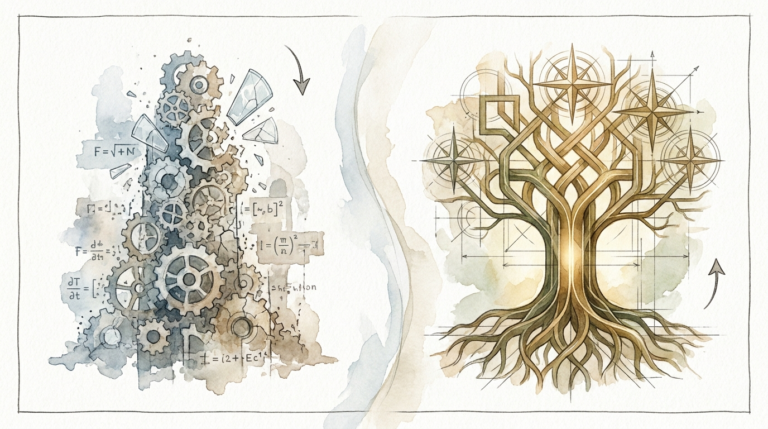
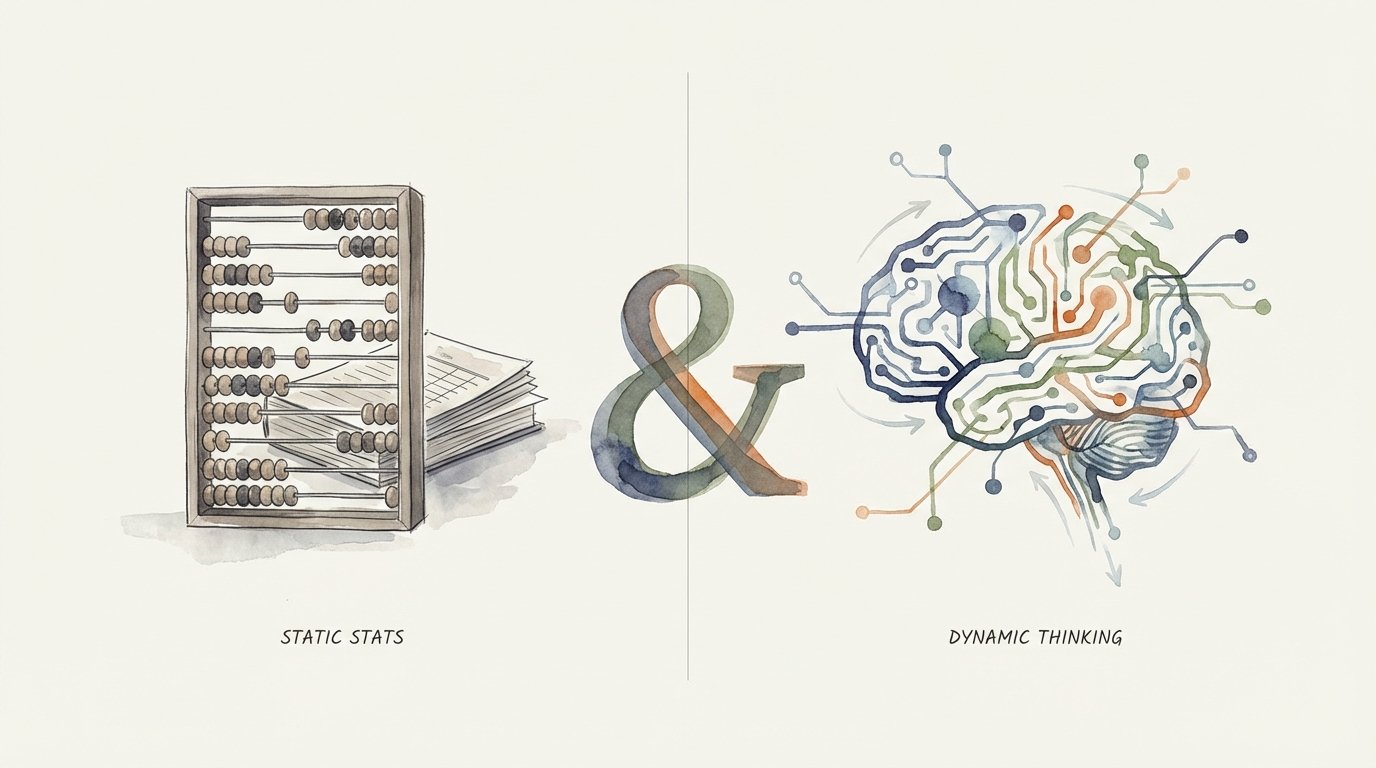
Escape the refresh button and enter the feedback loop. Most apps are designed to be static loops of consumption. The real power of technology lies in dynamic systems—where the child provides the input, and the world provides the feedback. It is time to move beyond the script.

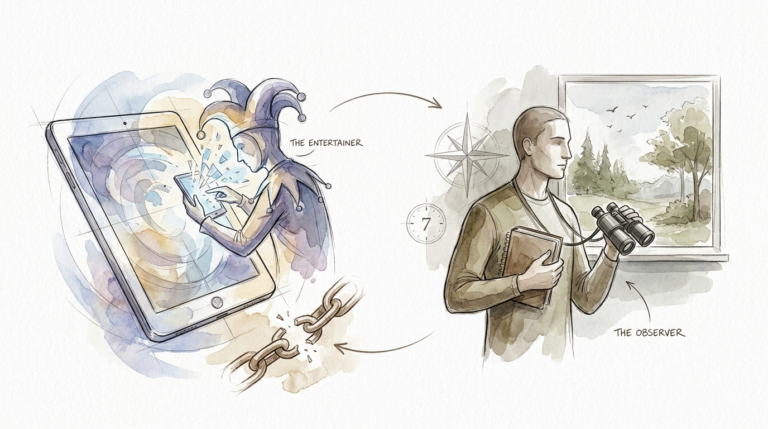
Understanding how the digital world operates is no longer an optional skill. It is the new literacy. Computational thinking allows children to stop being passive observers of screens and start becoming architects of their own reality. This mindset does not require a computer to start. It requires a shift in how we approach problems, patterns, and logic in the everyday world.
Computational Thinking For Kids Stats
Computational thinking is the mental process of breaking down complex problems into smaller, actionable steps. It is the logic that powers computer science, but its roots are in human reasoning. Today, this skill is moving from a niche elective to a global educational priority.
Recent data shows a massive surge in adoption. In the United States, 60% of high schools now offer foundational computer science courses. This is a significant jump from just 47% in 2019. This growth proves that educators are recognizing the “feedback loop” as a critical survival skill for the modern era.
Global participation is also reaching new heights. Two-thirds of countries worldwide now include some form of computing in their official school curricula. In the United Kingdom, 2024 saw a record 6,310 women start computing degrees. This narrowed the gender gap to 4.1 men for every 1 woman, down from 5.5 in 2019.
Research suggests that these skills have a direct impact on academic performance. Studies on the TIMSS (Trends in International Mathematics and Science Study) show that high levels of computational thinking predict significantly higher mathematics scores. The problem-solving sub-skill has the strongest correlation with success in standardized testing.
The job market is reflecting this shift. STEM occupations are projected to grow by 11% through 2031. This is double the rate of non-STEM jobs. In 2024, the technology workforce reached 6 million employees, with 78% of new roles requiring specialized skills in AI and algorithmic logic.
How It Works: The Four Pillars of Logic
Computational thinking is not a single action. It is a framework consisting of four distinct pillars. Each pillar provides a specific tool for navigating the world.
Decomposition
Decomposition is the art of breaking a big problem into small, manageable pieces. Think of it like building a massive LEGO castle. You do not build the whole thing at once. You follow steps to build the base, the walls, and then the towers.
Children use decomposition when they clean their rooms. Instead of seeing a “mess,” they see “books to stack,” “toys to box,” and “clothes to hang.” This prevents overwhelm and creates a clear path to completion.
Pattern Recognition
Pattern recognition involves finding similarities or trends within problems. If a child knows that every time they see a dark cloud, it might rain, they are recognizing a pattern. In the digital world, this translates to identifying recurring code structures or user behaviors.
This skill allows children to leverage past experiences to solve new problems. They learn that certain solutions work in multiple scenarios. This efficiency is the heart of smart problem-solving.
Abstraction
Abstraction is about focus. It involves stripping away the details that do not matter so you can focus on the ones that do. When you look at a map of a subway system, you do not see every tree or building. You only see the lines and stops.
In computational thinking, abstraction helps kids ignore distractions. If they are solving a math word problem, they learn to ignore the names of the characters and focus on the numbers and operations.
Algorithmic Thinking
Algorithmic thinking is the process of creating a step-by-step list of instructions. It is the “recipe” for the solution. If a child can explain exactly how to tie a shoe, they are creating an algorithm.
This is where the feedback loop becomes visible. If the shoe comes untied, the child must “debug” their algorithm. They look at the steps, find where it went wrong, and try again.
The Tangible Benefits of Early Exposure
Starting this journey early creates a massive advantage in cognitive development. It is not just about preparing for a career in software engineering.
Enhanced Problem-Solving Skills
Children who practice computational thinking do not give up when a toy breaks. They analyze why it broke. They look for the source of the failure. This creates a “growth mindset” where errors are seen as data points rather than failures.
Logical Reasoning and Persistence
Logic is a muscle. The more a child uses it to solve puzzles or build systems, the stronger it gets. Computational thinking requires persistence because the first “code” rarely works. Kids learn to iterate, refine, and polish their ideas until they function.
Future-Proofing for the AI Era
Artificial intelligence is becoming a standard part of life. Understanding the underlying logic of AI—how it uses data and patterns—is essential. Kids with these skills will not just use AI; they will understand how to direct it and audit its outputs.
Challenges and Common Mistakes
The path to logic is not always smooth. Many parents and educators hit the same roadblocks when trying to introduce these concepts.
Confusing Coding with Thinking
The biggest mistake is thinking that a child must be staring at a screen to learn. Coding is a tool, but computational thinking is the mindset. You can teach the core concepts using nothing but a deck of cards or a pile of laundry. Starting with screens too early can actually distract from the underlying logic.
The “Copy-Paste” Trap
Many modern apps for kids are too “static.” They provide a script to follow. If the child is just clicking where the arrow points, they are not learning to think. They are learning to obey. Real learning happens when the child has to create the script themselves.
Teacher and Parent Confidence
Many adults feel intimidated by technology. They worry they cannot teach what they do not understand. This fear often leads to avoiding the subject entirely. However, the best way to teach computational thinking is to learn alongside the child.
Limitations: When Logic Isn’t Enough
Computational thinking is powerful, but it is not a complete education. It has clear boundaries that must be respected to raise a well-rounded child.
The Need for Emotional Intelligence
Algorithms are cold. They do not understand empathy, nuance, or human emotion. A child might be a brilliant logical thinker but still struggle to share a toy or understand a friend’s feelings. Computational thinking should be a supplement to, not a replacement for, social-emotional learning.
Creativity vs. Constraints
Logic thrives on constraints. Creativity often thrives on breaking them. While algorithmic thinking helps execute an idea, the “spark” of the idea often comes from a place that is not purely logical. It is important to leave room for unstructured play where there are no rules and no “right” way to do things.
Comparison: Thinking vs. Doing
Understanding the difference between the mindset and the application is key. Use the table below to see how they differ.
| Feature | Computational Thinking | Computer Programming (Coding) |
|---|---|---|
| Core Goal | Mental problem-solving framework. | Technical execution of instructions. |
| Tools Required | Pen, paper, toys, or just conversation. | Computers, tablets, or specialized hardware. |
| Skill Type | Foundational cognitive skill. | Applied technical skill. |
| Primary Output | An “Algorithm” or plan. | “Code” or a functioning program. |
| Longevity | Permanent logic (never goes obsolete). | Language-specific (can change over time). |
Practical Tips for Parents and Educators
You can start integrating these concepts today without spending a dime on software. The goal is to make the feedback loop a natural part of the day.
- The Sandwich Algorithm: Ask your child to write down the exact steps to make a peanut butter sandwich. Follow their instructions literally. If they forget to say “open the jar,” try to put the knife through the lid. It’s a fun way to show the importance of detail.
- Unplugged Sorting: Give your child a big bucket of mixed items (buttons, LEGOs, coins). Ask them to sort them. Then, ask them to explain their “rules” for sorting. This is pattern recognition and abstraction in action.
- Debug the Day: When something goes wrong—like a missed bus or a lost shoe—treat it like a bug. Ask, “Where did the system break?” This removes the blame and focuses on the solution.
- Narrate Your Logic: When you are solving a problem, talk out loud. “I’m looking at this map. I’m ignoring the side streets (abstraction) so I can find the main highway (focus).”
Advanced Considerations: Moving Toward AI Literacy
For children who have mastered the basics, the next step is understanding complex systems. This involves moving from simple linear steps to loops and branches.
Conditional Logic (If-Then)
This is the basis of all smart systems. “If it is raining, then take an umbrella. Else, leave it at home.” Advanced learners can start mapping out their entire morning routine using if-then-else statements. This prepares them for the logic used in machine learning.
Recursion and Scaling
Recursion is when a process calls itself. In play, this looks like a child building a pattern that repeats within itself. Understanding how systems scale—how a small solution for one person can be turned into a solution for a million people—is the bridge between being a “coder” and being a “systems architect.”
Data Ethics
As kids learn to recognize patterns, they must also learn that patterns can be biased. If a child only sees “doctors” as men in their books, their “pattern recognition” muscle might create a false rule. Teaching kids to audit their own logic for fairness is the highest form of computational thinking.
Real-World Scenarios
Let’s look at how this plays out in a typical afternoon.
Scenario A: The Laundry Robot
A parent tells a child, “You are a robot. I will give you a pile of clothes. You need an algorithm to put them away.”
The child breaks it down:
1. Identify the item (Pattern Recognition).
2. If it is a shirt, put it on the bed. If it is a sock, put it in the basket (Conditional Logic).
3. Repeat until the pile is gone (Looping).
Scenario B: The Minecraft Bridge
A child wants to build a bridge across a massive canyon in a game.
Instead of placing blocks randomly, they use decomposition:
1. Build the first support pillar.
2. Build the span.
3. Build the second pillar.
They realize they need the same steps for every pillar. They have created a mental “function” they can reuse. This is the essence of efficient engineering.
Final Thoughts
The transition from a consumer to a creator begins with a single question: “How does this work?” By fostering computational thinking, we give children the keys to the digital kingdom. They learn that the world is not a collection of magic tricks, but a series of logical systems that can be understood and improved.
These statistics prove that the world is moving in this direction. Schools are changing, the job market is shifting, and the tools are becoming more accessible. However, the most important work still happens at home and in the classroom through simple, everyday interactions.
Encourage your child to experiment. Let them fail, let them debug, and let them find the patterns in the chaos. When they learn to master the feedback loop, they stop refreshing the page and start writing the future. Internalize these principles, and you will see your child’s confidence and clarity grow in every area of life.
Sources
1 coorpacademy.com (https://www.coorpacademy.com/en/blog/press/computational-thinking-will-vital-future-job-market/) | 2 digitalpromise.org (https://digitalpromise.org/2025/06/24/computational-thinking-is-literacy-expanding-the-way-we-support-young-learners/) | 3 cceionline.com (https://www.cceionline.com/february-2024-newsletter-tech-skills-for-children-the-benefits-of-computational-thinking-skills-for-younger-children/) | 4 thestempedia.com (https://thestempedia.com/blog/what-is-the-importance-of-computational-thinking-for-school-students/) | 5 bcs.org (https://www.bcs.org/articles-opinion-and-research/female-computing-students-closed-the-gap-on-men-in-2024-new-data-shows/) | 6 wokv.com (https://www.wokv.com/news/computer-science-has-gone-mainstream-us-education-yet-young-women-are-still-underrepresented/PVMD2DJEHRNS7J6Z7L3MQW6IQU/) | 7 stanford.edu (https://hai.stanford.edu/ai-index/2024-ai-index-report/education) | 8 edweek.org (https://www.edweek.org/teaching-learning/one-change-that-can-get-more-girls-students-of-color-taking-computer-science/2024/10) | 9 computingeducationresearch.org (https://computingeducationresearch.org/computing-education-around-the-world-data/) | 10 arizona.edu (https://journals.librarypublishing.arizona.edu/itlt/article/id/1516/) | 11 imagine-america.org (https://imagine-america.org/blog/state-of-it-job-market-2025) | 12 nsf.gov (https://par.nsf.gov/servlets/purl/10073487) | 13 codemonkey.com (https://www.codemonkey.com/blog/the-advantages-of-computational-thinking-for-kids/) | 14 jetbrains.com (https://blog.jetbrains.com/education/2024/12/17/computer-science-education-trends-2024/) | 15 ieeeusa.org (https://insight.ieeeusa.org/articles/seven-tech-occupations-poised-for-double-digit-job-growth-by-2034/) | 16 ed.gov (https://files.eric.ed.gov/fulltext/EJ1470293.pdf) | 17 researchgate.net (https://www.researchgate.net/publication/400251934_Between_computational_thinking_and_literacy_in_mathematics_education) | 18 ala.org (https://www.ala.org/sites/default/files/pla/content/initiatives/familyengagement/compthinking/MakingTheConnection_PLMag_JulAug2020.pdf) | 19 frontiersin.org (https://www.frontiersin.org/journals/education/articles/10.3389/feduc.2025.1535135/full)