screen free evening activities kids
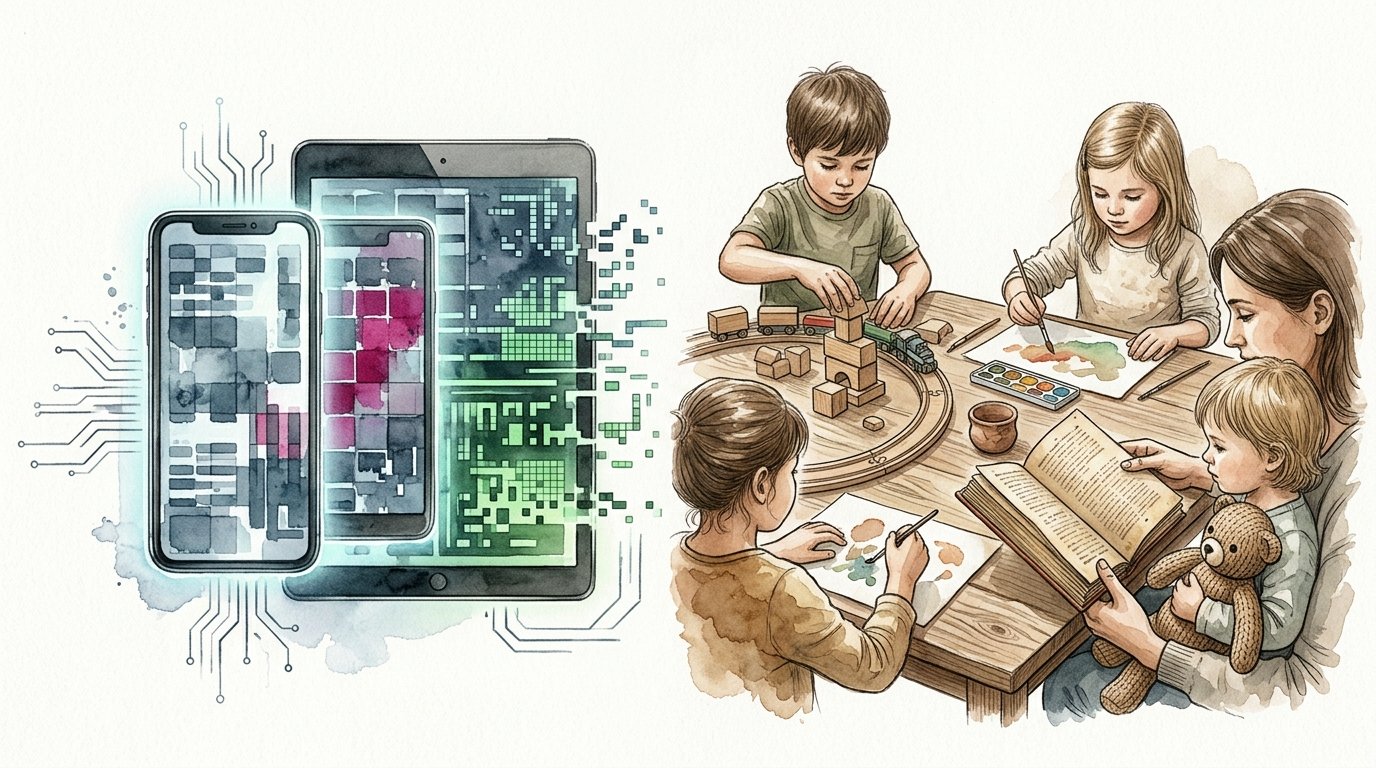
Swap the glow of pixels for the feel of the earth. Kids need more than just visual stimulation. They need tactile, sensory experiences that a screen can never provide. Try these natural alternatives tonight.
The evening hours often feel like a race against the clock. Parents are tired, kids are wired, and the easiest solution is often the glowing rectangle in the living room. But that blue light is doing more than just entertaining them; it is fundamentally altering their transition to rest. Shifting toward hands-on play is not just about “unplugging” for the sake of it. It is about reclaiming the biological rhythms that help a child’s brain develop and their body prepare for sleep.
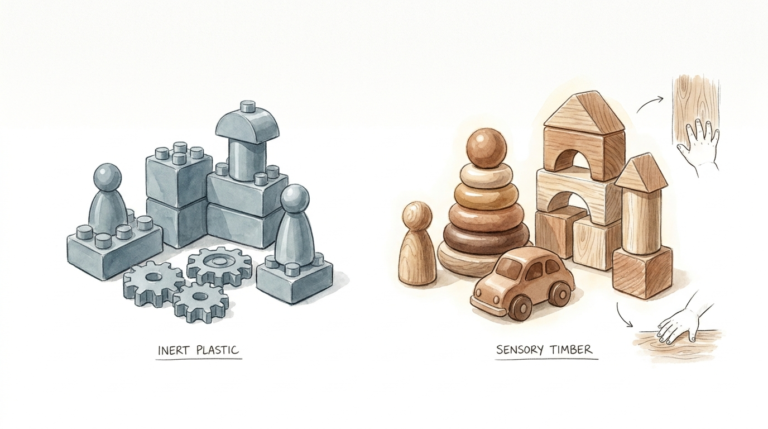
Natural textures like wood, water, and fabric provide a rich, multi-sensory input that digital environments simply cannot replicate. While a tablet offers a flat, glass surface, the real world offers weight, temperature, and resistance. These physical properties are the building blocks of spatial reasoning and motor coordination. Moving away from synthetic pixels allows a child’s nervous system to decompress and find a natural baseline before bed.
screen free evening activities kids
Screen free evening activities for kids are intentional, hands-on play experiences that occur in the hours leading up to bedtime. These activities replace digital media—such as televisions, tablets, and smartphones—with physical objects and social interaction. This concept exists because the human brain, particularly in its formative stages, requires diverse sensory input to build neural pathways.
In the real world, these activities act as a “soft landing” for the day. Instead of the rapid-fire visual stimulus of a video game, which triggers dopamine and keeps the brain in a state of high alert, screen-free options like building blocks or sensory bins engage the parasympathetic nervous system. This shift is critical for the production of melatonin, the hormone responsible for sleep.
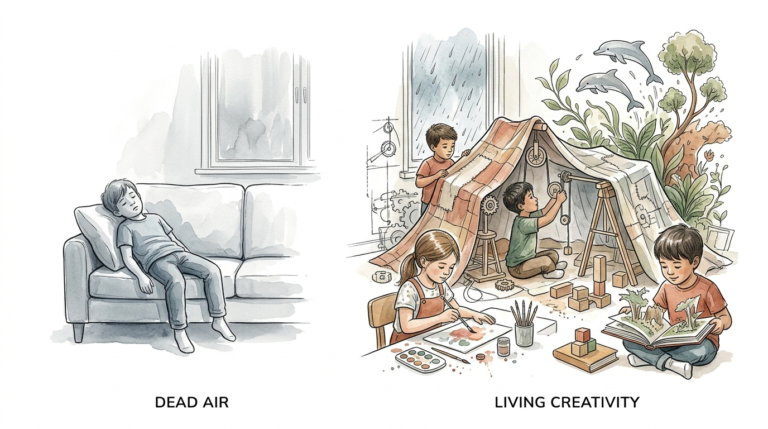
For example, consider a child building a fort with blankets. They are calculating weight, testing structural integrity, and using gross motor skills. This is a three-dimensional challenge that requires patience and problem-solving. In contrast, a digital game provides immediate, low-effort rewards. Transitioning to these real-world activities helps children develop a longer attention span and better emotional regulation.
How to Transition to Screen-Free Evenings
Making the switch requires a clear strategy to avoid the “techno-tantrums” that often follow a sudden loss of digital access. Start by establishing a “Sunset Protocol.” This means choosing a fixed time, ideally 60 to 90 minutes before sleep, when all personal devices are placed in a designated charging station away from common areas.
Environment matters just as much as timing. Dim the overhead lights and switch to warmer, amber-toned lamps to signal to the body that the day is ending. Prepare “Activity Zones” in advance. If a child walks into a room and sees an empty table, they will ask for a screen. If they walk in and see a half-finished puzzle or a bin of play dough, they are much more likely to engage with those materials naturally.
Use the “Bridge Technique” for the first week. If your child is used to high-energy digital stimulation, do not jump straight into silent reading. Start with high-engagement physical play, like a scavenger hunt or “keepy uppy” with a balloon. These activities provide the movement their bodies crave while keeping their eyes off the blue light. Gradually, as the week progresses, shift toward lower-energy tasks like drawing or audiobooks.
The Measurable Benefits of Unplugging
The primary advantage of removing screens at night is the immediate improvement in sleep quality. Research shows that blue light suppresses melatonin secretion more significantly in children than in adults because their eyes have larger pupils and clearer lenses. By eliminating this light source, you allow the brain to trigger its natural sleep-wake cycle, leading to faster sleep onset and deeper REM cycles.
Beyond sleep, tactile play builds superior cognitive skills. When kids interact with physical objects—like sorting buttons or building with LEGO—they are practicing “visuo-tactile exploration.” This skill is essential for developing spatial reasoning, geometry concepts, and fine motor control. Digital screens provide “impoverished stimulation” because they lack the depth and resistance found in the physical world.
Emotional regulation also sees a major boost. Digital content is often designed to provide instant gratification, which can make children more irritable when they have to wait for things in real life. Screen-free activities often require a degree of “productive struggle,” such as figuring out how to balance a block tower. Learning to navigate these small frustrations in a low-stakes environment builds resilience and patience that carries over into school and social life.
Challenges and Common Pitfalls to Avoid
The most frequent mistake parents make is attempting a “cold turkey” approach without a replacement plan. If you take away the tablet but offer nothing else to do, you are creating a vacuum that will be filled with whining and conflict. You must be ready to provide a viable alternative that is just as engaging as the digital one, at least initially.
Another major pitfall is parental hypocrisy. If you tell your child to put away their device while you are simultaneously scrolling through a social media feed, the message is lost. Children model their behavior after what they see, not what they are told. To succeed, the entire household must commit to the screen-free window. This shared commitment reinforces the idea that evening time is for connection, not just a rule for the kids to follow.
Don’t make the mistake of using screen-free time as a punishment. If “no tablet” is framed as a consequence for bad behavior, the child will associate physical play with being “in trouble.” Instead, frame it as a positive family tradition. Use language like, “It’s time for our evening adventure,” or “Let’s see what we can build tonight,” to keep the energy high and the focus on the fun of the activity itself.
Limitations and Environmental Constraints
Transitioning to screen-free evenings isn’t always easy, and it’s important to recognize the hurdles. Small living spaces can make high-energy indoor play difficult. If you don’t have room for a “keepy uppy” game or a giant fort, you may feel limited. In these cases, focus on “micro-activities” like card games, small-scale art projects, or sensory bins that can be used on a single tray or at a kitchen table.
Time is the other major constraint. For families with two working parents or late-night commutes, the “evening” might only be an hour long. In these scenarios, don’t feel pressured to set up elaborate craft projects. Focus on high-impact, low-prep activities. Reading a single chapter of a book together or having a “high-low” conversation about the day provides the necessary connection without requiring hours of preparation.
Weather and seasons also play a role. During winter, the lack of outdoor light makes evening walks or backyard gardening impossible in many regions. This is when you have to get creative with indoor “nature” play. Bringing in pinecones for a craft or planting a small indoor herb garden can provide that “feel of the earth” even when the ground outside is frozen.
Synthetic Pixels vs Natural Textures
The difference between digital and physical play is not just about content; it is about the quality of the sensory experience. The following table highlights the core differences between these two environments.
| Factor | Synthetic Pixels (Screens) | Natural Textures (Tactile) |
|---|---|---|
| Sensory Input | Primarily visual and auditory; 2D experience. | Full-body; includes weight, texture, and 3D depth. |
| Cognitive Load | Passive consumption; low problem-solving requirements. | Active exploration; requires structural and spatial reasoning. |
| Biological Impact | Suppresses melatonin; keeps the brain in high-alert. | Promotes relaxation; aligns with natural circadian rhythms. |
| Social Interaction | Often solitary or through a digital filter. | Direct, face-to-face; involves reading social cues. |
| Creative Freedom | Bounded by the rules of the app or game. | Open-ended; limited only by imagination and physics. |
Practical Tips for Success
To keep the momentum going, use a “Boredom Box.” Fill a large bin with items that are only available during screen-free time. This could include special art supplies, a set of magnets, or unique building kits. The novelty of these items makes the transition away from the tablet much more enticing. Rotate the contents every two weeks to keep the interest high.
Incorporate “Shadow Play” as the sun goes down. Use a single lamp or flashlight to create shadows on the wall using hands or paper cutouts. This activity is low-energy, highly creative, and perfectly suited for the dimming light of the evening. It teaches children about light, perspective, and storytelling in a way that feels magical rather than clinical.
Don’t forget the power of the “Kitchen Chemist.” Simple science experiments using household items like baking soda, vinegar, and food coloring are high-energy and visually stimulating without needing a screen. These activities encourage observation and hypothesis-making. Plus, they usually involve a “messy” element that kids find far more rewarding than any digital reward system.
Advanced Considerations for Long-Term Habits
For those looking to go deeper, consider the concept of “Sensory Integration.” Some children are more sensitive to sensory input than others. For a child who is easily overwhelmed, screen-free time should focus on calming, repetitive textures like kinetic sand or water play. For a child who “seeks” intense stimulation, high-movement activities like indoor obstacle courses are better. Tailoring the activity to your child’s specific sensory profile makes the evening far more successful.
Think about the “Pruning Process” in the brain. During childhood, the brain is constantly building and then “pruning” neural connections based on usage. If a child spends all their time on screens, the pathways for navigating the physical world and reading complex social cues may not be as robust. Consistently choosing tactile play ensures that those essential real-world pathways are strengthened and preserved.
Scaling these habits as children get older is also vital. While a toddler might enjoy a sensory bin, a pre-teen might prefer complex board games, learning a musical instrument, or working on a long-term woodworking project. The goal is to maintain the “unplugged” window regardless of the age of the child, simply adjusting the complexity of the task to meet their developmental level.
Real-World Examples of Screen-Free Success
Imagine a family of four in a typical suburban home. At 6:30 PM, the “Device Basket” comes out. The parents put in their phones, and the kids put in their school tablets. Instead of the usual scramble for the TV remote, the dad pulls out a stopwatch. He challenges the kids to see how fast they can sort a large jar of mixed coins by denomination. The kids are instantly engaged, using their fine motor skills to pluck small dimes and large quarters, competing for the fastest time.
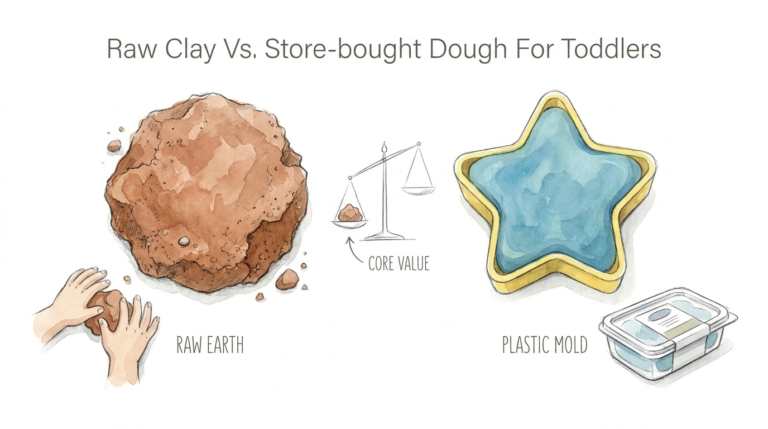
In another scenario, a mother in a small city apartment uses the “Indoor Mud Kitchen” approach. She sets up a tray with dried beans, rice, and various kitchen measuring cups. Her four-year-old spends forty minutes “cooking” a feast, pouring and measuring. The repetitive motion and the tactile feel of the grains have a grounding effect. By the time 7:30 PM rolls around, the child is calm and ready for a bath and a book, showing none of the “post-tablet” irritability that usually plagues their bedtime routine.
These examples show that screen-free evenings don’t require expensive kits or huge amounts of space. They require a shift in perspective. By focusing on simple, repeatable tasks that engage the senses, these families are building stronger bonds and better sleep habits without any digital intervention.
Final Thoughts
Shifting to screen-free evenings is one of the most powerful changes you can make for your child’s development. It moves them from a state of passive consumption to one of active exploration. By choosing natural textures over synthetic pixels, you are giving their brains the “nutrient-dense” play they need to grow, learn, and eventually, rest.
The goal isn’t to reach perfection or to demonize technology entirely. It is about creating a healthy balance that respects the biological needs of a growing child. Start small, stay consistent, and watch how your evenings transform from a chaotic rush into a time of genuine connection.
Experiment with different activities and see what resonates most with your family. You might find that the “feel of the earth”—whether through gardening, baking, or just playing with a bin of rice—is exactly what everyone needs to end the day on a high note. Turn off the glow, pick up a physical object, and let the real-world adventure begin.
Sources
1 sittercity.com | 2 developlearngrow.com | 3 thehood.ae | 4 happyhandsworld.com | 5 substack.com | 6 nyp.org | 7 bloomokids.com | 8 harvard.edu | 9 thejacobsladdergroup.org | 10 qicreative.com | 11 sparklestories.com | 12 curiousneuron.com | 13 childrensdayton.org