7 Day Ipad Reset System For Toddlers
Are you fighting the tablet every hour, or have you built a system that does the fighting for you? Most parents treat an iPad reset like a 7-day hostage negotiation. They hide the device and pray for the best. But true ‘reset’ success doesn’t come from willpower; it comes from environmental strategy. Learn how to replace the ‘No’ with a ‘Flow’ that redirects their nervous system before the meltdown even begins.

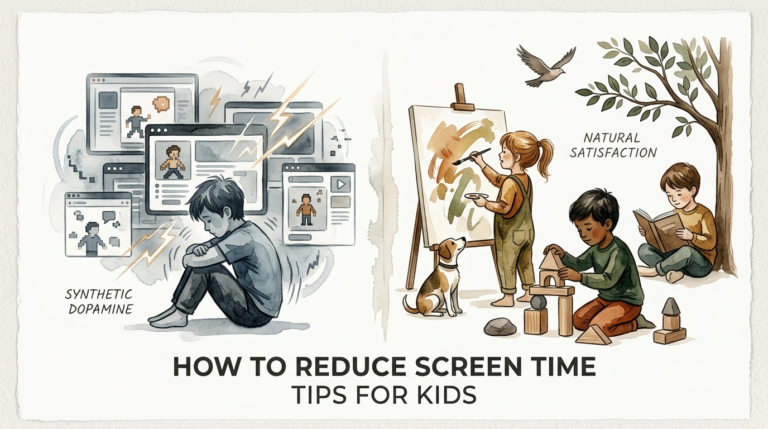
Parenting in the digital age often feels like managing a high-stakes addiction. You hand over the tablet for ten minutes of peace, but you pay for it with two hours of screaming when the screen goes black. This isn’t a lack of discipline on your part or “bad behavior” from your toddler. It is a biological response to a high-stimulation environment that their developing brains were never designed to handle.

When a child is locked into a high-dopamine loop from fast-paced videos or interactive games, their brain’s reward threshold skyrockets. The “real world”—with its slow-moving bugs, quiet books, and wooden blocks—cannot compete. To fix the behavior, you have to reset the biology. This is where a systemic approach replaces the manual struggle of daily arguments.
7 Day Ipad Reset System For Toddlers
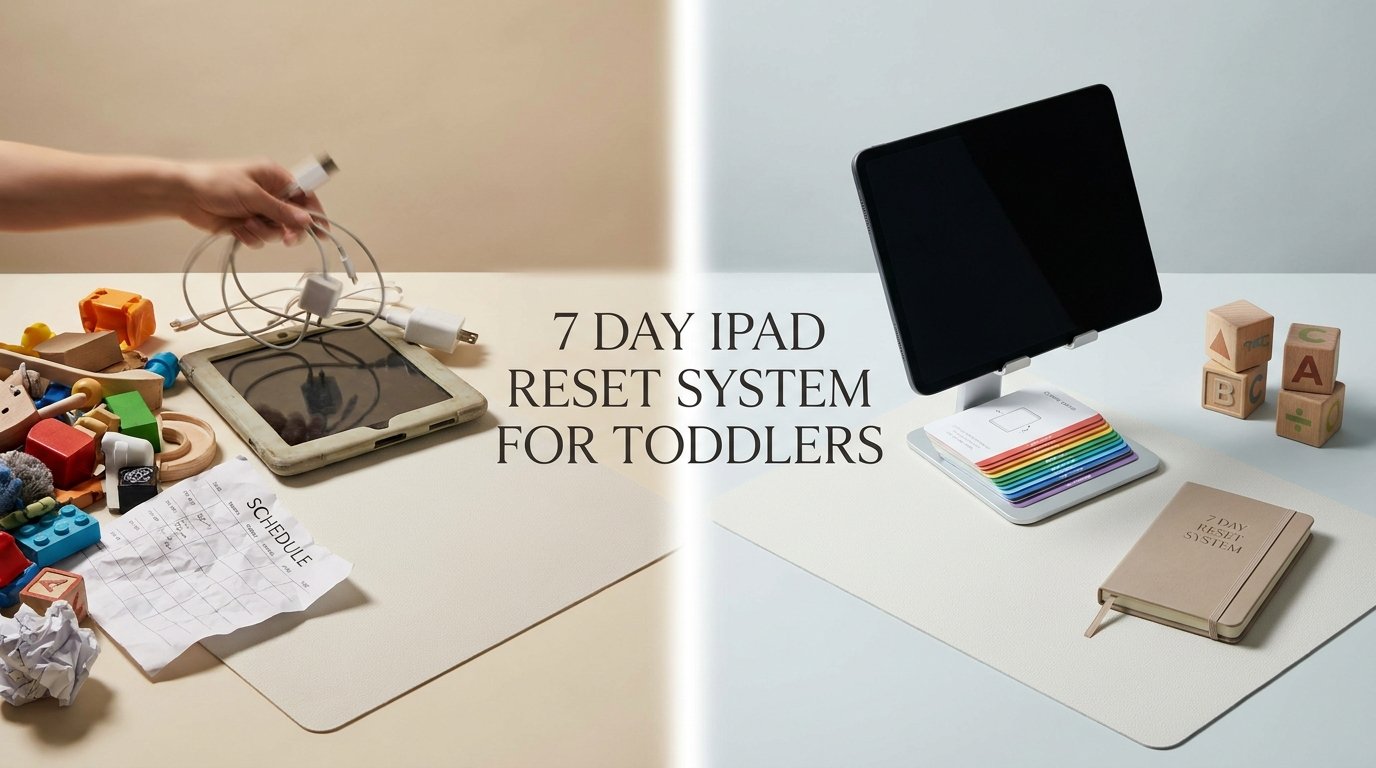
The 7 Day Ipad Reset System For Toddlers is a structured protocol designed to recalibrate a child’s nervous system and lower their dopamine threshold. It is more than just a “break” from screens. It is a total environmental overhaul that replaces digital stimulation with sensory-rich, low-arousal activities. By removing the trigger and saturating the environment with “slow” rewards, you allow the prefrontal cortex to regain control over impulsive urges.
This system exists because “moderation” is often impossible for a toddler who is already overstimulated. Their brains treat the removal of a tablet like a physical loss. Experts suggest that excessive screen time, especially “high-stimulation” media with rapid camera cuts and loud noises, can lead to shortened attention spans and irritability. A full 7-day reset provides enough time for the brain’s dopamine receptors to become more sensitive to everyday pleasures again.
In the real world, this system is used by families who have noticed “screen zombie” behavior—irritability, lack of interest in toys, or extreme tantrums during transitions. It is a tactical intervention. Instead of saying “no” a thousand times, you change the environment so the “no” is implied. The tablet doesn’t just go away; the world around the child becomes interesting enough to fill the void.
The Core Philosophy: System Over Willpower
Most parents fail because they rely on their own energy to fight the toddler’s energy. This is a losing battle. The 7-day system relies on environmental design. If the iPad is in a drawer, the child knows it’s there. If the iPad is moved to a high shelf in a locked closet or “sent to the repair shop,” the environmental cue is broken. You aren’t the “bad guy” withholding a toy; the toy is simply unavailable.
Step-by-Step Guide to the 7-Day Reset
Executing this system requires a plan. Do not start this on a whim on a Tuesday afternoon. You need a full week where you can be present and consistent. Follow this progression to move from digital dependence to sensory independence.
Day 1: The Tactical Removal
Start early in the morning. Before the child wakes up, remove all tablets and handheld devices from their usual spots. Hide them in a place where the child cannot see or reach them. When they ask for the device, have a simple, neutral script: “The tablet is resting right now. It isn’t available today.” Avoid long explanations. Immediately pivot to a high-sensory activity like a water table, play-dough, or a walk outside. The goal for Day 1 is to survive the initial shock by providing heavy sensory input.
Day 2: The Extinction Burst
Day 2 is typically the hardest. In psychology, this is known as the “extinction burst”—the behavior gets worse right before it stops. The child may scream louder or try harder to get the reward. This is the peak of the dopamine withdrawal. Stay the course. Do not negotiate. Focus on “heavy work” activities like pushing a toy stroller, climbing, or jumping on cushions to help regulate their nervous system.
Day 3: The Sensory Grounding
By Day 3, the initial fog starts to lift. You will notice your child beginning to look at their toys again, but their attention span will still be short. Use this day to introduce “Sensory Bins.” Fill a container with rice, beans, or kinetic sand. This type of “slow” play helps the brain focus on tactile sensations rather than flashing lights. This is the beginning of the dopamine recalibration.
Day 4: Green Time Immersion
Nature is the ultimate low-stimulation environment. Spend as much of Day 4 as possible outdoors. Whether it’s a park, a backyard, or a forest trail, the natural world moves at a human pace. The lack of artificial “pings” and “dings” allows the child’s cortisol levels to drop. Research shows that “green time” can significantly improve focus and emotional regulation in children who have been overstimulated by tech.
Day 5: The Boredom Bridge
Boredom is the mother of invention. On Day 5, resist the urge to entertain your child every second. Allow them to be bored. Sit nearby and read a book yourself, but don’t provide a direct activity. You will eventually see them pick up a stray toy and start a “pretend” game. This is a massive milestone. It means their brain is starting to generate its own entertainment rather than consuming it passively.
Day 6: System Design and New Rules
Prepare for the future. Decide what the new “normal” looks like. Will you allow 20 minutes on Saturdays? Will you stick to low-stimulation shows only? Clean out your streaming apps. Delete high-stim “digital candy” like Cocomelon or Blippi and prepare a library of low-stim alternatives like Little Bear or Trash Truck. The system must be ready before the device returns.
Day 7: The New Normal
If you choose to reintroduce the screen, do it with strict, system-based boundaries. Use a physical timer, not your phone. Use “Guided Access” to lock the child into one specific, pre-approved app. The tablet is no longer a free-for-all; it is a tool with a clear “start” and “stop” built into the environment.
Benefits of a Successful Reset
The primary benefit of a 7-day reset is the restoration of the parent-child relationship. When the “tablet battle” is removed, you stop being the police officer and start being the parent again. You will notice a significant decrease in the intensity and frequency of tantrums. This is because the child is no longer in a state of chronic overstimulation.
Practical and measurable benefits often include:
- Improved Sleep: Without blue light and high-dopamine hits, the brain produces melatonin more effectively. Children often fall asleep faster and stay asleep longer.
- Increased Focus: Toddlers begin to engage in “deep play,” staying with a single activity for 15–20 minutes instead of jumping from toy to toy.
- Enhanced Language Skills: Real-world interaction requires back-and-forth communication. Without a screen, toddlers are forced to use their words to express needs and play.
- Better Social Skills: Children become more aware of the people around them, leading to better eye contact and cooperation.
Challenges and Common Mistakes
The biggest mistake parents make is starting a reset without a “Sensory Safety Net.” If you take away the iPad but don’t provide alternative ways for the child to regulate their body, you are setting them up for failure. A child who is used to high stimulation needs movement, tactile input, and your presence to feel safe during the transition.
Other common pitfalls include:
- The “Just This Once” Trap: Giving in during a public meltdown on Day 2 or 3 completely resets the clock and teaches the child that screaming louder works.
- Parental Screen Use: If you are constantly scrolling while telling your toddler they can’t have their iPad, the system will fail. You must model the behavior you want to see.
- Inconsistent Messaging: Ensure all caregivers (grandparents, nannies, partners) are on the same page. One secret session with a phone can ruin the 7-day neurological reset.
Limitations of the System
This system is a powerful tool, but it is not a cure-all. For neurodivergent children, such as those with ASD or ADHD, screens can sometimes provide a necessary “regulatory” function or a way to decompress from sensory overwhelm in the real world. In these cases, a “cold turkey” reset may be too distressing. These families might find more success with a gradual reduction or by switching exclusively to low-stimulation content rather than a total blackout.
Additionally, the reset won’t work if the underlying environment is still high-stress. If the house is constantly loud, the TV is always on in the background, or there are no toys that encourage open-ended play, the child will naturally gravitate back toward the high-intensity lure of the tablet. The system requires a quiet, organized space to truly flourish.
Manual Struggle vs. Strategic System
Understanding the difference between fighting your child and managing the environment is the key to long-term success. Use the table below to see how your current approach compares to a systemic reset.
| Feature | Manual Struggle (The “No”) | Strategic System (The “Flow”) |
|---|---|---|
| Primary Tool | Parental Willpower/Arguments | Environmental Design |
| Device Status | Hidden nearby (Child knows it’s there) | Removed from the environment completely |
| Transition Strategy | Verbal warnings (often ignored) | Physical timers and sensory pivots |
| Goal | Short-term obedience | Long-term neurological recalibration |
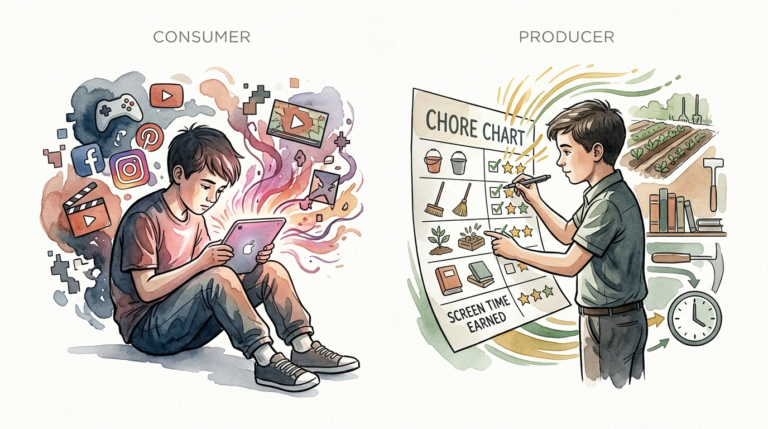
| Role of Parent | The “Gatekeeper” or “Police” | The “Architect” of the environment |
Practical Tips for Success
Success in a reset often comes down to the small details. Preparation is your best friend. Before you start, create a “Boredom Box” filled with items the child hasn’t seen in a while. Rotate these items so there is always something “new” to discover during the hardest days of the detox.
- Use a Visual Timer: Toddlers have no concept of “five minutes.” A visual timer that shows the red disappearing helps them see the transition coming.
- Prioritize “Heavy Work”: Activities like carrying a basket of laundry or pushing a heavy box help ground the child’s nervous system when they feel agitated.
- Choose “Slow” Media: If and when you reintroduce screens, stick to shows with natural colors, slow camera cuts, and realistic pacing. Avoid anything with rapid transitions or neon colors.
- Audit Your Apps: Delete any app that has “loot boxes,” infinite scrolling, or constant reward pings. These are designed to keep the brain in a high-dopamine loop.
Advanced Considerations: The Role of Dopamine
For those who want to understand the “why” behind the 7-day timeline, it comes down to neurobiology. Dopamine receptors take time to downregulate. When a child is constantly exposed to high-stimulus digital environments, their brain reduces the number of active dopamine receptors to protect itself from the surge. This is why “normal” life feels boring—their brain literally cannot “feel” the smaller rewards of a puzzle or a book.
A 7-day period is often the minimum time required for these receptors to begin returning to a baseline state. This is why Day 4 and 5 often feel like a breakthrough; the child’s brain is finally becoming sensitive enough to enjoy lower-level stimulation. Maintaining this baseline requires a permanent shift in how media is consumed—treating it like a “side dish” rather than the “main course” of the child’s day.
Example Scenario: The “Shopping Trip” Test
Consider a typical scenario: A parent needs to go to the grocery store. In a manual struggle system, the parent gives the child an iPad to keep them quiet. If the iPad isn’t there, the child has a meltdown because they have no other way to regulate their boredom in a cart.
In a Strategic System, the parent has replaced the iPad with a “Store Kit.” This might include a small magnifying glass for looking at produce, a list of “treasures” to find (e.g., “Find three red apples”), or a small toy that only comes out during errands. Because the child’s brain has been reset and is no longer craving the 10/10 stimulation of a screen, the 3/10 stimulation of a “scavenger hunt” is now enough to keep them engaged. The system has solved the problem before it started.
Final Thoughts
The 7 Day Ipad Reset System For Toddlers is a powerful intervention for families stuck in a cycle of screen-driven meltdowns. By shifting your focus from “controlling the child” to “designing the environment,” you remove the friction that leads to daily battles. This isn’t about being “anti-tech”; it’s about being “pro-development.”
Remember that the first 48 hours are the hardest. Your child is navigating a significant biological shift, and they need your calm, steady presence to anchor them. Once you break through the “extinction burst,” you will rediscover a child who is more creative, more attentive, and more emotionally resilient.
Start your reset when you have the mental margin to be consistent. Stock up on sensory supplies, get outside, and trust the process. The “No” will eventually become a “Flow,” and your home will feel like a sanctuary again instead of a negotiation room. If you find success with this reset, consider exploring other systems like toy rotation or rhythm-based scheduling to further support your child’s natural development.
Sources
1 myscreencoach.com | 2 verizon.com | 3 healthywithin.com | 4 rockwoodprep.com | 5 washingtonpost.com | 6 westgateresorts.com | 7 macworld.com