Deep Work For Kids Vs Screen Multitasking
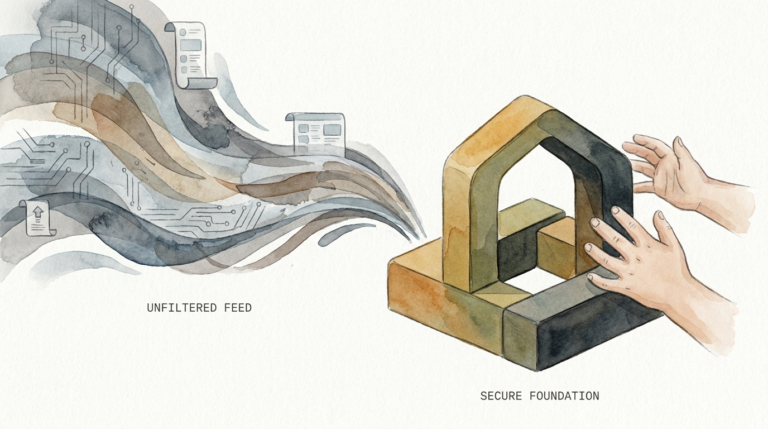
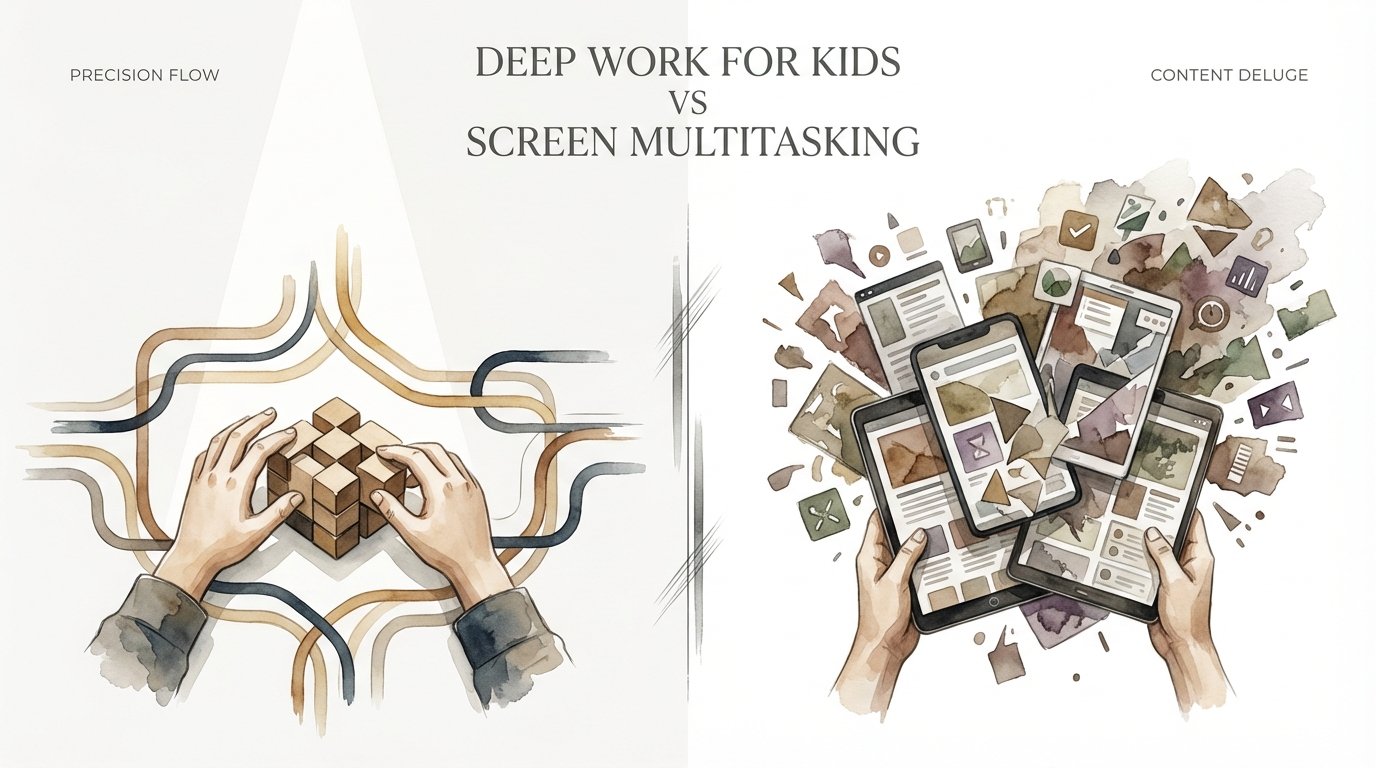
If we flood their brains with everything at once, we lose the ability to see anything at all. Standard content delivery is like a broken sprinkler—it floods everything and nourishes nothing. ‘Precision focus’ is the targeted drip irrigation of the mind. Stats show that ‘content hopping’ reduces the ability to enter a flow state by over 60%. Stop the flood; start the flow.

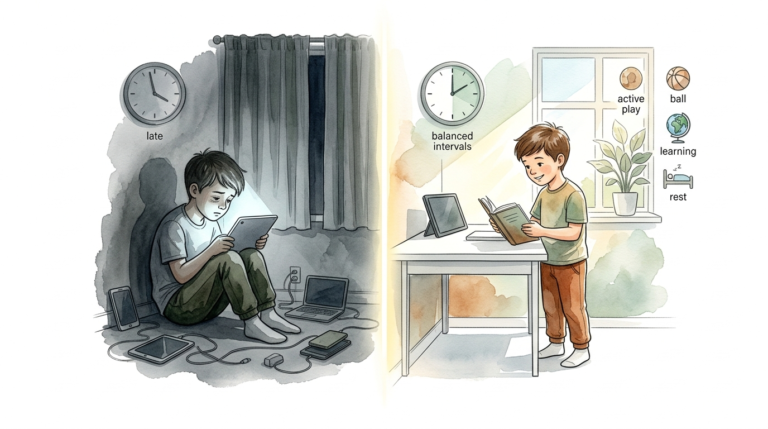
Modern childhood is often defined by a relentless stream of notifications, flickering pixels, and the constant urge to switch tabs. This environment creates a cognitive environment that actively fights against deep concentration. Parents and educators now face a critical choice: allow the digital deluge to dictate a child’s brain development, or cultivate the skill of precision flow.

Understanding the difference between these two states is more than just a productivity hack. It is about the fundamental architecture of the developing mind. When we teach children to focus, we are essentially helping them build a superpower that is becoming increasingly rare in our modern economy.
Deep Work For Kids Vs Screen Multitasking
Deep work represents the ability to focus without distraction on a cognitively demanding task. This concept, popularized by professor Cal Newport, refers to activities that push our mental capacities to their limit. For a child, this might look like solving a complex math problem, practicing a musical instrument for forty minutes, or becoming completely lost in a physical book.
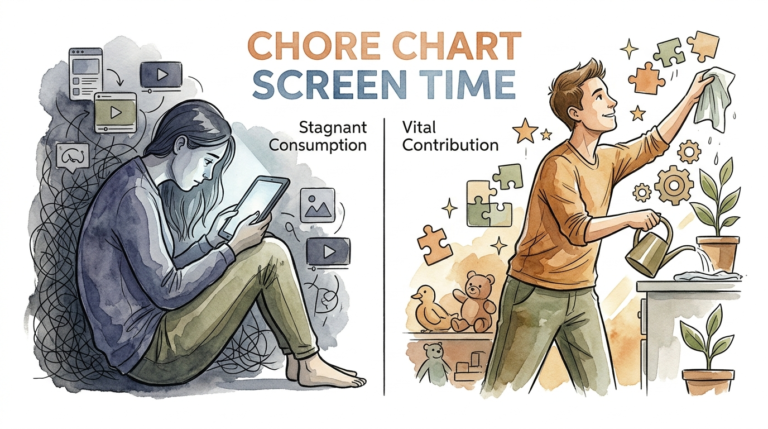
Screen multitasking sits at the opposite end of the spectrum. It is the habit of toggling between homework, a YouTube video, and a group chat. Many believe children are natural multitaskers because they grew up with technology. Science proves the opposite: the human brain cannot actually multitask. It simply switches between tasks rapidly, a process known as task-switching.
Research indicates that this constant switching comes with a heavy “switching cost.” Every time a child looks away from their essay to check a notification, a portion of their attention stays behind on the phone. This is called attention residue. It can take up to twenty-three minutes for the brain to fully return to the original task after a single distraction. In a world of constant pings, many children never actually reach their full cognitive potential because they are perpetually stuck in this recovery phase.
Real-world studies show that children who engage in heavy media multitasking often exhibit a smaller anterior cingulate cortex. This is the part of the brain responsible for regulating emotions and directing attention. When we allow screen multitasking to become the default mode, we are effectively training the brain to be easily distracted. Deep work, conversely, is the deliberate practice of strengthening the neural pathways required for elite performance and complex problem-solving.
How to Cultivate Deep Work Habits in Children
Transitioning from a state of constant distraction to precision flow requires a system, not just a set of rules. You must treat attention as a muscle that needs progressive resistance training. Start by identifying the “shallow work” in your child’s life—tasks like checking school emails, organizing a backpack, or quick logistical messages—and separate them from “deep work” sessions.
Designate a “Distraction-Free Zone” in the home. This should be a physical space where screens are strictly prohibited unless they are the primary tool for the task. Even then, the device should be locked into a single application. The mere presence of a smartphone, even when silenced and face down, can reduce cognitive performance by up to 10% because the brain must spend energy actively resisting the urge to check it.
Implement the “Phone Foyer” rule. Create a physical charging station near the front door or in a common area. Devices stay there during study blocks. This creates a physical boundary that signals to the brain that it is time to enter a different cognitive state. Without the visual cue of the phone, the temptation to switch tasks diminishes significantly.
Use the Pomodoro Technique for younger children. Start with twenty-five minutes of focused work followed by a five-minute “analog” break. An analog break means no screens—just stretching, getting a snack, or looking out the window. As the child’s focus muscle grows, you can gradually increase the work blocks to forty-five or ninety minutes. The goal is to build the capacity for sustained, unbroken concentration.
Narrate your own focus. Children learn more from what you do than what you say. If you are working on a project, tell them: “I am going to do forty-five minutes of deep work now. I’m putting my phone in the other room so I can really focus.” This gives them a vocabulary for concentration and models the behavior you want to see.
The Cognitive and Emotional Benefits of Precision Flow
The practical advantages of deep work extend far beyond better grades. When a child enters a flow state—the “zone” where they lose track of time and become fully absorbed in an activity—they experience a profound sense of intrinsic joy. This state has been linked to higher levels of general happiness and a significant reduction in anxiety.
Academic efficiency is the most immediate benefit. A student who masters deep work can often finish two hours of distracted homework in just forty-five minutes of intense focus. This “fixed-schedule productivity” frees up more time for play, sports, and sleep. It eliminates the “paddling in the shallows” that makes schoolwork feel like a never-ending chore.
Neurologically, deep work supports the process of myelination. Myelin is a fatty substance that wraps around neural pathways, allowing electrical signals to travel faster and more efficiently. When a child focuses intensely on a single skill, they trigger the growth of myelin along that specific circuit. This is how world-class experts are made; they aren’t just working harder, they are literally upgrading their brain’s hardware through focused repetitions.
Emotional regulation also improves. Constant task-switching keeps the brain in a state of high arousal and stress. Deep work, however, calms the nervous system. Children who can focus deeply are generally more resilient and better able to handle frustration. They learn that they can overcome “hard” problems through sustained effort, which builds genuine self-esteem.
Challenges and Common Mistakes to Avoid
One of the biggest pitfalls is the “Research Trap.” Many students feel they are working because they have twenty browser tabs open for a project. In reality, they are engaging in a content deluge that prevents them from synthesizing information. High-quality work requires moving from consuming content to creating it. Limit the number of open tabs to only what is strictly necessary for the current paragraph.
Avoid the “Emergency Inbox” mentality. Many parents allow children to keep their phones nearby “in case a teacher emails” or “in case of an emergency.” This effectively kills any chance of deep work. Teach children to batch their shallow work. They should check their school portal once in the morning and once after school. Everything else can wait until the deep work session is over.
Resistance is natural. The brain is wired to seek the dopamine hits provided by notifications and quick task-switches. When you first implement focus rituals, expect pushback. Your child’s brain is literally going through a “digital detox.” Stay consistent and emphasize the reward of the free time they will gain by finishing their work faster.
Don’t mistake “busy” for “productive.” A child who spends four hours at a desk but checks their phone every ten minutes is busy, but they aren’t being productive. They are accumulating massive amounts of attention residue. Focus on the intensity of the work, not just the duration. Twenty minutes of total immersion is worth more than two hours of fragmented effort.
When Precision Flow May Not Be Ideal
While deep work is a superpower, it is not the only way the brain should function. There are times when shallow work or “open monitoring” is necessary. Collaborative brainstorming, for instance, requires a more fluid, interactive state that doesn’t always allow for deep, solitary focus. In these scenarios, the goal is connection rather than individual output.
Environmental limitations can also play a role. A loud, crowded classroom or a chaotic household may make deep work impossible in the moment. In these cases, it is better to focus on shallow, logistical tasks and save the deep work for a time and place where silence can be guaranteed. Trying to force deep work in a distracting environment only leads to frustration and burnout.
Younger children also have physical limits. A five-year-old’s prefrontal cortex is still developing, and their “deep work” might only last ten or fifteen minutes. Pushing them beyond their developmental threshold can backfire, making them associate focus with pain or boredom. The goal is to keep the challenge slightly above their current skill level without overwhelming them.
Comparison: Content Deluge vs. Precision Flow
This table illustrates the fundamental differences between the two approaches to learning and information processing.
| Factor | Content Deluge (Multitasking) | Precision Flow (Deep Work) |
|---|---|---|
| Primary State | Fragmented and reactive | Sustained and proactive |
| Neural Impact | High attention residue; high stress | Increased myelination; calm focus |
| Output Quality | Low; derivative; prone to errors | High; original; elite level |
| Time Efficiency | Poor (up to 40% time loss) | Excellent (2x – 3x faster) |
| Emotional State | Anxiety and FOMO | Fulfillment and intrinsic joy |
Practical Tips for Implementation
Start by auditing the digital environment. Use website blockers like Freedom or Cold Turkey to shut down social media and news sites during study blocks. These tools act as “digital training wheels” that help the brain stay on track until the focus muscle becomes strong enough to do it independently.
Create a “Shutdown Ritual.” At the end of a deep work session, have the child physically close their books, clear their desk, and write down one thing they want to start on the next day. This helps the brain “close the loops” and prevents the work from bleeding into their relaxation time. It signals that the cognitive demand is over and it is time for the brain to recover.
Embrace boredom. This is perhaps the hardest tip for modern families. We have been trained to reach for a screen the second we feel a moment of stillness. However, boredom is the “waiting room” for creativity. If a child is never bored, their brain never enters the “default mode network” where original ideas are born. Allow for screen-free downtime every single day.
Optimize for the child’s natural rhythm. Some children are “morning larks” while others find their peak focus in the late afternoon. Schedule deep work blocks during these high-energy windows. Save shallow tasks, like cleaning the room or checking emails, for the “troughs” when their willpower and cognitive energy are naturally lower.
Advanced Considerations for Serious Practitioners
For older students and those pursuing elite performance in arts or academics, consider “The Grand Gesture.” This involves a significant change in environment to signal the importance of a task. It could be going to a specific library, or even clearing every single item off a desk except for one notebook. This environmental shift triggers a psychological readiness for deep immersion.
Focus on the “Lead Measure.” Instead of focusing on the grade (the lag measure), focus on the number of deep work hours completed (the lead measure). You have total control over the hours put in, and the grades will naturally follow as a byproduct of that intensity. Tracking “focus hours” in a simple log can be highly motivating for competitive students.
Consider the role of “Social Accountability.” Deep work doesn’t always have to be solitary. Working in the same room as a parent or peer who is also doing deep work can create a powerful “focus field.” The key is that there is zero talking. You are working “separately but together,” using each other’s presence to stay anchored to the task.
Example Scenario: The AP History Project
Imagine a high school student, Sarah, who has a major AP US History research paper due. In the “Content Deluge” scenario, Sarah sits at her laptop with TikTok open on her phone, a Spotify playlist running, and three different group chats pinging every two minutes. She spends four hours “working,” but most of that time is spent responding to messages and re-reading the same paragraph because her brain keeps losing its place. She ends the night exhausted, with only three mediocre paragraphs written.
In the “Precision Flow” scenario, Sarah uses a system. She leaves her phone in the kitchen (The Phone Foyer). She uses a website blocker to disable everything except her research database. She sets a timer for two ninety-minute blocks with a twenty-minute break in between. During those blocks, she enters a flow state. She notices connections between historical events that she would have missed if she were distracted. She finishes the entire first draft in three hours and still has time to watch a movie with her family before bed. She feels energized rather than drained because she actually achieved something of value.
Final Thoughts
The ability to focus is not a fixed trait; it is a skill that must be cultivated with intention. In a world that is designed to capture and sell our attention, reclaiming the power of deep work is a radical act of self-care for both parents and children. It is the difference between being a passive consumer of information and an active creator of value.
Start small. Choose one task this week—whether it’s a homework assignment or a creative hobby—and apply the principles of precision flow. Remove the distractions, set a timer, and watch as the quality of the work and the mood of the child transform. You are not just helping them get better grades; you are helping them build a brain that is resilient, creative, and capable of profound concentration.
Remember that the flood of digital content will never stop on its own. You must be the one to turn the valve. By prioritizing deep work over the shallow distractions of screen multitasking, you are giving your child the tools they need to thrive in any environment. Stop the flood; start the flow.
Sources
1 christianbullen.com (https://christianbullen.com/2023/06/10/creating-a-culture-of-deep-work-strategies-for-educators-and-students/) | 2 jotverse.com (https://www.jotverse.com/unlock-your-focus-a-students-guide-to-deep-work-in-the-age-of-distraction/) | 3 sunshine-parenting.com (https://sunshine-parenting.com/deep-work-rules-for-success-in-a-distracted-world-cal-newport/) | 4 smarten-up.com (https://www.smarten-up.com/blog/2025/3/3/deep-work-for-students-how-to-focus-like-a-pro) | 5 pocketprep.com (https://www.pocketprep.com/posts/book-report-deep-work/) | 6 deliberateowl.com (https://deliberateowl.com/blog/deep-work-for-parents-two-step-strategy-for-more-effective-efficient-work) | 7 elevateparents.au (https://www.elevateparents.au/post/can-my-child-multitask-understanding-the-impact-of-multitasking-on-study-and-learning) | 8 nih.gov (https://pmc.ncbi.nlm.nih.gov/articles/PMC11543232/) | 9 youtube.com (https://www.youtube.com/watch?v=tYXzA4Yhm-A) | 10 mit.edu (https://thereader.mitpress.mit.edu/how-multitasking-drains-your-brain/) | 11 brownhealth.org (https://www.brownhealth.org/be-well/multitasking-and-how-it-affects-your-brain-health) | 12 psychologytoday.com (https://www.psychologytoday.com/us/blog/differently-wired/201904/why-we-want-our-kids-go-the-flow) | 13 emaths.co.uk (https://www.emaths.co.uk/blog/general-education/item/the-power-of-flow) | 14 arihanthospitals.com (https://www.arihanthospitals.com/did-you-know-multitasking-can-be-harmful-to-your-kids/) | 15 thegeniusofplay.org (https://thegeniusofplay.org/asicommon/controls/shared/formsauthentication/login.aspx?ReturnUrl=%2fasicommon%2fcontrols%2fshared%2fformsauthentication%2flogin.aspx%3fReturnUrl%3d%252fasicommon%252fcontrols%252fshared%252fformsauthentication%252flogin.aspx%253fReturnUrl%253d%25252fasicommon%25252fcontrols%25252fshared%25252fformsauthentication%25252flogin.aspx%25253fReturnUrl%25253d%2525252fasicommon%2525252fcontrols%2525252fshared%2525252fformsauthentication%2525252flogin.aspx%2525253fReturnUrl%2525253d%252525252fasicommon%252525252fcontrols%252525252fshared%252525252fformsauthentication%252525252flogin.aspx%252525253fReturnUrl%252525253d%25252525252fasicommon%25252525252fcontrols%25252525252fshared%25252525252fformsauthentication%25252525252flogin.aspx%25252525253fReturnUrl%25252525253d%2525252525252fasicommon%2525252525252fcontrols%2525252525252fshared%2525252525252fformsauthentication%2525252525252flogin.aspx%2525252525253fReturnUrl%2525252525253d%252525252525252fasicommon%252525252525252fcontrols%252525252525252fshared%252525252525252fformsauthentication%252525252525252flogin.aspx%252525252525253fReturnUrl%252525252525253d%25252525252525252fasicommon%25252525252525252fcontrols%25252525252525252fshared%25252525252525252fformsauthentication%25252525252525252flogin.aspx%25252525252525253fReturnUrl%25252525252525253d%2525252525252525252fasicommon%2525252525252525252fcontrols%2525252525252525252fshared%2525252525252525252fformsauthentication%2525252525252525252flogin.aspx%2525252525252525253fReturnUrl%2525252525252525253d%252525252525252525252fasicommon%252525252525252525252fcontrols%252525252525252525252fshared%252525252525252525252fformsauthentication%252525252525252525252flogin.aspx%252525252525252525253fReturnUrl%252525252525252525253d%25252525252525252525252fasicommon%25252525252525252525252fcontrols%25252525252525252525252fshared%25252525252525252525252fformsauthentication%25252525252525252525252flogin.aspx%25252525252525252525253fReturnUrl%25252525252525252525253d%2525252525252525252525252ftgop%2525252525252525252525252fgenius%2525252525252525252525252fexpert-advice%2525252525252525252525252farticles%2525252525252525252525252fstate-of-flow-the-benefits-of-child-directed-play.aspx)