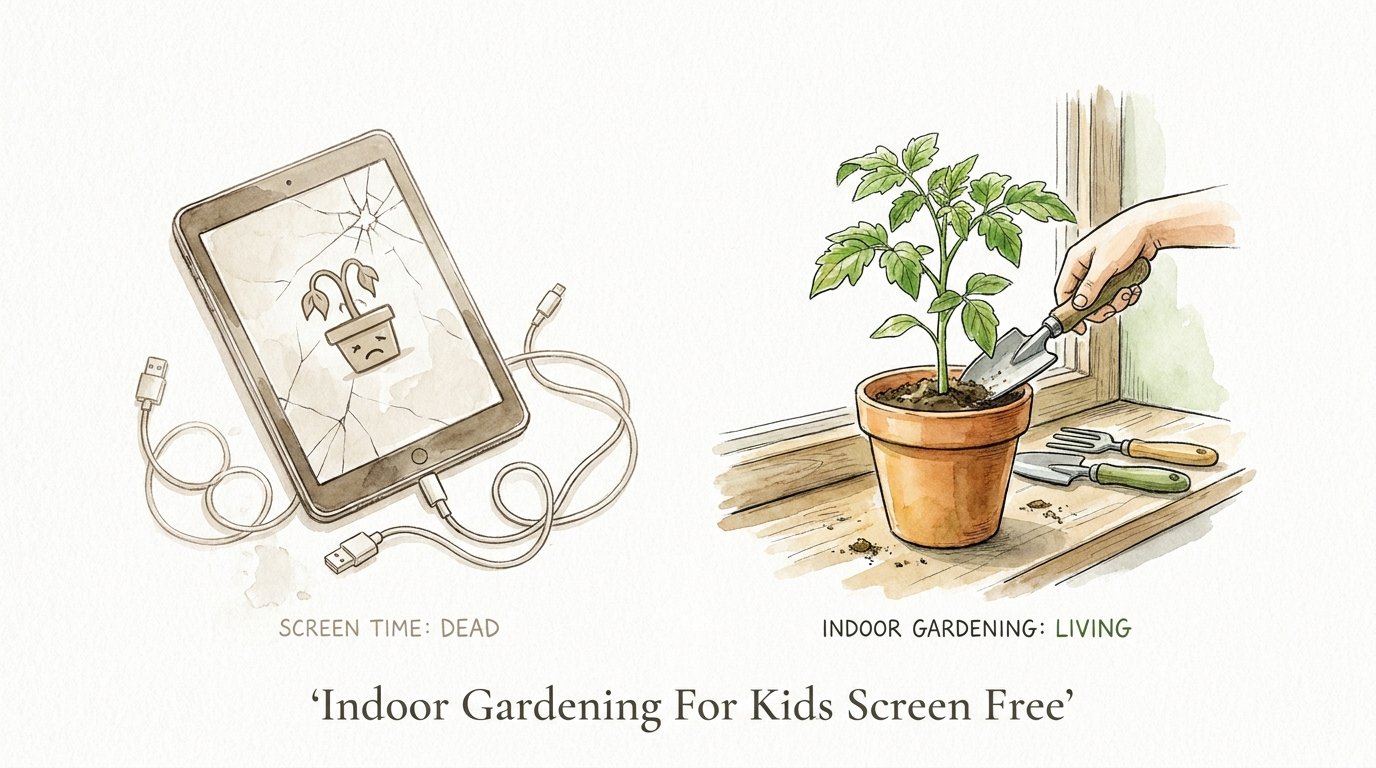
Indoor Gardening For Kids Screen Free
One set of food was made in a factory; the other was made by your child and the sun. Why do we give kids plastic simulations of life when the real thing is more exciting? A microgreen tray offers daily changes, biological feedback, and a physical reward they can actually eat. Move from sterile toys that never change to living systems that grow alongside your child’s curiosity.
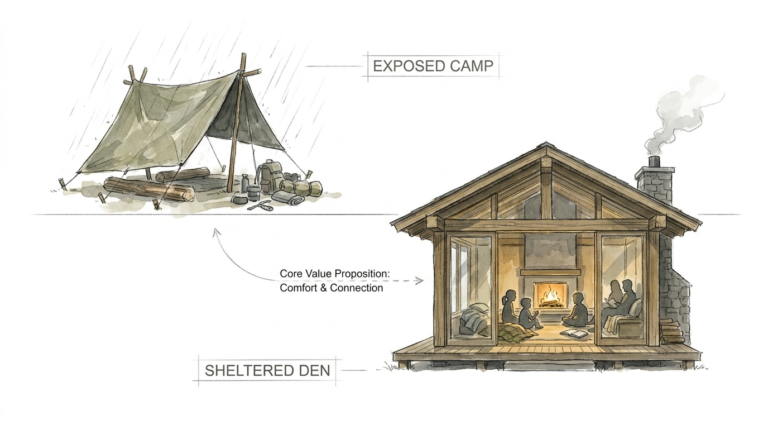
The modern playroom is often filled with static objects. These toys are designed to entertain for a moment, but they offer no growth. They are “dead” systems. In contrast, a tray of living microgreens is a “living” system. It responds to water, light, and care. It teaches a child that their actions have direct, visible consequences in the physical world.
This article guides you through the process of setting up an indoor microgreen garden. It is a journey from simple seeds to nutrient-dense superfoods. You will learn how to turn a kitchen counter into a laboratory of life. This is not just about growing food; it is about cultivating a mindset of observation and stewardship.
Indoor Gardening For Kids Screen Free
Indoor gardening for kids is a hands-on method of growing edible plants within the home. It focuses on microgreens—tiny versions of vegetables harvested just days after they sprout. This practice exists to reconnect children with the origins of their food. It provides a tangible alternative to digital entertainment.
Screens offer high-stimulation, low-effort dopamine. Gardening offers slow-release, high-reward satisfaction. In a world of instant gratification, waiting seven days for a radish sprout to emerge is a radical act of patience. It is used in homes and classrooms to teach biology, responsibility, and nutrition.
Imagine a child who refuses to eat broccoli. Now imagine that same child nurturing a tray of broccoli microgreens for a week. They watch the seeds swell. They see the first green leaves “pop.” When harvest time comes, the child is often the first to grab a handful. The “living” system has transformed a chore into a triumph.
How It Works: The Seed to Plate Journey
Growing microgreens is a straightforward process, but it requires attention to detail. It starts with the seed. Every seed is a biological time capsule containing everything needed to start a new life. When you add water, you “activate” this capsule.
The process follows a specific cycle: soaking, sowing, the blackout phase, and the light phase. Some larger seeds, like peas and sunflowers, benefit from a 12-hour soak in water. This softens the outer shell and tells the embryo inside that it is time to wake up. Smaller seeds, like broccoli or kale, can go straight into the soil.
Next is the sowing phase. You spread the seeds across a thin layer of damp soil or a hydroponic mat. Unlike traditional gardening where you space plants out, microgreens are sown densely. Think of it like a “seed blanket.” This density creates a lush carpet of greens that is easy for small hands to harvest.
The blackout phase is a crucial, often overlooked step. You cover the seeds with another tray or a dark cloth for 2-3 days. This mimics the seed being underground. The sprouts “stretch” upward, searching for light. This creates longer, cleaner stems that are easier to cut. Once the sprouts are about an inch tall, you remove the cover and introduce them to the sun.
Benefits of Living Systems
The advantages of indoor gardening extend far beyond a healthy snack. The primary benefit is biological feedback. If a child forgets to water their tray, the plants wilt. This is a clear, non-judgmental signal. It isn’t a parent nagging; it is the living system communicating its needs.
Microgreens are also nutritional powerhouses. Research shows that these tiny leaves can contain 4 to 40 times the nutrient density of mature vegetables. For a picky eater, a small pinch of microgreens provides the same vitamins as a large serving of standard greens. This makes every bite count toward their development.
Psychologically, gardening reduces cortisol levels and improves focus. It provides a sensory experience that screens cannot match. The smell of damp earth, the texture of the leaves, and the “snap” of a fresh harvest engage all five senses. It builds a “living” connection to the environment that lasts a lifetime.
Challenges and Common Mistakes
The biggest challenge in indoor gardening is moisture management. Too much water leads to mold; too little leads to wilting. Many beginners over-saturate the soil, turning it into a swamp. This chokes the roots and invites fungal growth. A spray bottle is the best tool for kids, as it limits the amount of water applied at once.
Another common mistake is confusing “root hairs” with mold. As seeds germinate, they send out tiny, fuzzy white filaments to grab moisture. These are healthy root hairs. Mold, on the outher hand, looks like a spiderweb and often has a sour smell. Teaching your child to distinguish between the two is a great lesson in scientific observation.
Airflow is also essential. Stagnant air trapped under a blackout dome can ruin a crop in hours. Always ensure there is a small gap for air to circulate. If the room is very humid, a small fan nearby can prevent most fungal issues.
Limitations of Indoor Microgreens
While microgreens are versatile, they have practical boundaries. They are not a replacement for a full-scale garden if you want to grow calorie-dense crops like potatoes or corn. Microgreens provide vitamins and minerals, but they do not provide the carbohydrates needed for a full meal.
Space is another constraint. While you can grow a tray on a windowsill, a serious setup for a large family may require shelving and dedicated LED grow lights. If your home lacks natural light, the plants will grow “leggy” and pale without supplemental lighting.
Environmental temperature also plays a role. Most microgreens thrive between 65 and 75 degrees Fahrenheit. If your home is drafty in the winter or lacks air conditioning in the summer, the growth rate will fluctuate significantly.
DEAD vs LIVING: A Comparison
Understanding the difference between static toys and living systems helps prioritize educational value.
| Feature | DEAD (Plastic Simulations) | LIVING (Microgreen Trays) |
|---|---|---|
| Change | Remains the same forever. | Changes hourly and daily. |
| Feedback | Requires batteries or imagination. | Provides biological feedback (growth/wilting). |
| Reward | Temporary entertainment. | Tangible, edible nutrition. |
| Skill Level | Zero skill required. | Develops observation and stewardship. |
Practical Tips for Success
Start with “the big three”: Radish, Pea Shoots, and Sunflowers. These seeds are large, fast-growing, and hard to kill. Radishes often sprout within 24 hours, providing almost instant gratification for young children. Pea shoots can be harvested, and they will often grow back for a second “cutting,” teaching the concept of regeneration.
Use “bottom watering” whenever possible. Instead of pouring water over the delicate leaves, place your growing tray inside a second tray filled with an inch of water. The soil will “wick” the moisture up from the bottom. This keeps the leaves dry and significantly reduces the risk of mold.
Personalize the experience. Let your child decorate the outside of the trays with stickers or markers. Give the “crop” a name. Creating an emotional investment ensures the child will check on their plants every morning without being reminded.
Advanced Considerations for Serious Practitioners
Once the basics are mastered, you can experiment with “weighted” germination. Placing a small weight (like a brick or a second tray of soil) on top of the seeds during the blackout phase forces the roots to dig deeper. This results in a much stronger, sturdier plant.
You can also explore the science of light spectrums. Blue light encourages leaf growth, while red light can influence the stem structure. Using adjustable LED grow lights allows you to fine-tune the growth of different varieties. For example, arugula prefers cooler light, while basil thrives in warmth.
Scaling up involves moving from soil to hydroponic mats. These are made of hemp, coco coir, or recycled felt. They are less messy than soil, making them ideal for high-volume indoor production. However, they require more precise nutrient management, as the mats themselves contain no minerals.
Example Scenario: The Weekend Pizza Party
Consider a family that wants to make Sunday night pizza more educational. On the previous Monday, the child sows a tray of “Spicy Radish” and “Mild Broccoli” microgreens. Throughout the week, they measure the growth with a ruler and record it in a “Garden Journal.”
By Friday, the greens have shifted from the blackout phase to the windowsill. On Sunday afternoon, the child uses safety scissors to harvest their “vegetable confetti.” They sprinkle the fresh, spicy radish greens over the hot pizza.
In this scenario, the child has moved from a passive consumer to an active producer. They understand the time, water, and sunlight required to create those flavors. The pizza isn’t just dinner; it is the culmination of a week-long biological experiment.
Final Thoughts
Indoor gardening for kids is more than a hobby; it is a gateway to biological literacy. By choosing living systems over sterile simulations, you provide your child with a mirror of the natural world. They learn that life is dynamic, responsive, and rewarding.
The journey from a dry seed to a vibrant tray of greens is a miracle that happens in seven days. It is a screen-free victory that builds confidence and health. Start small with a single tray of peas or radishes. Observe the changes together.
As your child grows, their curiosity will expand into more complex systems. Today it is a tray of microgreens; tomorrow it might be a backyard garden or a career in the sciences. The first step is simply inviting the sun and the soil onto your kitchen counter.
Sources
1 microgreensworld.com | 2 bioone.org | 3 letgrow.org | 4 pbs.org | 5 sydneyrudolfsteinercollege.com | 6 sydneysprouts.com.au | 7 allthatgrows.in | 8 nwtnlfn.org | 9 aquatreegarden.com | 10 youtube.com | 11 ingarden.de | 12 quora.com | 13 microgreensworld.com | 14 tierneyfamilyfarms.com | 15 themightymicrogreen.com | 16 risegardens.com | 17 microgreensworld.com | 18 kidsgardening.org