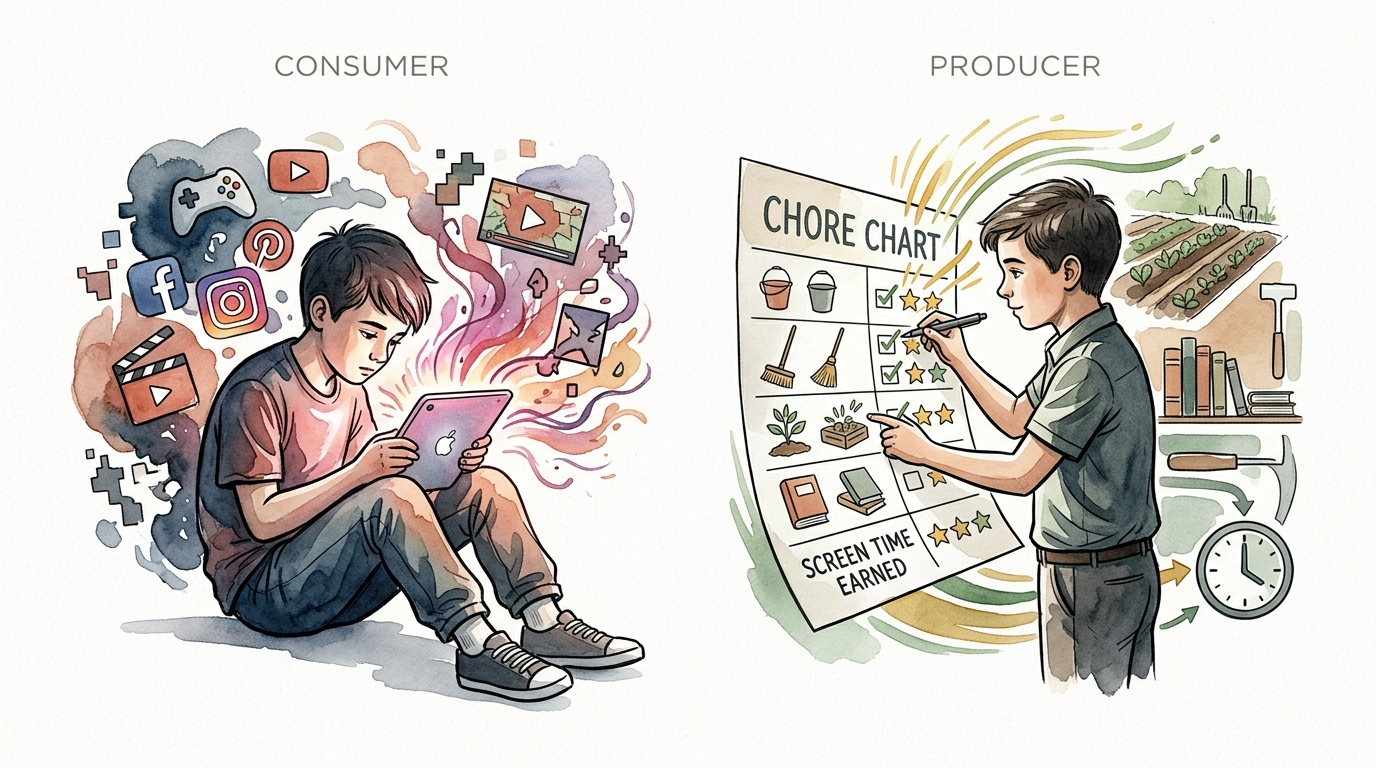
summer chore chart before screen time
Reward the effort, not the existence. End the summer “brain drain.” Making screen time a reward for production (chores, reading, building) teaches your kids the value of their time.
Parents often dread the long, unstructured weeks of July and August. Without a plan, the “summer slide” or brain drain can cause students to lose significant academic ground, particularly in math and reading. Implementing a structured system helps bridge the gap between school years while fostering a sense of accomplishment.
This guide walks you through the exact process of transforming your home from a digital consumption hub into a workshop of productivity. You will learn how to set up a system that prioritizes real-world contributions over passive scrolling.
summer chore chart before screen time
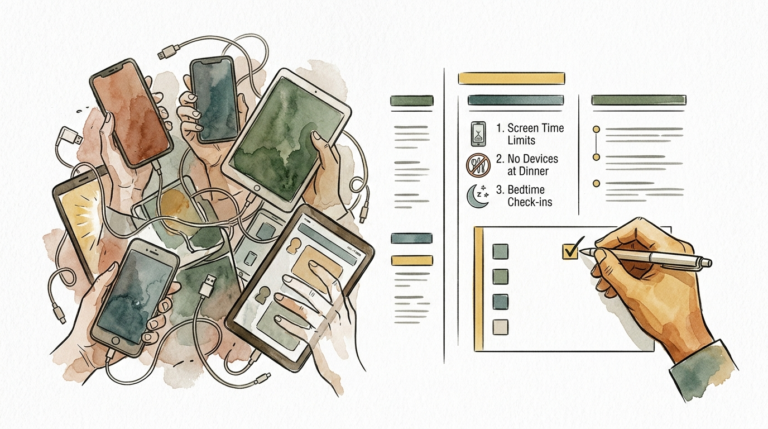
A summer chore chart before screen time is a visual contract between you and your child. It establishes a clear boundary: digital entertainment is an earned privilege, not an automatic right. In the real world, we work before we play, and this system mirrors that fundamental truth.
Think of the chart as a roadmap for the day. It defines exactly what “production” looks like in your household. For some families, this means traditional cleaning tasks like unloading the dishwasher. For others, it includes “brain production” such as solving a logic puzzle or writing a journal entry.
Using this method prevents the common summer morning struggle. Instead of waking up and asking for an iPad, children look at the chart to see what they must accomplish first. It shifts the burden of management from your voice to the visual system.
How to Build Your Summer Productivity Pipeline
Starting a new system requires clarity and a bit of prep work. You cannot simply hand a child a list and expect perfection on day one. A productivity pipeline works best when it is broken down into manageable phases.
Identify the Daily Essentials
Begin by listing the non-negotiables. These are the basic self-care and household tasks that must happen every single day. Common examples include making the bed, getting dressed, and eating a healthy breakfast. These tasks set the “baseline” for the day.
Categorize Production Tasks
Separate the remaining tasks into three categories: Physical, Mental, and Creative.
- Physical: Sweeping the kitchen, weeding the garden, or 30 minutes of active outdoor play.
- Mental: Reading 20 pages of a book, practicing math facts, or learning five new vocabulary words.
- Creative: Building a LEGO structure, drawing a comic strip, or practicing a musical instrument.
Determine the “Price” of Play
Decide how much production earns how much consumption. Some parents prefer a “Flat Fee” model where completing the entire list unlocks screens for the afternoon. Others use a “Value Model” where 30 minutes of reading earns 30 minutes of gaming.
Create the Visual Hub
The chart must be visible and accessible. A laminated sheet on the refrigerator or a chalkboard in the kitchen works well. Use checkmarks or magnets so kids can feel the satisfaction of “closing” a task.
The Benefits of Production-Based Rewards
The immediate benefit of a summer chore chart is a cleaner house and less whining. However, the long-term psychological advantages are even more profound. You are essentially training your child’s brain to value deep work over shallow hits of dopamine.
Building Grit and Perseverance
When a child has to finish a difficult chore before they can access their favorite game, they learn to push through frustration. This “grit” is a high predictor of future success in both college and career environments. It teaches them that the reward is sweeter when it is hard-won.
Mitigating Summer Learning Loss
Research indicates that students can lose up to two months of mathematical skills during the summer break. By including educational “production” on your chart, you ensure their brains stay active. This makes the transition back to school in September significantly smoother.
Developing a “Producer” Identity
Most of the digital world is designed to keep us as passive consumers. When you reward building, coding, or creating, you help your child identify as a “Producer.” This shift in identity encourages them to look at technology as a tool for creation rather than just a medium for entertainment.
Challenges and Common Pitfalls
Even the best-designed systems can hit roadblocks. Understanding where most parents fail will help you stay consistent throughout the summer months.
Parental Inconsistency
The system only works if you stick to it. If you give in and allow screen time “just this once” because you are tired, the contract is broken. Children are experts at finding the weak points in a system. You must be the “enforcer” until the routine becomes a habit.
Vague Task Descriptions
A task like “clean your room” is too broad for many children. This leads to arguments over whether the job is actually finished. Instead, use specific instructions: “Put all toys in the bin, put dirty clothes in the hamper, and clear the floor.”
Making it Punitive
If the chore chart feels like a punishment, your child will rebel. Frame the system as a way for them to gain freedom and autonomy. Use positive language. Instead of saying, “You can’t have your tablet because you didn’t sweep,” try “As soon as you finish sweeping, you’ve earned your gaming time!”
Limitations: When the System Needs an Audit
While a summer chore chart before screen time is powerful, it is not a magic bullet for every situation. There are realistic boundaries to what a transactional system can achieve.
Some children may become overly transactional, refusing to help with any task that isn’t on the chart. If you notice your child asking, “What do I get for this?” for every small request, it is time to recalibrate. Ensure you also emphasize “Family Contribution” tasks that are done simply because we love and support each other.
Additionally, highly stimulating digital content can sometimes “override” the value of the reward. If a child spends all day working for 30 minutes of a high-intensity game, they may experience a “crash” or behavioral meltdown when the time is up. In these cases, you may need to limit the *type* of screen time allowed, favoring “active” content like coding tutorials or creative editing over passive video scrolling.
The Pure Consumer vs. The Young Producer
To understand the goal of this system, we must look at the two different ways kids interact with the world. One path leads to dependency, while the other leads to mastery.
| Feature | The Pure Consumer | The Young Producer |
|---|---|---|
| Primary Activity | Scrolling, watching, reacting. | Building, writing, coding, solving. |
| Attention Span | Fragmented and short. | Deep and sustained. |
| Sense of Value | Derived from what they own or watch. | Derived from what they can do or make. |
| Long-term Skill | Digital literacy (basic). | Creative problem solving and grit. |
Practical Tips for Immediate Success
If you are ready to launch your chart tomorrow, keep these best practices in mind to ensure a smooth rollout.
- Start Small: Don’t list 20 chores on day one. Start with 3-5 tasks and build up as the child gains confidence.
- Use Timers: For tasks like “reading” or “cleaning,” use a physical kitchen timer. It provides a clear “finish line” for the child.
- The “Morning Launch”: Establish a rule that no screens are allowed before 10:00 AM, regardless of how fast chores are done. This encourages creative play during the most productive hours of the day.
- Inspect What You Expect: Check the quality of the work. If the dishwasher is unloaded but the plates are messy, the task isn’t “produced” yet.
Advanced Strategies for Long-Term Habits
For families who have mastered the basic chart, you can level up the system to provide deeper insights into time management and “investing” effort.
The Time Bank System
Instead of “earning” time for today, allow children to “bank” their minutes. If they do extra production on a rainy Monday, they can save those minutes for a longer movie night on Friday. This teaches the concept of delayed gratification and long-term planning.
Skill-Based Rewards
Offer “Premium” screen time for educational production. For example, if a child spends 30 minutes on a coding platform, they might earn double the time for gaming later. This incentivizes “Active” screen use over “Passive” screen use.
The Weekly Audit
Every Sunday, sit down and review the chart together. Ask your child which tasks were the hardest and which they enjoyed the most. This reflection helps them develop meta-cognition—the ability to think about their own work habits.
Example Scenarios
How does this look in a real home? Let’s look at two different age groups and how the “Production Pipeline” operates for them.
The Elementary Example (Age 8)
Leo wakes up at 7:30 AM. He knows he must get dressed, brush his teeth, and eat breakfast before he even looks at the chart. Once he is “launched,” he checks his daily tasks:
1. Read 15 minutes of a chapter book.
2. Complete 2 pages of a math workbook.
3. Feed the dog and clear the breakfast table.
4. Build one “new” thing with blocks.
By 10:30 AM, Leo has finished his production. He earns 45 minutes of Minecraft, which he chooses to use after lunch.
The Tween Example (Age 13)
Maya has a higher threshold for production. Her list includes:
1. 30 minutes of DuoLingo (language learning).
2. Vacuuming the living room and hallway.
3. Writing a 200-word summary of a news article.
4. 45 minutes of outdoor exercise or basketball.
Maya completes her tasks by noon. She earns 90 minutes of screen time, which she splits between chatting with friends and watching a documentary on her favorite hobby.
Final Thoughts
Implementing a summer chore chart before screen time is about more than just getting the house clean. It is about shifting the culture of your home from one of entitlement to one of contribution. You are giving your children the gift of a structured environment where their efforts have tangible results.
When you reward production, you are preparing them for the reality of adulthood. You are showing them that their time has value and that they have the power to create, not just consume. This summer, don’t just survive the break—use it to build a foundation of discipline that will last a lifetime.
Encourage your kids to take ownership of their charts. Let them suggest tasks or negotiate for higher-value production projects. The more they feel like partners in the system, the more they will rise to the challenge. Turn off the “auto-pilot” on digital consumption and watch their creativity thrive.
Sources
1 caitlinhoustonblog.com | 2 lelycee.org | 3 charlestonmoms.com | 4 charlestonmoms.com | 5 stayfitmom.com | 6 kprz.com | 7 harvard.edu | 8 apa.org | 9 northshorechildguidance.org | 10 stanford.edu | 11 betterscreentime.com