recommended screen time for teenager
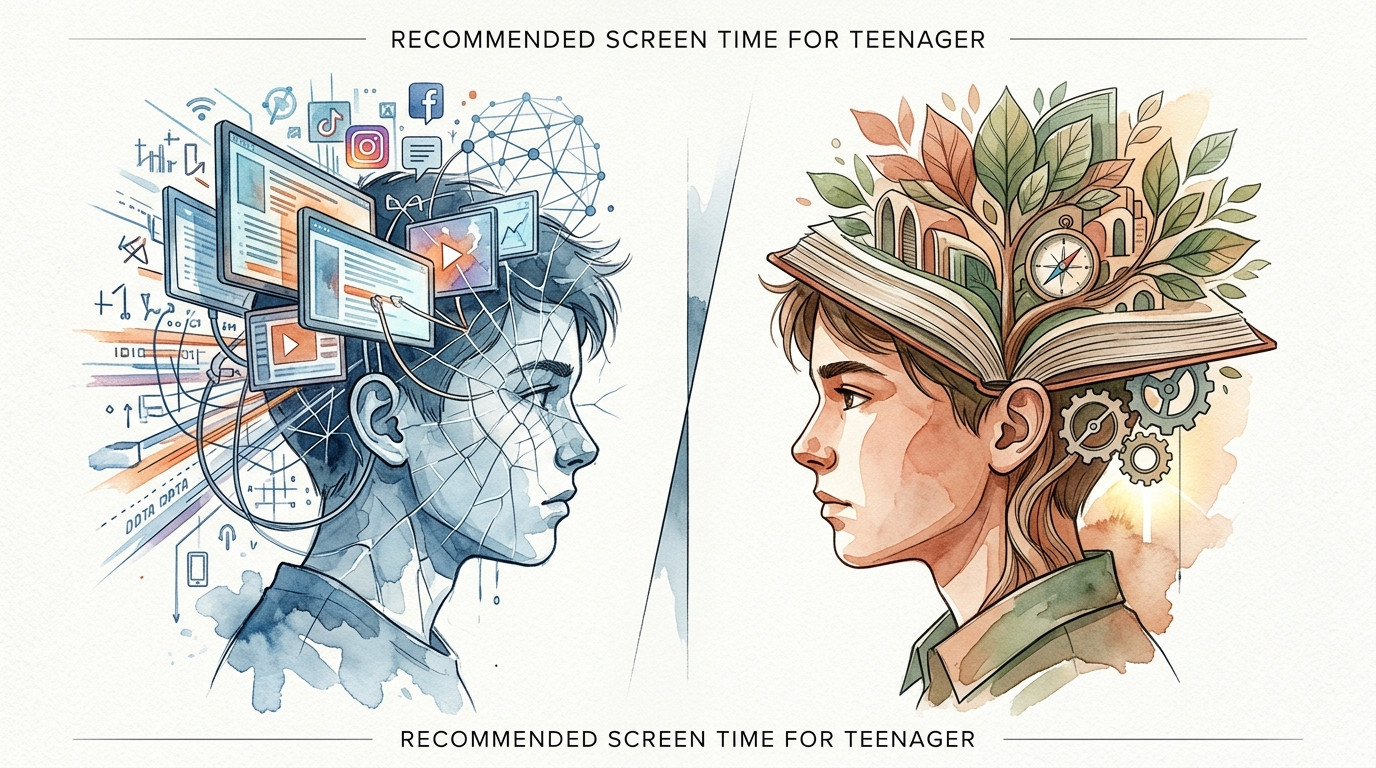
An open connection isn’t always a good thing. We wouldn’t leave a teen in a physical storm without a coat, yet we leave them exposed to the digital gale 24/7. Discover the boundaries that foster resilience, not anxiety.
The digital world is no longer a separate place where we “go.” It is the environment in which our teenagers live, breathe, and socialize. For many parents, the struggle to manage this space feels like a losing battle against billion-dollar algorithms. We want our children to be tech-savvy, yet we see the light fading from their eyes after four hours of mindless scrolling. This tension creates a crossroads in modern parenting: how do we protect them without paralyzing them?
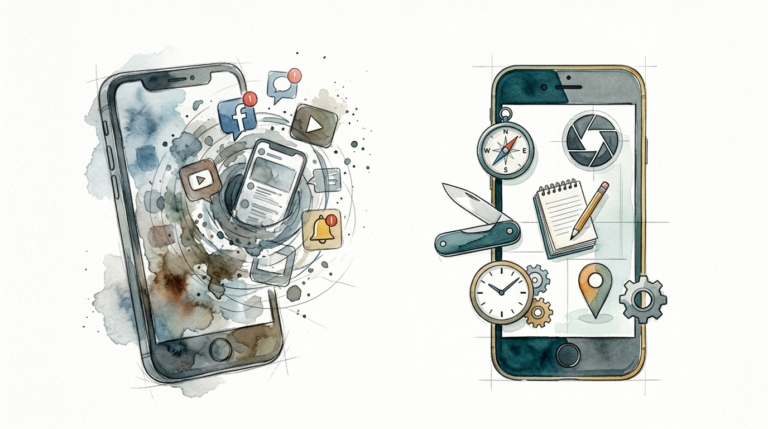
Understanding digital boundaries is not about building a wall. It is about building a compass. We are moving away from the era of “policing” and into the era of “mentoring.” This shift requires us to look past the glowing screen and into the developing brain of the adolescent. In this guide, we will explore how to navigate these waters using the latest expert frameworks and psychological insights.
recommended screen time for teenager
The landscape of what we consider “safe” or “healthy” changed significantly in early 2026. For years, parents looked for a magic number, often landing on the “two-hour rule.” However, the American Academy of Pediatrics (AAP) and other leading health organizations have shifted their focus. They now emphasize quality, context, and conversation over rigid hourly caps.
Current 2026 guidelines suggest that for teenagers aged 13 to 18, there is no longer a universal “fixed cap” that fits every family. Instead, the goal is “balanced use.” Most experts suggest aiming for approximately two hours of recreational screen time on school nights, but this number is secondary to the “5 C’s” framework.
The 5 C’s framework helps parents evaluate the impact of digital media:
- Child: Is the teen’s unique personality thriving or struggling with current use?
- Content: Are they watching educational videos and connecting with friends, or are they stuck in “brain rot” loops?
- Calm: Does the device help them regulate, or does it leave them irritable and anxious?
- Crowding Out: Is the screen displacing sleep, physical activity, or face-to-face social time?
- Communication: Are parents and teens talking openly about what is happening in the digital space?
This transition exists because a teen coding a website for three hours is doing something vastly different than a teen watching autoplaying short-form videos for the same duration. Real-world situations require flexibility. If a teenager is using a tablet to create digital art or learn a new language, the “time limit” should reflect that productivity. If they are scrolling through curated feeds that trigger body dysmorphia, even thirty minutes might be too much.
How Digital Boundaries Work for the Developing Brain
Setting digital boundaries is essentially an exercise in externalizing the prefrontal cortex. The teen brain is a construction site. The “gas pedal” (the reward system) is fully functional, but the “brakes” (impulse control) are still under development. Digital platforms exploit this gap using intermittent reinforcement.
When a teenager receives a notification, a like, or a comment, their brain releases a burst of dopamine. This is the same neurological mechanism involved in gambling. Because their impulse control is not yet mature, they cannot easily stop the “one more scroll” cycle on their own. Boundaries act as the external “brakes” they haven’t fully grown yet.
To implement these effectively, you must understand the “Digital Sunset” principle. Blue light from screens suppresses melatonin, the hormone that tells the body it is time to sleep. Setting a boundary that ends screen use 60 minutes before bed allows the brain to transition into a rest state. Without this gap, teens often experience “digital withdrawal,” leading to late-night anxiety and poor REM sleep, which is critical for memory consolidation and emotional regulation.
Effective boundaries also work through the “Friction Method.” If a device is in the pocket, the brain is constantly monitoring it. If the device is in a charging station in the kitchen, the “cost” of using it increases. This physical distance reduces the cognitive load on the teenager, allowing their mind to wander—a state where creativity and problem-solving actually happen.
Benefits of Establishing Clear Digital Boundaries
The practical benefits of setting limits extend far beyond just “less phone time.” When a family establishes a healthy digital rhythm, the teenager gains measurable advantages in several life domains.
1. Increased Emotional Resilience: Teens who have “off” periods learn to sit with their own thoughts and minor boredom. This builds a buffer against the constant social comparison found online. They develop an identity that is not tethered to digital validation.
2. Improved Academic Focus: Studies show that even the presence of a smartphone on a desk reduces cognitive capacity. Clear boundaries during homework hours allow for “Deep Work.” This helps teenagers learn to focus on complex tasks without the constant interruption of “pings” and “buzzes.”
3. Restored Sleep Cycles: Sleep is the foundation of adolescent mental health. Consistent boundaries around nighttime use lead to better mood regulation, lower rates of depression, and improved physical growth.
4. Stronger Real-World Social Skills: Boundaries protect face-to-face time. High-quality social interaction requires reading body language and tone—skills that are often flattened in text-based communication. Protecting family meals as “screen-free zones” ensures these skills are practiced daily.
Challenges and Common Mistakes
Setting boundaries is rarely a smooth process. Parents often face resistance because they are fighting against products designed to be addictive. Understanding why these mistakes happen can help you stay the course.
The “Digital Bribe” Trap: Using screen time as the primary reward or punishment can backfire. It imbues the device with even more value, making it the center of the teen’s world. If screen time is the only thing they care about, the “hunger” for it grows.
Inconsistency: If the rule is “no phones at dinner,” but parents check their email while waiting for the salad, the boundary collapses. Teens have a high-functioning “hypocrisy radar.” Modeling the behavior is more effective than any software filter.
The Sudden Shutdown: Walking into a room and demanding a teen “get off that thing right now” often triggers a fight-or-flight response. This happens because they may be in the middle of a social interaction or a gaming match that cannot be paused. Abrupt transitions lead to conflict and “digital irritability.”
Over-Reliance on Tracking Apps: While tools like Apple Screen Time or Google Family Link are helpful, they are not a substitute for parenting. If the app is the only thing enforcing the rule, the teenager will eventually find a workaround. Stealthily monitoring every text message can also erode the trust necessary for the “Conversation” part of the 5 C’s.
Limitations: When This Approach May Not Work
Every teenager is different, and there are situations where standard screen time limits might not be ideal or practical. Recognizing these boundaries helps maintain your credibility as a guide.
Neurodivergent Teens: For teenagers with ADHD or Autism, screens can sometimes be a vital tool for self-regulation or social connection that feels “safe.” Rigidly enforcing a two-hour limit might strip away a necessary coping mechanism. In these cases, the focus should be on the type of content and the impact on sleep rather than a raw number of minutes.
Educational Requirements: Modern schooling is digital. If a teen is on a laptop for six hours doing research, coding, and writing, they have already exceeded most “recommended” limits. Parents must learn to distinguish between “School Screen Time” and “Recreational Screen Time.”
Creative Professionalism: Some teenagers use digital tools for professional-level creative work, such as video editing, music production, or 3D modeling. Restricting this “work” can stifle talent and career development. The boundary here should be about balance—ensuring they still get sunlight and movement—rather than stopping the creative flow.
Comparing the Approaches: The Exposed Mind vs The Sheltered Intellect
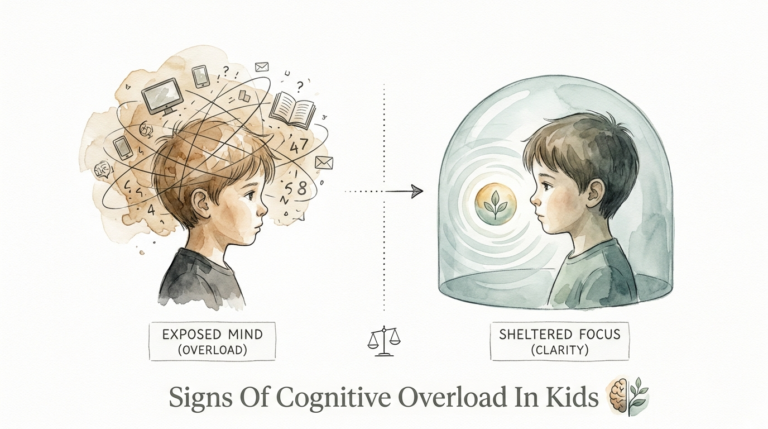
There is a subtle spectrum in how parents approach the digital world. On one end, we have the Exposed Mind—a teenager with zero boundaries who is shaped entirely by the algorithm. On the other, we have the Sheltered Intellect—a teenager who is so restricted they lack the literacy to survive in a digital society.
| Feature | The Exposed Mind | The Sheltered Intellect | The Integrated Teen |
|---|---|---|---|
| Control | None (Algorithm-led) | Total (Parent-led) | Shared (Collaborative) |
| Resilience | Low (High Anxiety) | Brittle (No Experience) | High (Practiced) |
| Literacy | High Consumption | Zero Context | Critical Thinking |
| Trust | Ignored | Eroded | Strong |
The goal is to move toward the “Integrated Teen.” This individual has enough exposure to learn the rules of the road but enough boundaries to stay safe. They understand how a “like” button works to manipulate them, and they have the self-regulation to put the phone down when it stops being fun.
Practical Tips and Best Practices
If you want to start today, focus on these actionable strategies to build digital resilience in your home.
- Develop a Family Media Plan: Use the free tools from the AAP to sit down with your teen. Discuss when screens are allowed and when they are not. Letting them have a say in the rules increases the likelihood they will follow them.
- Use the “Five-Minute Warning”: Instead of a sudden shutdown, give a verbal cue. “Five minutes until we head to dinner.” This allows them to find a stopping point in their digital activity, reducing the “transition shock.”
- Optimize Notifications: Help your teen go into their settings and turn off non-essential notifications. Only people should be able to “ping” them, not apps. This takes away the “intermittent reinforcement” of the red dot.
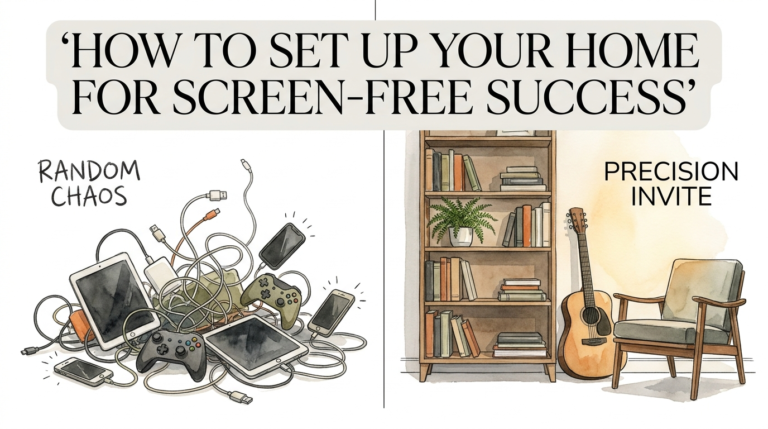
- Charge Outside the Bedroom: This is the single most effective rule for teen mental health. Purchase a multi-device charging station for the kitchen or hallway. All devices “go to bed” at a set time.
- Curate the Feed Together: Spend fifteen minutes looking at their Instagram or TikTok “Following” list. Ask them, “How do you feel after watching this person’s content?” If the answer is “annoyed” or “bad about myself,” encourage them to unfollow.
Advanced Considerations: Decoding the Algorithm
For parents who want to go deeper, we must talk about Media Literacy. A boundary is a temporary fix; literacy is a permanent one. Teach your teenager that these apps are not “free.” They are paying with their attention.
Explain the concept of “Attention Capitalism.” Help them understand that when they spend more time on a platform, that platform makes more money from advertisers. This realization can often spark a sense of rebellion in teenagers. They don’t want to be “used” by a corporation. Reframing the boundary as “reclaiming your sovereignty” is often more effective than framing it as “safety.”
Teach them to spot “Dark Patterns”—design choices meant to keep them scrolling. Infinite scroll, auto-playing videos, and “streaks” in messaging apps are all tactics to bypass their willpower. When a teen can name these tactics, the power of the tactic diminishes. They move from being a “user” to being a “conscious consumer.”
Example Scenario: The “Social Media Spiral” vs. The “Digital Deep Dive”
Consider two different evenings for a 15-year-old named Leo.
Scenario A (The Spiral): Leo has no set boundaries. He finishes his homework and opens a short-form video app. Two hours pass in what feels like five minutes. He feels “sluggy” and irritable. He sees a post of friends at a party he wasn’t invited to. His brain enters a FOMO (Fear Of Missing Out) loop. He takes his phone to bed and scrolls until 1:00 AM. The next morning, he is exhausted and fails a quiz.
Scenario B (The Deep Dive): Leo’s family has a 9:00 PM “Digital Sunset.” He spends an hour after dinner using a music production app to mix a track. This is high-quality “active” screen time. At 9:00 PM, he puts his phone in the kitchen charger. He spends 30 minutes reading a physical book and is asleep by 10:00 PM. He wakes up refreshed, having processed the previous day’s learning during deep REM sleep.
In both scenarios, Leo used technology. In Scenario B, the boundaries protected his biology and his mental health, allowing him to use the tool without being used by it.
Final Thoughts
Managing a teenager’s digital life is one of the hardest parts of modern parenting. It requires constant adjustment, patience, and a willingness to look at our own habits. We cannot expect our children to be disciplined in a world designed to be undisciplined unless we provide the framework for them to grow.
Remember that the goal is not a “perfectly silent” digital life. The goal is resilience. We want teenagers who can navigate a storm without drowning. By shifting from rigid hour-counting to a focus on quality, context, and conversation, we give them the tools they need for a lifetime of digital health.
Don’t be afraid to experiment. Start with a small change, like the screen-free dinner table, and see how the energy in your home shifts. You might find that once the “digital gale” calms down, the person standing there is more creative, more focused, and more present than you ever imagined.
Sources
1 milikacenterfortherapyandresilience.com | 2 newcanaanpediatrics.com | 3 insightspsychology.org | 4 sparkandstitchinstitute.com | 5 jelliesapp.com | 6 screentimerecommendationsbyageus.com | 7 petrohiloscounseling.com | 8 missionprephealthcare.com | 9 harvard.edu