parenting in the digital age
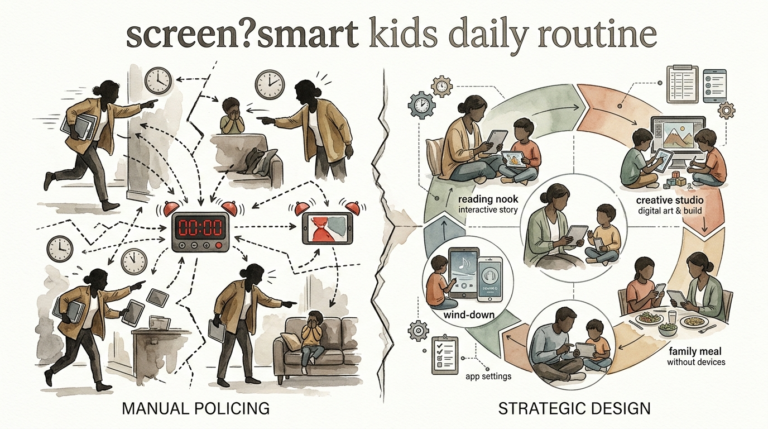
Stop being the screen-time police and start being the system designer. Manual policing of devices leads to burnout and conflict. Shift to a strategic family system that builds autonomy and boundaries without the daily power struggle.

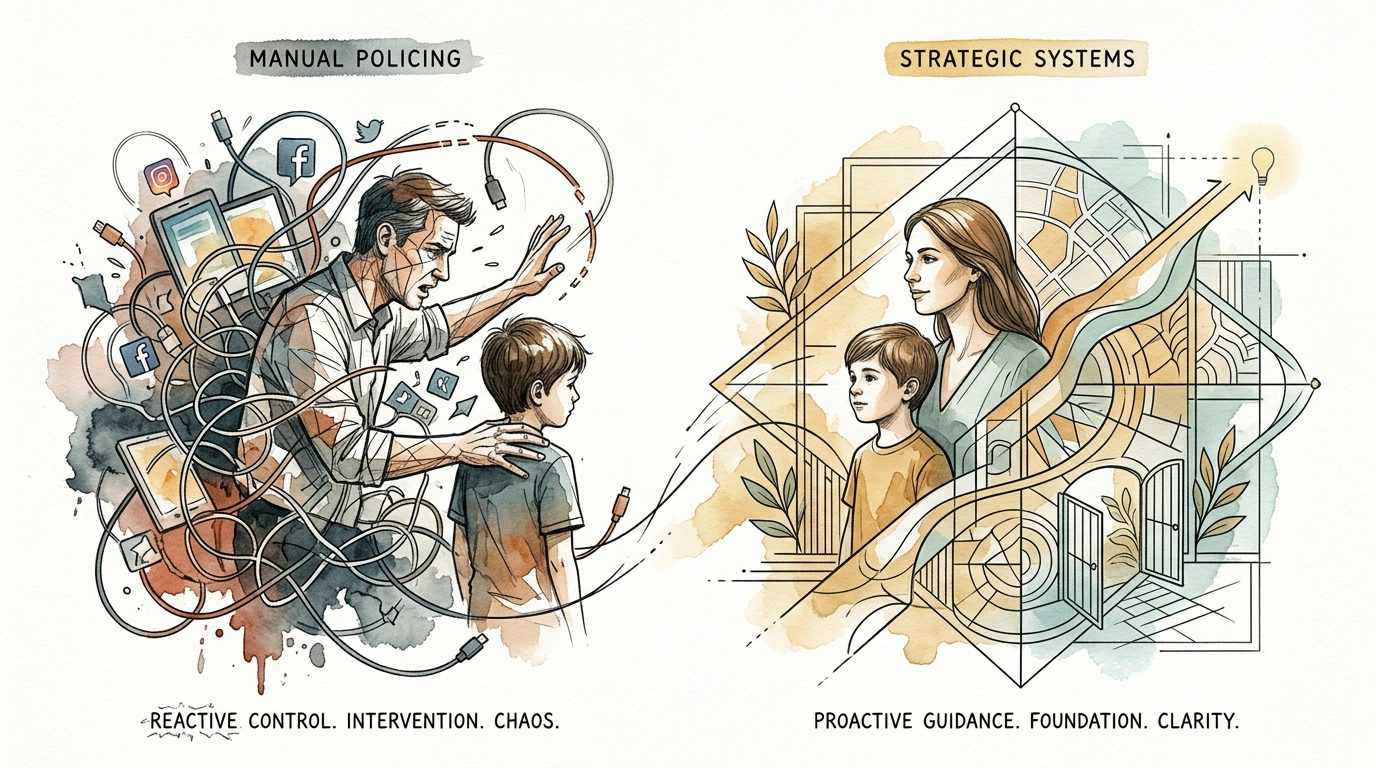
Most parents spend their evenings in a cycle of “five more minutes” negotiations and “put that away” demands. This reactive approach treats digital usage like a crime scene rather than a life skill. It creates a dynamic where you are the warden and your child is the inmate looking for a way to break the rules.

Strategic systems change the game by moving the boundaries from your voice to the infrastructure of your home. You become the architect of an environment where healthy habits are the path of least resistance. This guide will show you how to build that framework from the ground up.
parenting in the digital age
Parenting in the digital age is no longer about just “watching what they watch.” It is about managing an environment where 59% of children begin using screens by age three and the average teen clocks over 8 hours of daily use [1.1.1, 1.1.7]. We live in a world where children’s attention is the primary currency for massive tech corporations.
The digital landscape has shifted from stationary desktop computers to pocket-sized dopamine engines. By age ten, roughly 42% of children own their own smartphone, and that number jumps to 57% for 11-12 year olds [1.1.6, 1.1.7]. This constant connectivity replaces essential developmental activities like face-to-face conversation, imaginative play, and deep sleep.
Research indicates that when screens replace human interaction, language outcomes and social functioning can suffer [1.1.8]. Excessive use is also linked to a sharp rise in myopia and a double risk of depression or anxiety for teens who spend more than three hours daily on social media [1.1.7, 1.1.8]. Understanding these risks is not about creating fear; it is about recognizing that “winging it” is no longer a viable strategy.
Building Your Family Digital System
Transitioning from a police officer to a system designer requires a structured approach. You need to create a “Family Media Plan” that acts as the constitution for your household. This is a living document that you and your children build together to foster buy-in and accountability [1.2.7].
The “Sunday Setup” Ritual
Start each week with a 15-minute synchronization meeting. Use this time to review the upcoming schedule, discuss any new apps the kids want to download, and check in on how the previous week’s limits worked. This removes the “surprise” element from screen time restrictions and allows for calm negotiation before the school week begins [1.4.7].
Centralized Tech Hubs
Physical boundaries are often more effective than digital ones. Establish a “Charging Command Center” in a shared area like the kitchen or entryway. All devices—including parent phones—go to this hub at a designated time, such as one hour before bed. This prevents “sleep displacement,” where kids stay up late scrolling under the covers [1.1.8, 1.5.2].
Collaborative Device Contracts
Create a written agreement that outlines the expectations for device use. This should include specific rules for different categories: educational use, creative use (like coding or digital art), and pure entertainment. Clearly define the consequences for breaking the rules so you never have to “invent” a punishment in the heat of a conflict [1.2.7, 1.5.3].
The Advantages of System Design
Systems provide a level of consistency that manual policing cannot match. When the rules are baked into the environment, you spend less energy on enforcement and more energy on connection. A strategic system fosters self-regulation, teaching children how to manage their own impulses rather than just obeying yours.
One major benefit is the reduction in “negotiation fatigue.” If the system automatically pauses the internet at 8:00 PM, the router is the “bad guy,” not you. This preserves the parent-child relationship and reduces the “addict-like behavior” often seen during abrupt transitions away from devices [1.5.4].
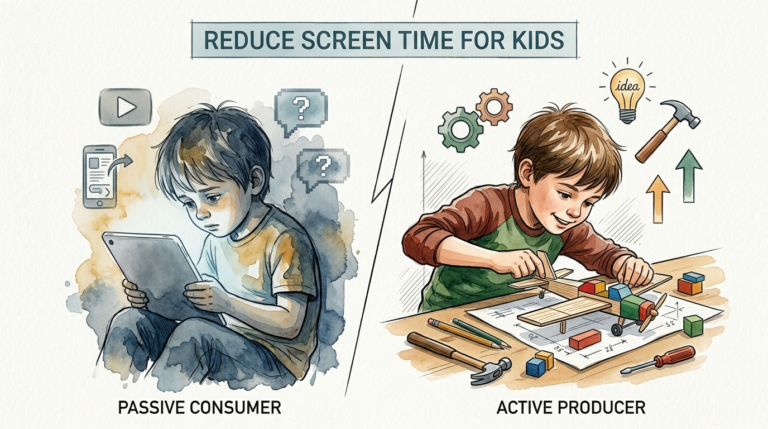
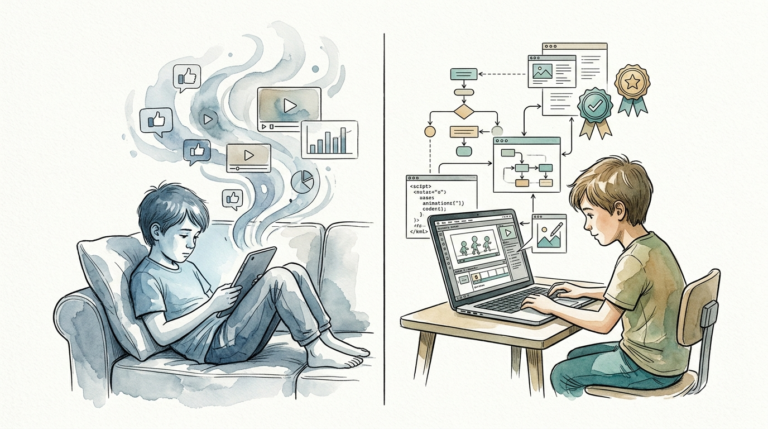
Strategic systems also encourage “meaningful use.” Instead of endless scrolling, kids are nudged toward high-quality content that teaches, inspires creativity, or encourages social connection [1.4.3]. This turns screen time from a passive drain into an active tool for development.
The “Screen Police” Trap
Common mistakes often stem from a desire for total control. The “Ban” trap—where certain apps or devices are forbidden without explanation—often backfires by making those items more enticing. Sometimes the unknown is more exciting than the reality, and forbidding an app can lead kids to hide their usage [1.5.7].
Inconsistency is another system-killer. If you enforce a “no phones at the table” rule but check your own emails during dinner, the system loses all credibility. Hypocrisy is the fastest way to breed resentment and non-compliance in children, especially teens who are sensitive to perceived unfairness [1.5.4, 1.5.6].
Many parents also wait too long to talk about digital safety. By the time a child has a personal smartphone, they have likely already encountered bullying, inappropriate content, or aggressive marketing [1.5.1]. A reactive approach means you are always playing catch-up with technologies that evolve faster than your parenting tactics.
When Systems Face Resistance
Systems are not a “set it and forget it” solution. As children mature, they naturally seek more independence. A system that works for an eight-year-old will feel like a prison to a fifteen-year-old. You must be prepared to adjust the boundaries to match their developmental stage [1.2.3, 1.4.3].
Neurodiverse children may also require different system settings. For some, screens provide a necessary sensory break or a way to communicate. In these cases, rigid time limits might be less effective than content-based filters that allow for safe, deep-dive interests while blocking harmful “infinite scroll” loops [1.3.1].
External factors, like school-mandated device use, can also blur the lines of your system. It is difficult to enforce a “two-hour limit” when your child needs four hours on a laptop for homework. Your system needs to be flexible enough to distinguish between “productive” and “consumptive” screen time [1.5.4].
Manual Policing vs. Strategic Systems
To understand why systems win, consider the differences in efficiency and relationship impact. Manual policing is a high-effort, low-yield activity that often results in temporary compliance but long-term rebellion.
| Factor | Manual Policing | Strategic Systems |
|---|---|---|
| Daily Effort | High (Constant nagging/checking) | Low (Automated limits/routines) |
| Conflict Levels | Frequent (Power struggles) | Occasional (System reviews) |
| Skill Built | Obedience to authority | Self-regulation and autonomy |
| Scalability | Difficult as more devices enter | Easy via central software |
| Outcome | Reactive compliance | Proactive digital citizenship |
Practical Best Practices
Start with the tools already at your fingertips. For iPhone households, Apple Screen Time allows for “Downtime” schedules and app-specific limits that sync across all family devices [1.6.6]. Android users can utilize Google Family Link to monitor app downloads and set daily “Bedtime” locks [1.6.3].
Consider a multi-layered approach for filtering. Use a router-level filter (like OpenDNS or a smart router) to block adult content across the entire home network. For deeper monitoring of messages and social media, tools like Bark use AI to alert you to signs of bullying, depression, or predatory behavior without requiring you to read every single text [1.6.2].
Implement “Screen-Free Zones” to protect face-to-face connection. The dinner table, the car, and the bedrooms should be tech-neutral territories. This ensures that screens do not crowd out the “analog” activities—like reading, talking, and creative play—that are essential for healthy brain development [1.3.8, 1.4.3, 1.5.2].
Advanced Digital Guardianship
As you become more comfortable with basic systems, look toward advanced guardianship. This includes teaching “Digital Citizenship”—the ethics of how we treat others online. Discuss the permanence of digital footprints and how law enforcement uses social media to investigate everything from bullying to more serious crimes [1.2.5, 1.2.6].
Pay attention to the data privacy of the tools you use. Some third-party parental control apps collect and store significant amounts of user data, which could pose a risk if the company suffers a breach [1.6.4]. Prioritize tools that value privacy and offer transparent data-handling practices.
Prepare for the future of AI. While only 8% of parents currently report their children using chatbots, that number is expected to grow rapidly [1.1.6]. Teach your children to question AI-generated content and understand the difference between a helpful tool and a persuasive algorithm designed to keep them engaged [1.2.2].
Scenario: The Sunday Setup in Practice
Imagine it is Sunday evening. Instead of the usual “get off your phone” yelling, you sit down for the 15-minute family sync. You open the Screen Time report for the week. You notice that your 12-year-old spent five hours on TikTok on Tuesday. Instead of a lecture, you ask, “What was happening on Tuesday that made the app so hard to put down?”
The child explains they were feeling stressed about a math test. This opens a conversation about “mood-driven scrolling” and healthy ways to handle stress [1.1.8]. You agree to a system adjustment: During “Math Study Time,” the TikTok app will be blocked, but the Spotify app remains open for focus music.
By the end of the meeting, the devices are plugged into the kitchen charging station. The “Downtime” is set to begin in 30 minutes. There is no yelling. There is no hidden resentment. The system is doing the work, and you are back to being a parent rather than a prosecutor.
Final Thoughts
Moving from the “screen-time police” to a “system designer” is the single most effective way to reclaim your peace of mind and protect your children’s development. It shifts the focus from limitation to empowerment, teaching kids how to live with technology rather than being controlled by it.
A successful system is built on trust, transparency, and a few high-quality tools. It requires you to model the behavior you want to see and to be willing to iterate as your children grow. Perfection is not the goal; consistency and connection are the targets.
Start small today. Pick one “Screen-Free Zone” or establish a central charging station. Once those habits stick, layer in the digital controls and the weekly syncs. You will soon find that the power struggles fade, replaced by a family that navigates the digital world with intention and autonomy.
Sources
1 apolosign.com | 2 carolinerowettcoaching.com | 3 bark.us | 4 recordablebookbuddy.com | 5 linkdaze.com | 6 everblog.com | 7 monstermath.app | 8 childrenandscreens.org | 9 harvard.edu | 10 healthychildren.org | 11 nih.gov | 12 psychologytoday.com | 13 policechiefmagazine.org | 14 kidsee.app